
South Korea's "Drone Warrior" Initiative: Ambitious, Yet Challenged
South Korea plans to transform its entire military into "drone warriors" by 2029, aiming for drones to be a universal combat tool. This ambitious plan faces significant hurdles, including personnel shortages and supply chain constraints.
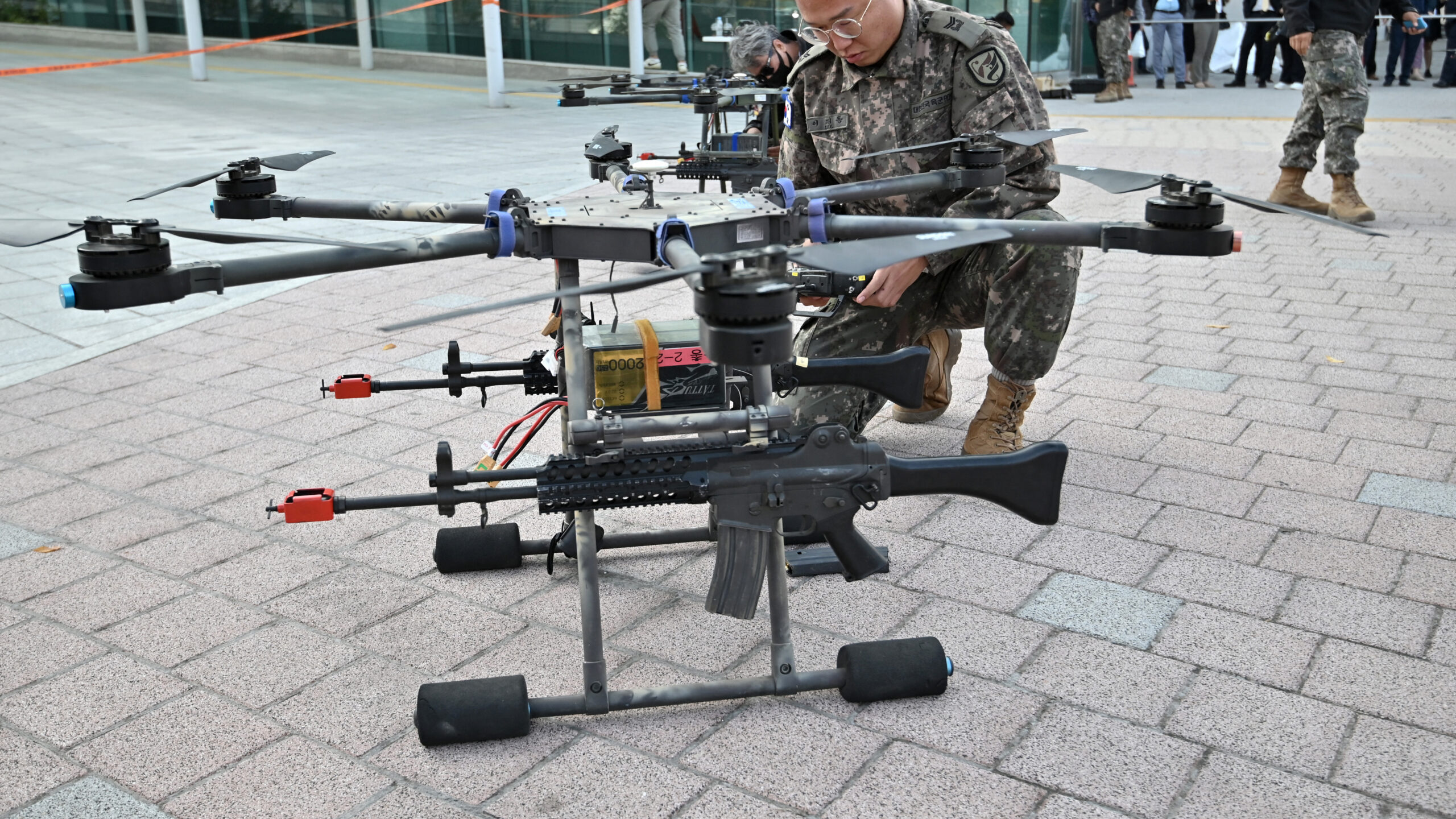
South Korea's "Drone Warrior" Initiative: Ambitious, Yet Challenged
Verdict: South Korea's strategic vision to transform its entire military into "drone warriors" by making drones a universal combat tool is bold and critically relevant given regional threats. While the ambition to leverage modern drone warfare is commendable, the plan faces formidable practical hurdles—from severe personnel shortages to a challenging domestic supply chain—that could significantly impact its real-world effectiveness and timeline.
The Vision: Drones as a Second Personal Weapon
South Korea's military, with its nearly half-million active-duty personnel, is embarking on an ambitious program to integrate drone operation into the core skill set of every soldier. The goal, as articulated by South Korea’s Minister of National Defense, Ahn Gyu-back, is to make drones as familiar and essential as a personal firearm, effectively turning them into a "second personal weapon" and a "universal combat tool." This strategic shift is heavily influenced by the conflicts in Ukraine and the Middle East, where drones have proven to be significant force multipliers.
The underlying motivation is clear: to maintain a crucial technological edge against North Korea's substantially larger military, which boasts over 1.2 million active soldiers compared to South Korea's approximately 450,000. By equipping individual units with readily available, cheap, and expendable drones for surveillance and strike missions, and simultaneously deploying advanced counter-drone systems like lasers and microwave weapons, South Korea aims to offset its numerical disadvantage through technological superiority.
Implementation and Scale: A Phased Rollout
The full realization of the "drone warrior" concept is a multi-year endeavor. The initial phase for this year involves distributing 11,000 "training drones" to military personnel. The broader objective is to deploy a total of 60,000 drones across the military by 2029. It's important to note that while the aim is universal training, not every single soldier will be equipped with their own drone immediately, especially for training purposes. The former drone operations command headquarters will also be restructured, shifting its focus from direct combat command to fostering collaboration with South Korean industry for developing and procuring commercial drone technology.
The Tech Imperative: Domestic Production and Supply Chain Challenges
A critical element of South Korea's drone strategy is a staunch commitment to security and self-reliance. The defense minister emphasized the requirement for drones to be procured with 100 percent domestically produced components, explicitly excluding any Chinese parts due to security concerns, given China's role as North Korea’s primary economic and security partner. While South Korean companies are actively developing new military attack drones, this "no Chinese components" stipulation presents a significant challenge for the commercial drone market, which is largely dominated by Chinese manufacturers like DJI.
Finding enough non-Chinese commercial drones for training hundreds of thousands of conscripts will be an uphill battle. This supply chain constraint could hamper the ambitious training schedule and the sheer volume of drones needed for such a widespread initiative.
Potential Upsides: A Force Multiplier
If successfully implemented, the "drone warrior" program offers several compelling advantages:
- Technological Edge: Provides South Korea with a crucial technological advantage in modern warfare scenarios.
- Force Multiplier: Drones can significantly augment the capabilities of a numerically smaller force, enabling enhanced surveillance, precision strikes, and rapid decision-making on the battlefield.
- Enhanced Combat Readiness: Integrating drone operation as a fundamental skill would create a more adaptable and technologically proficient military.
- Domestic Industry Growth: The focus on 100% domestic components could spur significant growth and innovation within South Korea's defense and technology sectors.
Significant Hurdles and Practical Constraints
Despite its strategic importance, the plan faces substantial obstacles:
- Manpower Crisis: South Korea's declining birthrate has led to a shrinking conscripted military, making it difficult to even maintain an active-duty force of 500,000 troops. The mandatory military service currently excludes women, further limiting the potential recruitment pool. Compounding this, there's a projected shortage of noncommissioned officers and officers who would be essential for training new conscripts in drone operation.
- Supply Chain & Sourcing: As mentioned, the strict requirement for 100% domestically produced, non-Chinese components for training drones poses a monumental sourcing challenge given China's dominance in the commercial drone market.
- Realism of "Universal" Training: While inspiring, the concept of every soldier being a drone operator might be an overreach. Lessons from Ukraine, often cited as an inspiration, show that their effective drone warfare relies on widely deployed specialized drone operator teams, a dedicated Unmanned Systems Forces branch, sophisticated digital battle management systems, and a nimble homegrown drone industry that produces millions of drones annually. Ukraine does not train everyone as a drone pilot, though it has scaled up training significantly.
- Evolving Threat Landscape: North Korean soldiers returning from fighting with Russia are already instructing their military on drone warfare, suggesting that the adversary is also adapting and learning.
Strategic Context: Learning from Others, Charting a Unique Path
While South Korea draws inspiration from Ukraine, its proposed implementation differs significantly. Ukraine's success stems from a highly specialized, adaptive approach rather than a blanket training mandate. Even the US military, which is also integrating drone familiarization and counter-drone measures into basic training and requesting billions for drone systems, isn't proposing that every soldier be a dedicated drone pilot.
South Korea's plan to reorganize its drone command to focus on industrial collaboration is a positive step, aiming to foster the kind of nimble homegrown innovation seen in Ukraine. However, overcoming the manpower and specific supply chain issues will be critical to its success.
Recommendation
South Korea's "drone warrior" initiative is a vital strategic response to its unique geopolitical situation. To maximize its chances of success, the government should:
- Prioritize Manpower Solutions: Address the shrinking military and trainer shortages through innovative recruitment, retention, and training strategies. This might include re-evaluating conscription policies.
- Diversify Sourcing and R&D: Intensify efforts to develop a robust domestic commercial drone industry, potentially exploring partnerships with non-Chinese manufacturers globally, even if some initial compromises on the "100% domestic" rule are considered for training purposes.
- Refine Training Strategy: While broad familiarization is good, consider a multi-tiered approach that includes highly specialized drone units (similar to Ukraine's model) alongside general awareness and basic operational skills for all troops. Not every soldier needs to be an expert pilot, but everyone should understand drone capabilities and counter-drone tactics.
- Invest in Counter-Drone Measures: Continue aggressive investment in counter-drone technologies, as the threat will evolve rapidly.
This initiative is necessary, but its ambitious scope demands pragmatic execution and adaptability in the face of significant domestic and logistical challenges.
FAQ
Q: Is South Korea the first country to try to train its entire military as "drone warriors"?
A: While many countries, including Ukraine and the US, are significantly expanding drone integration and training within their militaries, South Korea's stated goal of training every single member of its nearly half-million-strong force to operate drones like a "second personal weapon" is exceptionally ambitious and appears to be a unique, widespread mandate compared to the specialized team approaches seen elsewhere.
Q: What are the biggest obstacles to South Korea's plan?
A: The most significant obstacles include South Korea's shrinking military population due to declining birth rates, which makes it challenging to maintain the target force size and find enough trainers. Another major hurdle is the defense ministry's requirement for 100% domestically produced components for drones, with no Chinese parts, which complicates the procurement of commercial training drones given China's dominance in that market.
Q: How will South Korea acquire the drones needed for this initiative?
A: South Korea plans to provide 11,000 training drones this year, with a goal of deploying 60,000 drones by 2029. The acquisition strategy emphasizes 100% domestically produced components to avoid Chinese parts due to security concerns. This means relying on South Korean companies to develop and manufacture both military attack drones and the commercial-grade drones needed for widespread training, potentially facing challenges in scaling up production and finding alternatives to globally dominant Chinese components.
Related articles
Android 17 QPR2 Beta 7.1: The Performance Relief You've Been Waiting
Android 17 QPR2 Beta 7.1: Finally Fixing the QPR1 Performance Woes Verdict: Android 17 QPR2 Beta 7.1 is a crucial and highly anticipated software update for Google Pixel users, specifically targeting and resolving the

DJI Solo Video Setups: Smart Choices for Lone Creators
This review delves into DJI's recommended solo video setups, highlighting the Osmo Pocket 3 Creator Combo as a top pick for its integrated camera, gimbal, and mic. It also covers stabilizers like the Osmo Mobile 8 and RS 4, and the DJI Mic Mini series for enhanced audio, providing honest pros, cons, and clear buying advice.

Ars Technica's Rocket Report: Your Essential Space Industry Briefing
Quick Verdict Ars Technica's Rocket Report, presented by veteran space reporter Stephen Clark, offers an invaluable and meticulously organized weekly (or similar frequency, implied by "Edition 9.15") digest of the most

Apple iPhone Duo: A Daring Debut with Notable Compromises
Apple's highly anticipated iPhone Duo, priced at $2,000, has gone on pre-order. While hailed as "Apple's most exciting device in a decade" for its innovative foldable design and immersive display, it comes with significant drawbacks like the absence of FaceID and a premium camera.
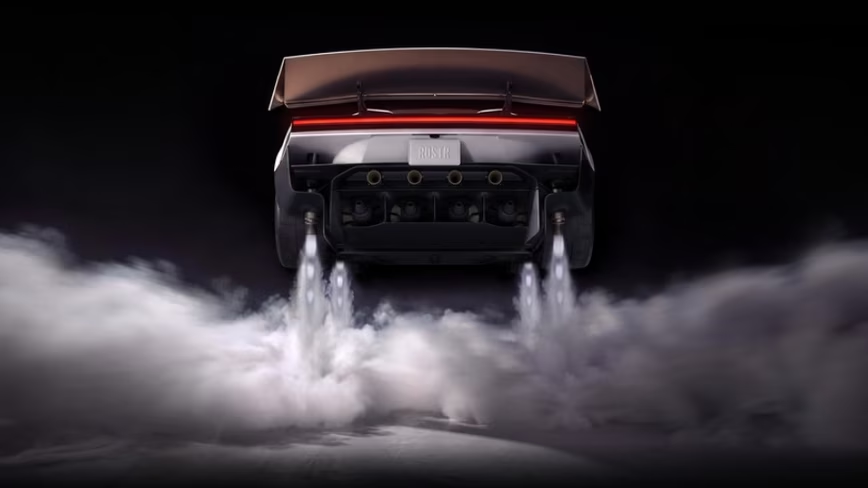
Tesla Unveils Thruster-Equipped Roadster, 2028 Production Targeted
Tesla has unveiled its second-generation Roadster, featuring cold-gas thrusters co-developed with SpaceX, enabling it to jump and flip. The electric sports car demonstrated 0-60mph in an astonishing 0.81 seconds, with production targeted for 2028. This highly anticipated reveal also serves as a key recruitment tool for Tesla's ambitious AI and robotics initiatives.

KDE Plasma 6.8: A Future-Focused 30th Anniversary Update
Quick Verdict KDE Plasma 6.8, arriving as the "30th Anniversary Edition," is a pivotal release that decisively pushes the desktop environment into the future. With a definitive farewell to native X11 sessions and a