
Rethinking Connection: Sheila J. Simpson on Navigating Our
Sheila J. Simpson argues that constant digital connectivity paradoxically leaves many feeling unheard, as convenience replaces depth in communication. She highlights how this erodes genuine connection in both personal and professional spheres, urging intentionality over sheer volume.

Sheila J. Simpson, Executive Director of FOCCUS Marriage Ministries, issues a timely warning: the pervasive digital connectivity of our modern world has paradoxically led to a profound sense of isolation and a decline in genuine human connection. In a recent analysis, Simpson highlighted that while access to others has never been easier, many individuals feel increasingly unheard as convenience-driven digital exchanges replace meaningful, in-depth interactions across both personal and professional spheres. Her insights challenge the assumption that more communication automatically equates to stronger relationships, advocating for a deliberate shift towards intentional presence.
The Paradox of Digital Connectivity
Simpson frames this growing disconnect as a defining tension of modern relationships, observing that constant communication has not fostered the expected depth. Instead, it has fundamentally reshaped engagement, often sacrificing clarity, emotional presence, and true understanding. She poses a critical question: Are we genuinely communicating more, or simply exchanging a greater volume of information without true absorption?
Erosion of Meaningful Interaction
This distinction, Simpson argues, carries significant consequences. Convenience has become the primary driver, with emails supplanting conversations, text messages replacing phone calls, and quick reactions overriding thoughtful reflection. Over time, these small digital substitutions accumulate, eroding the foundation of meaningful interaction. Simpson emphasizes that technology is merely a tool; the real concern arises when convenience becomes the default mode of communication, particularly in relationships requiring emotional investment. Digital channels allow for the delay or avoidance of difficult conversations, leading to a weakening ability to engage with discomfort and interpret crucial non-verbal cues.
Professional Ramifications
The impact extends to professional environments, where perceived efficiency often masks underlying issues. Simpson notes that an email, while seemingly quick, frequently lacks nuance, leading to misinterpretations and unclear intent. What could be resolved in a 30-minute face-to-face discussion might spiral into ten fragmented emails, ultimately consuming more time and straining professional rapport. The modern emphasis on speed – quick responses, brief messages, immediate resolution – pressures individuals to prioritize output over genuine understanding, hindering the development of robust, trust-based working relationships.
Prioritizing Presence Over Efficiency
According to Simpson, authentic relationships, whether personal or professional, cannot flourish under such conditions. They demand patience, presence, and sustained attention, involving active listening, careful clarification, and the willingness to navigate disagreements. She cautions that constantly being conditioned to speed rather than depth prevents true relational growth. The fundamental issue isn't the existence of technology, but rather the absence of intentionality in how it is utilized. Trust is fostered through human interaction where individuals feel genuinely heard, respected, and understood—qualities that cannot be achieved through sheer communication volume alone.
The Path Forward
Simpson identifies the gradual weakening of emotional connection, often obscured by frequent, yet superficial, digital exchanges, as a significant relational challenge for the coming decade. As technology advances, she stresses that no innovation will supersede the inherent human need to feel seen, valued, and understood. The solution, therefore, isn't to abandon technology but to redefine its role. This calls for conscious choices about when to leverage digital tools and when to prioritize direct, in-person engagement, fostering a renewed commitment to presence. Simpson encourages individuals to reflect on their weekly balance between real conversation and digital communication, urging accountability for a higher standard of interaction. She highlights that communication habits formed in the workplace inevitably spill over into personal lives, making the challenge and the opportunity to address it universally shared.
Ultimately, Simpson asserts that relationships are not merely sustained by constant connectivity; they are profoundly strengthened when individuals choose to be fully present with one another. Her message resonates as a critical call to action for a world grappling with the paradox of being more connected, yet increasingly alone.
FAQ
Q: What is Sheila J. Simpson's main concern regarding modern communication?
A: Simpson is concerned that while digital technology has made communication more convenient and frequent, it has led to a decline in depth, emotional presence, and genuine connection. People are exchanging more information but often feel unheard, as convenience replaces the intentionality needed for meaningful relationships.
Q: How does digital communication affect professional relationships, according to Simpson?
A: In professional settings, digital communication, particularly email, can lack nuance and lead to misinterpretations, turning simple discussions into extended, fragmented exchanges. The emphasis on speed and efficiency can hinder the development of trust and understanding, ultimately weakening professional rapport despite perceived productivity.
Q: What is Simpson's proposed solution to the paradox of constant connectivity?
A: Simpson suggests that the solution is not to reduce technology use, but to be more intentional about how and when it's used. She advocates for conscious decisions to prioritize direct, in-person engagement over digital tools when depth and emotional connection are required, emphasizing presence, patience, and accountability in all relationships.
Related articles

Apple Unveils iPhone Duo: Pricey Foldable Sees Soaring Demand
Apple has officially entered the foldable smartphone arena with the long-anticipated launch of the iPhone Duo. Priced starting at a hefty $1,999, the device features a 5.4-inch outer display and a larger 7.6-inch inner

in-depth: Chicago-Area Cops Helped HSI Spy on Minnesota Anti-ICE
Chicago-area law enforcement, including local police and HSI agents, conducted undercover surveillance on Minnesota anti-ICE activists at an April 2, 2022, talk in Chicago. This operation was part of a federal conspiracy probe into 15 Minnesota activists facing felony charges related to immigration enforcement resistance. Civil liberties advocates have condemned the surveillance as a troubling intrusion into protected political activity.

Mark Wahlberg on using AI in film ‘the right way’ and being open to
Actor Mark Wahlberg believes AI has a place in filmmaking if used responsibly for enhancement, not script generation or actor replacement. At TechCrunch Disrupt, he expressed openness to an AI likeness carrying on his legacy, managed by his family, and emphasized storytelling.

Tesla Unveils Thruster-Equipped Roadster, 2028 Production Targeted
Tesla has unveiled its second-generation Roadster, featuring cold-gas thrusters co-developed with SpaceX, enabling it to jump and flip. The electric sports car demonstrated 0-60mph in an astonishing 0.81 seconds, with production targeted for 2028. This highly anticipated reveal also serves as a key recruitment tool for Tesla's ambitious AI and robotics initiatives.

Amazon Prime Video Launches AI-Powered Prime 360 for NBA Coverage
Amazon Prime Video is elevating its NBA coverage with the introduction of Prime 360, an AI-powered replay system offering immersive, 'fly through' views of the action. Kicking off its second season, Prime Video also adds Yahoo fantasy integration and gains exclusive Eastern Conference Finals rights, expanding its tech-driven sports broadcast. The new features aim to deliver a unique and interactive viewing experience for basketball fans.
regional: A two-person Seattle startup lands $1M to reinvent
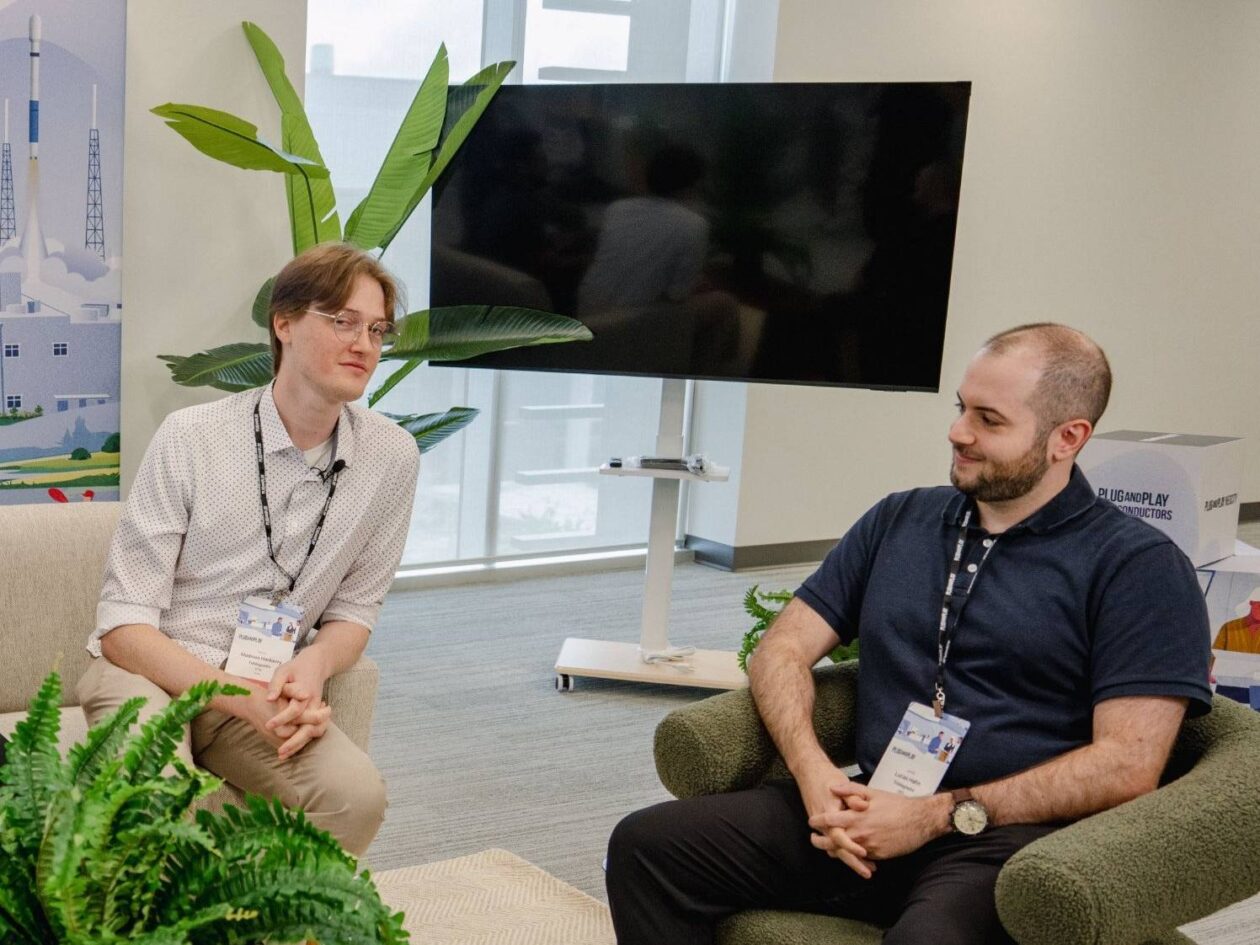
Seattle startup TriMagnetix has secured $1 million to develop semiconductor chips that consume 800 times less energy and are radiation-resistant. The two-person company, leveraging nanomagnetic technology, is targeting space applications and data centers. With new funding and key partnerships, TriMagnetix aims for commercial sales within a year.