
Plants can speak using electricity, so this startup built an AI model
A new frontier in agricultural technology is emerging as Electric Plant, a startup co-founded by Justin Mast and neuroscientist Lee von Kraus, announces an $11.2 million seed funding round to advance its AI-powered

A new frontier in agricultural technology is emerging as Electric Plant, a startup co-founded by Justin Mast and neuroscientist Lee von Kraus, announces an $11.2 million seed funding round to advance its AI-powered system for deciphering plant communication. The company has developed "Bombadil," a large language model designed to interpret the subtle electrical signals within plants, providing real-time insights into their needs and potentially revolutionizing how humans interact with the plant kingdom.
The recent funding round was led by Onto Ventures and Climactic, with notable participation from Ponderosa, Endeavor Catalyst, Ludlow, Michigan Rise, The Fund, Schox VC, and Dug Song. This investment underscores growing confidence in Electric Plant's innovative approach to plant monitoring, which promises to enhance crop yields and promote more sustainable farming practices by reducing resource waste.
The Genesis of a Plant Translator
Electric Plant's journey began with an intriguing scientific discovery that captivated CEO Justin Mast: a houseplant wired to a motorized stand, using electrical signals to move itself closer to a light source. This revelation spurred Mast to explore the concept of plant bioelectricity further, leading him to partner with Lee von Kraus, an expert with experience at DARPA.
For the past three years, the duo has diligently collected vast amounts of data to train Bombadil. This AI model is designed to translate the microvolt changes coursing through a plant's stem into actionable intelligence for growers. The ultimate vision extends beyond monitoring, aiming to enable a form of two-way communication with plants, with listening being the crucial first step.
Unlocking Plant Secrets with AI and Affordable Sensors
Traditional methods for assessing plant health, such as soil probes or satellite imagery, often provide delayed or insufficient information about a plant's immediate requirements. Mast highlights that these existing tools, while sophisticated, still "lag quite a bit behind the real-time needs of the plant." Electric Plant's solution offers a significant improvement by providing instant feedback.
The startup's innovative sensors, roughly the size of a folded iPhone, attach directly to a plant using small stainless steel screws that penetrate the cambium layer. These sensors wirelessly transmit data to a base station, which is then processed by the cloud-based Bombadil model. This system offers a dramatically more affordable alternative to current agricultural monitoring equipment, with Electric Plant's sensors costing "tens of dollars" compared to the thousands typically associated with existing tools.
Broad Applications and Environmental Impact
Bombadil has already demonstrated its versatility by interpreting electrical signals in approximately 125 different plant species, ranging from common tomatoes and dahlias to imposing redwoods and delicate ferns. Mast proudly states that this makes Bombadil "the most diverse model ever created on biological electrical signals," noting that no equivalent currently exists even in the animal kingdom.
While specific initial customers remain undisclosed, the potential applications span vast sectors including agriculture, horticulture, and forestry. By providing growers with precise, real-time data, Electric Plant's system can optimize resource allocation, leading to significant benefits such as increased yields and a reduction in water usage by 20% or more. This capability is critical for addressing global challenges related to food security and environmental sustainability.
As Electric Plant moves forward, its technology holds the promise of fundamentally changing how humanity understands and manages plant life, fostering a deeper connection and more efficient utilization of natural resources. The ability to truly listen to plants could usher in a new era of biological insight and agricultural innovation.
FAQ
Q: How does Electric Plant's technology work?
A: Electric Plant uses small, affordable sensors attached to a plant's stem to detect subtle electrical signals. This data is then wirelessly transmitted to a base station and processed by Bombadil, their proprietary AI model, which interprets the signals to understand the plant's needs.
Q: What is "Bombadil" and what can it do?
A: Bombadil is Electric Plant's large language model, trained to interpret the microvolt electrical changes within plants. It can currently understand the needs of about 125 diverse plant species, relaying information to growers in real-time to help them make informed decisions about watering, nutrients, and light.
Q: What are the main benefits for farmers and growers?
A: By providing real-time insights into plant health and needs, Electric Plant's system can significantly boost crop yields and reduce resource consumption, particularly water usage by 20% or more. This helps farmers optimize their operations, lower costs, and adopt more sustainable practices.
Related articles

AI Model Lock-in? It's Not the Model, It's Everything Else
A recent survey reveals that while swapping AI models is becoming common, the real lock-in risk for enterprises lies in the surrounding infrastructure: integrations, agent workflows, and guardrails. Despite concerns about vendor lock-in, it often ranks lower than immediate priorities like security and cost in AI purchasing decisions. However, multi-model adopters are proactively building open, flexible architectures, demonstrating a path to mitigate future migration headaches.
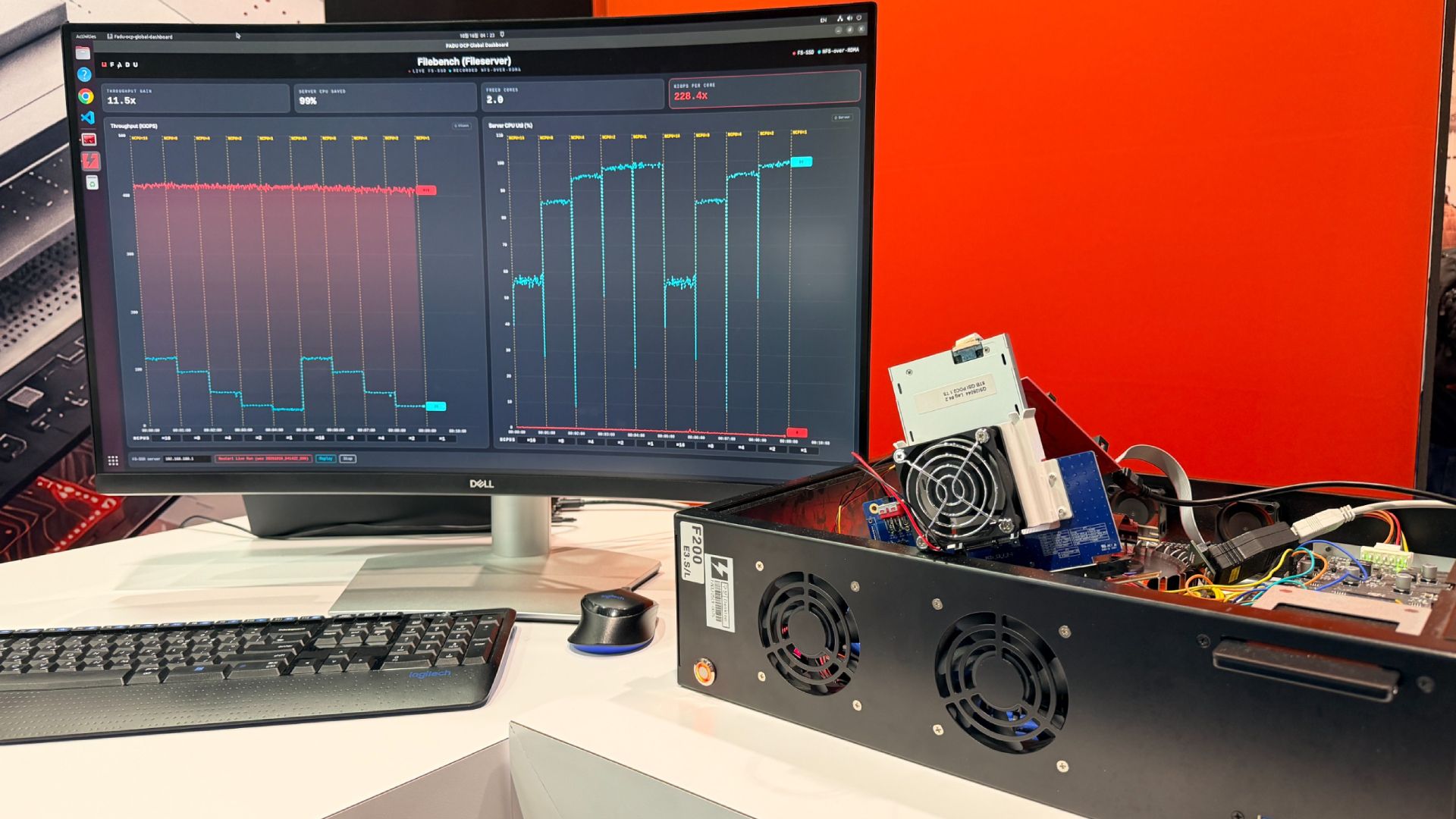
FADU FS-SSD: A Glimpse into the Future of Storage
FADU's File-Semantic SSD moves the filesystem directly into the drive, aiming to dramatically reduce host CPU overhead for file operations, especially for GPUs and DPUs. Promising early results, but a long wait for samples (Q3 2027).

Anthropic Pitches AI Safety Bill: Blocking Models at 50+ Deaths
Anthropic has pitched a draft AI safety bill to Congress that would allow blocking an AI model's release if it poses a "catastrophic risk" – defined as potentially causing over 50 deaths or $1 billion in damages through specific threats. The controversial proposal mandates that federal agencies seek judicial approval to halt a model's distribution, limiting their independent authority. This move comes amid ongoing debates over AI regulation and concerns about agentic hacking.

Google's Personalized Gemini AI Hits Cars, Leveraging User Data
Google is introducing "Personal Intelligence" to Gemini AI in cars, allowing the assistant to leverage user data from Google apps like Gmail, Calendar, and Maps for highly personalized assistance. Rolling out to Android Auto today and to cars with Google built-in soon, this update offers contextual help like checking flight statuses or navigating to appointments. Users must opt-in to enable this feature, and personalized responses only work when a phone is connected, emphasizing user control over privacy.

Black Ops Remaster Boom: Devs Demand Their Share of Legacy Profits
Classic CoD Remasters Make Bank, But Devs Who Built Them See Zero Remember when Call of Duty: Black Ops and Black Ops 2 hit PlayStation 5 earlier this year? For many of us, it was a sudden, glorious blast from the past.

SpaceX's AI Business Fuels Explosive Q3 2026 Revenue Growth
SpaceX reported Q3 2026 revenues of $14.6 billion, a 161% jump, primarily driven by an 830% year-over-year surge in its Super Intelligence (SI) division. This growth was fueled by new cloud services, the Cursor acquisition, and wider Grok AI adoption, alongside robust performance in its Starlink Connectivity business.