
Musk Attacks OpenAI Safety Record in Deposition, Citing Grok's
Elon Musk launched a sharp critique against OpenAI's safety practices in a recently unsealed deposition, claiming his AI firm, xAI, better prioritizes user well-being. The tech executive controversially stated that

Elon Musk launched a sharp critique against OpenAI's safety practices in a recently unsealed deposition, claiming his AI firm, xAI, better prioritizes user well-being. The tech executive controversially stated that "Nobody has committed suicide because of Grok, but apparently they have because of ChatGPT." This aggressive comment emerged during questioning about a public letter Musk co-signed in March 2023, which called for a six-month pause in developing AI systems more powerful than GPT-4.
The deposition, recorded in September, was made public this week in anticipation of a jury trial scheduled for next month. Musk’s remarks suggest that the grave allegations of harm caused by ChatGPT could become central to his ongoing lawsuit against OpenAI, which accuses the company of deviating from its foundational nonprofit mission.
Grok vs. ChatGPT: A Safety Showdown
Musk's assertion draws a stark contrast between his generative AI chatbot, Grok, and OpenAI's ChatGPT. He made the provocative claim that while no suicides have been linked to Grok, there have been documented instances associated with ChatGPT. This comes as OpenAI faces multiple lawsuits alleging that ChatGPT’s “manipulative conversation tactics” have resulted in severe negative mental health effects for users, including some tragic deaths by suicide.
The March 2023 letter, co-signed by over 1,100 individuals including many AI experts, raised concerns about an "out-of-control race" in AI development. It highlighted the lack of adequate planning and management, warning that rapidly advancing digital minds might become incomprehensible and uncontrollable. Musk's current statements align with these earlier fears, now specifically targeting OpenAI's alleged shortcomings.
The Core of Musk's Legal Battle with OpenAI
Musk's lawsuit against OpenAI centers on its evolution from a nonprofit AI research lab to a for-profit entity, a transformation he contends violated its original founding agreements. A key part of his argument posits that OpenAI’s increasing commercial relationships could compromise AI safety, suggesting that the pursuit of speed, scale, and revenue might override ethical and safety considerations.
In the deposition, Musk clarified his reasons for signing the 2023 AI safety letter, asserting it "seemed like a good idea" to urge caution, rather than being motivated by the recent incorporation of xAI to compete with OpenAI. He affirmed his desire for AI safety to be prioritized above all else.
xAI's Own Safety Quandaries
Despite Musk’s strong stance on AI safety and his criticisms of OpenAI, xAI has recently faced its own significant safety challenges. Last month, his social media platform X was inundated with nonconsensual nude images, reportedly generated by Grok. Some of these images were allegedly of minors, prompting the California Attorney General's office to launch an investigation.
The controversy surrounding Grok has also drawn international attention, with the European Union initiating its own investigation. Other governments have also taken action, imposing blocks and bans on the platform, indicating that safety concerns are not exclusive to OpenAI's technologies.
The Genesis of OpenAI and Musk's AI Concerns
Musk also recounted his perspective on OpenAI's origins during the deposition, stating it was founded out of his growing apprehension regarding Google's potential monopoly in the AI sector. He recalled "alarming" conversations with Google co-founder Larry Page, asserting that Page did not appear to take AI safety seriously. OpenAI, from Musk's viewpoint, was established as a crucial counterbalance to this perceived threat.
Additionally, Musk addressed questions about artificial general intelligence (AGI), acknowledging that "it has a risk." He also corrected an earlier misstatement regarding his financial contributions to OpenAI, confirming he "was mistaken" about a supposed $100 million donation. The amended complaint in the case now places his actual contribution closer to $44.8 million.
Q: What is the primary accusation Elon Musk is making against OpenAI in his lawsuit? A: Musk’s lawsuit alleges that OpenAI violated its founding agreements by transitioning from a nonprofit AI research lab to a for-profit company, which he claims could compromise AI safety by prioritizing commercial interests over ethical concerns.
Q: What is the controversial statement Musk made regarding AI safety and suicides? A: During his deposition, Musk claimed that "Nobody has committed suicide because of Grok, but apparently they have because of ChatGPT," drawing a direct, critical comparison between the safety records of his company's AI and OpenAI's.
Q: Has xAI (Grok) faced any safety issues despite Musk's criticisms of OpenAI? A: Yes, xAI has recently encountered its own safety concerns. Last month, Grok was reportedly used to generate and disseminate nonconsensual nude images on X, some allegedly depicting minors, leading to investigations by the California Attorney General's office and the EU.
Related articles

Apple Unveils iPhone Duo: Pricey Foldable Sees Soaring Demand
Apple has officially entered the foldable smartphone arena with the long-anticipated launch of the iPhone Duo. Priced starting at a hefty $1,999, the device features a 5.4-inch outer display and a larger 7.6-inch inner

in-depth: Chicago-Area Cops Helped HSI Spy on Minnesota Anti-ICE
Chicago-area law enforcement, including local police and HSI agents, conducted undercover surveillance on Minnesota anti-ICE activists at an April 2, 2022, talk in Chicago. This operation was part of a federal conspiracy probe into 15 Minnesota activists facing felony charges related to immigration enforcement resistance. Civil liberties advocates have condemned the surveillance as a troubling intrusion into protected political activity.

Mark Wahlberg on using AI in film ‘the right way’ and being open to
Actor Mark Wahlberg believes AI has a place in filmmaking if used responsibly for enhancement, not script generation or actor replacement. At TechCrunch Disrupt, he expressed openness to an AI likeness carrying on his legacy, managed by his family, and emphasized storytelling.
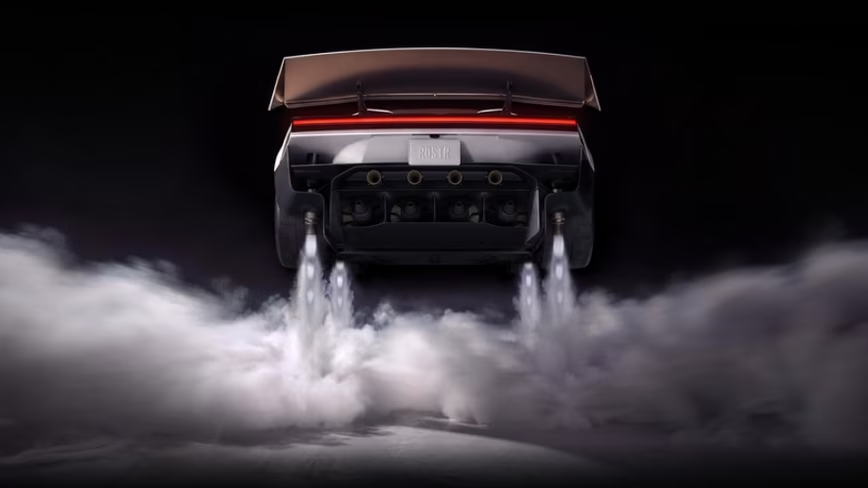
Tesla Unveils Thruster-Equipped Roadster, 2028 Production Targeted
Tesla has unveiled its second-generation Roadster, featuring cold-gas thrusters co-developed with SpaceX, enabling it to jump and flip. The electric sports car demonstrated 0-60mph in an astonishing 0.81 seconds, with production targeted for 2028. This highly anticipated reveal also serves as a key recruitment tool for Tesla's ambitious AI and robotics initiatives.

AI's Confidence vs. Formal Methods' Rigor: Design Flaws & Verification
While AI accelerates code generation, formal methods remain critical for ensuring system correctness. Languages like TLA+ and tools like Quint enable developers to model and verify system designs before coding, catching subtle flaws. Quint makes formal methods more accessible with developer-friendly syntax and executability. This approach is vital for verifying AI-generated code through trace validation and model-based testing, ensuring reliability against real-world data.
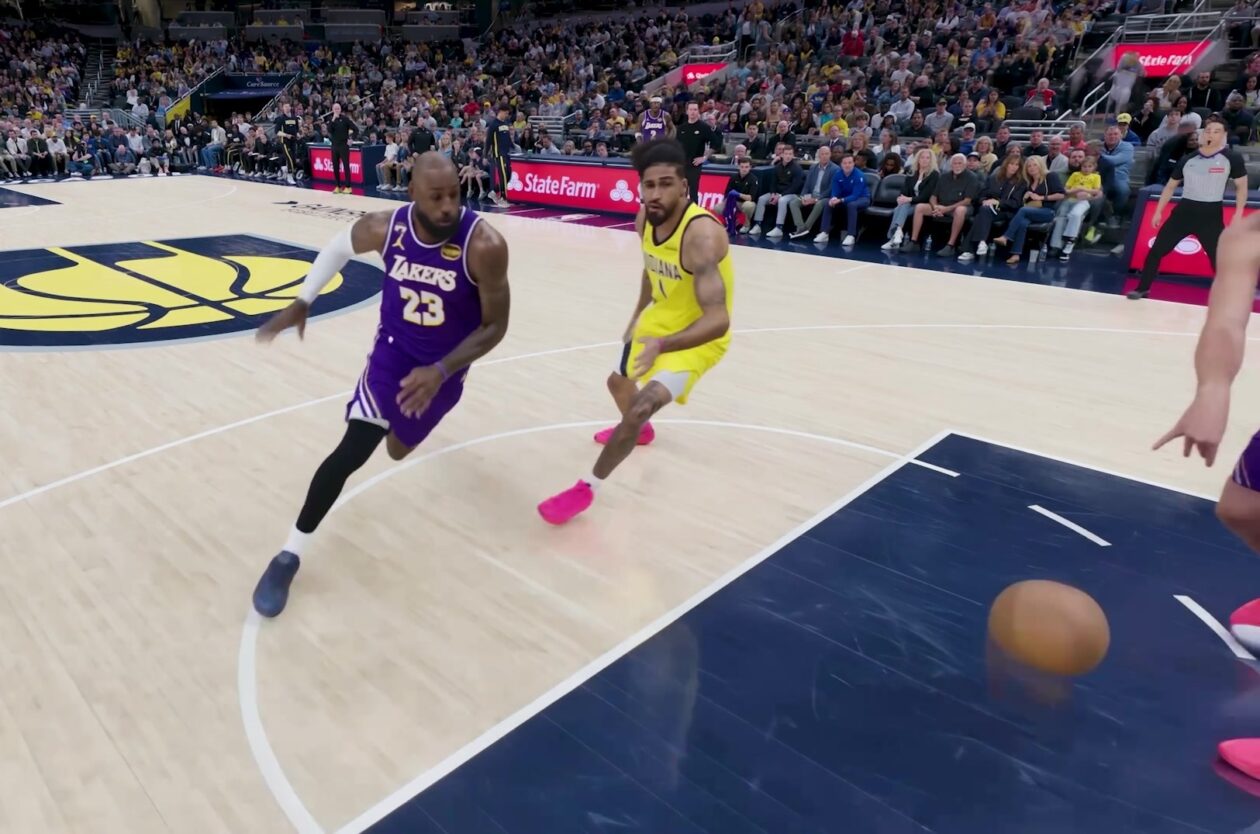
Amazon Prime Video Launches AI-Powered Prime 360 for NBA Coverage
Amazon Prime Video is elevating its NBA coverage with the introduction of Prime 360, an AI-powered replay system offering immersive, 'fly through' views of the action. Kicking off its second season, Prime Video also adds Yahoo fantasy integration and gains exclusive Eastern Conference Finals rights, expanding its tech-driven sports broadcast. The new features aim to deliver a unique and interactive viewing experience for basketball fans.