
Mobile Gaming's AI Leap: Sumo & Arm Forge a "Paradigm Shift
Sumo Digital is partnering with Arm to test groundbreaking AI-powered neural technology for mobile chips, aiming for "PC-quality graphics on mobile." This collaboration could usher in a new era of visually stunning and immersive mobile gaming experiences. Both companies, despite recent challenges, are committed to pushing the boundaries of portable entertainment.
Mobile Gaming's AI Leap: Sumo & Arm Forge a "Paradigm Shift"
Alright, gamers, let's talk about the future of gaming in your pocket. We've all seen mobile games get increasingly impressive over the years, pushing the boundaries of what we thought tiny handheld devices could achieve. But what if I told you a major leap forward, one that promises "PC-quality graphics on mobile," is on the horizon, powered by AI, and being spearheaded by two industry heavyweights? Buckle up, because UK games firm Sumo Digital is teaming up with chip giant Arm to test some truly boundary-pushing neural technology, and it could redefine what we expect from our smartphones and tablets.
Unleashing the Neural Beast: Arm's Vision for Mobile Graphics
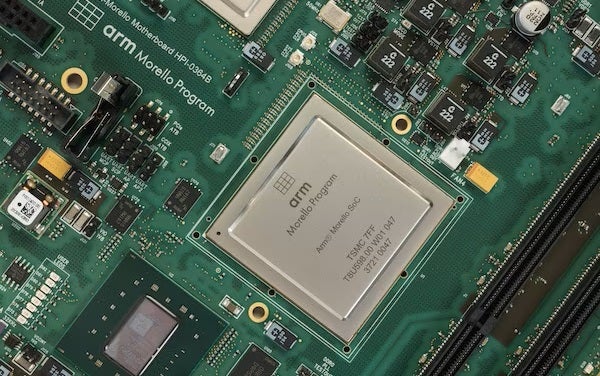
At the heart of this exciting partnership is Arm's in-development neural technology, specifically designed to supercharge mobile gaming. Arm has been working tirelessly on what they call "AI-powered neural accelerators" integrated into their GPUs. The ultimate goal? To bring desktop-tier visual fidelity to the palm of your hand. Think intricate details, dynamic lighting, realistic physics, and complex environments – the kind of stuff you usually only see on high-end gaming rigs – now potentially coming to your phone.
Chris Bergey, the EVP of Arm's Edge AI Business unit, didn't mince words, stating that "Bringing desktop-quality graphics to mobile has been one of the industry's toughest challenges." This isn't just about cranking up the resolution; it's about fundamentally changing how mobile devices process and render graphics, unlocking truly "game-changing, immersive experiences" for players. It’s a bold claim, but if anyone can make it happen, it's Arm, a company whose chip designs power the vast majority of mobile devices worldwide.
Sumo Digital: The Developer's Developer on the Front Lines
So, where does Sumo Digital, known for its extensive portfolio of development services and beloved titles, fit into all this? They're acting as the crucial real-world testbed for Arm's ambitious technology. Sumo Digital's CEO, Gary Dunn, is visibly enthusiastic about the collaboration, calling Arm's neural technology a "paradigm shift for what’s possible with video games on mobile."
Sumo's role is to put this bleeding-edge tech through its paces under actual development conditions, figuring out its capabilities, limitations, and, most importantly, how developers can best harness its power. The studio is actively working on a project to demonstrate these capabilities, with promises of sharing some impressive demos at GDC (Game Developers Conference) this week. This hands-on evaluation by a seasoned studio like Sumo is critical; it’s one thing to have powerful hardware, but another entirely to make it accessible and practical for game creators. As Bergey noted, they're doing "important work to ease the on-ramp for developers so they can push visual quality even further on mobile."
A Glimpse into the AI-Powered Future of Gaming
Imagine firing up your favorite mobile RPG and seeing character models with intricate textures rivaling their console counterparts, or exploring open worlds with draw distances and environmental complexity that genuinely surprise you. That's the promise of this partnership. AI-powered neural accelerators could offload strenuous graphical computations, allowing for more detailed scenes, more sophisticated enemy AI, and smoother frame rates, all while potentially being more power-efficient. This isn't just about prettier games; it's about enabling entirely new types of experiences that were previously confined to more powerful, larger platforms.
For an enthusiast audience like us, this means the lines between dedicated gaming devices and our everyday phones could blur even further. We could see mobile ports of demanding PC titles run with unprecedented fidelity, or entirely new mobile-first IPs that set a new visual standard for the platform. While no specific games or release dates are tied to this technology yet – this is still in the testing phase – the implications for what’s possible are truly exciting.
Navigating Tumultuous Waters: Arm and Sumo's Recent Journeys
It's also worth acknowledging that both Arm and Sumo Digital have navigated some turbulent waters recently, making this forward-looking partnership even more significant. Arm went public in 2023 after a highly publicized attempt by graphics card giant Nvidia to acquire the company fell through. That failed deal, unfortunately, led to nearly a thousand staff losing their jobs. Despite these setbacks, Arm's commitment to innovation, as evidenced by this neural technology, remains undimmed.
Sumo Digital has similarly seen its share of changes. Acquired by Chinese tech and entertainment behemoth Tencent in 2021, the company has recently streamlined its operations, divesting several subsidiaries including The Chinese Room, publisher Secret Mode, Auroch Digital, and the Polish arm of PixelAnt. The studio also saw its founders depart, with Gary Dunn and Andy Stewart stepping in as co-CEOs, and recently announced another round of redundancies. This period of strategic recalibration seemingly involved a renewed focus on its "development services" business. While Dunn clarifies they still pursue original IP and make full games (mentioning titles like Nutmeg! and Tabitha for Secret Mode, and other large projects), this partnership with Arm perfectly aligns with Sumo's strength as a premier development partner, helping to shape the future of game creation for the wider industry.
What Does This Mean for Us, the Players?
So, what does all this tech talk really boil down to for you, the player? It means hope for a future where the mobile device you already carry can deliver gaming experiences that genuinely impress, rather than just serving as a time-killer. It means potentially seeing your favorite franchises, or exciting new IPs, rendered with detail and immersion previously unimaginable on a phone. It means less graphical compromise and more jaw-dropping moments.
While it’s still early days – remember, this is about evaluating and developing the foundation for future games – the collaboration between Arm’s hardware innovation and Sumo’s development expertise is a powerful one. It suggests a future where the only limit to mobile gaming's visual fidelity is the imagination of developers, rather than the constraints of the hardware. The road to "PC-quality graphics on mobile" is long, but with partnerships like this, the destination feels closer than ever.
FAQ
Q: What is Arm's new neural technology?
A: Arm's neural technology refers to AI-powered neural accelerators built into their GPUs, designed to significantly boost graphical performance and enable "PC-quality graphics on mobile" devices.
Q: What is Sumo Digital's specific role in this partnership?
A: Sumo Digital is partnering with Arm to evaluate this new neural technology in real-world development conditions. They are working on a project to demonstrate its capabilities and plan to share demos at GDC.
Q: Does this mean mobile games will look exactly like high-end PC games soon?
A: The goal is to bring "PC-quality graphics" to mobile, unlocking more immersive and visually stunning experiences. While the exact parity will depend on various factors, this technology aims to significantly close the visual gap between mobile and PC gaming, pushing the boundaries of what's currently possible on handheld devices.
Related articles

The Party's Back! Tales from '85 Unleashes Season 2 on Netflix
Stranger Things: Tales from '85, the animated spin-off, returns to Netflix on September 17th with 10 new episodes. Set between seasons 2 and 3 of the original live-action series, Season 2 sees The Party facing ghostly apparitions and strange creatures around Valentine's Day. While it received mixed reactions initially, it retains the 80s vibe and core characters.

Seattle Warned on Big Tech Reliance; Microsoft/OpenAI Sued; Apple's
A new City of Seattle study warns of the city's risky economic over-reliance on a few dominant tech companies. Simultaneously, the Seattle Times and Newsday are suing Microsoft and OpenAI for alleged AI training data theft, while Apple's new foldable iPhone Duo evokes memories of Microsoft's defunct Surface Duo.
Google's AI Branding Fix: A Clearer Vision for Gemini
This article critiques Google's fragmented AI branding, proposing a unified 'Gemini Intelligence' system to simplify user experience and strengthen Gemini's identity.

Chuwi UniBox AI495 Pro Review: A Mini AI Powerhouse
Chuwi's UniBox AI495 Pro review: A powerful mini workstation with 192GB RAM and an AMD Ryzen AI chip for local LLM processing, packed into a compact, Mac Pro-esque design.

Blood of The Dawnwalker’s True Foes Lurk in the Wilds
_Blood of The Dawnwalker_ from Rebel Wolves is an RPG that unexpectedly challenges players with fierce wildlife, drawing comparisons to _Dragon Age: Inquisition_'s early zones. Its unique directional combat system, while engaging, can lead to players being overwhelmed by animal ambushes. Despite the high difficulty, these encounters add a fun, dynamic layer to the game.

Nscale Adds Former OpenAI Exec Fidji Simo to Board Ahead of IPO
Nscale, the U.K.-based AI data center startup, has appointed former OpenAI, Meta, and Instacart executive Fidji Simo to its board of directors. This high-profile addition comes as Nscale prepares for a potential IPO this fall, leveraging Simo's extensive experience in scaling major tech platforms and guiding a company through a successful public offering.