
Microsoft's Phi-4 Vision AI Learns When to Think, When to React
Microsoft has launched Phi-4-reasoning-vision-15B, a compact multimodal AI that intelligently decides when to apply complex reasoning and when to respond directly. This open-weight model matches larger systems' performance with significantly less data, signaling a shift toward efficient, practical AI deployment across various applications.

Microsoft has unveiled Phi-4-reasoning-vision-15B, a compact, open-weight multimodal AI model designed to intelligently determine when to engage in complex reasoning and when to deliver immediate responses. Released on Tuesday, this 15-billion-parameter model processes both images and text, demonstrating performance comparable to systems many times its size while demanding significantly less compute and training data. This strategic launch underscores Microsoft's commitment to developing efficient, smaller AI models capable of tackling real-world deployment challenges where larger, more resource-intensive systems prove impractical.
Efficiency Through Meticulous Data Curation
A core differentiator for Phi-4-reasoning-vision-15B is its remarkable training efficiency. The model was trained on approximately 200 billion tokens of multimodal data, a stark contrast to rival models consuming over a trillion tokens. This substantial reduction translates directly into lower training costs and a smaller environmental footprint. Microsoft attributes this efficiency to meticulous data curation, including rigorous filtering of open-source datasets, integration of high-quality internal data, and strategic acquisitions. Manual review by human experts and leveraging GPT-4o for response regeneration ensured a pristine training environment, even correcting errors prevalent in widely used open-source datasets.
The Innovation of Mixed Reasoning
The model’s most innovative feature is its "mixed reasoning" approach. While traditional reasoning models dedicate extra compute to step-by-step problem-solving, this can hinder straightforward visual tasks like image captioning. Microsoft's solution involved training Phi-4-reasoning-vision-15B on a hybrid dataset: 20% of samples included explicit chain-of-thought reasoning, while 80% were marked for direct responses. This enables the model to intelligently adapt its processing, engaging in structured reasoning for complex problems like math and science, but defaulting to swift answers for perception-focused tasks. Users can override this behavior by explicitly prompting with specific tokens.
Powering Practical Vision Applications
Underpinning its capabilities is a mid-fusion architecture, combining a SigLIP-2 vision encoder with the Phi-4-Reasoning language backbone, prioritizing efficiency. Crucially, dynamic resolution encoders, particularly the SigLIP-2 Naflex variant, enable it to excel at understanding high-resolution images, like 720p screenshots. This fine-grained visual understanding is vital for powering computer-using agents, allowing the model to accurately identify and localize interactive elements on screens. Its low inference-time requirements make it ideal for interactive environments and autonomous software agents, positioning it as a key enabler for future AI deployment.
Performance and the Expanding Phi Ecosystem
Benchmark evaluations position Phi-4-reasoning-vision-15B as a highly efficient performer. While its raw accuracy on certain benchmarks may not consistently surpass the largest rival models, it delivers competitive results in a fraction of the time and at a significantly lower computational cost. This places it on the "Pareto frontier" for models balancing speed and accuracy, appealing to cost-conscious deployments. The model is the latest addition to Microsoft's rapidly expanding Phi family, which includes Phi-4 for language, Phi Silica for on-device inference, and Rho-alpha, Microsoft's first robotics model, extending AI into physical world control.
Implications for Enterprise AI
The release of Phi-4-reasoning-vision-15B signals a pivotal shift in the AI industry's focus. Microsoft's Phi series champions the counter-narrative that intelligent engineering and data quality can mitigate the need for brute-force scale. This has profound implications for enterprises facing tight latency budgets, finite hardware, or compounding API call costs, as a smaller, efficient model achieving comparable performance can unlock previously uneconomical use cases. Microsoft's decision to release the model as open-weight, with fine-tuning code and benchmark logs, is also a calculated competitive move to foster an open ecosystem integrating with Azure and its broader enterprise software stack.
Challenges and Future Outlook
Despite its strengths, Phi-4-reasoning-vision-15B does have areas for further development. It still trails the largest models on the most challenging benchmarks in advanced mathematical reasoning and general multimodal understanding. The 20/80 reasoning-to-non-reasoning data split is a heuristic, and the model's inherent ability to discern when to invoke deep reasoning versus a direct response remains an "open problem." While Microsoft has committed to transparency by releasing self-evaluated benchmarks and logs, independent reproduction and verification will be crucial to solidify its claims. Ultimately, its success will hinge on real-world utility as developers integrate it into practical applications, proving that intelligent efficiency can indeed outperform sheer scale.
FAQ
Q: What makes Phi-4-reasoning-vision-15B unique compared to other AI models? A: Its distinctiveness lies in its efficiency and "mixed reasoning" capability. It's a compact 15-billion-parameter model that achieves performance competitive with much larger systems but uses significantly less training data and compute. It intelligently decides whether to engage in complex, step-by-step reasoning for tasks like math and science, or provide quick, direct answers for simpler visual tasks like image captioning, optimizing both accuracy and speed.
Q: Where can developers access Phi-4-reasoning-vision-15B? A: Microsoft has made the model openly available immediately. Developers can access it through Microsoft Foundry, HuggingFace, and GitHub under a permissive license, facilitating its integration into a wide range of applications and research projects.
Q: What are some potential real-world applications for this model? A: Given its efficiency and ability to interpret high-resolution visual data, Phi-4-reasoning-vision-15B is well-suited for various practical applications. These include powering computer-using agents that navigate graphical user interfaces, automating tasks on edge devices, enhancing interactive applications requiring low latency, and even contributing to advanced robotics for bimanual manipulation and humanoid systems.
Related articles

Apple Unveils iPhone Duo: Pricey Foldable Sees Soaring Demand
Apple has officially entered the foldable smartphone arena with the long-anticipated launch of the iPhone Duo. Priced starting at a hefty $1,999, the device features a 5.4-inch outer display and a larger 7.6-inch inner

in-depth: Chicago-Area Cops Helped HSI Spy on Minnesota Anti-ICE
Chicago-area law enforcement, including local police and HSI agents, conducted undercover surveillance on Minnesota anti-ICE activists at an April 2, 2022, talk in Chicago. This operation was part of a federal conspiracy probe into 15 Minnesota activists facing felony charges related to immigration enforcement resistance. Civil liberties advocates have condemned the surveillance as a troubling intrusion into protected political activity.

Mark Wahlberg on using AI in film ‘the right way’ and being open to
Actor Mark Wahlberg believes AI has a place in filmmaking if used responsibly for enhancement, not script generation or actor replacement. At TechCrunch Disrupt, he expressed openness to an AI likeness carrying on his legacy, managed by his family, and emphasized storytelling.
Tesla Unveils Thruster-Equipped Roadster, 2028 Production Targeted
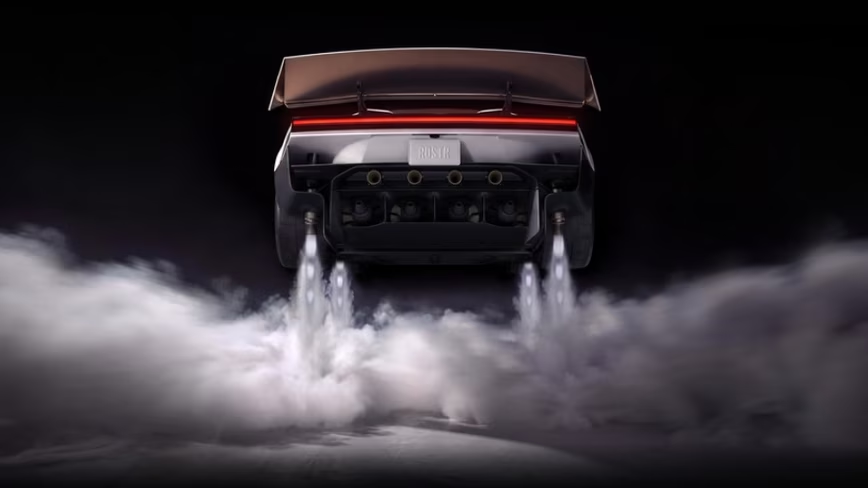
Tesla has unveiled its second-generation Roadster, featuring cold-gas thrusters co-developed with SpaceX, enabling it to jump and flip. The electric sports car demonstrated 0-60mph in an astonishing 0.81 seconds, with production targeted for 2028. This highly anticipated reveal also serves as a key recruitment tool for Tesla's ambitious AI and robotics initiatives.
Amazon Prime Video Launches AI-Powered Prime 360 for NBA Coverage
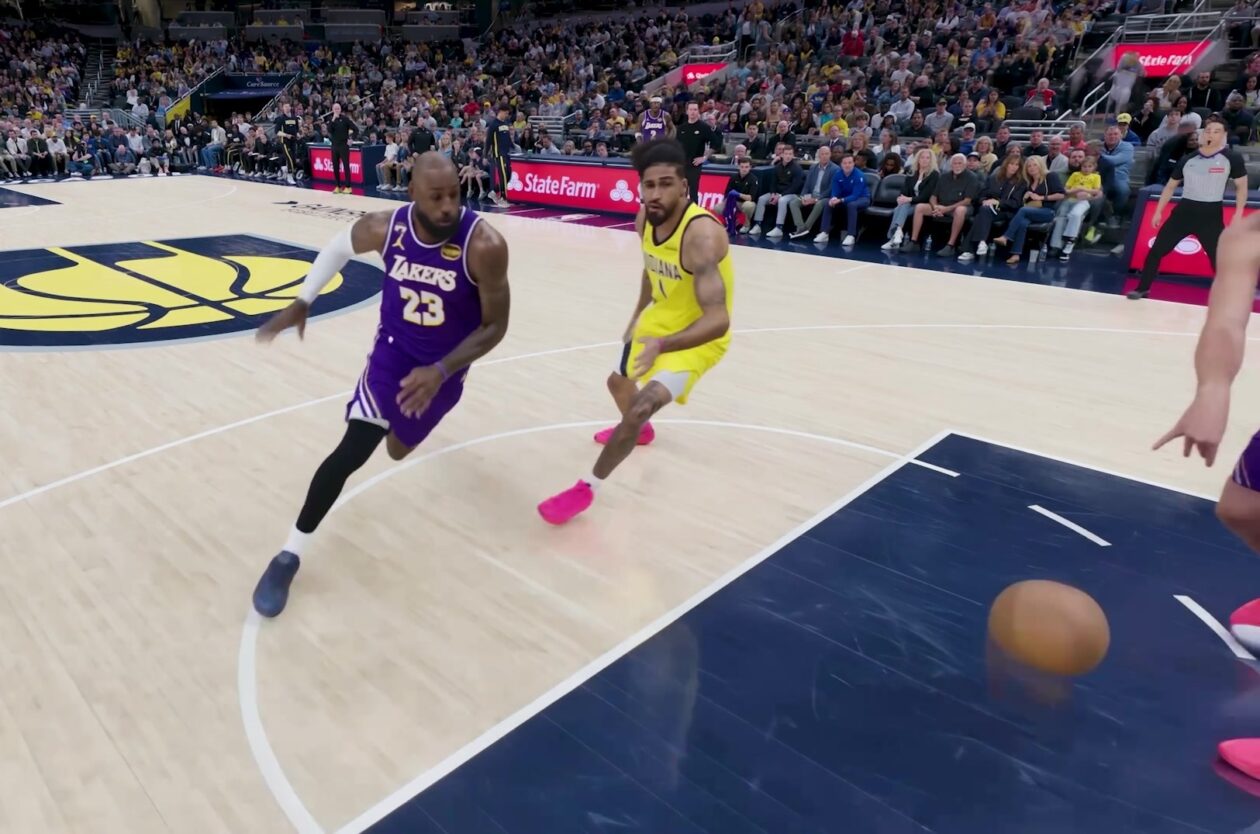
Amazon Prime Video is elevating its NBA coverage with the introduction of Prime 360, an AI-powered replay system offering immersive, 'fly through' views of the action. Kicking off its second season, Prime Video also adds Yahoo fantasy integration and gains exclusive Eastern Conference Finals rights, expanding its tech-driven sports broadcast. The new features aim to deliver a unique and interactive viewing experience for basketball fans.
regional: A two-person Seattle startup lands $1M to reinvent
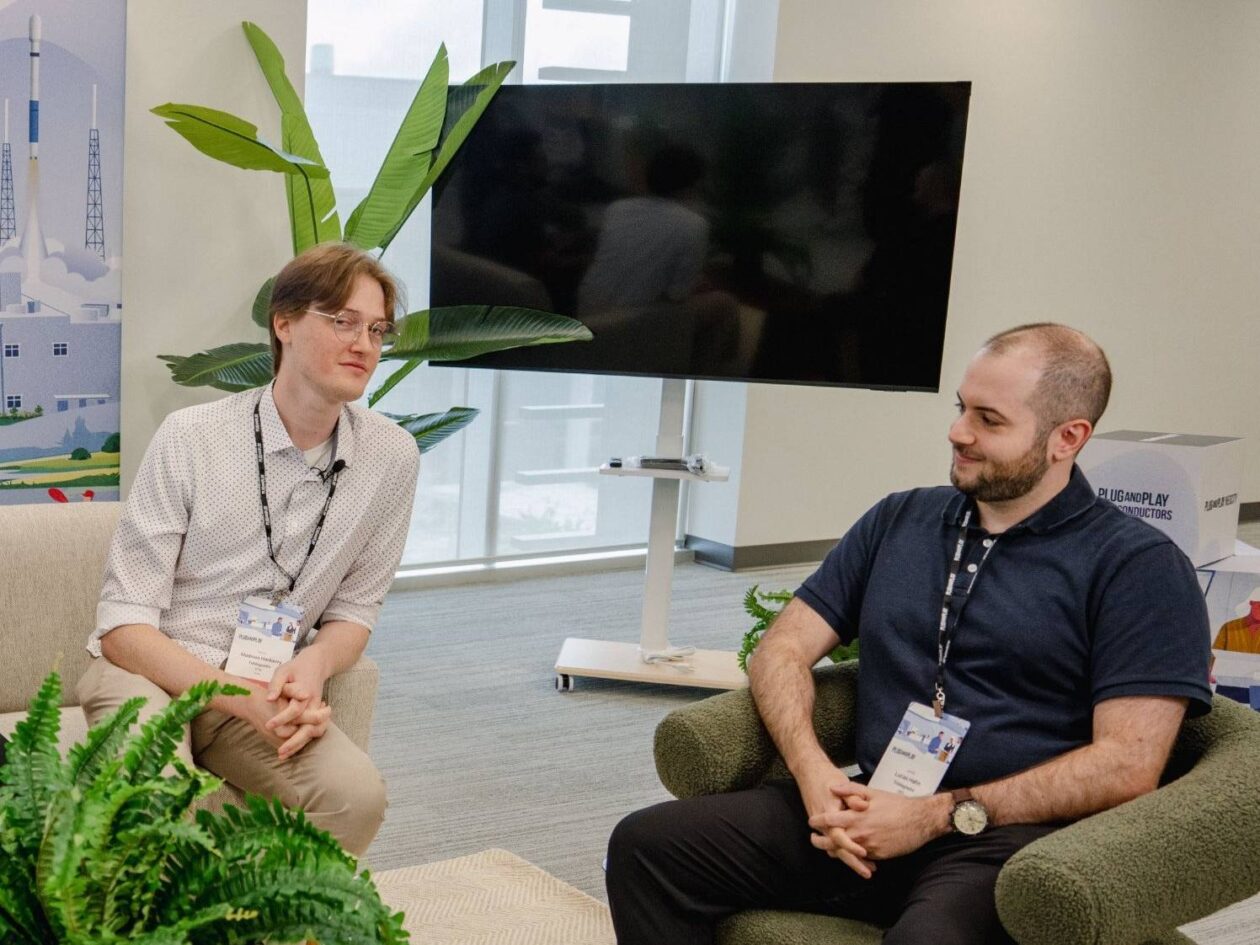
Seattle startup TriMagnetix has secured $1 million to develop semiconductor chips that consume 800 times less energy and are radiation-resistant. The two-person company, leveraging nanomagnetic technology, is targeting space applications and data centers. With new funding and key partnerships, TriMagnetix aims for commercial sales within a year.