
Lace Secures $40M to Revolutionize Chip-Making with Helium Atoms
Norwegian startup Lace has secured $40 million in Series A funding to advance its groundbreaking chip-making technology. The company plans to replace traditional light-based lithography with helium atom beams, promising chip features up to ten times smaller than current capabilities. This investment, led by Atomico and including Microsoft's M12, highlights a strategic push to diversify the semiconductor supply chain and meet growing AI demand.
In a significant move poised to disrupt the semiconductor industry, Norwegian startup Lace has announced a successful $40 million Series A funding round. The Bergen-based company is developing a groundbreaking lithography technology that employs helium atoms instead of light to etch chip patterns, promising features up to ten times smaller than current industry standards.
The Series A investment was led by European venture capital firm Atomico, with notable participation from Microsoft’s venture arm M12, Linse Capital, Norwegian state climate investment company Nysnø, and the Spanish Society for Technological Transformation. This substantial backing underscores the strategic importance and potential of Lace’s innovative approach to chip manufacturing.
Challenging the Lithography Landscape
The global semiconductor industry heavily relies on extreme ultraviolet (EUV) lithography systems, predominantly manufactured by Dutch giant ASML. These highly advanced machines, costing upwards of $350 million each, utilize light with a 13.5 nanometer wavelength to define chip circuits, forming the bedrock of modern AI hardware. ASML currently holds a near-monopoly on these critical systems.
Lace aims to introduce a credible alternative. Founded in July 2023 by physicist Bodil Holst and her former PhD student Adria Salvador Palau, the company’s technology harnesses a beam of helium atoms. This atomic beam is approximately 0.1 nanometers wide—roughly the size of a single hydrogen atom—making it about 135 times finer than ASML’s EUV light. If successfully scaled for manufacturing, this could enable transistors and other structures at what Holst terms “ultimately atomic resolution.”
Scientific Foundations and Future Outlook
Bodil Holst, a Danish-Norwegian physicist who joined the University of Bergen in 2007, built her research career on nanoscale imaging, molecular-beam lithography, and 2D materials. She continues to hold an affiliated professorship at the university while serving as Lace's CEO. CTO Adria Salvador Palau completed his PhD under Holst at Bergen and now operates from Barcelona.
Prior to its Series A, Lace received pre-seed investments from the European Innovation Council and Innovasjon Norge, Norway’s national innovation agency. The company has already developed prototype systems and publicly shared its research findings at a scientific lithography summit in February 2026. Looking ahead, Lace targets the deployment of a test tool in a pilot chip fabrication plant around 2029, marking a crucial step towards commercialization.
Geopolitical and Strategic Significance
Lace’s emergence comes at a time when governments and investors are prioritizing diversification in the semiconductor supply chain. This push is driven by increasing geopolitical tensions, particularly concerning export controls on advanced lithography equipment to China, and the burgeoning demand for chips fueled by artificial intelligence advancements.
ASML's dominant position, while technically impressive, has become a politically sensitive flashpoint in the broader technological competition between global powers. A viable alternative to EUV, even one a decade away from full commercial deployment, holds substantial strategic value. The diverse investor syndicate, including a European VC, a Norwegian state fund, and a Spanish government-affiliated investor, suggests that Lace is being supported as much for its geopolitical optionality as for its long-term commercial potential, aiming to introduce competition and resilience into the global chip ecosystem.
FAQ
Q: What is Lace's core technology for chip manufacturing?
A: Lace's core technology involves using a beam of helium atoms, rather than light, to etch patterns onto chips, enabling significantly smaller and more precise features.
Q: How much finer can Lace's technology make chip features compared to current methods?
A: Lace's technology is designed to create chip features up to ten times smaller than what current extreme ultraviolet (EUV) lithography systems can achieve.
Q: Who were the key investors in Lace's $40 million Series A funding round?
A: The Series A round was led by Atomico, with participation from Microsoft’s M12, Linse Capital, Nysnø (a Norwegian state climate investment company), and the Spanish Society for Technological Transformation.
Related articles

Apple Unveils iPhone Duo: Pricey Foldable Sees Soaring Demand
Apple has officially entered the foldable smartphone arena with the long-anticipated launch of the iPhone Duo. Priced starting at a hefty $1,999, the device features a 5.4-inch outer display and a larger 7.6-inch inner

in-depth: Chicago-Area Cops Helped HSI Spy on Minnesota Anti-ICE
Chicago-area law enforcement, including local police and HSI agents, conducted undercover surveillance on Minnesota anti-ICE activists at an April 2, 2022, talk in Chicago. This operation was part of a federal conspiracy probe into 15 Minnesota activists facing felony charges related to immigration enforcement resistance. Civil liberties advocates have condemned the surveillance as a troubling intrusion into protected political activity.

Mark Wahlberg on using AI in film ‘the right way’ and being open to
Actor Mark Wahlberg believes AI has a place in filmmaking if used responsibly for enhancement, not script generation or actor replacement. At TechCrunch Disrupt, he expressed openness to an AI likeness carrying on his legacy, managed by his family, and emphasized storytelling.
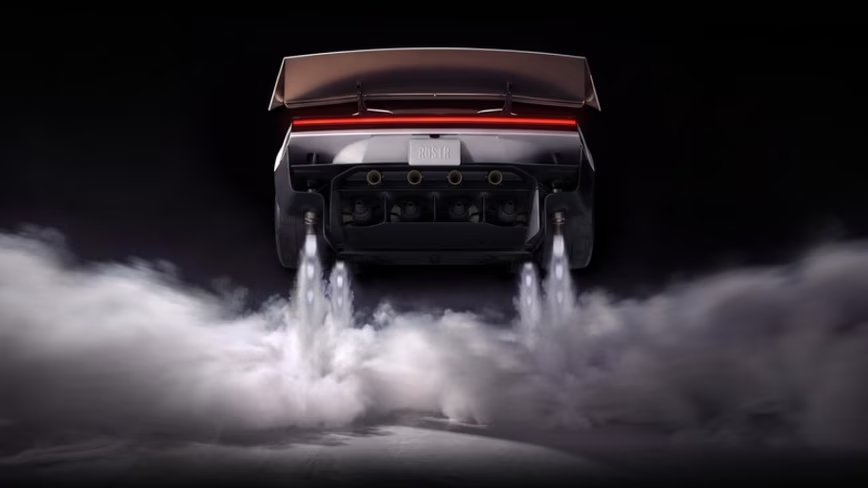
Tesla Unveils Thruster-Equipped Roadster, 2028 Production Targeted
Tesla has unveiled its second-generation Roadster, featuring cold-gas thrusters co-developed with SpaceX, enabling it to jump and flip. The electric sports car demonstrated 0-60mph in an astonishing 0.81 seconds, with production targeted for 2028. This highly anticipated reveal also serves as a key recruitment tool for Tesla's ambitious AI and robotics initiatives.
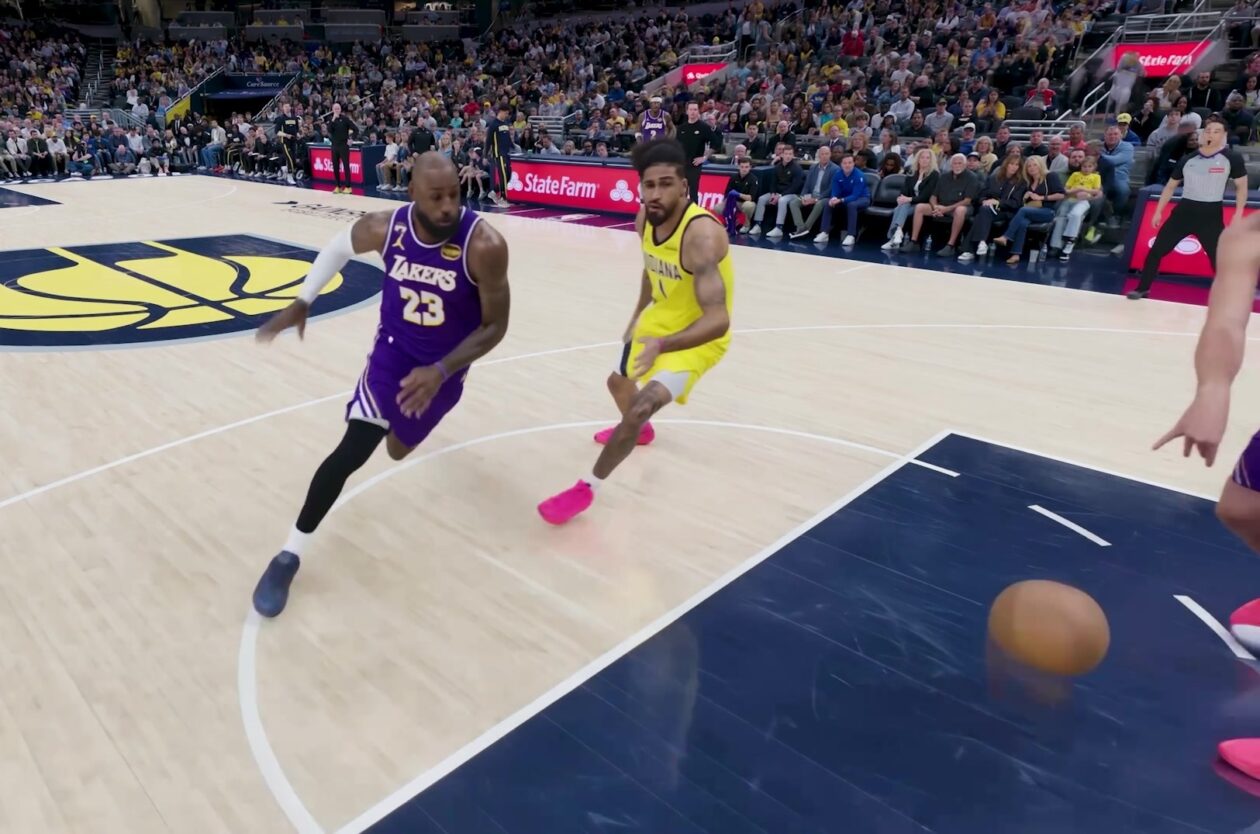
Amazon Prime Video Launches AI-Powered Prime 360 for NBA Coverage
Amazon Prime Video is elevating its NBA coverage with the introduction of Prime 360, an AI-powered replay system offering immersive, 'fly through' views of the action. Kicking off its second season, Prime Video also adds Yahoo fantasy integration and gains exclusive Eastern Conference Finals rights, expanding its tech-driven sports broadcast. The new features aim to deliver a unique and interactive viewing experience for basketball fans.
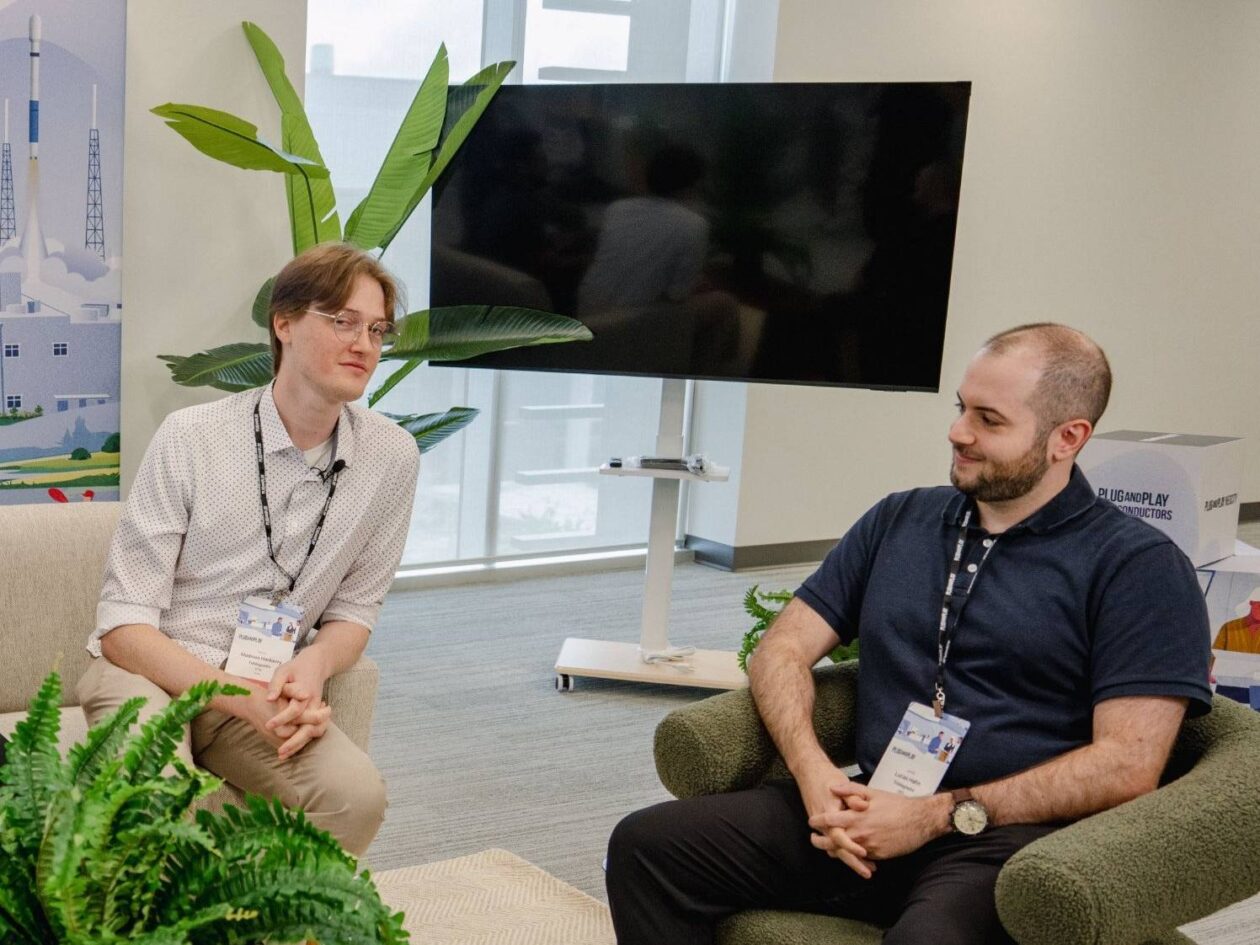
regional: A two-person Seattle startup lands $1M to reinvent
Seattle startup TriMagnetix has secured $1 million to develop semiconductor chips that consume 800 times less energy and are radiation-resistant. The two-person company, leveraging nanomagnetic technology, is targeting space applications and data centers. With new funding and key partnerships, TriMagnetix aims for commercial sales within a year.