
How to Understand Why the Steam Deck's GPU is Falling Behind
The Valve Steam Deck revolutionized portable PC gaming, bringing a vast library of games to your hands. However, technology moves fast, and even great designs can show their age. This guide will help you understand why
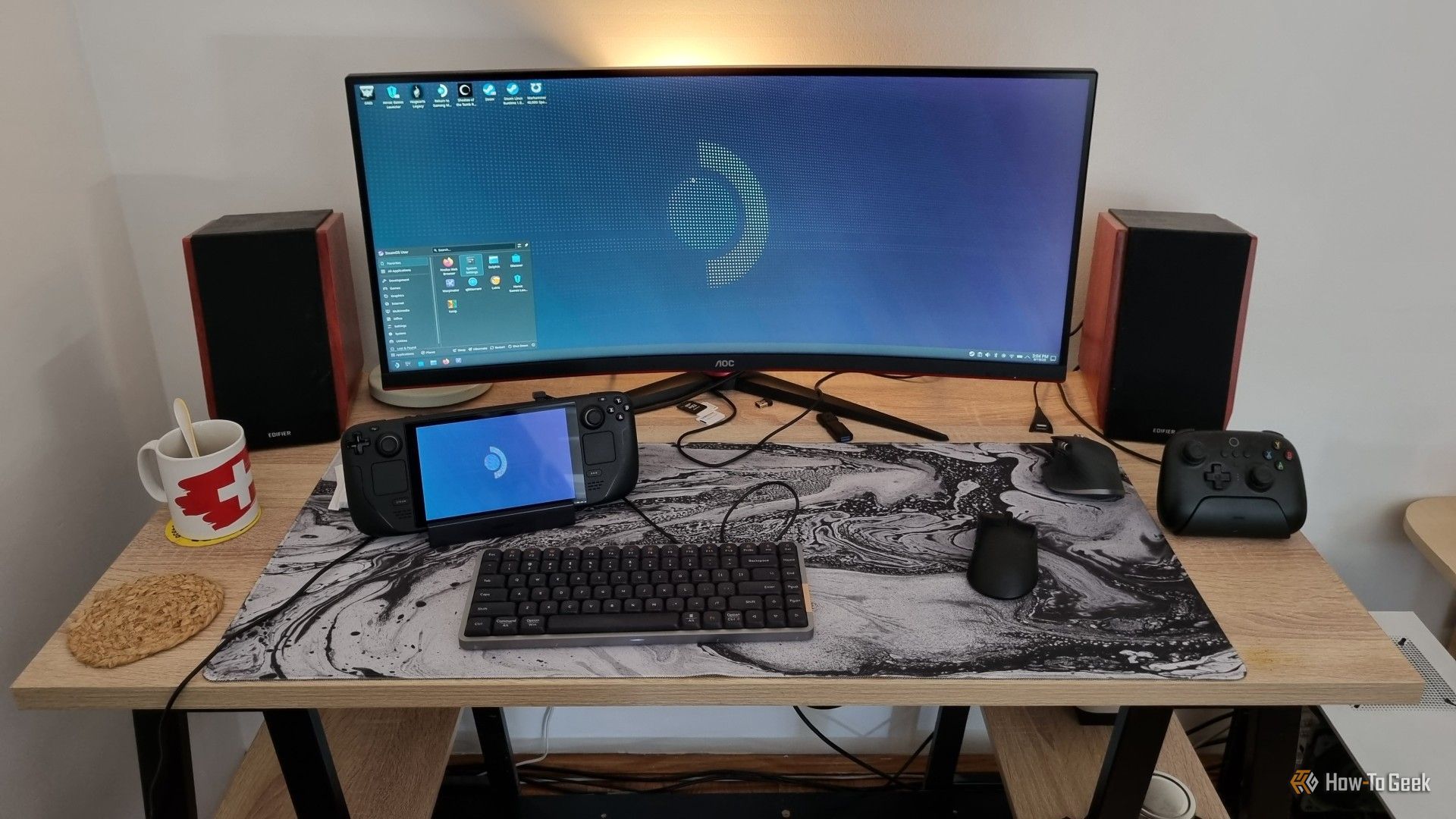
The Valve Steam Deck revolutionized portable PC gaming, bringing a vast library of games to your hands. However, technology moves fast, and even great designs can show their age. This guide will help you understand why the Steam Deck's GPU, while a thoughtful choice at launch, is now considered by many to be outdated, using comparisons to newer handhelds and even affordable mini PCs to illustrate the shift in performance.
By the end of this guide, you'll have a clear picture of the Steam Deck's GPU capabilities in today's landscape, recognize the benchmarks set by more recent hardware, and understand Valve's potential direction for a future Steam Deck 2.
Prerequisites
Before you begin, ensure you have:
- An interest in handheld gaming devices, particularly the Steam Deck.
- A basic familiarity with gaming hardware concepts like GPUs and performance.
- Curiosity about how current technology stacks up against established devices.
Step 1: Reflecting on the Steam Deck's Original Vision
When Valve launched the Steam Deck in 2022, it wasn't designed to be a bleeding-edge powerhouse. Instead, it was a carefully engineered device, balancing crucial factors like performance, power efficiency, and cost. This deliberate approach created a machine that was almost perfectly suited for its intended purpose at the time.
However, even at its release, the GPU, internally codenamed "Aerith," was noted as being quite "borderline" in terms of raw power. While it capably handled most games available at its launch, the increasing demands of newer game releases have since made the gaming experience range from "unpleasant to impossible" for many titles.
Tip: Understanding Valve's Design Philosophy
Remember that Valve's initial goal was accessibility and a balanced experience, not maximum raw power. This context is vital when evaluating its current standing. Even the Steam Deck OLED, released later, focused on refining the display and other features while retaining the original GPU design, underscoring Valve's long-term strategy for the initial platform.
Step 2: Observing the Performance Gap with Newer Handhelds
The landscape of handheld PCs has evolved rapidly since the Steam Deck's debut. While many newer handhelds offer significantly more GPU performance, they often come with a much higher price tag.
One key point of comparison is the Nintendo Switch 2. Despite being a different class of device, its arrival highlights the Steam Deck's limitations. For users who owned more powerful handhelds like the Lenovo Legion Go, the Switch 2 offered a better overall experience for shared games, being thinner, lighter, and often more enjoyable to use. This is particularly noticeable with features like DLSS on the Switch 2, which can provide significant performance benefits. This comparison emphasizes that raw power isn't the only metric; the overall user experience and feature set (like DLSS) also play a crucial role.
Clarification: Battery Life and Efficiency
While newer systems often boast higher performance, achieving usable battery life on these devices often requires limiting them to a 15W (or lower) power consumption window, a testament to Valve's foresight in optimizing the Steam Deck. Some newer systems compensate with enormous battery capacities, but there are practical limits to this approach.
Step 3: The Mini PC Perspective - A Striking Comparison
Perhaps the most telling indicator of the Steam Deck's GPU aging comes from the world of budget-friendly mini PCs. Consider a device like the GMKtec NucBox K12. While not a portable handheld, its internal components offer a stark contrast.
The K12, for example, comes with a Radeon 780M integrated GPU. This GPU, released in 2023, offers nearly twice the raw performance of the "Aerith" GPU found in the Steam Deck. What's more, a 32GB K12 model can be found at a price point comparable to a 512GB Steam Deck OLED (though with half the RAM on the Deck). This comparison, despite the difference in form factor, vividly illustrates how quickly a common integrated GPU in an entry-level PC can now outperform the Steam Deck's custom silicon.
Understanding the Comparison
It's crucial to understand that a mini PC isn't a direct replacement for a Steam Deck; they serve different purposes. The comparison is solely to highlight the significant advancement in integrated GPU technology over a relatively short period. The fact that a GPU from 2023, now found in sub-$1000 mini PCs, can deliver such a performance leap underscores how much the technology has progressed.
Step 4: Anticipating the Steam Deck 2 - A Generational Leap
Valve has openly stated that it's not rushing the development of a Steam Deck 2, viewing the original as a foundational template for the handheld PC market. However, they've also indicated that a second-generation device would need to represent a "generational leap" in performance.
This implies a significant jump, potentially a tripling of performance at a given wattage. Rumors suggest a potential "Gainsborough" GPU, possibly a 12CU RDNA 4 unit, which could offer substantially more power than even the Radeon 780M seen in mini PCs. Such an upgrade would also ideally provide a much larger performance difference when the device is plugged in versus running on battery, similar to how the Switch 2 reportedly gets a massive boost when docked.
Tip: Setting Expectations for Future Releases
While the current Steam Deck remains capable for indie games and older AAA titles from the PS4 era, its GPU now makes it feel somewhat "retro" for the latest releases. The expectation for a Steam Deck 2 is not just an incremental update but a substantial performance jump to stay relevant with rapidly evolving gaming graphics and processing demands.
Next Steps
Understanding the current state of the Steam Deck's GPU provides valuable context for both current owners and those anticipating future handheld innovations. While the Steam Deck remains a beloved device, the rapid pace of technological advancement, especially in integrated graphics, clearly demonstrates the need for a significant upgrade in a potential Steam Deck 2. Keep an eye on industry developments and Valve's announcements for what the next generation of portable PC gaming might hold.
FAQ
Q: Is my Steam Deck still good for gaming?
A: Yes, absolutely! The Steam Deck is still excellent for playing indie games and older AAA titles, particularly those from the PlayStation 4 era. Its GPU, while showing its age against newer hardware, was optimized for a vast library of games that remain highly enjoyable on the platform.
Q: Why did Valve keep the same GPU design for the Steam Deck OLED?
A: Valve's strategy with the OLED model was to refine the existing platform, focusing on significant display improvements (like the OLED screen) and other quality-of-life enhancements, rather than a full performance overhaul. This allowed them to offer an improved user experience without the higher cost and development time associated with a completely new generational GPU leap.
Q: Does a mini PC truly prove the Steam Deck's GPU is outdated?
A: While a mini PC like the GMKtec NucBox K12 isn't a direct competitor due to its lack of portability, its integrated GPU (Radeon 780M) offering nearly double the raw performance at a comparable price point (considering specifications) serves as a strong illustration of how much integrated graphics technology has advanced in a short time. This comparison highlights the significant performance gap that has emerged.
Related articles

TCG Pocket Responds: A Much-Needed Pace Shift for Pokémon Fans
Pokémon TCG Pocket is rolling out a major update for its second anniversary, primarily addressing player concerns about overwhelming content releases by shifting to a six-week set schedule. This aims to curb player decline and improve overall engagement by giving trainers more time to collect and strategize. The update also adds new collection methods, improved deck-building features, and enhanced trading functionality.

Ditch Merge & Center: The Better Way to Align Text in Excel
Learn to use Excel's "Center Across Selection" to align text across cells without merging, avoiding common data manipulation issues. This guide provides steps to utilize this newly accessible feature and add it to your Quick Access Toolbar.

Stop Android Auto Battery Drain: Essential Features to Disable and
Android Auto offers unparalleled convenience, bringing your phone's most useful features directly to your car's display. From navigation and calls to messages and music, it keeps you connected without distracting you

Turn Your Android Phone into a Powerful Desktop Replacement
Learn how to transform your Android phone into a full-fledged desktop computer using external displays and accessories, providing a cost-effective and integrated alternative to new Googlebooks.

howto: Four Ways the Fitbit Edge Is Better Than the Charge 6, and Two
Learn the key differences between the Fitbit Edge and Charge 6, including four advantages of the Edge and two areas where it falls short, to help you choose the best fitness tracker for your needs.
How to Connect Your Googlebook to a Printer - Print Documents with
Learn to quickly connect your Googlebook to a printer via Wi-Fi, USB, or Bluetooth and print documents in minutes. This guide covers direct printing, app-specific connections, troubleshooting, and even printing screenshots as a workaround.