
How to Spot Linux Distro Red Flags Before You Install It
Don't waste time on problematic Linux distributions. This guide outlines 6 critical red flags to identify before installation, helping you choose a stable, secure, and well-maintained system from the start.

Choosing a Linux distribution can feel overwhelming, especially with hundreds available. Beyond common comparisons like desktop environments or boot times, understanding the red flags that signal potential trouble is crucial. By identifying these warning signs before you install, you can save yourself from broken systems, security vulnerabilities, and frustrating experiences. This guide will walk you through six critical red flags to watch out for, helping you pick a stable, secure, and well-supported Linux distro.
What You'll Accomplish
By the end of this guide, you'll be equipped to identify key indicators of a potentially problematic Linux distribution. You'll learn what to look for in a project's development, community, update processes, and marketing claims, enabling you to make an informed decision and avoid common pitfalls before committing to an installation.
Prerequisites
- Basic Internet Access: To research distributions, their communities, and development repositories.
- Curiosity and Patience: To investigate the details of a distro beyond its flashy surface.
1. It's Primarily a Single-Developer Project
The Red Flag: If a Linux distribution's development is overwhelmingly driven by a single individual, it's a significant risk. You might notice that 90% of the code commits in the project's repository belong to one user, with little to no recent contributions from others.
Why It's a Problem: Such projects are incredibly vulnerable to becoming "abandonware." If that sole developer loses interest, changes focus, or faces personal challenges, the entire project can stall or cease development, leaving users with an unmaintained and potentially insecure system. A historical example is CrunchBang Linux, which effectively froze after its primary developer announced its end in 2015, although community efforts later revived similar projects.
What to Look For: Examine the project's repository (like GitHub or GitLab) for a "Contributors" tab or section. Look for a diverse group of recent contributors and an active development team. While exceptions exist (like MX Linux, which maintains a small but consistent core team and robust community support built on Debian Stable), a lack of shared responsibility is a major warning sign. A project with proper community governance is much more sustainable.
2. The Distro Sells Aesthetics Over Engineering
The Red Flag: Beware of distributions whose primary marketing or homepage focuses heavily on futuristic looks, custom themes, and dazzling animations, rather than transparently showcasing their maintenance strategy or engineering prowess.
Why It's a Problem: While a beautiful desktop is appealing, aggressive modifications to upstream desktop environments like KDE Plasma or GNOME are often the first things to break. These custom elements require constant maintenance to keep pace with evolving upstream components. CutefishOS, for instance, attracted users with its modern design but ultimately stalled due to a lack of sustained maintenance, leaving it unmaintained for extended periods.
What to Look For: Look for evidence of active maintenance and a clearly outlined long-term user experience (UX) strategy. A distribution like Zorin OS demonstrates that it's possible to be both aesthetically pleasing and seriously backed by ongoing development. A healthy project will explain how it keeps its customized desktop environment stable and up-to-date, not just what it looks like.
3. There's No Clear Explanation of How Updates Are Tested
The Red Flag: If a distribution offers no visible information about its quality control process for updates, you might effectively become an unwitting beta tester.
Why It's a Problem: It's not just about choosing between rolling or stable releases; it's about how the distro ensures package integrity. Some smaller distributions might hold back upstream updates but fail to rebuild dependent packages, leading to unexpected system breakages, especially with third-party repositories. Critically, delays in patching core components like the Linux kernel, glibc, OpenSSL, or systemd, even for a couple of weeks, can create dangerous windows for security vulnerabilities. As an Arch developer noted regarding Manjaro's stable branch, holding packages can leave users vulnerable to security bugs long after upstream fixes are available.
What to Look For: Investigate the distribution's documentation or community forums for details on their testing processes. Do they have a staging environment? Are package dependencies rigorously checked? Transparency around how updates are handled and rolled out is a sign of a responsible distribution.
4. The Community Is Defensive and Blames Users
The Red Flag: A community that reacts defensively when issues are reported, rather than openly acknowledging and discussing bugs, is a major warning sign.
Why It's a Problem: You hope for a community that embraces transparency and collective problem-solving. In weaker projects, you'll often encounter a "works for me" culture where users are blamed for reporting issues instead of being offered help. This cultural wall can hide deeper technical problems and makes effective troubleshooting almost impossible. Solus' infrastructure collapse in 2023 was exacerbated by a defensive community that accused members warning of issues of "spreading panic."
What to Look For: Spend time observing community forums, chat channels, or bug trackers. Do developers and experienced users engage constructively with bug reports? Is documentation honest about known risks and how to fix problems? While communities like Arch Linux can be blunt, their historical honesty about expectations and fixes differs significantly from one that deflects responsibility or blames users.
5. Basic Hardware Support Feels Optional
The Red Flag: A distribution that intentionally avoids proprietary firmware required for basic modern hardware functions is likely to cause frustration.
Why It's a Problem: Modern laptops and many components rely on proprietary firmware to operate correctly. If a distribution, for ideological reasons, omits these necessary drivers, beginners may only discover issues (like non-functional Wi-Fi or graphics) after installation. The workarounds often require advanced technical knowledge, leading to a frustrating experience. Examples include Trisquel and Parabola GNU/Linux-libre, which adhere strictly to free-software principles to the point of impracticality for mainstream systems.
What to Look For: Check if the distribution clearly states its stance on proprietary firmware and drivers. Research user experiences with the distro on modern hardware, particularly concerning Wi-Fi, graphics, and Bluetooth. Distributions like Fedora strike a balance, strongly supporting open-source but making compromises that ensure usability on most contemporary hardware. A distro expecting you to make ideological sacrifices for basic hardware functionality is a red flag.
6. The Distro Claims to Be Perfect for Everyone
The Red Flag: Be wary of any distribution that claims to be ideal for privacy, gaming, development, content creation, and server use all at once.
Why It's a Problem: In the world of engineering, good design inherently involves tradeoffs. A distribution optimized for bleeding-edge gaming packages rarely offers the same stability as one built for critical server environments. Trying to be everything to everyone often leads to an oversimplified approach that compromises reliability across the board. Sabayon Linux, for example, attempted to cater to both gamers needing new packages and regular users seeking stability, causing its package manager to frequently desync from its Gentoo base, leading to chronic synchronization and maintenance problems.
What to Look For: Mature Linux projects typically have a clear target audience and purpose. They understand their strengths and limitations. Look for a distribution that articulates who it's designed for and why, rather than making broad, unachievable promises. A focused project is far more likely to deliver a reliable and well-engineered experience.
Next Steps
Once you've identified potential red flags, you can narrow down your choices. Research distributions known for their stability, strong community support, and clear update policies. Consider trying distros in a virtual machine first to test hardware compatibility and user experience before committing to a full installation.
FAQ
Q: Can a distro with a small development team still be good?
A: Yes, but it's less common. Exceptions like MX Linux succeed by having a transparent, consistent core team and building upon a stable, well-maintained base (like Debian Stable). This means that even if their specific tooling slows, core security updates for the underlying system continue. However, this is rare, and it's generally safer to choose a distro with a larger, more distributed team.
Q: What if a distro looks very appealing but has a defensive community?
A: A defensive or unhelpful community is a significant red flag that can lead to immense frustration, especially for less technical users. Even if the distro initially seems promising, a poor community often indicates deeper technical issues or a lack of proper support channels. Honest documentation and transparent bug reporting are fundamental for long-term usability, so prioritizing a healthy community is usually more important than immediate aesthetic appeal.
Q: Is it always bad for a distro to use custom desktop environments or themes?
A: Not inherently, but aggressive, heavily customized desktop environments (especially those modifying upstream projects like KDE Plasma or GNOME extensively) can be problematic. They require significant, ongoing maintenance to keep them stable and compatible with evolving upstream components. Look for distros that not only offer unique aesthetics but also clearly outline their long-term UX strategy and demonstrate consistent maintenance to support those customizations, rather than just flashy marketing.
Related articles
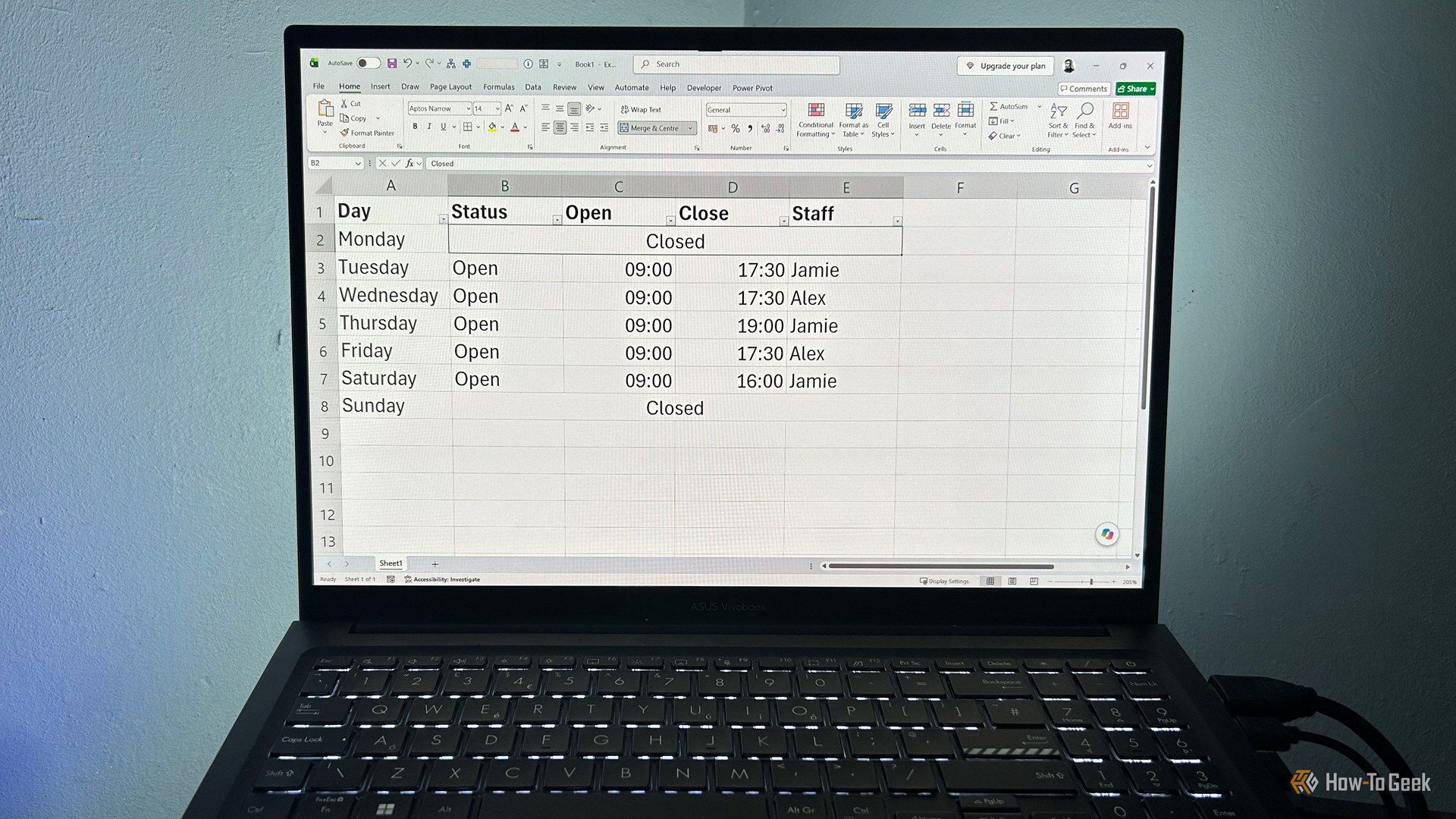
Ditch Merge & Center: The Better Way to Align Text in Excel
Learn to use Excel's "Center Across Selection" to align text across cells without merging, avoiding common data manipulation issues. This guide provides steps to utilize this newly accessible feature and add it to your Quick Access Toolbar.

AI's Confidence vs. Formal Methods' Rigor: Design Flaws & Verification
While AI accelerates code generation, formal methods remain critical for ensuring system correctness. Languages like TLA+ and tools like Quint enable developers to model and verify system designs before coding, catching subtle flaws. Quint makes formal methods more accessible with developer-friendly syntax and executability. This approach is vital for verifying AI-generated code through trace validation and model-based testing, ensuring reliability against real-world data.
%20102026%20top%20art%20SOURCE%20Govee.jpg)
in-depth: The Best Permanent Outdoor Lights (2026): Govee, Eufy
WIRED, a leading voice in technology journalism, has just released its updated guide for 2026 on the best permanent outdoor lights, spotlighting top contenders Govee, Eufy, and Cync. These innovative eave lights are

Stop Android Auto Battery Drain: Essential Features to Disable and
Android Auto offers unparalleled convenience, bringing your phone's most useful features directly to your car's display. From navigation and calls to messages and music, it keeps you connected without distracting you

Apple’s new HomeView smart display is $10 cheaper at Amazon: latest
In a rare move for a new Apple product, the highly anticipated HomeView smart display is already available at a discount on Amazon, weeks before its official launch. Consumers can now pre-order Apple's first dedicated
Turn Your Android Phone into a Powerful Desktop Replacement
Learn how to transform your Android phone into a full-fledged desktop computer using external displays and accessories, providing a cost-effective and integrated alternative to new Googlebooks.