
Europe is pushing back on Washington’s chip war: latest — Key Details
The Netherlands is directly challenging Washington's escalating "chip war" against China, with Dutch Trade Minister Sjoerd Sjoerdsma visiting the U.S. capital this week to lobby against proposed legislation that would

The Netherlands is directly challenging Washington's escalating "chip war" against China, with Dutch Trade Minister Sjoerd Sjoerdsma visiting the U.S. capital this week to lobby against proposed legislation that would significantly broaden export controls on semiconductor manufacturing equipment. The move underscores growing European concerns over the economic fallout from American efforts to curb China's technological advancements, particularly impacting ASML, the continent's most valuable tech company.
Minister Sjoerdsma met with Commerce Secretary Howard Lutnick and members of Congress, explicitly opposing the proposed MATCH Act (H.R. 8170). This bill aims to prevent Chinese chipmakers from acquiring Western semiconductor machinery, a measure that would severely restrict the sales of Netherlands-based ASML, a global leader in lithography equipment crucial for producing advanced AI chips.
“It’s exceptional that I’m coming here to broadly outline our concerns to Congress,” Sjoerdsma told Bloomberg following his meetings, emphasizing the critical stakes for the Netherlands. The proposed legislation, introduced in April, has not yet been put to a full vote in either the House or Senate and would likely need to be integrated into a larger legislative package to pass.
ASML holds a unique position in the global tech landscape as the sole manufacturer of the highly sophisticated lithography machines essential for creating cutting-edge semiconductors. The company, a cornerstone of European industrial strength, relies significantly on the Chinese market, which accounts for 19% of its net system sales.
Existing U.S. export controls already prohibit ASML from selling its most advanced extreme ultraviolet (EUV) tools to China. However, the MATCH Act seeks to expand these restrictions to include deep ultraviolet (DUV) immersion machines. As ASML CEO Christophe Fouquet clarified to TechCrunch in May, these DUV tools represent an older generation of technology, having first been shipped about a decade ago. Nevertheless, they are currently a significant part of ASML’s sales to China, and the MATCH Act would render them off-limits.
The pushback from the Netherlands highlights a growing divergence in economic and geopolitical priorities between key allies. While the U.S. aims to contain China's semiconductor capabilities for national security reasons, European nations like the Netherlands are wary of the severe economic repercussions on their domestic industries, particularly a high-value exporter like ASML.
Should the MATCH Act pass, it would not only force ASML to forgo a substantial portion of its revenue but could also incentivize China to accelerate its indigenous development of semiconductor manufacturing technologies, potentially creating a long-term competitor to Western suppliers. The ongoing diplomatic efforts by the Dutch government reflect a strategic attempt to balance alliance solidarity with vital national economic interests, setting the stage for continued negotiations over the future of global tech supply chains.
FAQ
Q: What is the MATCH Act?
A: The MATCH Act (H.R. 8170) is proposed U.S. legislation that would prevent Chinese chipmakers from accessing Western semiconductor manufacturing equipment, expanding existing export controls.
Q: Why is the Netherlands opposing the MATCH Act?
A: The Netherlands is opposing the MATCH Act because it would significantly harm ASML, a Dutch-based company and the world's only maker of advanced lithography machines. China accounts for 19% of ASML's sales, and the act would ban the sale of older-generation DUV tools currently permitted.
Q: What kind of chip-making equipment is ASML currently allowed to sell to China?
A: ASML is currently allowed to sell older-generation deep ultraviolet (DUV) immersion tools to China. Its most advanced extreme ultraviolet (EUV) tools are already banned from export to China under existing controls.
Related articles

Apple Unveils iPhone Duo: Pricey Foldable Sees Soaring Demand
Apple has officially entered the foldable smartphone arena with the long-anticipated launch of the iPhone Duo. Priced starting at a hefty $1,999, the device features a 5.4-inch outer display and a larger 7.6-inch inner

in-depth: Chicago-Area Cops Helped HSI Spy on Minnesota Anti-ICE
Chicago-area law enforcement, including local police and HSI agents, conducted undercover surveillance on Minnesota anti-ICE activists at an April 2, 2022, talk in Chicago. This operation was part of a federal conspiracy probe into 15 Minnesota activists facing felony charges related to immigration enforcement resistance. Civil liberties advocates have condemned the surveillance as a troubling intrusion into protected political activity.

Mark Wahlberg on using AI in film ‘the right way’ and being open to
Actor Mark Wahlberg believes AI has a place in filmmaking if used responsibly for enhancement, not script generation or actor replacement. At TechCrunch Disrupt, he expressed openness to an AI likeness carrying on his legacy, managed by his family, and emphasized storytelling.
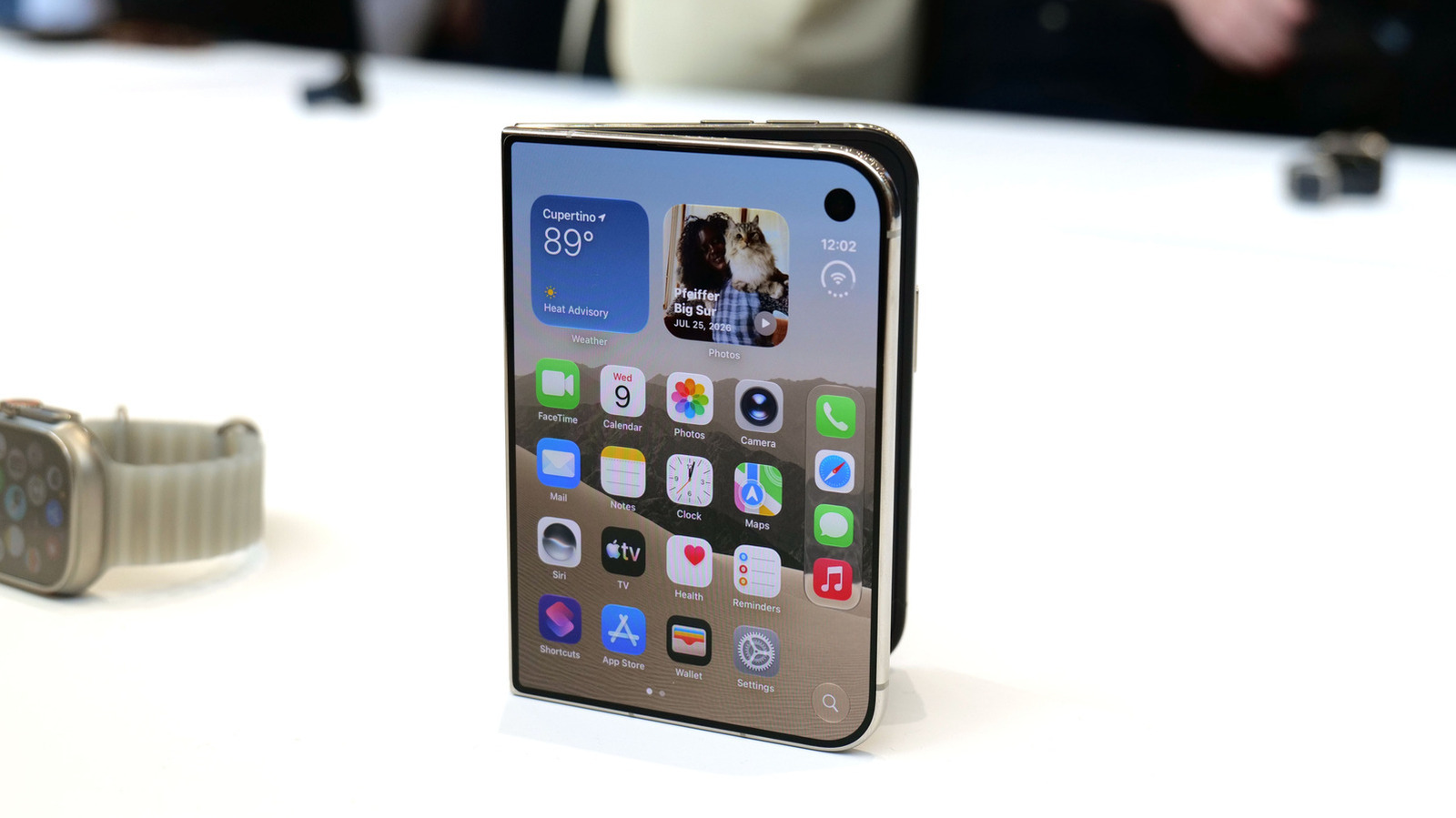
Apple iPhone Duo: A Daring Debut with Notable Compromises
Apple's highly anticipated iPhone Duo, priced at $2,000, has gone on pre-order. While hailed as "Apple's most exciting device in a decade" for its innovative foldable design and immersive display, it comes with significant drawbacks like the absence of FaceID and a premium camera.

Tesla Unveils Thruster-Equipped Roadster, 2028 Production Targeted
Tesla has unveiled its second-generation Roadster, featuring cold-gas thrusters co-developed with SpaceX, enabling it to jump and flip. The electric sports car demonstrated 0-60mph in an astonishing 0.81 seconds, with production targeted for 2028. This highly anticipated reveal also serves as a key recruitment tool for Tesla's ambitious AI and robotics initiatives.

AI's Confidence vs. Formal Methods' Rigor: Design Flaws & Verification
While AI accelerates code generation, formal methods remain critical for ensuring system correctness. Languages like TLA+ and tools like Quint enable developers to model and verify system designs before coding, catching subtle flaws. Quint makes formal methods more accessible with developer-friendly syntax and executability. This approach is vital for verifying AI-generated code through trace validation and model-based testing, ensuring reliability against real-world data.