
Cohere's Open-Weight ASR Model Hits 5.4% WER, Disrupting Production
Cohere has launched Transcribe, an open-weight ASR model with a remarkable 5.42% word error rate. This model offers enterprises state-of-the-art accuracy, comparable to closed APIs, while allowing on-premise deployment to address data residency, control, and latency concerns. Transcribe currently leads the Hugging Face ASR leaderboard, outperforming Whisper and other industry leaders.

Cohere has unveiled Transcribe, an open-weight Automatic Speech Recognition (ASR) model, achieving a remarkable average word error rate (WER) of just 5.42%. Announced on March 30, 2026, this breakthrough performance positions Transcribe as a formidable contender capable of replacing existing closed-source speech APIs in demanding enterprise production pipelines.
Enterprises previously faced a difficult choice: highly accurate but proprietary APIs with potential data residency issues, or open models that often sacrificed accuracy for deployability and control. Cohere's Transcribe, licensed under Apache-2.0, aims to eliminate this compromise by offering state-of-the-art accuracy alongside the flexibility and control of an open-weight model.
Setting a New Standard for ASR Accuracy
Transcribe, accessible via Cohere’s API or within its Model Vault as cohere-transcribe-03-2026, boasts 2 billion parameters. Its average WER of 5.42% signifies fewer transcription errors compared to many similar models on the market. This focus on minimizing WER was deliberate, with Cohere prioritizing production readiness from the outset.
The model's training spans 14 languages, including English, French, German, Italian, Spanish, Greek, Dutch, Polish, Portuguese, Chinese, Japanese, Korean, Vietnamese, and Arabic. While Cohere did not specify the particular Chinese dialect, the broad linguistic coverage suggests a wide applicability for global enterprises.
Empowering Enterprise Self-Hosting and Control
A key differentiator for Transcribe is its open-weight nature, enabling organizations to deploy the model directly on their own local GPU infrastructure. This capability addresses critical concerns such as data residency, latency, and cost, which are often associated with routing sensitive audio data through external, closed APIs.
Unlike research models such as OpenAI's Whisper, which launched under an MIT license, Transcribe is commercially ready from its initial release. Early adopters have highlighted the significance of this commercial-ready, open-weight approach for enterprise deployments, particularly for teams seeking to bring audio data workloads in-house. Cohere notes that Transcribe features a more manageable inference footprint for local GPUs, achieved by extending the “Pareto frontier” to deliver high accuracy and throughput within the 1B+ parameter model cohort.
Outperforming Industry Stalwarts
Cohere’s Transcribe has quickly risen to prominence, currently topping the Hugging Face ASR leaderboard. Its 5.42% average WER outpaces several established models, including OpenAI’s Whisper Large v3, which powers ChatGPT’s voice features, recorded at 7.44% WER.
Other notable competitors like ElevenLabs Scribe v2 logged a 5.83% WER, and Qwen3-ASR-1.7B stood at 5.76%, both trailing Transcribe’s accuracy. Beyond the leaderboard, Transcribe demonstrated strong performance on specific datasets: 8.15% on the AMI dataset (for meeting understanding) and 5.87% on the Voxpopuli dataset (for diverse accent understanding), a score only narrowly beaten by Zoom Scribe.
Implications for Modern Workflows
For engineering teams developing sophisticated AI applications like Retrieval Augmented Generation (RAG) pipelines or agent workflows that rely on audio inputs, Transcribe offers a compelling path to achieving production-grade transcription without the typical data residency and latency penalties inherent in closed API solutions. The ability to deploy on-premises provides unparalleled control over data security and processing.
The model's launch marks a significant shift in the ASR landscape, providing enterprises with a powerful, flexible, and accurate tool to integrate voice capabilities deeply into their operations, ultimately driving new levels of automation and insight from audio data.
FAQ
Q: What is Cohere's Transcribe model and why is it significant?
A: Transcribe is Cohere's new open-weight Automatic Speech Recognition (ASR) model, notable for achieving a low average word error rate (WER) of 5.42%. Its significance lies in offering state-of-the-art accuracy alongside the ability for enterprises to self-host the model, addressing data residency and control issues often associated with closed-source speech APIs.
Q: How does Transcribe compare in performance to other leading ASR models?
A: Transcribe currently leads the Hugging Face ASR leaderboard with its 5.42% WER. It outperforms prominent models like OpenAI’s Whisper Large v3 (7.44% WER), ElevenLabs Scribe v2 (5.83% WER), and Qwen3-ASR-1.7B (5.76% WER), demonstrating superior contextual accuracy.
Q: What are the main benefits for enterprises adopting Cohere's Transcribe?
A: Enterprises can benefit from Transcribe’s high accuracy for critical voice-enabled workflows, alongside the flexibility of local deployment on their own GPU infrastructure. This allows for greater control over data residency, reduced latency, and potentially lower costs compared to relying on external closed APIs, making it ideal for RAG pipelines and agent workflows.
Related articles

Apple Unveils iPhone Duo: Pricey Foldable Sees Soaring Demand
Apple has officially entered the foldable smartphone arena with the long-anticipated launch of the iPhone Duo. Priced starting at a hefty $1,999, the device features a 5.4-inch outer display and a larger 7.6-inch inner

in-depth: Chicago-Area Cops Helped HSI Spy on Minnesota Anti-ICE
Chicago-area law enforcement, including local police and HSI agents, conducted undercover surveillance on Minnesota anti-ICE activists at an April 2, 2022, talk in Chicago. This operation was part of a federal conspiracy probe into 15 Minnesota activists facing felony charges related to immigration enforcement resistance. Civil liberties advocates have condemned the surveillance as a troubling intrusion into protected political activity.

Mark Wahlberg on using AI in film ‘the right way’ and being open to
Actor Mark Wahlberg believes AI has a place in filmmaking if used responsibly for enhancement, not script generation or actor replacement. At TechCrunch Disrupt, he expressed openness to an AI likeness carrying on his legacy, managed by his family, and emphasized storytelling.
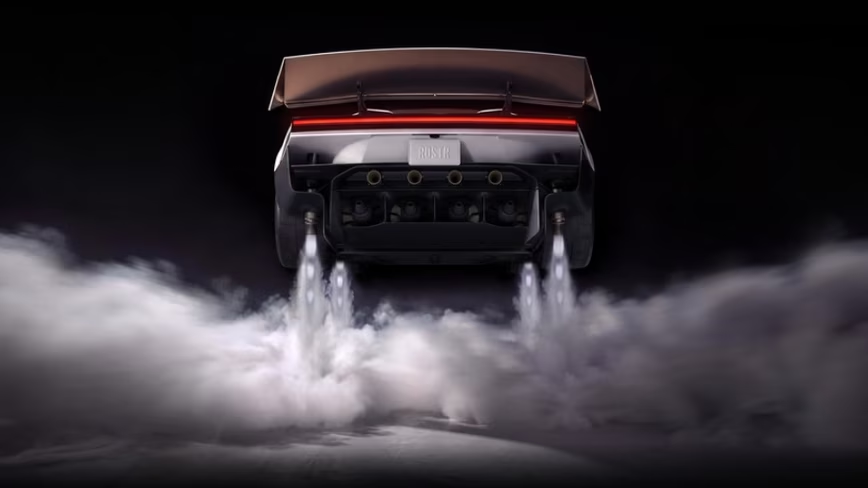
Tesla Unveils Thruster-Equipped Roadster, 2028 Production Targeted
Tesla has unveiled its second-generation Roadster, featuring cold-gas thrusters co-developed with SpaceX, enabling it to jump and flip. The electric sports car demonstrated 0-60mph in an astonishing 0.81 seconds, with production targeted for 2028. This highly anticipated reveal also serves as a key recruitment tool for Tesla's ambitious AI and robotics initiatives.

AI's Confidence vs. Formal Methods' Rigor: Design Flaws & Verification
While AI accelerates code generation, formal methods remain critical for ensuring system correctness. Languages like TLA+ and tools like Quint enable developers to model and verify system designs before coding, catching subtle flaws. Quint makes formal methods more accessible with developer-friendly syntax and executability. This approach is vital for verifying AI-generated code through trace validation and model-based testing, ensuring reliability against real-world data.
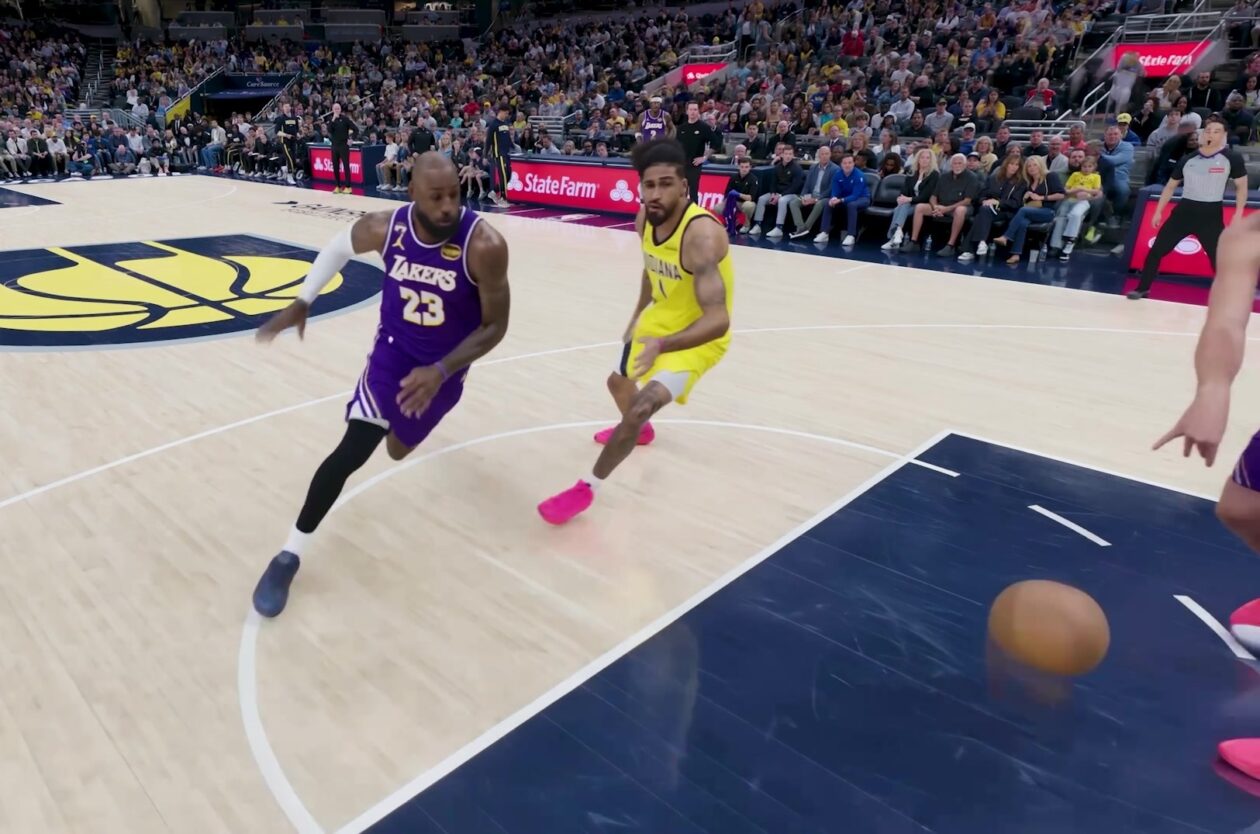
Amazon Prime Video Launches AI-Powered Prime 360 for NBA Coverage
Amazon Prime Video is elevating its NBA coverage with the introduction of Prime 360, an AI-powered replay system offering immersive, 'fly through' views of the action. Kicking off its second season, Prime Video also adds Yahoo fantasy integration and gains exclusive Eastern Conference Finals rights, expanding its tech-driven sports broadcast. The new features aim to deliver a unique and interactive viewing experience for basketball fans.