
analysis: Joby Demonstrated its Air Taxi in Manhattan, but You Can’t
Joby Aviation recently demonstrated its electric air taxi with a pilot-only flight from JFK to Manhattan, showcasing a potential 10-minute commute. Part of a federal initiative, this event highlights the future of urban air mobility. However, routine passenger flights are years away, pending arduous federal approvals and overcoming skepticism about cost and widespread utility.
Air Taxis: A Glimpse into Urban Mobility's Future
Joby Aviation recently offered a compelling vision of future urban travel, successfully demonstrating its electric air taxi with a pilot-only flight from Kennedy International Airport to Manhattan this April. This significant event, part of a federal initiative to accelerate the adoption of air taxis, showcased the potential for dramatically reduced travel times in congested city environments. However, despite the technological strides, routine passenger flights remain years away, pending rigorous federal approvals and the resolution of ongoing debates about their practical application and cost.
The Groundbreaking Demonstration Flight
The demonstration flight saw Joby's innovative aircraft, which incorporates elements of both a helicopter and an airplane, complete the journey to the heart of Manhattan in approximately 10 minutes. This remarkably short transit time starkly contrasts with the hour or more typically required for the same distance by car, highlighting the transformative promise of these electric vertical takeoff and landing (eVTOL) vehicles for metropolitan transport. The flight served as a tangible example of how such aircraft could eventually integrate into daily urban operations.
Federal Push for Air Mobility
This ambitious flight was facilitated by a federal program established last year by the Trump administration, aimed at fostering collaboration among states, cities, and private companies to expedite the deployment of electric aircraft for various uses, including passenger transport, cargo delivery, and medical operations. In March, the Transportation Department selected eight pilot projects spanning 26 states to advance this vision, with Joby's New York demonstration being a key component of one such initiative. This governmental push underscores a strategic effort to position the United States at the forefront of the emerging air taxi industry.
Industry Optimism Meets Expert Skepticism
Proponents within the aviation industry and several experts envision air taxis eventually superseding traditional helicopters and even offering a viable alternative to cars for specific travel needs. They project a future where these quiet, electric aircraft streamline urban mobility. Conversely, a segment of skeptical experts, like Laurie Garrow, an engineering professor at the Georgia Institute of Technology specializing in aviation, express caution. Garrow suggests that air taxis will likely be more expensive than helicopters and serve relatively niche markets initially, pushing back against the notion of widespread "flying cars everywhere."
The Path Ahead: Regulatory Hurdles and Future Outlook
Despite the optimistic outlook from developers, the path to commercial operation for air taxis is fraught with arduous regulatory hurdles. No company has yet secured federal authorization from the United States to routinely transport passengers or cargo, a process that involves extensive testing and certification by the Federal Aviation Administration. Garrow estimates that it will take another "two to five years" before these aircraft meaningfully enter service, primarily in specialized roles, rather than immediately transforming mass transit. The industry's past promises of imminent commercial flights, which have not yet materialized, further fuel this cautious perspective.
While Joby Aviation's demonstration flight in Manhattan offered an exciting glimpse into a future of faster, more efficient urban travel, it simultaneously underscored the significant challenges ahead. The journey from successful demonstration to widespread commercial service is a complex one, requiring overcoming substantial regulatory, economic, and infrastructural obstacles. For now, the public awaits the rigorous processes that will determine when these innovative air taxis can finally take to the skies with passengers aboard.
FAQ
Q: When can the public expect to fly in Joby's air taxi?
A: The public cannot fly in Joby's air taxi yet. While demonstration flights are occurring, no company has secured federal approval to routinely carry passengers in the United States. Experts estimate it could be another two to five years before these aircraft enter service, likely in niche markets initially.
Q: What is the purpose of the federal program mentioned in the article?
A: The federal program, created by the Trump administration, aims to encourage states, cities, and companies to collaborate in expediting the rollout of electric aircraft for passenger, cargo, and medical operations. It's designed to hasten the arrival of air taxis.
Q: How long did Joby's demonstration flight from Kennedy International Airport to Manhattan take?
A: Joby's electric aircraft completed the flight from Kennedy International Airport into Manhattan in approximately 10 minutes, significantly reducing the typical hour or more required by car.
Related articles
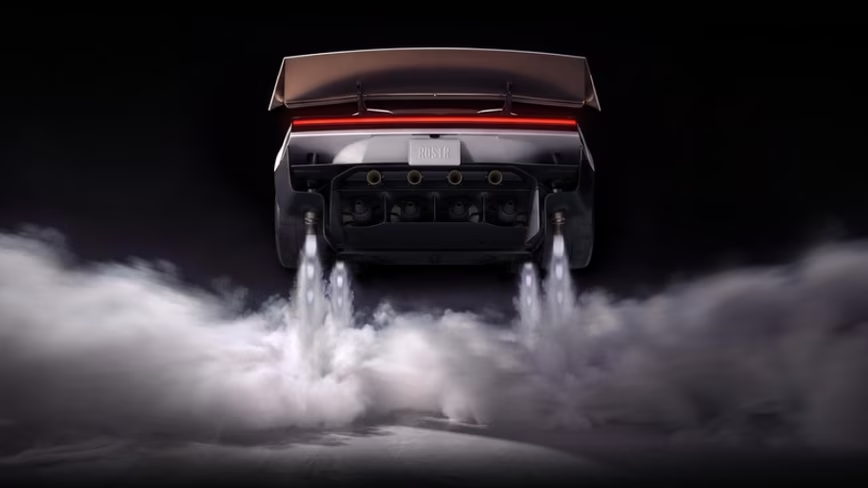
Tesla Unveils Thruster-Equipped Roadster, 2028 Production Targeted
Tesla has unveiled its second-generation Roadster, featuring cold-gas thrusters co-developed with SpaceX, enabling it to jump and flip. The electric sports car demonstrated 0-60mph in an astonishing 0.81 seconds, with production targeted for 2028. This highly anticipated reveal also serves as a key recruitment tool for Tesla's ambitious AI and robotics initiatives.

Amazon Prime Video Launches AI-Powered Prime 360 for NBA Coverage
Amazon Prime Video is elevating its NBA coverage with the introduction of Prime 360, an AI-powered replay system offering immersive, 'fly through' views of the action. Kicking off its second season, Prime Video also adds Yahoo fantasy integration and gains exclusive Eastern Conference Finals rights, expanding its tech-driven sports broadcast. The new features aim to deliver a unique and interactive viewing experience for basketball fans.

regional: A two-person Seattle startup lands $1M to reinvent
Seattle startup TriMagnetix has secured $1 million to develop semiconductor chips that consume 800 times less energy and are radiation-resistant. The two-person company, leveraging nanomagnetic technology, is targeting space applications and data centers. With new funding and key partnerships, TriMagnetix aims for commercial sales within a year.
%20102026%20top%20art%20SOURCE%20Govee.jpg)
in-depth: The Best Permanent Outdoor Lights (2026): Govee, Eufy
WIRED, a leading voice in technology journalism, has just released its updated guide for 2026 on the best permanent outdoor lights, spotlighting top contenders Govee, Eufy, and Cync. These innovative eave lights are

regional: ‘What is fusion?’ Helion Energy harnesses the power of
Helion Energy, the Everett-based fusion startup, gained mainstream attention this week after being featured as a clue on the popular game show "Jeopardy!". The $800 clue, part of a "Y Combinator" category, highlighted Helion's mission to build the first fusion power plant, bringing the concept of clean energy to a wider audience. CEO David Kirtley celebrated the "surreal" moment as a sign that reliable clean power is becoming more accessible.

Apple’s new HomeView smart display is $10 cheaper at Amazon: latest
In a rare move for a new Apple product, the highly anticipated HomeView smart display is already available at a discount on Amazon, weeks before its official launch. Consumers can now pre-order Apple's first dedicated