
analysis: Can Science Predict When a Study Won’t Hold Up?: Artificial
A major seven-year DARPA-funded study, SCORE, has concluded that AI cannot reliably predict whether scientific studies will replicate. This finding dampens hopes for a "scientific credit score" and highlights the enduring difficulty of validating research amidst a flood of annual publications.
A major, seven-year research initiative funded by the Defense Advanced Projects Agency (DARPA) has concluded that artificial intelligence is not yet equipped to reliably predict whether scientific studies will stand up to scrutiny. Published this month, the findings from the "Systematizing Confidence in Open Research and Evidence" (SCORE) project temper hopes that AI could provide a swift solution to validating the vast amount of scientific literature produced annually. The ambitious effort, involving hundreds of scientists, sought to develop a "scientific credit score" to quickly identify robust research, but ultimately found AI's predictive capabilities insufficient for this critical task.
The Replication Challenge and AI's Promise
The scientific enterprise faces a monumental challenge: over 10 million studies and other publications are released annually, but a substantial portion of these findings will eventually be found incorrect or unreproducible. Verifying research through direct replication is a cornerstone of scientific integrity, yet it is an incredibly difficult and time-consuming process. This inherent delay in validation prompted Adam Russell, then a program manager for DARPA, to envision a groundbreaking solution.
Russell's vision, which led to the SCORE project, was to leverage the power of artificial intelligence to generate a "credit score" for scientific papers. The aim was to offer a rapid assessment of a study's likely robustness, enabling policymakers and researchers to quickly distinguish between highly dependable findings and those less likely to withstand further investigation. As Russell articulated, the goal was to identify research "likely to be robust, we can premise a policy on it," separating it from work that "might make for a book in the airport," implying less rigorous or less impactful findings.
Seven Years of SCORE Investigation
To test this ambitious hypothesis, DARPA initiated the SCORE program seven years ago, marshaling a vast collaborative effort involving hundreds of scientists. The team's mission was clear: to inspect an extensive catalog of studies and, crucially, to re-run many of the original experiments. This painstaking process was designed not just to replicate results, but to dissect the underlying factors and methodologies that contribute to a study's long-term validity and reproducibility. By understanding what makes research "hold up," they hoped to train AI systems to recognize these qualities preemptively.
AI Falls Short of Expectations
Now, after years of intensive research and analysis, the SCORE team is publishing a raft of papers detailing their findings, and the conclusion is stark: artificial intelligence, at its current stage of development, cannot reliably predict which scientific studies will hold up to scrutiny. The dream of a universally applicable "scientific credit score" generated by AI remains just that—a dream, for now. This outcome is a significant setback for those who hoped AI could offer a scalable, automated solution to the scientific community's reproducibility challenges.
A Persistent Scientific Problem
This revelation underscores the enduring complexity of ensuring scientific rigor and reproducibility, a challenge that has been at the forefront of scientific discourse for over a decade. Brian Nosek, executive director at the Center for Open Science, famously led a team in the 2010s to replicate 100 psychology papers. Their monumental effort yielded a disconcerting result: only 39 percent of the original studies could be successfully replicated. This historical context highlights that the difficulty in confirming research is not a new problem, but rather a systemic issue that even advanced AI struggles to navigate.
Implications for Future Research and Trust
The SCORE project's findings serve as a critical reminder that while AI excels in many data-intensive tasks, the intricate and often nuanced process of scientific validation remains deeply human. The project's inability to train AI to reliably predict research robustness suggests that the subtle interplay of experimental design, statistical analysis, and contextual factors is far more complex than current algorithms can grasp. For the scientific community, this means continued reliance on painstaking human replication, rigorous peer review, and transparent methodologies to maintain the integrity and trustworthiness of new discoveries. It also points to the need for further fundamental breakthroughs in AI's understanding of scientific reasoning before it can truly become a predictive partner in validating empirical research.
FAQ
Q: What was the main objective of the DARPA-funded SCORE project?
A: The primary goal of the SCORE project was to leverage artificial intelligence to predict which scientific studies would successfully replicate, thereby creating a rapid "scientific credit score" to assess research robustness.
Q: Who led the vision for the SCORE project?
A: Adam Russell, then a program manager for the Defense Advanced Research Projects Agency (DARPA), conceived the idea of generating a credit score for science to help distinguish reliable findings from less robust ones.
Q: What was the ultimate conclusion regarding AI's ability to predict study robustness?
A: After seven years of intensive research, the SCORE team concluded that artificial intelligence is not yet capable of making reliable predictions about whether scientific studies will hold up to scrutiny and replication.
Related articles

Apple Unveils iPhone Duo: Pricey Foldable Sees Soaring Demand
Apple has officially entered the foldable smartphone arena with the long-anticipated launch of the iPhone Duo. Priced starting at a hefty $1,999, the device features a 5.4-inch outer display and a larger 7.6-inch inner

in-depth: Chicago-Area Cops Helped HSI Spy on Minnesota Anti-ICE
Chicago-area law enforcement, including local police and HSI agents, conducted undercover surveillance on Minnesota anti-ICE activists at an April 2, 2022, talk in Chicago. This operation was part of a federal conspiracy probe into 15 Minnesota activists facing felony charges related to immigration enforcement resistance. Civil liberties advocates have condemned the surveillance as a troubling intrusion into protected political activity.

Mark Wahlberg on using AI in film ‘the right way’ and being open to
Actor Mark Wahlberg believes AI has a place in filmmaking if used responsibly for enhancement, not script generation or actor replacement. At TechCrunch Disrupt, he expressed openness to an AI likeness carrying on his legacy, managed by his family, and emphasized storytelling.

Tesla Unveils Thruster-Equipped Roadster, 2028 Production Targeted
Tesla has unveiled its second-generation Roadster, featuring cold-gas thrusters co-developed with SpaceX, enabling it to jump and flip. The electric sports car demonstrated 0-60mph in an astonishing 0.81 seconds, with production targeted for 2028. This highly anticipated reveal also serves as a key recruitment tool for Tesla's ambitious AI and robotics initiatives.

Amazon Prime Video Launches AI-Powered Prime 360 for NBA Coverage
Amazon Prime Video is elevating its NBA coverage with the introduction of Prime 360, an AI-powered replay system offering immersive, 'fly through' views of the action. Kicking off its second season, Prime Video also adds Yahoo fantasy integration and gains exclusive Eastern Conference Finals rights, expanding its tech-driven sports broadcast. The new features aim to deliver a unique and interactive viewing experience for basketball fans.
regional: A two-person Seattle startup lands $1M to reinvent
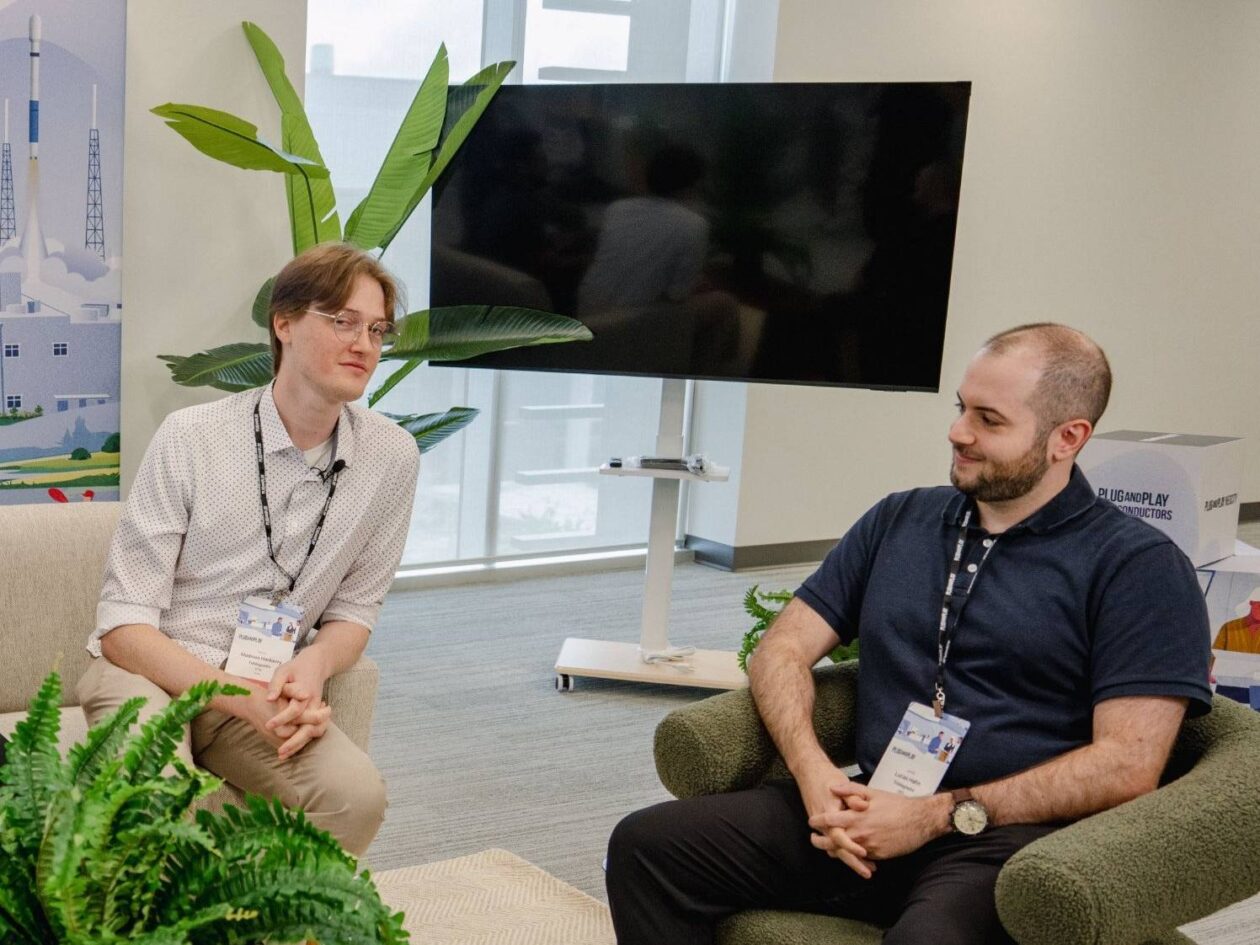
Seattle startup TriMagnetix has secured $1 million to develop semiconductor chips that consume 800 times less energy and are radiation-resistant. The two-person company, leveraging nanomagnetic technology, is targeting space applications and data centers. With new funding and key partnerships, TriMagnetix aims for commercial sales within a year.