
AI Coding: Short-Term Velocity, Long-Term Complexity
The promise of Artificial Intelligence (AI) in software development has captured the industry's imagination. Large Language Models (LLMs) and AI agents are touted as revolutionary tools capable of dramatically boosting

The promise of Artificial Intelligence (AI) in software development has captured the industry's imagination. Large Language Models (LLMs) and AI agents are touted as revolutionary tools capable of dramatically boosting developer productivity. Many practitioners report significant increases in their output after adopting these tools. But as with any powerful technology, it's critical to look beyond the initial hype and examine the empirical evidence. A recent study, “Speed at the Cost of Quality: How Cursor AI Increases Short-Term Velocity and Long-Term Complexity in Open-Source Projects,” delves into this very question, offering a nuanced perspective on the impact of tools like Cursor AI in open-source environments.
Unpacking the Study: Methodology and Focus
The research aimed to estimate the causal effect of adopting Cursor AI, a popular LLM agent assistant, on both development velocity and software quality within open-source projects. To achieve this, the researchers employed a state-of-the-art difference-in-differences design. This robust methodology involved comparing GitHub projects that adopted Cursor with a carefully matched control group of similar GitHub projects that did not. This approach helps to isolate the specific impact of Cursor AI by accounting for other potential influencing factors, allowing for a more accurate assessment of its effects.
The Double-Edged Sword: Initial Velocity vs. Hidden Costs
The study's findings present a compelling, if complex, picture. On one hand, the adoption of Cursor AI was indeed associated with a statistically significant and substantial increase in project-level development velocity. This aligns with many developers' anecdotal experiences of feeling more productive when using AI assistants. However, this velocity boost was identified as transient – meaning it was significant but not sustained over the long term.
Crucially, this short-term gain came with considerable long-term costs. The research revealed a substantial and persistent increase in two critical indicators of software quality: static analysis warnings and code complexity. For fellow developers, these are red flags. Static analysis warnings highlight potential bugs, security vulnerabilities, or adherence to poor coding practices. An increase in these warnings directly correlates with a higher likelihood of defects, increased debugging time, and ultimately, a less reliable codebase. Code complexity, on the other hand, makes code harder to read, understand, test, and maintain. Complex code is more prone to errors during modifications and makes onboarding new team members a more challenging and time-consuming process.
The Feedback Loop: Quality Degradation Driving Slowdown
The study didn't stop at identifying these quality issues; it went further to establish a causal link. Through panel generalized-method-of-moments estimation, the researchers demonstrated that these very increases in static analysis warnings and code complexity were major factors driving the long-term velocity slowdown. This is a critical insight: the technical debt incurred through potentially rapid, AI-generated code that lacks careful oversight eventually catches up, negating initial speed gains and making future development efforts more arduous and slower.
For senior developers, this finding underscores a fundamental principle: sacrificing quality for speed rarely pays off in the long run. While AI tools can accelerate code generation, they do not inherently guarantee adherence to best practices, maintainability standards, or architectural coherence. The ease of generating code can, ironically, lead to a codebase that is more difficult to manage and evolve.
Practical Takeaways for Thoughtful AI Integration
What does this mean for us, the developers integrating AI into our workflows?
- Prioritize Quality Assurance: The study emphatically calls for quality assurance to be a first-class citizen in the design of agentic AI coding tools and AI-driven workflows. As developers, this means we must not reduce our vigilance. Implement robust static analysis tools, configure them strictly, and ensure their warnings are addressed promptly.
- Strengthen Code Review: AI-generated code, like any code, benefits immensely from peer review. Our human judgment, experience, and understanding of project context remain irreplaceable in identifying subtle issues, enforcing coding standards, and maintaining architectural integrity.
- Invest in Education and Best Practices: Developers need to understand not just how to use AI coding assistants, but also how to evaluate their output. This includes training on identifying complex or poorly structured code, understanding common static analysis warnings, and advocating for clear, maintainable solutions.
- Balance Velocity with Maintainability: While the allure of rapid development is strong, we must maintain a holistic view of project health. Sustainable velocity comes from a clean, well-structured, and easily maintainable codebase, not just from sheer lines of code generated.
- Advocate for Smarter Tools: As the technology evolves, we should push for AI tools that inherently integrate quality checks, offer refactoring suggestions based on project-specific rules, and learn from human feedback on code quality, not just functionality.
In conclusion, while AI coding assistants like Cursor AI offer tantalizing prospects for boosting short-term development velocity, the evidence suggests that this often comes at the cost of increased code complexity and static analysis warnings. These quality compromises can significantly impede long-term project velocity and maintainability. The path forward involves a balanced approach where AI assists, but human oversight, rigorous quality assurance, and a commitment to sustainable development practices remain paramount.
FAQ
Q: What does "difference-in-differences design" mean in this context? A: The difference-in-differences design is a statistical method used to estimate the causal effect of an intervention. In this study, it involved comparing the changes in velocity and quality metrics for GitHub projects that adopted Cursor AI (the intervention group) against the changes in the same metrics for a carefully matched group of projects that did not adopt Cursor AI (the control group). This helps isolate the impact directly attributable to Cursor AI, minimizing confounding factors.
Q: How was "development velocity" measured and found to be transient? A: While the abstract doesn't detail the exact metrics for velocity, typically in software engineering studies, it refers to quantifiable output like commits per developer, lines of code changed, or feature completion rates over time. The study found this increase to be "transient," meaning the boost was observed initially after adoption but did not persist or grow over an extended period, eventually leveling off or decreasing due to accumulating quality issues.
Q: Why are static analysis warnings and code complexity considered major drivers of long-term slowdown? A: Static analysis warnings indicate potential defects, security flaws, or deviations from coding standards, which lead to more bugs and increased debugging time. High code complexity makes a codebase harder to understand, modify, and test, increasing the cognitive load on developers, slowing down feature development, making refactoring risky, and contributing to a higher defect injection rate. Together, these factors create technical debt that compounds over time, directly impeding future development velocity.
Related articles

AI's Impact on Malware Detection: Next-Gen Protection Deep Dive
The landscape of cybersecurity has transformed dramatically. Gone are the days when a simple virus attached itself to a file, easily quarantined by an antivirus scanner. Today, malware is sophisticated, multifaceted,

AI Cybersecurity: The Perpetual Cat and Mouse Game
In the rapidly evolving digital landscape, the interplay between artificial intelligence and cybersecurity has created a dynamic, ceaseless challenge—a true cat and mouse game. AI is not merely a tool for defense; it's
Learningto/Pass: Free, AI-Powered Interview Prep for Developers
Landing a role at a top-tier tech company often hinges on mastering complex data structures and algorithms, coupled with a solid grasp of system design. The problem for many aspiring software developers is that quality

The Composite Design Pattern: Unifying Individual Objects and Groups
As software engineers, we frequently encounter scenarios where we need to manage collections of objects that can be either individual entities or groups containing other entities. Think of a file system with files and
Java's Secret Weapon: How Age Powers Its AI Future
Java's extensive history is a key AI superpower, offering a stable foundation for agent-generated code and an unparalleled dataset for training AI models. Its mature ecosystem of libraries and agentic harnesses further enable developers to build robust, integrated AI applications. This positions Java as a powerful, reliable choice for future AI-driven software development.
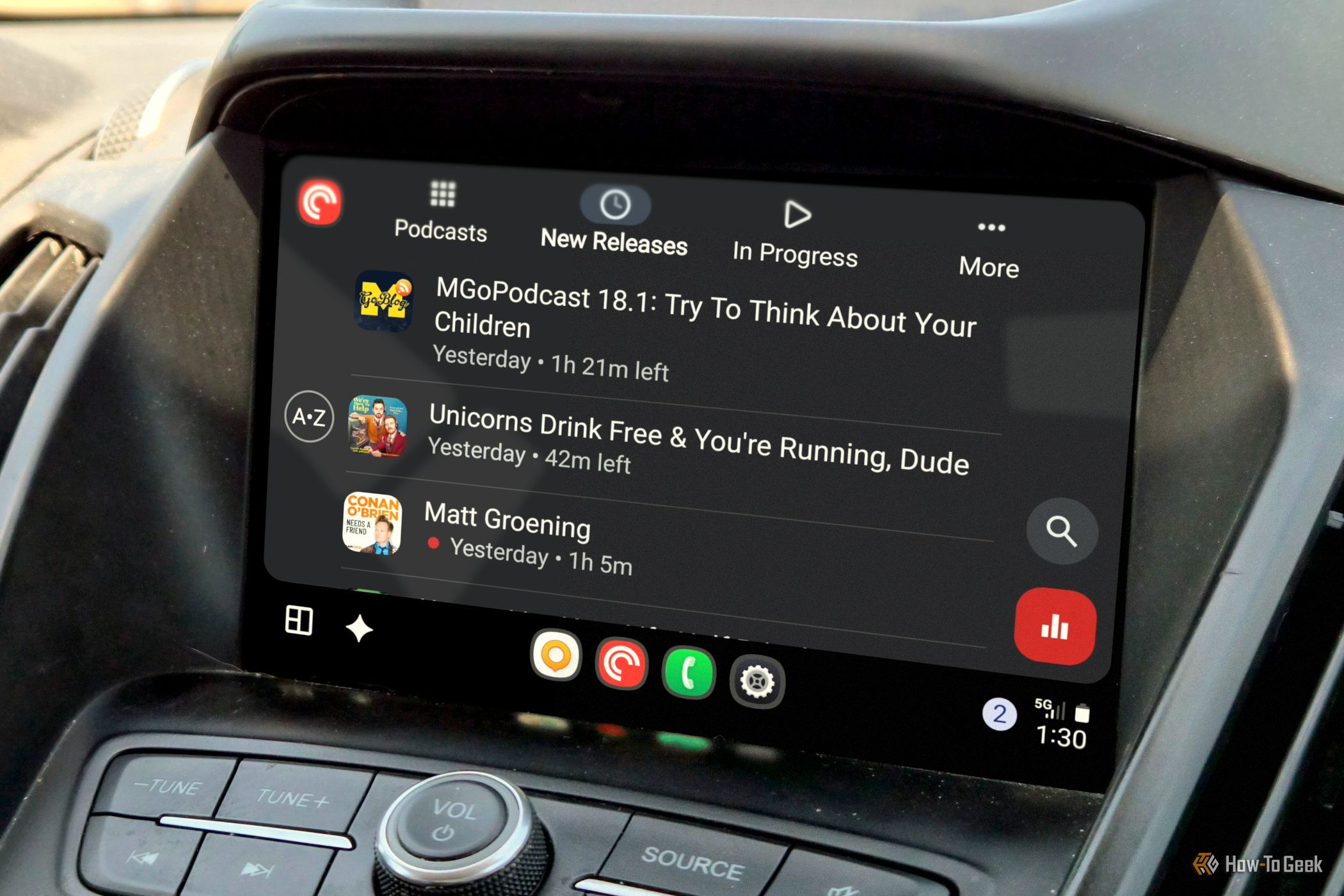
Master Podcasts in Android Auto with Pocket Casts for
Navigating podcast apps in Android Auto can often feel cumbersome, adding unnecessary complexity to your driving experience. Many apps force you to browse extensive libraries or fiddle with intricate menus while on the