35 results found
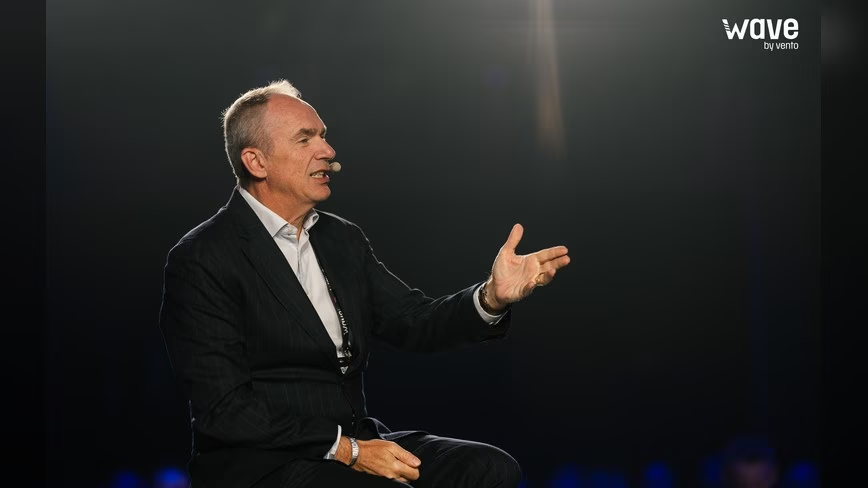
Jean-Christophe Laloux, incoming EIF chief, announced that funds backed by the European Tech Champions Initiative now hold 15 unicorn companies. He detailed plans to expand the initiative to support smaller funds and attract co-investors, emphasizing the importance of scaling European startups within the continent for "sovereignty." The EIF will prioritize investments in deep tech, including AI, biotech, defense, and cleantech.

TypeSafe AI, the creator of the non-text AI model Jev, has achieved a $7.5 billion valuation following a massive $870 million funding round led by Andreessen Horowitz. Launched just weeks ago, Jev quickly went viral, attracting a third of Fortune 500 companies with its unique approach to automation that is faster and more efficient than traditional LLMs.

TechCrunch has unveiled the full breakout session agenda for Disrupt 2026, taking place October 13-15 in San Francisco. These 50-minute, interactive sessions will offer deep dives into critical tech challenges, primarily focusing on AI, fundraising, and company scaling, with expert insights and audience Q&A. Attendees can register now for discounts.

Vals, a San Francisco startup, has secured $40 million in Series A funding led by Andreessen Horowitz to revolutionize AI benchmarking. The company aims to replace outdated, manipulable evaluation systems with rigorous, confidential, and task-specific assessments for AI models. Vals' approach focuses on real-world impact across industries, seeking to become the trusted standard for AI accountability and public trust.

AI founders face an unprecedented challenge: their core products becoming features of rapidly evolving foundation models from giants like OpenAI. TechCrunch Disrupt 2026 will host a critical session on navigating this shift, featuring Michel Tricot (Airbyte), Linda Tong (Webflow), and Rob Toews (Radical Ventures) to discuss building lasting defensibility.

Instinct, a year-old AI startup, has rapidly secured $350 million in total funding, reaching a $2.5 billion valuation after a fresh $250 million Series B round. Its AI assistant, led by 23-year-old Noah Shinn, has garnered immense user enthusiasm for organizing various life aspects but also faces significant privacy concerns.

OpenAI-backed Thrive Holdings secured $2 billion at a $12 billion valuation to expand its enterprise AI integration strategy. The firm acquires traditional businesses, infusing AI into their operations, and plans to extend its proven model beyond accounting and IT into regulatory services for physical assets. This major funding round highlights a growing trend of hands-on AI deployment in the enterprise.

US venture capital in H1 2026 saw 87.5% of funds go to megadeals, largely driven by AI. PitchBook's report reveals a stark market split: AI companies command huge premiums, while older startups are discounted by up to 59.1% based on their last funding round's vintage. The exit market remains challenging, even as unicorn numbers swell.

Embattled AI hedge fund Situational Awareness has invested a further $400 million into chip startup Source Foundry, bringing its total backing to $500 million. This significant move comes despite the fund recently selling off much of its public portfolio and seeing its assets under management drop from $20 billion to $10 billion. The investment underscores a continued strategic focus on critical AI infrastructure, even after recent market struggles.

AI infrastructure startup Naïve has raised $28.5 million in Series A funding led by Nexus Venture Partners to automate the complex process of setting up and running a business. With over 30,000 developer customers, Naïve's platform allows AI agents to handle tasks from incorporation to payments, and is now focusing on optimizing the high operational costs of AI agent fleets.

Lightspeed Venture Partners has fully embraced a creator-led venture capital model, hiring seed investor Claire Zau, popular on Instagram and TikTok, to source deals and co-host their new show, Lightwork. This strategic move aligns with a broader industry trend seeing firms like a16z and OpenAI integrating creators to build trust and connect with the next generation of founders.

Silicon Valley's startup scene is experiencing a dramatic shift for young founders. While AI has democratized building, enabling early success and significant funding, it also brings immense pressure for rapid growth and constant public performance. This creates a high-stakes environment where founders face intense scrutiny and ethical dilemmas alongside unprecedented opportunities.
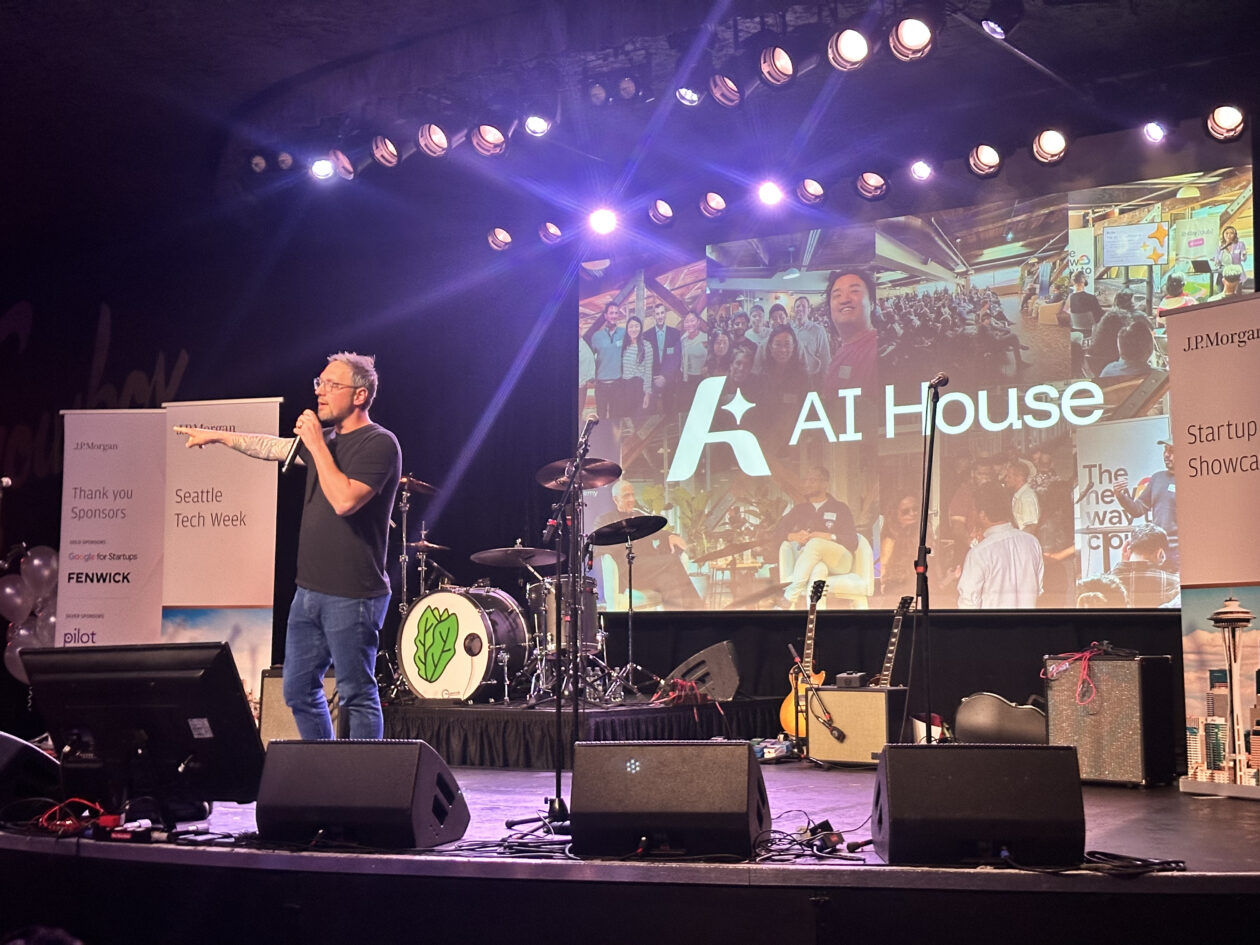
AI House co-founder Jacob Colker delivered a passionate 'rallying cry' for Seattle at a recent tech event, urging residents to overcome a 'confidence problem' and recognize the city's immense potential. He emphasized the need for greater community and connection to fully leverage Seattle's role in the future of technology.

Top VC Predicts Inevitable Wealth Redistribution in AI Boom Neil Rimer, co-founder of the highly successful venture capital firm Index Ventures, has made a striking prediction: the unprecedented wealth generated by

a16z-backed Base Power has launched its large home battery systems in Illinois, entering the PJM Interconnection grid territory which is struggling with soaring electricity demand and high prices. The startup offers cheaper power to residents by bypassing traditional grid bottlenecks, deploying batteries "behind the meter." This move aims to stabilize the stressed grid and provide a more affordable energy option for consumers.

Sakana AI has launched Marlin, an "ultra deep research" agent designed for enterprise clients. Operating as a "Virtual CSO," Marlin conducts self-governing reasoning for up to eight hours to deliver comprehensive, 100+ page strategy reports. Powered by Adaptive Branching Monte Carlo Tree Search (AB-MCTS) and a multi-LLM architecture, it focuses on deep, vetted analysis over quick generation, backed by strict data privacy policies and significant venture capital.

Mercor co-founder Brendan Foody has publicly accused elite VC firm Sequoia of using "dual-pricing" strategies, investing in startups at two different valuations while founders highlight only the higher figure. This practice, Foody claims, misleads employees and angel investors about a company's true worth. Sequoia partner Shaun Maguire defended the firm, calling it a response to competitive market dynamics rather than a deceptive tactic, sparking debate on startup valuation transparency.

Amidst record-breaking AI investments, a new trend called "together tech" is emerging, focusing on human connection and real-world experiences. Startups like Brynn Putnam's Board and the cyberdeck movement are gaining traction by prioritizing in-person social interaction over purely digital engagement, signaling a compelling counter-narrative in the startup landscape.

TechCrunch's Startup Battlefield is returning to Sydney, Australia, on August 19, 2026, in partnership with Stripe. Ten startups will pitch, with the winner securing automatic entry to TechCrunch Disrupt's Startup Battlefield 200 in San Francisco. This return follows the highly successful 2017 event, which launched companies like HealthMatch and FluroSat (now Regrow Agriculture) to raise over $85 million combined and foster a vibrant Australian tech ecosystem.

The international AI landscape presents unique challenges and opportunities, requiring developers to think beyond traditional tech hubs. Key aspects include adapting AI models to local languages and cultures, navigating the complex global supply chain for critical hardware like semiconductors, and understanding how venture capital assesses these international ventures. Success hinges on deep local market understanding, robust technical solutions for localization, and resilience against logistical hurdles.
AI startups in the Bay Area are investing heavily in high-production hype videos for social media, exemplified by Daydream Lab's $80,000 *Alice in Wonderland* themed ad for its $15 million funding round. This trend, fueled by venture capital and intense competition, aims to attract attention and recruit talent, with companies consciously choosing traditional video production to maintain professionalism.

DeepMind veteran David Silver has secured an unprecedented $1.1 billion in funding for his new British AI lab, Ineffable Intelligence, at a $5.1 billion valuation. The company aims to build a "superlearner" AI that acquires knowledge and skills purely through reinforcement learning, without relying on human data, a radical departure from current large language models.

AI coding startup Cursor is nearing a $2B+ funding round at a $50B valuation, nearly doubling its previous valuation in six months. Led by Thrive and Andreessen Horowitz, this capital injection is fueled by rapid enterprise growth and improved profitability from its proprietary AI model.

Many of us developers dream of building a groundbreaking product, perhaps even a startup. The conventional wisdom often points to seeking venture capital (VC) funding as a prerequisite for scale. But what if there was

This review analyzes the current trend of young, college-dropout AI entrepreneurs receiving unprecedented VC support, including housing, personal chefs, and daily task management. While designed for hyper-focus, it raises concerns about sustainability, founder well-being, and parallels to past tech booms, warranting a cautious outlook.
