
Community-First AI Cloud: Scaling GPUs Without VC Drama
Many of us developers dream of building a groundbreaking product, perhaps even a startup. The conventional wisdom often points to seeking venture capital (VC) funding as a prerequisite for scale. But what if there was

Many of us developers dream of building a groundbreaking product, perhaps even a startup. The conventional wisdom often points to seeking venture capital (VC) funding as a prerequisite for scale. But what if there was another way, one deeply rooted in the very community you aim to serve? This is the story of RunPod, an end-to-end AI cloud, whose founders chose to circumvent traditional VC paths, opting instead for a direct, community-driven approach to funding, product development, and scaling.
The problem RunPod's founders, Zhen Lu and Pardeep, observed stemmed from their own experiences building large-scale distributed systems and machine learning projects. They found the existing development experience for GPU-accelerated workloads on "hyperscalers" to be "pretty awful." Setting up virtual machines, installing dependencies, and managing complex matrices consumed valuable time, hindering rapid iteration—a critical component of successful software development, especially in the nascent field of AI. They envisioned a future where machine learning, particularly with accelerators like GPUs, would be central to software development, and they didn't want to miss the opportunity to build a better cloud experience for it.
From Basements to Global Infrastructure: RunPod's Technical Journey
RunPod's journey began not with a funding round, but with a conviction and a few servers in their basements. As technical founders, their expertise lay in software development, not marketing or capital markets. They self-funded their initial hardware and built their "V0" product: GPU-enabled development environments. The core idea was to provide an incredibly fast way for developers to spin up and tear down these environments, reducing the "stakes" for experimentation and iteration. They made it free initially, posting on Reddit and offering access to those willing to provide "cold, hard truth" feedback.
This direct engagement validated their initial hypothesis: developers wanted this. Researchers at the cutting edge of ML, frustrated with existing solutions, found RunPod’s approach easier to use and built with them in mind. The feedback was overwhelmingly positive, quickly moving from constructive criticism to "please take my money."
As users became more successful, some even launching their own businesses, they began pulling RunPod towards offering higher levels of abstraction. This led to the development of features like serverless autoscaling for truly custom workloads, engineered for extremely fast cold starts. The emphasis remained on enabling rapid iteration, recognizing that "the faster that you can make your changes, the faster you can see those changes reflected, the better you're able to make progress."
To achieve scalability and support diverse infrastructure, RunPod adopted a unique approach: a "single pane of glass" to control all required AI-focused GPU compute. This system was designed from day one to operate "anywhere on anything." This philosophy was born out of necessity, as their initial setup involved consumer-level, un-cased deep learning machines cobbled together and running on home internet connections. This inherent flexibility allowed RunPod to build a global infrastructure partner network, quickly onboarding and integrating diverse hardware into a unified mesh, all managed by their software layer. This software abstraction creates a seamless experience for users, regardless of the underlying physical infrastructure.
The Power of Community-Driven Development
Building a product with the community as your primary "investor" and feedback loop presents unique challenges and opportunities. With the democratization of AI, RunPod attracted a broad user base, from researchers to individuals simply wanting to "generate stuff for my everyday life." This diversity meant differentiating "signal from noise" was critical for maintaining focus.
RunPod's strategy involved asking clarifying questions, primarily, "to what end?" This helped them understand the ultimate goals of their users. While they appreciated all users, they could identify their Ideal Customer Profile (ICP) by focusing on those building differentiated products or businesses. For example, a user experimenting with a proof-of-concept might transition to asking, "How do I scale this business from a technology perspective?" This insight allowed RunPod to prioritize and build features that directly addressed the scaling needs of their most impactful users, leveraging their own expertise in building scalable distributed systems.
This iterative process, balancing the technical founders' strong intuition about developer needs with fast feedback loops from a diverse, engaged community, proved crucial. It wasn't about blindly building what everyone asked for (avoiding the "Homer Simpson car" trap), but rather asking the right questions, looking around the corner, and integrating user feedback into a coherent product roadmap driven by a clear vision.
Technical Foundations and Philosophy
RunPod’s technical philosophy also extends to its "data-first paradigm." Unlike traditional computing, which often assumes a "workload first" approach where data is moved to the compute, AI workloads deal with immense magnitudes of data. RunPod's approach prioritizes bringing the compute to the data, a more efficient strategy for handling the scale of modern AI.
Ultimately, RunPod demonstrates that deep technical expertise, a clear vision, and a genuine connection with your user base can be a powerful alternative to traditional venture capital, fostering a product that is truly aligned with developer needs from the ground up.
FAQ
Q: What is RunPod's core offering, and how does it differ from traditional cloud providers for AI development? A: RunPod is an end-to-end AI cloud focused on providing GPU-accelerated compute. Its core offering started with fast, GPU-enabled development environments. It differs by aiming for an easier, more developer-centric experience compared to traditional hyperscalers, which often require extensive setup for GPU workloads. RunPod offers features like serverless autoscaling with fast cold starts specifically tailored for custom AI workloads, and an underlying software layer designed for "anywhere on anything" deployment.
Q: How does RunPod manage its global infrastructure given its "anywhere on anything" design philosophy? A: RunPod achieves this by developing a robust software layer that functions as a "single pane of glass" for controlling all AI-focused GPU compute. This software abstracts away the underlying hardware and networking complexities, allowing them to integrate a global network of diverse infrastructure partners. This enables them to provide a unified, mesh-like compute environment, regardless of the specific consumer-level or enterprise-grade machines in use.
Q: How did RunPod balance founder intuition with community feedback in its product roadmap? A: RunPod's founders maintained a strong conviction about developer needs while actively seeking fast feedback from their community. They used clarifying questions like "to what end?" to filter signal from noise, understanding whether users were building for personal use or for differentiated products/businesses. This allowed them to prioritize features, such as scaling solutions, that directly addressed the needs of their Ideal Customer Profile, integrating community desires into a visionary product roadmap rather than simply implementing every request.
Related articles

Ditch Merge & Center: The Better Way to Align Text in Excel
Learn to use Excel's "Center Across Selection" to align text across cells without merging, avoiding common data manipulation issues. This guide provides steps to utilize this newly accessible feature and add it to your Quick Access Toolbar.

AI's Confidence vs. Formal Methods' Rigor: Design Flaws & Verification
While AI accelerates code generation, formal methods remain critical for ensuring system correctness. Languages like TLA+ and tools like Quint enable developers to model and verify system designs before coding, catching subtle flaws. Quint makes formal methods more accessible with developer-friendly syntax and executability. This approach is vital for verifying AI-generated code through trace validation and model-based testing, ensuring reliability against real-world data.
Ephemeral PR Preview Environments on GKE: A Deep Dive
Every development team eventually grapples with the limitations of shared staging environments. The familiar scenario: multiple features deployed simultaneously, database migrations clashing, and the phrase "it works on
Secure Internal API Access for AI Agents with MCP
AI agents accessing internal APIs directly pose significant risks, including identity loss, unrestricted queries, and security bypasses. The Model Context Protocol (MCP) offers a solution by defining explicit tools. A secure architecture involves an MCP server wrapping the API with strict input validation, coupled with a gateway that handles authentication, rate limiting, and audit logging, ensuring safe and accountable access.
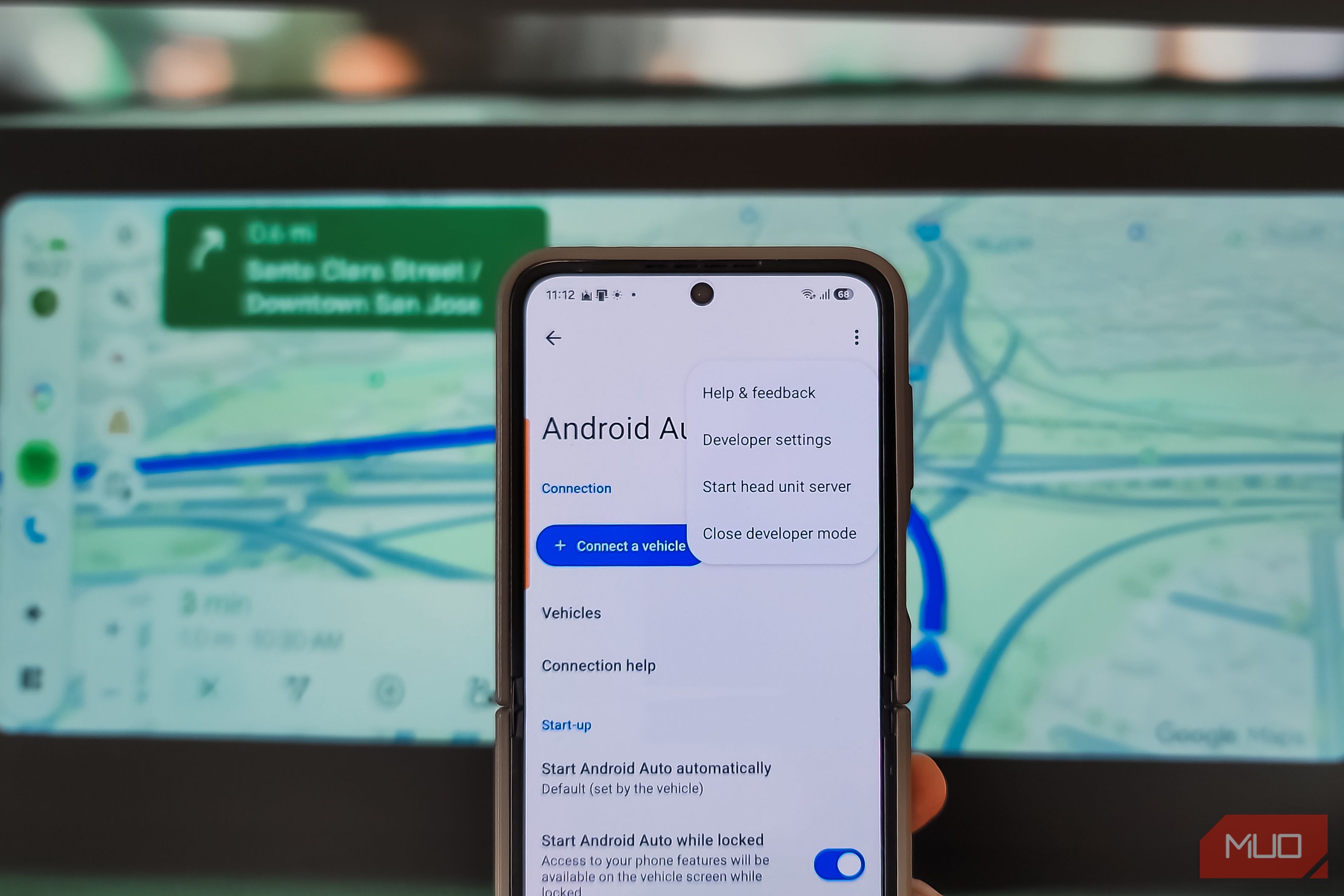
Stop Android Auto Battery Drain: Essential Features to Disable and
Android Auto offers unparalleled convenience, bringing your phone's most useful features directly to your car's display. From navigation and calls to messages and music, it keeps you connected without distracting you
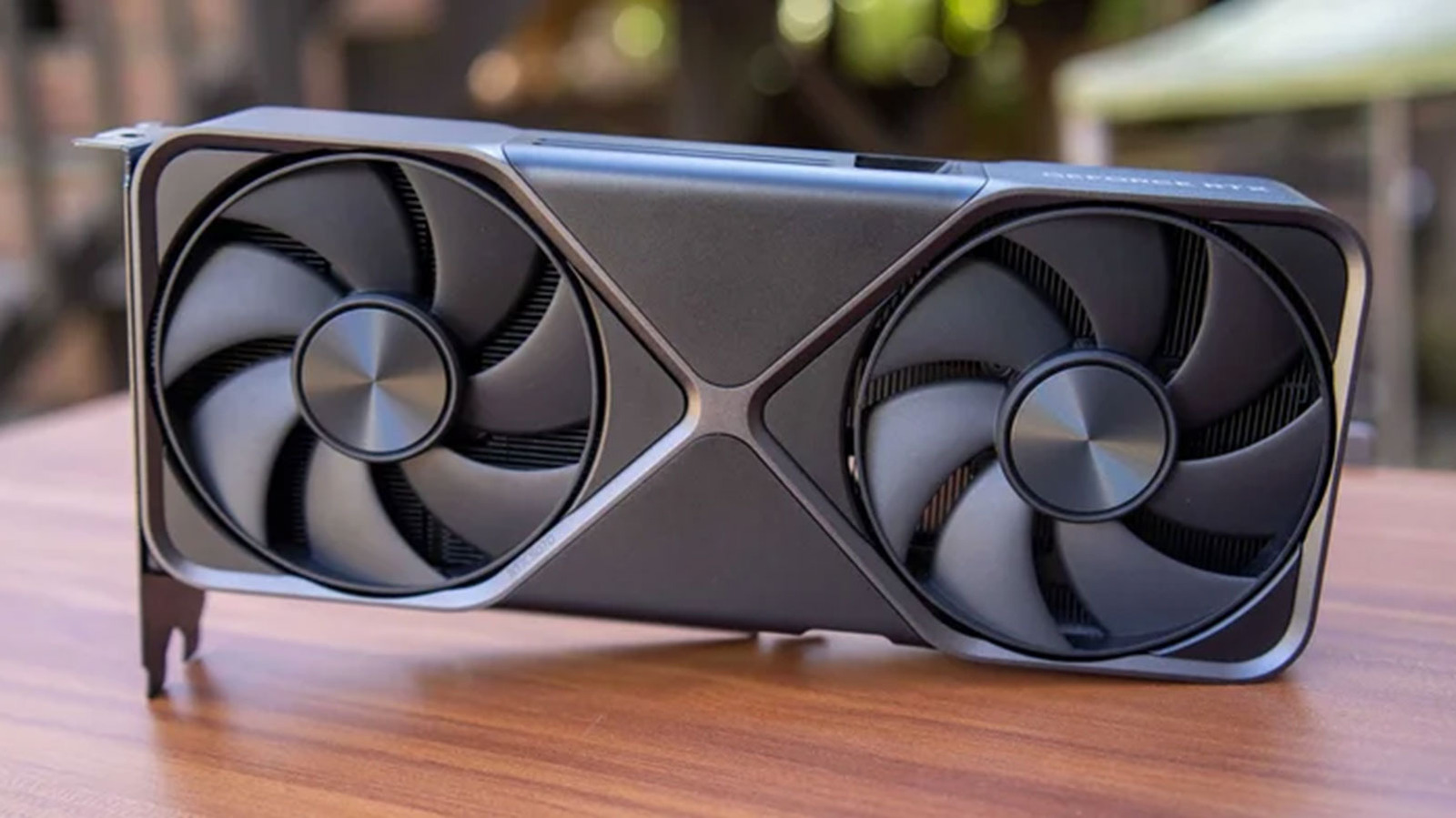
NVIDIA DLSS: A Powerful AI Upscaling Game-Changer
NVIDIA DLSS, or Deep Learning Super Sampling, has become a cornerstone technology for PC gamers with RTX graphics cards. It's a proprietary upscaling solution designed to boost game performance and, in some cases,