41 results found

Uber has significantly deepened its investment in India’s burgeoning ride-hailing ecosystem, announcing a $10 million Series B funding round into Carrum Mobility, an Indian fleet management startup. The move, disclosed

Despite an incredibly tumultuous year for Xbox—marked by leadership changes, massive layoffs, studio sales, and strategic pivots—the company successfully delivered on its promise of over 75 day-one Game Pass Ultimate releases. Subscribers consistently received new titles, showcasing a rare point of stability amidst widespread corporate upheaval and re-evaluation of the service's growth.

Instinct, a year-old AI startup, has rapidly secured $350 million in total funding, reaching a $2.5 billion valuation after a fresh $250 million Series B round. Its AI assistant, led by 23-year-old Noah Shinn, has garnered immense user enthusiasm for organizing various life aspects but also faces significant privacy concerns.

Anthropic is reportedly planning to pitch IPO investors on a monumental $30 trillion market opportunity, a figure that would significantly surpass SpaceX's previous record. This audacious estimate aims to underscore AI's transformative potential and justify a high valuation, despite recent market skepticism regarding similar colossal projections. The move comes as Anthropic prepares for a potential record-breaking IPO later this year.

An in-depth review of the AI Evaluation Harness methodology reveals its critical importance for enterprise LLMs. Unlike qualitative reviews, it objectively measures correctness, unmasking models' dangerous tendency to be most confident when wrong.

OpenAI-backed Thrive Holdings secured $2 billion at a $12 billion valuation to expand its enterprise AI integration strategy. The firm acquires traditional businesses, infusing AI into their operations, and plans to extend its proven model beyond accounting and IT into regulatory services for physical assets. This major funding round highlights a growing trend of hands-on AI deployment in the enterprise.
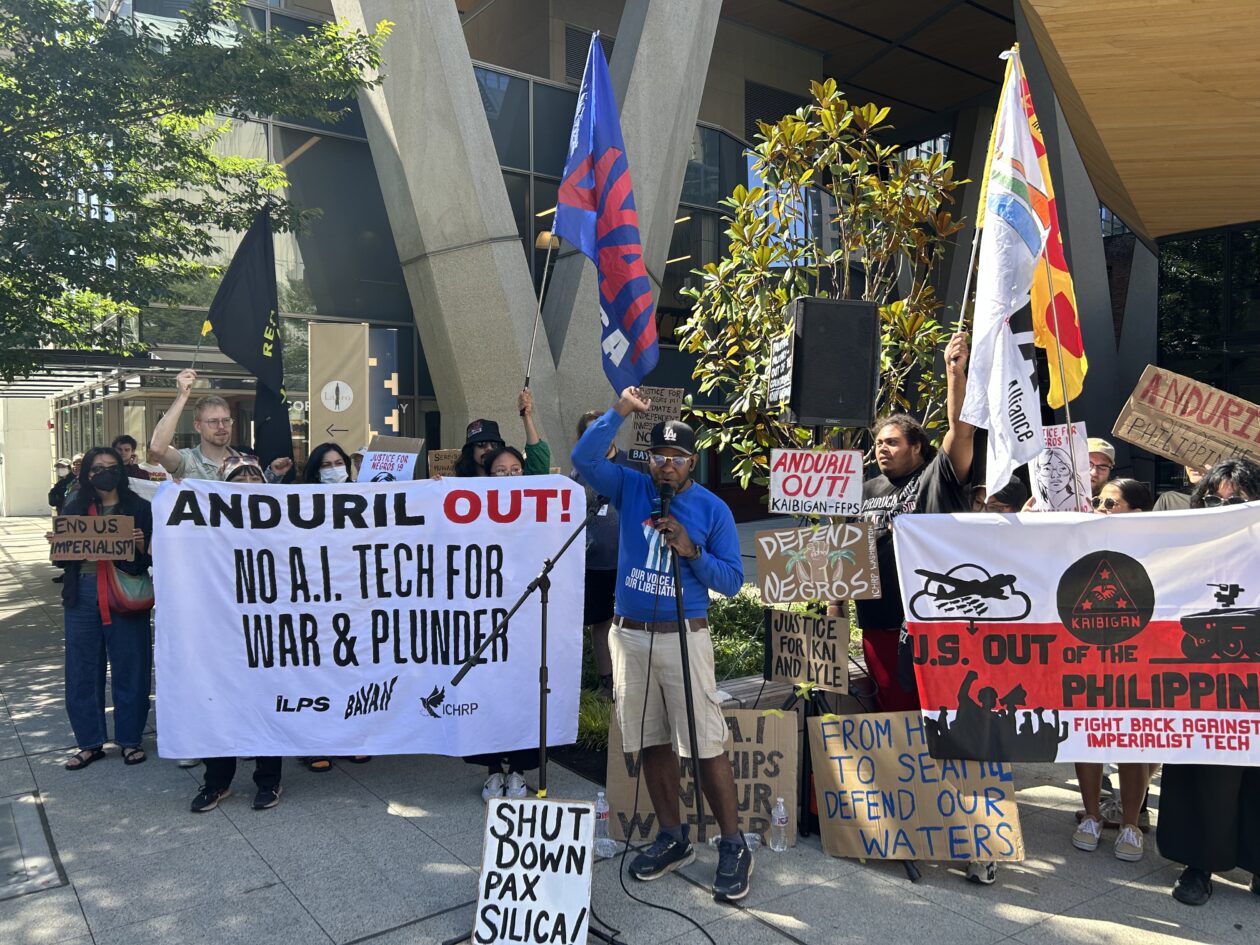
Defense technology powerhouse Anduril is reportedly seeking a new funding round that could propel its valuation to an astonishing $100 billion, a move that would underscore its meteoric rise in the defense sector. This

Seattle-based startup Augmodo has successfully closed a $21 million funding round, boosting its valuation to $350 million. This significant investment is set to accelerate the company’s expansion of its spatial AI
The landscape of software development is undergoing a profound transformation, largely driven by the rapid advancements in artificial intelligence. For many seasoned developers, this shift has prompted a re-evaluation

AI law startup Norm announced Tuesday it has successfully closed a $120 million Series C funding round, propelling the nearly three-year-old company to a $1.2 billion valuation and officially granting it unicorn status.

Wayve, the UK-based self-driving AI startup, has initiated an $85 million employee tender offer at an $8.5 billion valuation, allowing staff to sell vested equity. This move reflects a growing trend among AI companies using such offers for talent retention, supported by eager investors betting on continued high growth. Wayve plans robotaxi pilots with Uber this year and Nissan integration by 2027.

Micron Technology has become a Wall Street favorite, with its valuation soaring amidst booming demand for AI memory chips, particularly High-Bandwidth Memory (HBM). Its stock surged over 236% in a month, briefly surpassing Meta and Tesla's market cap, driven by blockbuster earnings and strategic long-term agreements to mitigate market volatility.

Michael Ronis, founder of Janbrook Partners, argues that while AI offers powerful efficiencies in recruitment, companies risk costly turnover by prioritizing automation over human judgment. He emphasizes that AI excels at data processing but lacks the ability to assess crucial elements like cultural fit, candidate motivation, and interpersonal dynamics. Ronis advocates for a complementary model where AI enhances research, allowing human recruiters to focus on essential relationship-building and nuanced evaluation.

AI is pushing the cost of code generation to near zero, profoundly reshaping engineering leadership. This shift moves the bottleneck from coding speed to ideation and process, necessitating a re-evaluation of how teams measure effectiveness and collaborate. Engineering leaders must now prioritize customer value, foster cross-functional empathy, and emphasize system ownership over raw code output.

This review finds that the provided source content, CNET's navigation menu, lacks any specific details about the "Gemini Is Down?" incident, preventing an analysis of the outage, user impact, or Google's response. A proper evaluation requires the actual news article.

Google has slashed the price of its budget AI Plus subscription to $4.99/month and doubled storage to 400GB for U.S. consumers. This aggressive move signals an escalating price war in the AI market, potentially commoditizing AI infrastructure and challenging valuations for companies like OpenAI and Anthropic.

Mercor co-founder Brendan Foody has publicly accused elite VC firm Sequoia of using "dual-pricing" strategies, investing in startups at two different valuations while founders highlight only the higher figure. This practice, Foody claims, misleads employees and angel investors about a company's true worth. Sequoia partner Shaun Maguire defended the firm, calling it a response to competitive market dynamics rather than a deceptive tactic, sparking debate on startup valuation transparency.

CNET expands its vast digital footprint to offer daily assistance for NYT Connections, promising timely "Sports Edition" hints and answers for June 5, #620. This review assesses CNET's platform and its suitability as a provider for such a service, highlighting its strengths as a credible, broad content hub versus potential challenges in user experience and a lack of specific article content for direct evaluation.

Coralogix, a software-monitoring startup, has raised $200 million in Series F funding, bringing its valuation to $1.6 billion. The company is betting on increased demand for tools to monitor and troubleshoot autonomous AI agents as they become critical in enterprise operations.
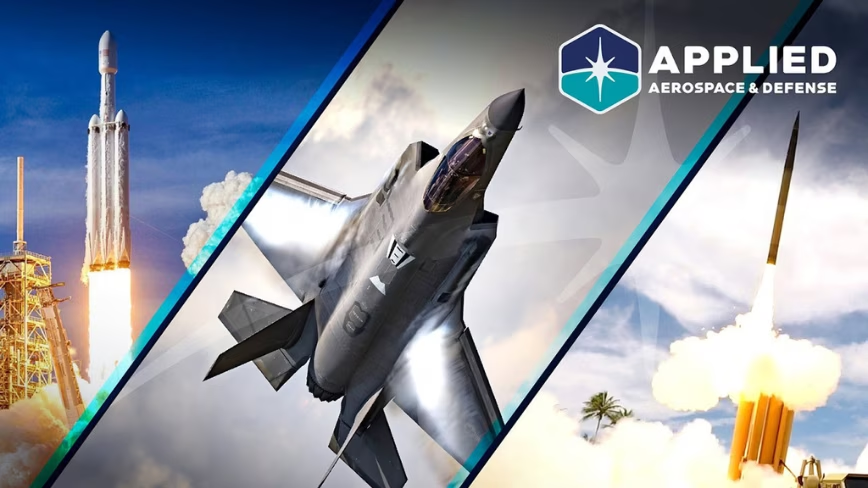
Applied Aerospace & Defense, a Huntsville-based firm, successfully raised $650 million in an IPO that was ten times oversubscribed, pricing shares at $20. The offering underscores a strong investor shift towards defense hardware and solidifies the company's $3.4 billion market valuation. Trading begins Wednesday on the NYSE under AADX.

Microsoft has launched ASSERT, an open-source framework designed to simplify AI behavior testing. It enables developers to create comprehensive, application-specific evaluations using natural language descriptions, ensuring AI systems act as intended for particular products and services. The tool translates high-level goals into structured tests, generates scenarios, scores results, and logs execution paths.

Cognition, the AI coding agent startup behind Devin, secured $1 billion at a $26 billion valuation this week. Despite this, CEO Scott Wu insists AI agents shouldn't replace humans, aiming for augmentation to free programmers from tedious tasks. Wu envisions Devin as a "buddy" that enhances creativity, even as it handles 89% of Cognition's internal code.

A new phenomenon is sweeping the artificial intelligence landscape: the emergence of what AI veteran Oren Etzioni calls “Virgin Unicorns.” These are AI labs that have achieved billion-dollar-plus valuations and

Anthropic's new `/goals` feature for Claude Code revolutionizes AI agent reliability by separating task execution from goal evaluation. This prevents agents from prematurely ending tasks, using a dedicated evaluator model to ensure specified conditions are fully met before declaring completion. The innovation offers a more robust, auditable approach to AI agent deployment.

DeepMind veteran David Silver has secured an unprecedented $1.1 billion in funding for his new British AI lab, Ineffable Intelligence, at a $5.1 billion valuation. The company aims to build a "superlearner" AI that acquires knowledge and skills purely through reinforcement learning, without relying on human data, a radical departure from current large language models.
