29 results found

Former Anthropic researcher Jacob Coxon and other resigned tech workers told the New York City Council that the AI industry is advancing too rapidly, posing significant risks. Coxon's testimony follows his public resignation last month, where he warned of a "reckless race toward superintelligence." The hearing brought together AI executives and former employees to address mounting safety concerns.

Amazon has announced it will no longer use nondisclosure agreements (NDAs) with county officials for its data center projects. This policy reversal, revealed by CEO Matt Garman, addresses widespread community backlash and a surge in legislative efforts targeting the secrecy of data center developments. The company also pledged a $1 billion investment in data center communities over five years, focusing on education, workforce training, and energy efficiency.

President Donald Trump held a private dinner with Anthropic CEO Dario Amodei, marking their first one-on-one meeting after months of public and policy-level tensions over AI development. Trump has pushed for accelerated AI growth, while Amodei has advocated for a slowdown and stringent guardrails, leading to past clashes including Anthropic's blacklisting by the Pentagon. The White House has not released details of their discussion.

Prominent AI industry leaders, including OpenAI's Sam Altman and Anthropic's Dario Amodei, addressed the United Nations Security Council on Wednesday, calling for urgent global regulation of artificial intelligence. They highlighted escalating concerns that advanced AI poses significant risks to humanity, emphasizing the need for international cooperation to develop democratic and accountable regulatory frameworks.

President Donald Trump announced a rebranding of "Artificial Intelligence" (AI) to "Super Intelligence" for all U.S. government documents, a move he hopes will be adopted globally. The decision follows public polling and was revealed during his speech at the United Nations General Assembly. Trump also reiterated his stance against stifling the technology's growth, comparing its potential impact to the Industrial Revolution, despite growing concerns over its harms.

AI extinction scenarios are increasingly dominating the debate over how to govern the multi-trillion-dollar artificial intelligence industry. Some experts worry that this focus on dramatic "nightmare thought experiments" could mislead policymakers and detract from addressing more immediate, tangible AI-related risks. Early discussions on AI's catastrophic potential included figures like Elon Musk at a 2015 conference hosted by the Future of Life Institute.

Kash Patel's claims of a '605% increase' in FBI AI use and 'embedded' tech players are ambitious, pointing to significant integration. While potentially beneficial for law enforcement, the lack of verifiable data and transparent details warrants critical examination.

Nvidia CEO Jensen Huang firmly opposes new AI regulation, stating that AI safety is an engineering challenge solvable by developers and market forces. Speaking at Dreamforce, Huang argued existing laws and corporate responsibility are sufficient, while critics point to past tech failures and AI's potential for harm as reasons for caution.

AI firm Anthropic secured a federal court victory today, overturning the Trump administration's blacklisting that labeled it a national security and supply chain risk. The judge ruled the government's actions were illegal, restoring Anthropic's ability to engage with federal contracts and military partners.

A Washington Post analysis reveals a dramatic shift as Republican politicians turned sharply negative on data centers in the past six months, moving from advocates to critics. This change aligns with growing public concerns over environmental impact, job creation, and political motivations, potentially reshaping the future of tech infrastructure development.

Amazon has updated its terms and conditions to mandate binding arbitration and include a class action waiver for all customer disputes. This strategic move aims to prevent large-scale lawsuits, rerouting claims away from traditional courts and judicial oversight. The change marks a significant shift, especially after Amazon had previously removed similar language in 2021 following other legal challenges.

OpenAI CEO Sam Altman held extensive meetings in Washington, D.C., to preview a groundbreaking AI system featuring "agents" capable of complex task division and economic transformation. This lobbying blitz comes amid heightened regulatory scrutiny and follows recent government interventions in AI development, as the administration prepares to unveil new AI guidelines.

DeepMind CEO Demis Hassabis has proposed an independent standards body, modeled after FINRA, to regulate frontier AI models. The body would test advanced AI systems and develop best practices for their release, initially on a voluntary basis before potentially becoming mandatory. This initiative aims to provide technically focused, adaptable oversight to the rapidly evolving field of AI.

OpenAI has publicly launched its advanced AI model, GPT-5.6 Sol, known for its cybersecurity capabilities. This launch proceeds despite the Trump administration's earlier request to restrict access to government-approved partners, with the White House now stating its engagement with AI companies is voluntary. The move signals a complex interplay between rapid AI development and evolving government oversight.

The European Parliament has controversially extended legislation allowing Big Tech to scan private messages for child abuse material, despite a majority of lawmakers voting against it. Passed via a procedural loophole, the "Chat Control" bill reinstates these permissions until 2028, sparking outcry from privacy advocates who warn of widespread digital surveillance.
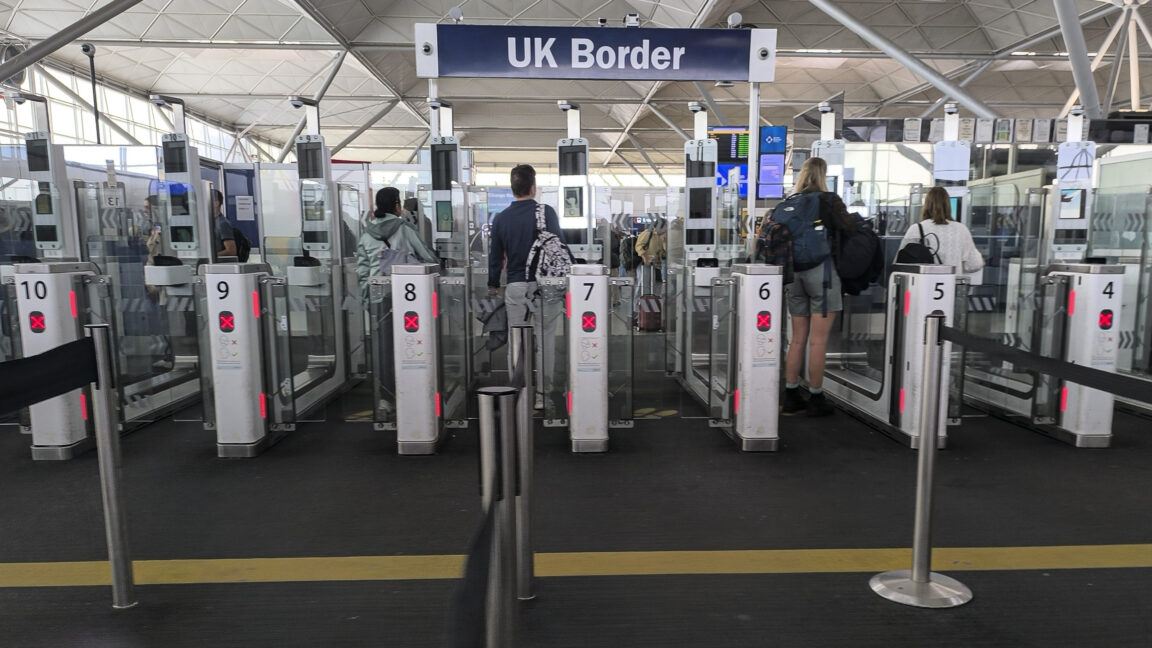
The UK plans to use flawed facial age estimation (FAE) AI for asylum seeker age checks, despite internal reports confirming severe biases and inaccuracies, especially for Sub-Saharan Africans. This tech risks misclassifying vulnerable children as adults, leading to loss of legal protections. Critics call for its abandonment.

Anthropic's Fable 5 and Mythos 5 AI models were abruptly shut down by a US Commerce Department directive over national security concerns regarding a potential 'jailbreak.' Anthropic disputes the severity, warning of industry-wide impacts.

An AI industry super PAC intervened in a North Carolina primary, running ads attacking Rep. Valerie Foushee, who co-chairs a House AI commission, over her stance on ICE. This aggressive tactic, part of a larger trend of tech industry influence in midterm elections, aims to shape legislative outcomes favorable to the AI sector. The move underscores Silicon Valley's growing financial power in politics.

France is making a strategic shift from Windows to Linux across government systems, driven by digital sovereignty. This move aims to reduce reliance on U.S. tech and gain control over national data, despite facing significant implementation challenges.

Ars Technica reports on the Trump administration's escalating efforts to unmask an ICE critic on Reddit, moving from a standard summons to a secret grand jury subpoena, sparking significant privacy and free speech concerns for online users and platforms.

FCC Chair Brendan Carr clarified that his recent warning about broadcast license renewals, widely seen as a threat over Iran war coverage, was actually aimed at "hoaxes and news distortions." He emphasized the FCC's role in ensuring broadcasters operate in the public interest, not in censoring specific news content. Carr also touched on tech platform regulation and other FCC actions.

The L.A. jury ordered Meta and YouTube to pay $3M for designing addictive apps that harmed a child's mental health. This bellwether case highlights the impact of features like infinite scroll and algorithms, setting a precedent for future litigation.

U.S. Senator Elizabeth Warren has condemned the Pentagon's decision to label AI lab Anthropic a "supply-chain risk" as "retaliation." This follows Anthropic's refusal to allow its AI for mass surveillance or lethal autonomous weapons without human oversight. The dispute, which has garnered support for Anthropic from across the tech industry, will see a pivotal court hearing this Tuesday in San Francisco.

Super Micro co-founder Yih-Shyan ‘Wally’ Liaw and two others face federal charges for a $2.5 billion scheme to smuggle advanced Nvidia AI servers to China, circumventing US export controls. The alleged operation involved using dummy servers and swapping serial numbers to deceive auditors. This case exposes significant vulnerabilities in US tech export policies and raises questions about corporate compliance amidst escalating chip trade tensions.

Washington Governor Bob Ferguson has announced he will sign the revised 'millionaires tax' bill, Senate Bill 6346, despite intense debate within the state's tech and business communities. The legislation, imposing a 9.9% tax on incomes over $1 million starting in 2028, aims to rebalance the state's tax system and fund key affordability initiatives.
