5 results found
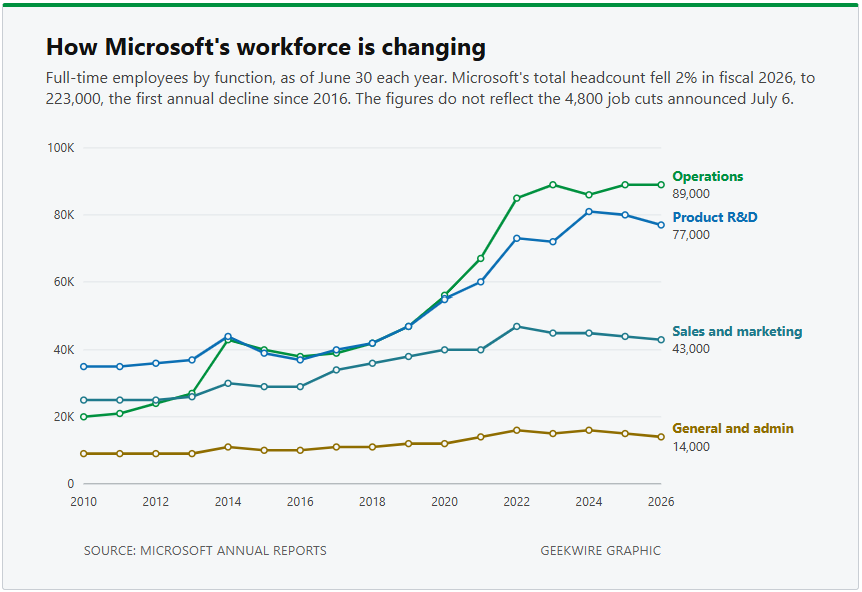
Microsoft's total headcount dropped for the first time in a decade, fueled by a second consecutive decline in R&D roles, despite record revenue growth. This strategic shift reflects the company's adaptation to the AI era, including significant investments in AI infrastructure and a reallocation of engineering talent to customer-facing roles.
Nostalgia for classic Walkmans is strong, but former Sony engineer Akira Tanaka reveals why a reissue is impossible. Key components no longer exist, vital manufacturing expertise has been lost, and the economics of a niche market don't support the immense R&D required to recreate these complex devices from scratch.

Porsche is closing three subsidiaries—Cellforce Group (battery R&D), Porsche eBike Performance, and Cetitec (software)—affecting over 500 jobs. This strategic overhaul, driven by CEO Michael Leiters, aims to refocus on core business amidst declining sales and profits, particularly in key markets like China and North America.

Dana Lawson, Netlify's CTO, shares insights on building and leading a lean, globally distributed engineering team. Her approach emphasizes a strong written culture, intentional in-person connections, and pragmatic tech choices to power 5% of the internet with only ~50 R&D staff. AI agents play a crucial role in augmenting communication and documentation.

Samsung's R&D chief, Won-Joon Choi, has clarified why the Galaxy S26 will not feature internal magnets, citing concerns over added device thickness. He noted that with 80-90% of users already employing cases, many with magnetic capabilities, the trade-off for internal magnets is deemed unnecessary. This approach contrasts with competitors like Apple and Google.
