
Beyond Nostalgia: Why Classic Walkmans Can't Be Re-Engineered
Nostalgia for classic Walkmans is strong, but former Sony engineer Akira Tanaka reveals why a reissue is impossible. Key components no longer exist, vital manufacturing expertise has been lost, and the economics of a niche market don't support the immense R&D required to recreate these complex devices from scratch.
Many of us, looking at the resurgence of retro tech like vinyl or even cassettes, might wonder why a company like Sony can't simply bring back its beloved classic Walkman models. On the surface, it seems like a straightforward business decision and a relatively minor engineering task: dust off the old blueprints, find a factory, and hit "go." However, as illuminated by former Sony mechanical engineer Akira Tanaka, the reality is far more complex, akin to starting a completely new project rather than a simple re-release. For software developers accustomed to managing dependencies, evolving tech stacks, and maintaining legacy systems, Tanaka's insights offer a stark reminder of the intricate ecosystem behind hardware development and why some technological chapters are truly closed.
The Supply Chain Abyss: When Components Vanish
One of the most immediate roadblocks Sony faces is the complete disappearance of specialized components. Imagine trying to build a modern application where core libraries and SDKs from 30 years ago are simply no longer available, and their original maintainers have moved on or dissolved. Classic Walkman models relied on highly specialized miniature motors, magnetic heads, optical pickups for CDs, and proprietary integrated circuits. These parts weren't off-the-shelf commodities; they were often custom-designed and produced by a network of suppliers that have long since shifted focus or exited the business. Sony's original bills of materials now describe components that literally no one manufactures.
To "bring back" a Walkman means embarking on a full-scale redesign. A new cassette player would need a wholly new transport mechanism, motor, head, control system, and power supply, all built around currently available parts. A CD player would require a new optical assembly, and a MiniDisc player would add the complexity of a magnetic recording head, signal processing, and specialized software. This isn't a minor update; it's a ground-up development program for each format, incurring significant R&D costs and a development timeline comparable to a brand new product.
The Tacit Knowledge Gap: Manufacturing's Lost Art
Beyond the parts themselves, the very how of manufacturing these devices has largely evaporated. Later Walkman models were engineering marvels of miniaturization and precision. Achieving those incredibly thin profiles and tight tolerances wasn't just about design drawings; it involved bespoke production lines, highly specific adjustment procedures, and undocumented factory floor expertise. Think of it as the "tribal knowledge" within an engineering team – the undocumented quirks, the specific jig setups, the alignment tricks that solved persistent problems, or the subtle adjustments that prevented premature wear.
This specialized manufacturing know-how resided with the engineers and factory workers who lived and breathed these machines. While drawings detail dimensions, they don't capture the cumulative wisdom of tuning a production line over thousands of units. The mass market demand for such precision ended long ago, leading to the dismantling of these specialized lines. Today's cassette player manufacturers, for instance, serve a niche, low-cost market, a far cry from the relentless pursuit of miniaturization that characterized the Walkman's golden age. Attempting to replicate that level of precision would necessitate recreating the entire manufacturing process from scratch, without the accumulated institutional experience.
Economic Realities: Beyond Niche Appeal
Even if the technical hurdles were overcome, the economics present a formidable barrier. While online communities might suggest a large demand, the actual market for new classic Walkmans remains relatively small. Akira Tanaka estimates that even sales in the tens of thousands might not be sufficient to recoup the substantial development and tooling costs required for a modern re-engineering effort. Low production volumes inherently drive up the unit cost of specialized components, making each player far more expensive than nostalgic fans might anticipate. When factoring in manufacturing, warranty, and support, the retail price would likely be prohibitive, underscoring that a major corporation like Sony operates on economies of scale that niche retro products simply can't provide.
Ecosystem Collapse: The Media Dependency Problem
The challenge isn't just the player itself but its entire ecosystem. While CDs and cassettes still see some new production, MiniDisc faces an insurmountable hurdle: Sony officially ended production of all recordable MiniDisc media in early 2025. Releasing a new MiniDisc Walkman into a market with a finite, declining supply of blank media would be illogical. It’s akin to launching a new console without any games. For a product to succeed, its consumables must be readily available, and restarting MiniDisc media production would be another massive, costly undertaking that Sony has clearly indicated no interest in.
Strategic Resource Allocation: Focusing on the Future
Sony, like any major tech company, operates with finite engineering staff and development budgets. Its current Walkman division focuses on Android-based, Hi-Res digital audio players, designed for local files and streaming services. This strategic decision aligns their limited resources with the modern audio market's demands. Diverting significant engineering talent and capital to re-engineer obsolete mechanical formats would be a direct opportunity cost, pulling resources away from the products that define their current and future market strategy. This is a common corporate reality: prioritizing innovation and market relevance over niche nostalgia.
Institutional Memory and the Human Factor
Tanaka's final, somewhat jocular, reason—his own departure from Sony—highlights a critical, often underestimated, factor: the loss of institutional knowledge. While documentation (drawings, reports, patents) exists, it doesn't fully capture the "why" behind every design choice, the lessons learned from failed prototypes, or the ingenious, on-the-fly fixes that production problems demanded. This deep, implicit understanding often resides with the experienced engineers. As Sony transitioned away from mechanical Walkmans, the imperative to rigorously document and transfer this highly specific mechanical engineering knowledge waned. The people who truly understood the nuances of these complex mechanical systems have retired or moved on, creating a knowledge vacuum that is incredibly difficult to fill.
Conclusion
For developers, the story of the classic Walkman offers a poignant lesson: complex systems are more than just their code or their blueprints. They are products of a specific technological era, supported by a vast, interconnected ecosystem of components, manufacturing processes, economic realities, and human expertise. When that ecosystem disperses and evolves, reviving a past iteration becomes less about a simple "reboot" and more about an impossible "re-genesis." Sony's classic Walkmans are not merely "obsolete" in a functional sense, but in an existential one – their underlying world has vanished.
FAQ
Q: Could 3D printing or modern rapid prototyping techniques overcome the component availability issue for a classic Walkman? A: While 3D printing can create custom parts, it's generally unsuitable for the ultra-precise, miniaturized, and durable components (like magnetic heads, tiny motors, or complex optical pickups) required for a high-fidelity Walkman. Materials science, manufacturing tolerances, and the economies of scale needed for these functional components are far beyond what current consumer or even industrial 3D printing can achieve for mass production. It would still require a complete redesign using available technologies, essentially building a new player that superficially resembles the old, rather than a true reissue.
Q: How does the "loss of manufacturing technology" compare to modern software development challenges? A: In software, this parallels the challenges of maintaining or porting highly optimized, platform-specific codebases (e.g., assembly, specific hardware drivers) when the target hardware or operating system becomes obsolete, and the original developers have left. The "secret sauce" for performance or stability might have been in undocumented optimizations, specialized toolchains, or even specific compiler versions that are no longer supported. Recreating that precise functionality and performance without the original expertise and environment is often a costly and error-prone "start over."
Q: If there's clear demand from collectors, why wouldn't Sony license the design to a smaller company? A: Even for a smaller company, the fundamental issues of unavailable parts, lost manufacturing expertise, and the cost of developing modern equivalents would remain. Licensing the "design" (blueprints) without access to the original supply chain, tooling, and specialized knowledge would be largely symbolic. Any licensee would still face the prohibitively high R&D and production costs relative to the niche market size, making it an unfeasible venture for most, regardless of branding.
Related articles

AI's Impact on Malware Detection: Next-Gen Protection Deep Dive
The landscape of cybersecurity has transformed dramatically. Gone are the days when a simple virus attached itself to a file, easily quarantined by an antivirus scanner. Today, malware is sophisticated, multifaceted,

AI Cybersecurity: The Perpetual Cat and Mouse Game
In the rapidly evolving digital landscape, the interplay between artificial intelligence and cybersecurity has created a dynamic, ceaseless challenge—a true cat and mouse game. AI is not merely a tool for defense; it's
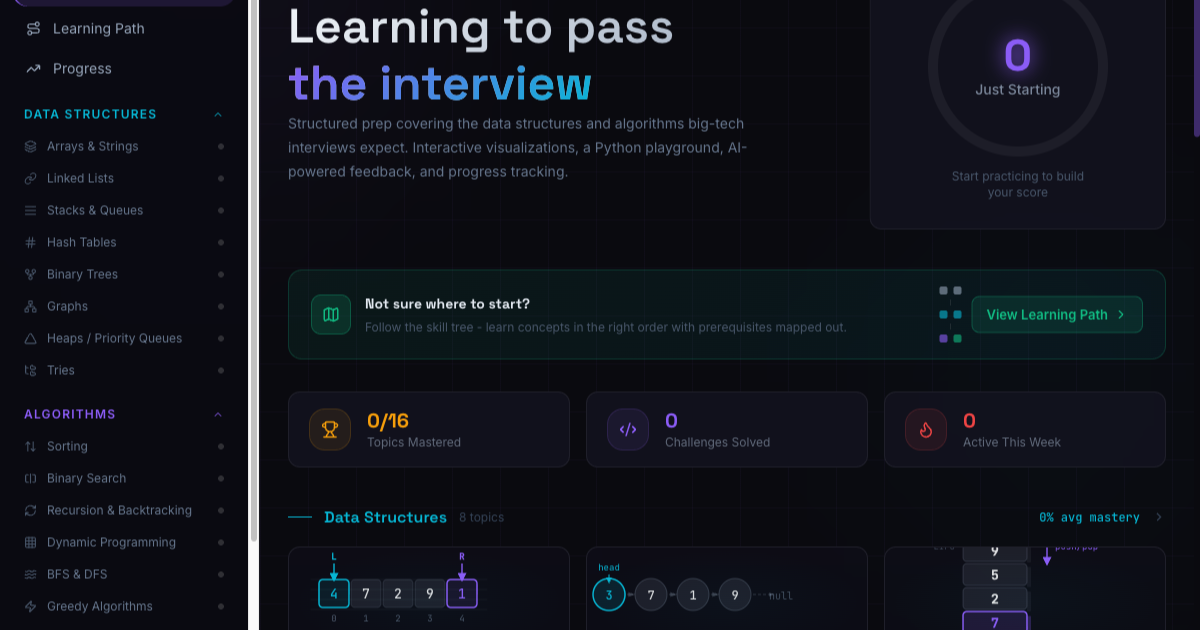
Learningto/Pass: Free, AI-Powered Interview Prep for Developers
Landing a role at a top-tier tech company often hinges on mastering complex data structures and algorithms, coupled with a solid grasp of system design. The problem for many aspiring software developers is that quality
The Composite Design Pattern: Unifying Individual Objects and Groups
As software engineers, we frequently encounter scenarios where we need to manage collections of objects that can be either individual entities or groups containing other entities. Think of a file system with files and

Nintendo Direct September 2026: Metroid, Kirby, Persona 6 & More
Nintendo's September 2026 Direct unveiled a strong lineup for the Switch 2, including the new 2D Metroid Ravenous and Kirby and the World Beyond. Persona 6 was confirmed for the console, alongside enhanced editions of Pikmin 4 and Resident Evil remakes. The presentation highlighted Nintendo's focus on its new hardware, offering a mix of new titles and beloved classics.
Java's Secret Weapon: How Age Powers Its AI Future
Java's extensive history is a key AI superpower, offering a stable foundation for agent-generated code and an unparalleled dataset for training AI models. Its mature ecosystem of libraries and agentic harnesses further enable developers to build robust, integrated AI applications. This positions Java as a powerful, reliable choice for future AI-driven software development.