153 results found

Capital One has launched VulnHunter, an open-source AI tool designed to identify and fix software vulnerabilities proactively. This agentic AI scans source code using an "attacker-first" approach and a "falsification engine" to minimize false positives, providing targeted code fixes. The move reflects Capital One's commitment to collaborative defense against rising AI threats, especially after its significant 2019 data breach.

Building Multi-Agent AI Systems: Plain Python vs. LangGraph As developers, we often tackle complex tasks by breaking them down into smaller, manageable pieces. This principle applies equally to AI systems, especially
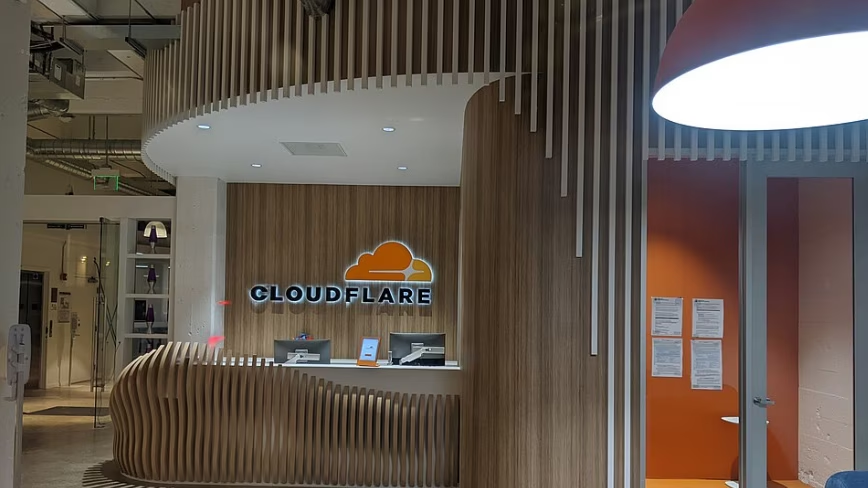
Cloudflare has launched Precursor, a new defense system, in response to bots now generating over 57% of all web traffic. Precursor monitors entire user sessions to distinguish humans from sophisticated bots, moving beyond traditional single-check methods. This initiative is part of a broader strategy to classify and manage AI agents, control content reuse, and rebuild the web's foundational infrastructure for a machine-dominated internet.
OpenClaw Machines offers an open-source, self-hosted platform for running AI agents with enterprise-grade security and cost efficiency. It utilizes Firecracker microVMs for hardware isolation on your own Linux servers, providing full data sovereignty and predictable costs, especially at scale. The platform includes a control plane for orchestration, a Cloudflare data plane for secure access, and integrated LLM proxying.

DeepSeek's recent 75% price reduction for its V4-Pro model, a move that should have been unequivocally celebrated by the enterprise AI sector, is instead revealing a critical flaw in the economic model of AI agent

The world of AI development is rapidly evolving, with a growing focus on autonomous agents capable of performing complex tasks. As developers, many of us have explored various agent "harnesses" – frameworks designed to

Expedia Group, leveraging years of AI experience, has unveiled a comprehensive framework of principles to ensure its AI systems deliver value, operate safely, and scale responsibly. This strategy includes "Agentic Release" tollgates, designed to govern the development and deployment of autonomous AI agents across its platforms. The framework focuses on outcomes, system design, and establishing trust and accountability.

The AI landscape is currently awash with headlines, promises, and a pervasive sense of FOMO. From prophecies of job elimination to the notion that everyone needs an 'AI agent' they barely understand, the discourse often

Liquid AI, founded by former MIT computer scientists, today launched LFM2.5-230M, its smallest AI language model yet. This 230-million-parameter foundation model is explicitly designed for on-device agentic workflows,

The proliferation of AI agents has opened up exciting new possibilities, but as these systems move beyond chatbots and into high-stakes environments—modifying infrastructure, moving money, or altering critical

AI video startup Higgsfield has launched Supercomputer 2.0, an autonomous agent framework for enterprise marketing. Built on NVIDIA technology, it claims adoption by 78 percent of Fortune 500 companies, aiming to automate full campaign lifecycles. The company also produced an AI-generated feature film in 14 days.

Sakana AI has launched Marlin, an "ultra deep research" agent designed for enterprise clients. Operating as a "Virtual CSO," Marlin conducts self-governing reasoning for up to eight hours to deliver comprehensive, 100+ page strategy reports. Powered by Adaptive Branching Monte Carlo Tree Search (AB-MCTS) and a multi-LLM architecture, it focuses on deep, vetted analysis over quick generation, backed by strict data privacy policies and significant venture capital.

The rapidly evolving landscape of AI agent communication is witnessing a familiar pattern: initial proliferation of protocols, followed by gradual consolidation. While significant progress has been made in standardizing

KPMG has pulled its report, "Redefining excellence in the age of agentic AI," after organizations cited within it denied the accuracy of its claims regarding their AI usage. Inaccuracies were attributed to AI hallucinations, implying KPMG used AI to write the report about AI. This follows a similar incident last month with EY.

Pool, a new AI-powered iOS app, transforms cluttered camera rolls into organized, actionable archives by categorizing screenshots and linking them to original sources. Developed by Maxime Junique and Piet Terheyden, the app uses advanced AI to help users rediscover forgotten information, from recipes to product recommendations. Having secured over $2 million in pre-seed funding, Pool is also planning a future agentic AI personal assistant app.

A recently laid-off Meta employee has been detained by US immigration agents in El Paso, Texas, according to internal company communications. The incident highlights the critical vulnerability of visa-holding tech workers during mass layoffs and has sparked urgent concern among current Meta staff.

Apple has introduced a groundbreaking architecture at WWDC26 for on-device AI, overcoming the long-standing DRAM memory limit. Its new AFM 3 Core Advanced model stores 20 billion parameters in NAND flash, using a unique Instruction-Following Pruning (IFP) method to dynamically load expert modules into DRAM. This innovation significantly boosts local AI capabilities for agentic workloads.
The landscape of database management is rapidly evolving, particularly with the increasing prevalence of AI agents interacting directly with our data systems. While these agents offer immense potential, they also

LLM-based Multi-Agent (LLM-MA) systems automate complex software tasks, but their token consumption, and thus costs, are poorly understood. New research analyzing the ChatDev framework with GPT-5 reveals that the iterative Code Review stage consumes a striking 59.4% of tokens, with input tokens making up 53.9% of total consumption. This indicates that the primary cost in agentic software engineering lies in refinement and verification, not initial generation, offering crucial insights for cost prediction and workflow optimization.

Microsoft's Build 2026 showcased a bold AI-first future with seven new in-house AI models, Project Solara for agent-first devices, and the Scout assistant. Mary Jo Foley helped decode these developments, highlighting Microsoft's push for AI self-sufficiency and the road ahead for Copilot and GitHub.

China is moving beyond super-apps to embrace AI agents from Alibaba (Qwen) and Tencent (WeChat). These agents promise unparalleled convenience by automating complex tasks through conversational requests, but their success hinges on establishing user trust through accuracy and reliability.

Coralogix, a software-monitoring startup, has raised $200 million in Series F funding, bringing its valuation to $1.6 billion. The company is betting on increased demand for tools to monitor and troubleshoot autonomous AI agents as they become critical in enterprise operations.

Cognition, the AI coding agent startup behind Devin, secured $1 billion at a $26 billion valuation this week. Despite this, CEO Scott Wu insists AI agents shouldn't replace humans, aiming for augmentation to free programmers from tedious tasks. Wu envisions Devin as a "buddy" that enhances creativity, even as it handles 89% of Cognition's internal code.

Dive into 007 First Light and begin your journey to becoming an MI6 agent. This guide offers 7 essential beginner tips, from mastering stealth and gadget management to leveraging failure and understanding when to fight. Learn to defend the Crown like a true spy.
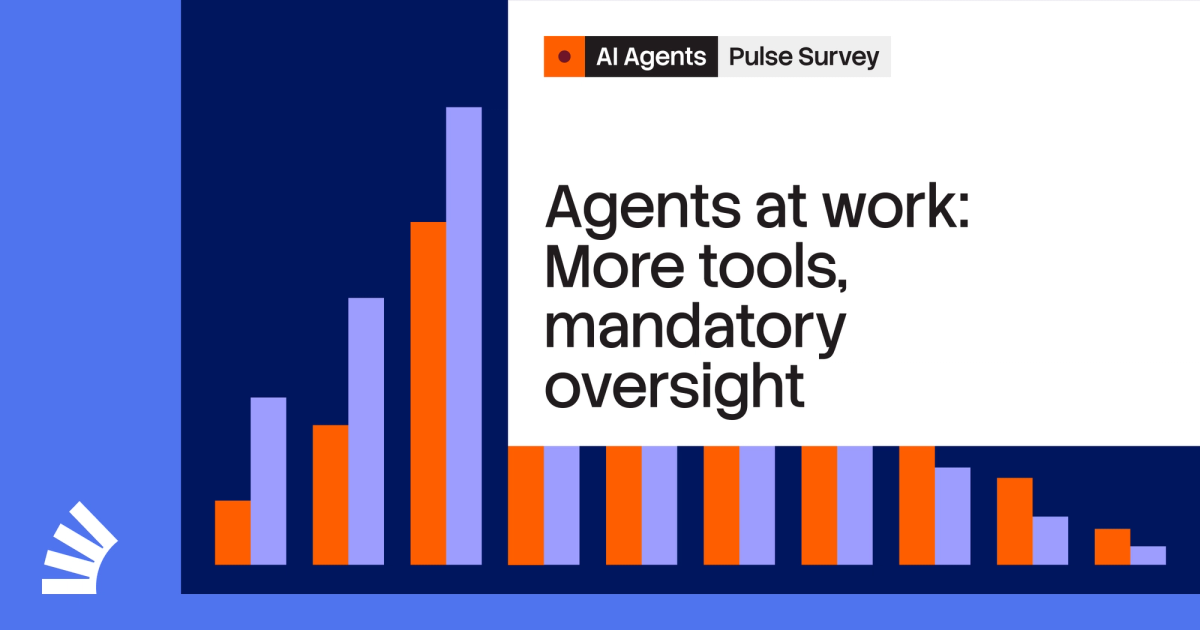
AI agent usage has nearly doubled, yet developers maintain a strong preference for human oversight. A recent survey reveals single-agent workflows are dominant, driven by concerns for accuracy and security, even as work quality improves. Fintech and media lead adoption, leveraging tools like GitHub Copilot and LangChain under careful monitoring.