
Why AI hasn't Replaced Human Expertise in Your SaaS Stack
As software developers, we've all seen the headlines and the seductive promise: AI would become the ultimate answer engine, allowing us to code with minimal human interaction. The vision of prompting our way to perfect

As software developers, we've all seen the headlines and the seductive promise: AI would become the ultimate answer engine, allowing us to code with minimal human interaction. The vision of prompting our way to perfect solutions, even with limited coding knowledge, was compelling.
Yet, the data tells a different story. Despite the rapid proliferation of AI coding assistants, reasoning models, and LLM-powered documentation tools, a significant majority of developers—over 80%—continue to regularly visit platforms like Stack Overflow. And when an AI-generated answer doesn't quite inspire confidence, a staggering 75% of developers turn to another human for clarification. This isn't a failure of AI; rather, it highlights that for the truly hard problems, developers need more than just an answer – they need knowledge, context, and human validation.
The Shifting Landscape of Developer Challenges
Stack Overflow's internal LLM, used to categorize questions, reveals a fascinating trend: the number of advanced technical questions on the platform has doubled since 2023. This coincides precisely with the period when AI coding assistants became dramatically more capable.
What does this signify? AI tools are effectively handling the straightforward tasks: boilerplate code generation, syntax lookups, standard library usage, and common programming patterns. These easier problems are increasingly offloaded to AI, often with great success. However, the questions that remain – those developers can't resolve even with AI's assistance – are more complex and challenging than ever. Developers resort to human communities when AI reaches its limits, underscoring that our collective problem-solving capacity is now focused on higher-order issues.
This insight has profound implications for how we, as developers and enterprise SaaS buyers, evaluate AI tools. The question shouldn't merely be, "Can it answer coding questions?" (most can, to varying degrees). Instead, we should ask: "Can it reliably address the hard questions that AI tools alone cannot resolve, or can it effectively route us to human expertise for those problems?"
Beyond the Accepted Answer: The Power of Discourse
When asked why they use platforms like Stack Overflow, many developers surprisingly prioritize reading the comments section over just the accepted answer. While the accepted answer confirms what works, the comments delve deeper, explaining why it works, outlining potential edge cases, discussing when a solution might not be appropriate, and offering modifications or alternative perspectives.
Developers aren't just seeking a quick fix; they're pursuing comprehensive knowledge. True understanding often emerges from the discourse—the sometimes-contentious, always-contextual conversations that arise when diverse practitioners tackle the same problem. AI models, while adept at synthesizing patterns from vast text corpora, struggle to replicate this nuanced engagement. They cannot participate in genuine debate, acknowledge inherent uncertainties, or surface the most revealing aspects of a dynamic conversation. Flattening this rich back-and-forth into a single, confident paragraph diminishes a significant portion of its value.
Bridging the Validation Gap
Enterprise software buyers are rightly optimistic about AI's productivity benefits, from faster code generation to more natural documentation searches. These efficiencies are tangible. However, a critical "validation gap" persists. When a developer questions the trustworthiness of an AI-generated solution, they require human judgment for recourse. The 75% figure of developers turning to a person highlights the practical scale of this gap.
This validation gap carries real costs for organizations. A developer unable to confidently validate an AI solution might waste valuable time second-guessing it, abandon a potentially viable approach, or worse, deploy unproven or untrustworthy code. The most valuable AI-adjacent tools in your enterprise stack are those that go beyond merely generating answers; they actively help developers determine which answers to trust.
An effective knowledge intelligence layer can bridge this gap by connecting internal expertise with open questions, surfacing relevant community discussions, and making institutional knowledge readily searchable. This integration empowers AI tools by providing the crucial context developers need to confidently evaluate and utilize AI output.
Evaluating AI-Enabled SaaS: Key Considerations
When integrating AI features into your enterprise software stack, consider these critical questions:
- Does the tool acknowledge uncertainty? Confidently incorrect answers are far more detrimental than acknowledged uncertainty. Prioritize tools that surface confidence levels, flag edge cases, or indicate when a query falls outside their reliable knowledge base.
- How does it handle complex questions? For challenging problems, the most valuable response might be, "I'm not sure, but here's where you can find expert human guidance." Tools that effectively route users to human expertise for the 20% of truly hard questions are more valuable than those attempting to provide fast, but low-quality, answers to everything.
- Does it preserve context and discourse? Raw answers lack the depth of contextualized knowledge. Platforms that surface discussions, explain tradeoffs, and present dissenting perspectives foster better decision-making than those that condense complex knowledge into a singular output.
- How seamlessly does it integrate with human expertise? The objective isn't to replace expert communities but to enhance access to their invaluable knowledge. Tools that effectively combine AI capabilities with structured human knowledge – whether internal institutional expertise or external developer communities – will significantly outperform standalone AI oracles.
The Bottom Line for Your SaaS Stack
The doubling of advanced questions on platforms like Stack Overflow since 2023 serves as a clear indicator: AI has mastered the easy problems, but the remaining challenges are genuinely hard. While AI tools are undoubtedly game-changers for productivity and efficiency, human expertise and the platforms that foster it remain indispensable for navigating complex technical hurdles.
The wisest strategy for your enterprise SaaS stack isn't about choosing between AI features and battle-tested human experience. It's about selecting platforms and integrating tools that allow these two powerful forces to work together, leveraging AI's strengths while empowering and amplifying human knowledge.
FAQ
Q: Why are developers still visiting Stack Overflow regularly even with advanced AI coding assistants?
A: Developers increasingly rely on AI for basic tasks like boilerplate code, syntax lookups, and common patterns. However, AI struggles with truly advanced, complex problems that require deep contextual understanding, nuanced debate, and validation. The number of advanced questions on Stack Overflow has doubled, indicating that developers turn to human communities for these harder, less straightforward challenges that AI cannot reliably solve.
Q: What is the "validation gap" in the context of developers using AI-generated solutions?
A: The validation gap refers to the need for human judgment when developers are uncertain about the trustworthiness or accuracy of an AI-generated answer. Data shows that 75% of developers turn to another human when they don't trust AI output. This gap can lead to wasted time, abandoned approaches, or the deployment of unreliable code, creating significant costs for enterprises.
Q: What key features should enterprise SaaS buyers look for in AI-enabled tools to ensure reliable outcomes for complex technical problems?
A: Buyers should prioritize tools that acknowledge uncertainty, clearly indicate confidence levels, and flag edge cases. They should also look for mechanisms to route complex questions to human expertise or relevant community discussions. Crucially, effective tools will preserve context and discourse around answers, rather than flattening knowledge, and seamlessly integrate with existing human knowledge bases and expert communities.
Related articles

Ditch Merge & Center: The Better Way to Align Text in Excel
Learn to use Excel's "Center Across Selection" to align text across cells without merging, avoiding common data manipulation issues. This guide provides steps to utilize this newly accessible feature and add it to your Quick Access Toolbar.

Ars Technica's Rocket Report: Your Essential Space Industry Briefing
Quick Verdict Ars Technica's Rocket Report, presented by veteran space reporter Stephen Clark, offers an invaluable and meticulously organized weekly (or similar frequency, implied by "Edition 9.15") digest of the most

AI's Confidence vs. Formal Methods' Rigor: Design Flaws & Verification
While AI accelerates code generation, formal methods remain critical for ensuring system correctness. Languages like TLA+ and tools like Quint enable developers to model and verify system designs before coding, catching subtle flaws. Quint makes formal methods more accessible with developer-friendly syntax and executability. This approach is vital for verifying AI-generated code through trace validation and model-based testing, ensuring reliability against real-world data.
Ephemeral PR Preview Environments on GKE: A Deep Dive
Every development team eventually grapples with the limitations of shared staging environments. The familiar scenario: multiple features deployed simultaneously, database migrations clashing, and the phrase "it works on
Secure Internal API Access for AI Agents with MCP
AI agents accessing internal APIs directly pose significant risks, including identity loss, unrestricted queries, and security bypasses. The Model Context Protocol (MCP) offers a solution by defining explicit tools. A secure architecture involves an MCP server wrapping the API with strict input validation, coupled with a gateway that handles authentication, rate limiting, and audit logging, ensuring safe and accountable access.
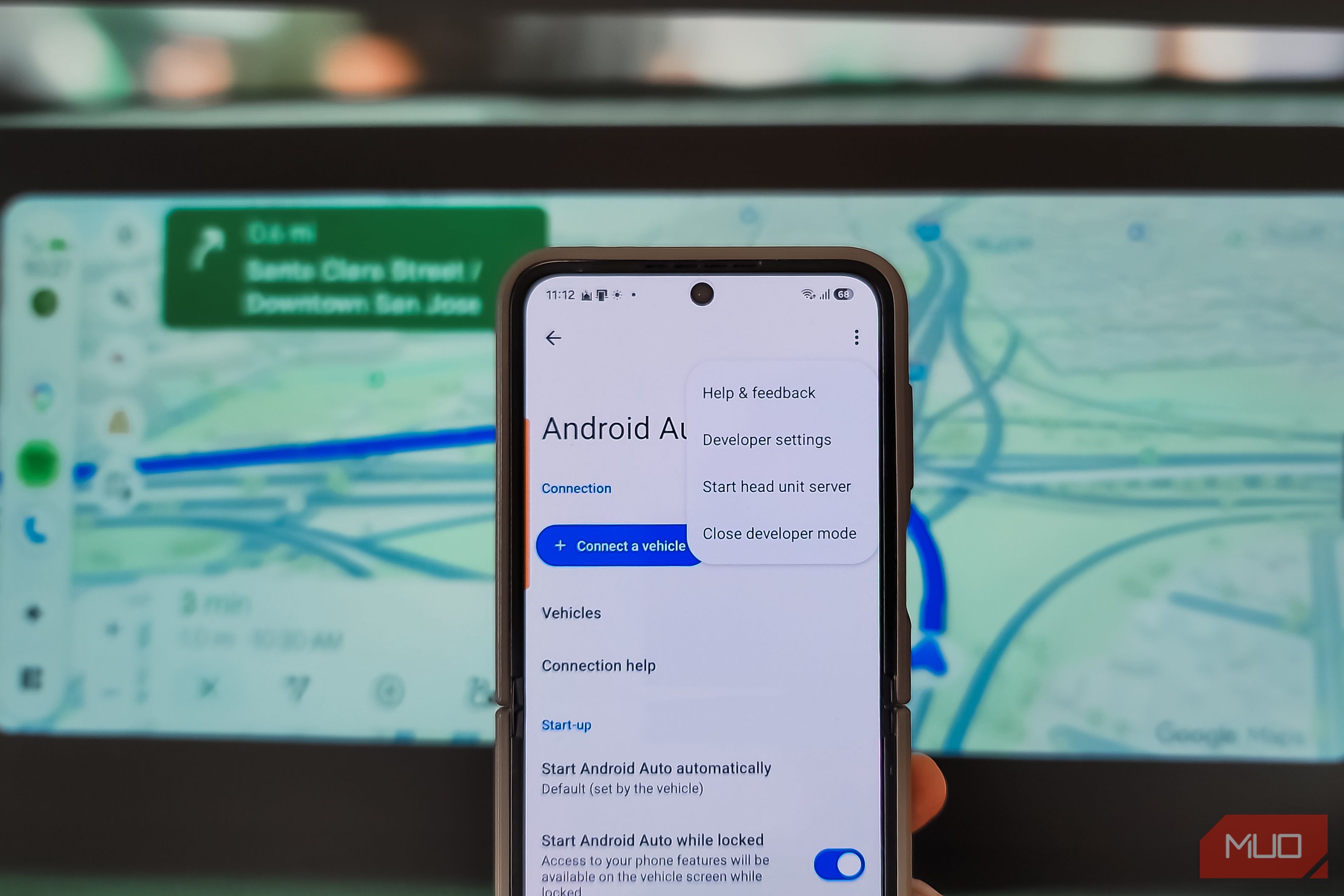
Stop Android Auto Battery Drain: Essential Features to Disable and
Android Auto offers unparalleled convenience, bringing your phone's most useful features directly to your car's display. From navigation and calls to messages and music, it keeps you connected without distracting you