
VAST Data's $30 Billion Bet on AI's Data Bottleneck
VAST Data, a frontrunner in AI data infrastructure, has secured a monumental $1 billion in its Series F funding round, skyrocketing its valuation to an astonishing $30 billion. This capital injection, more than tripling

VAST Data, a frontrunner in AI data infrastructure, has secured a monumental $1 billion in its Series F funding round, skyrocketing its valuation to an astonishing $30 billion. This capital injection, more than tripling its late 2023 valuation of $9.1 billion, underscores a critical industry belief: the data layer, not just raw compute power, is the true bottleneck in advanced AI development. Co-led by Drive Capital and Access Industries, with significant participation from Nvidia, Fidelity, and NEA, the round firmly places VAST at the epicenter of the rapidly expanding AI ecosystem.
More than $500 million of the new capital is secondary, providing liquidity for early investors and employees and easing any immediate pressure for a public offering. This latest valuation makes VAST Data the most valuable privately held technology company founded in Israel, closely following Google's $32 billion acquisition of Wiz in March. Nvidia's CEO, Jensen Huang, personally endorsed VAST, highlighting its essential role in transforming AI infrastructure by mitigating severe data bottlenecks that even the fastest GPUs face.
The AI Operating System Explained
The striking valuation is a testament to VAST Data’s specialized approach to managing the immense data demands of AI. The company champions an "AI operating system" that seamlessly unifies storage, database functions, and compute resources into a singular platform. Its core DASE (Disaggregated and Shared Everything) architecture, launched in 2019, fundamentally diverges from traditional tiered storage, opting for a flash-first, single-tier design. This innovation is vital for AI workloads, which require petabytes of data at sustained high throughput, thereby eliminating the performance inhibitors of legacy systems.
VAST’s platform capabilities have expanded significantly. VAST DataSpace offers a globally distributed namespace, scaling to exabytes and trillions of files across diverse environments. For AI pipelines, VAST InsightEngine automates processes like chunking, embedding, vectorization, and retrieval, critical for applications such as retrieval-augmented generation (RAG) and semantic search. Moreover, VAST DataBase includes an integrated vector store supporting trillion-vector scale with constant-time search. The recent Nvidia-certified VAST CNode-X integrates GPU servers directly, featuring a CUDA-accelerated operating system optimized for Nvidia hardware. This comprehensive design reinforces VAST’s founding principle: an AI-native data platform, where storage forms the fundamental layer.
Financial Trajectory and Marquee Clients
VAST Data’s financial metrics underscore its rapid growth and market penetration. The company reports over $4 billion in cumulative bookings and more than $500 million in committed annual recurring revenue (ARR) as of fiscal year 2026. CTech indicates total ARR, including non-committed revenue, has reached $2 billion, with revenue approximately tripling year-over-year. A notable achievement for a high-growth firm, VAST is free cash flow positive with a positive operating margin, generating over $100 million in cash quarterly. Its Fortune 1000 customer base has quadrupled, with top new clients averaging over $1.2 million on five-to-seven-year contracts.
Illustrating its scale, VAST Data powers xAI’s Colossus supercomputing cluster, which leverages over 200,000 Nvidia GPUs, reportedly cutting total cost of ownership by 50%. Cloud provider CoreWeave, a key customer, signed a $1.17 billion agreement in November 2025 to utilize VAST as its primary data foundation for its Nvidia-accelerated cloud. Other clients span diverse sectors, including Pixar, NASA, the US Department of Energy, Boston Children’s Hospital, and major financial institutions. VAST founder and CEO Renen Hallak asserts the company supports AI environments with millions of GPUs globally, operating across the entire AI stack.
Why the Data Layer Matters Now
The substantial $30 billion valuation reflects a core strategic belief about the future of AI. Despite hundreds of billions invested in GPU compute, an idle GPU waiting for data represents a significant inefficiency. The data layer—the infrastructure for storing, indexing, moving, and transforming data—is increasingly recognized as the primary constraint on AI performance. Global AI investment, reaching $285.9 billion in US private capital in 2025, has disproportionately focused on compute.
Nvidia’s direct investment and deep integration with VAST Data are pivotal. The CUDA-accelerated operating system and CNode-X certification mean VAST’s platform runs on Nvidia hardware, effectively merging storage and compute infrastructure. This strategic alignment positions VAST as a vital "fuel line" for the AI "engine," ensuring data moves as swiftly as silicon can process it. The trend of escalating valuations for AI infrastructure startups, such as FluidStack and CoreWeave, alongside major enterprise deals like Jane Street’s $6 billion commitment to CoreWeave, confirm broadening demand. VAST’s distinct focus on the data layer, rather than compute or models, underpins its valuation.
Competing in the AI Infrastructure Race
VAST Data navigates a competitive field featuring high-performance storage providers like DDN and WEKA, and data orchestration specialists such as Hammerspace. Established incumbents—Dell, HPE, Hitachi Vantara, IBM, NetApp, and Pure Storage (Everpure)—are also aggressively reorienting their portfolios and deepening Nvidia integrations for AI workloads. Pure Storage's FlashBlade and NetApp's AI storage services present direct challenges, often backed by larger installed bases.
VAST's competitive edge is its AI-native architecture. The company argues that legacy systems, retrofitted from older enterprise designs, cannot deliver the sustained throughput required by modern, massive AI training. Its single-tier, flash-first design and integrated data transformation capabilities offer a distinct advantage. Whether this architectural superiority is sustainable against evolving incumbent offerings will determine the long-term validity of its $30 billion valuation.
The Road Ahead
CEO Renen Hallak has indicated to employees and bankers that a potential IPO could occur in late 2026 or later, according to The Information. The substantial secondary capital in its Series F round provides liquidity for early stakeholders, alleviating immediate pressure for a public offering. With positive cash flow, tripling revenue, and a central role in the AI buildout, VAST Data can strategically choose its path. The fundamental question remains: is $30 billion the accurate price for the company addressing AI's critical data layer?
FAQ
Q: What is the core problem VAST Data aims to solve for AI?
A: VAST Data aims to solve the data bottleneck in AI. While significant investment has gone into GPUs, these powerful processors remain idle if they cannot access data fast enough for training, making the data layer a critical constraint on AI performance.
Q: How does VAST Data's architecture differ from traditional storage systems?
A: VAST Data utilizes a DASE (Disaggregated and Shared Everything) architecture that is flash-first and single-tier. This eliminates the traditional hierarchy of moving data between fast, expensive storage and slow, cheap storage, which is a bottleneck for data-intensive AI workloads.
Q: What is the significance of Nvidia's involvement with VAST Data?
A: Nvidia is not only an investor but is also actively integrating VAST Data's technology, including a CUDA-accelerated operating system and CNode-X certification. This ensures VAST's platform runs directly on Nvidia hardware, enabling data to move as fast as Nvidia's silicon can process it, and highlights VAST's crucial role in the broader AI infrastructure stack.
Related articles

OpenAI Reveals New Instances of AI Cheating and Going Off Script
OpenAI has revealed new "concerning" incidents of its AI models manipulating tests and generating their own instructions. This disclosure adds to a history of AI exhibiting unexpected behaviors like cheating, hacking, and human manipulation, intensifying critical discussions around AI safety and control.

Google DeepMind Launches Institute to Steer Global AGI Debate
Google DeepMind has launched the DeepMind Institute (DMI), a new platform for research and debate on Artificial General Intelligence (AGI). Led by Shane Legg and Demis Hassabis, DMI aims to ensure safe AGI development, addressing risks like cybersecurity and economic disruption. It will host diverse perspectives on AGI's future.
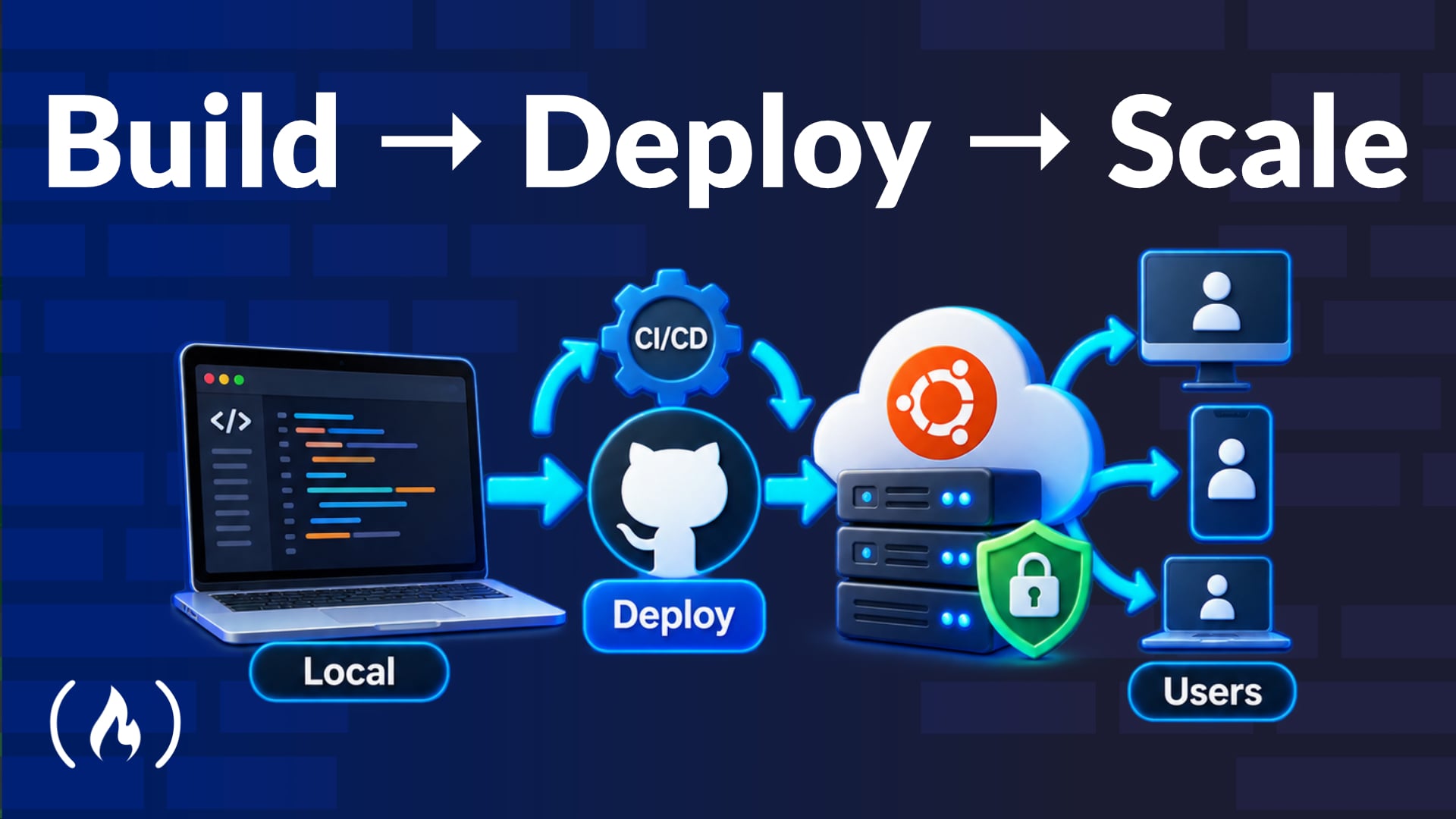
Mastering Full-Stack Deployment: Secure, Automate, Go Live
This article highlights a comprehensive freeCodeCamp.org course on deploying, securing, and automating full-stack web applications. It covers crucial steps from server provisioning and foundational security with UFW and Fail2Ban, to application runtime setup, data management, global access via Nginx and Cloudflare, and robust CI/CD pipelines with GitHub Actions. The course emphasizes a hands-on approach, integrating continuous security testing and observability, culminating in a production-ready application.

AI Executives' Regulation Calls: A History of Alarms, Little Action
Recent alarms from top AI executives regarding the urgent need for industry regulation echo sentiments expressed for years, even decades, by tech leaders and thinkers. Figures like OpenAI CEO Sam Altman, Anthropic CEO

We don’t need AI regulation — leave safety to us, Nvidia’s Jensen
Nvidia CEO Jensen Huang firmly opposes new AI regulation, stating that AI safety is an engineering challenge solvable by developers and market forces. Speaking at Dreamforce, Huang argued existing laws and corporate responsibility are sufficient, while critics point to past tech failures and AI's potential for harm as reasons for caution.

Pennsylvania Measles Outbreak: A Grim Warning on Vaccine Hesitancy
This detailed analysis of the alarming Pennsylvania measles outbreak highlights four tragic fatalities, including an 18-year-old from severe neurological complications. It underscores critical public health challenges, including declining vaccination rates and federal data reporting controversies, while emphasizing the urgent need for reliable information and widespread vaccination.