
Unlocking Peak Performance: AI-Driven Optimization for Modern Software
For a long time, the notion of slow software has been a persistent frustration for users and a complex challenge for developers. Achieving peak performance often demanded specialized expertise, significant time
For a long time, the notion of slow software has been a persistent frustration for users and a complex challenge for developers. Achieving peak performance often demanded specialized expertise, significant time investment, and a budget that made many potentially beneficial optimizations simply unfeasible for all but the largest projects. While some argued that "code was never the hard part," this overlooked domains like Just-In-Time (JIT) compilers or advanced database systems, where writing highly efficient code was indeed a monumental undertaking.
Historically, a developer might look at a potential optimization, estimate its performance gain at a mere 2%, and then weigh that against days or weeks of work required to implement and verify it. Many such optimizations were discarded. The barrier to entry for developing intricate systems, such as custom JIT compilers, was so high that they remained rare, despite their potential to dramatically accelerate many applications.
AI as an Optimization Multiplier
The landscape has fundamentally shifted with the advent of AI and Large Language Models (LLMs). The cost and effort associated with complex performance optimization have plummeted by orders of magnitude—potentially 1,000 to over 1,000,000 times less in human effort, and roughly 1,000 times cheaper in dollar cost compared to specialized engineering teams. This drastic reduction means that sophisticated performance work, once the exclusive domain of a few experts, is now accessible to virtually any developer capable of articulating their needs to an AI agent.
This new paradigm enables the creation of dynamic, custom software precisely fitted to individual workloads rather than broad classes of workloads. For instance, consider the development of a regex engine. An AI agent, given a benchmark suite, can iterate and optimize a regex engine for a month, learning to generalize its improvements. While an initial version might overfit to the benchmark, introducing a holdout set can prompt the agent to create more generally applicable optimizations.
Beyond specialized engines, AI assists with tasks like integrating Ahead-Of-Time (AOT) compilation into tools such as ripgrep. An agent can perform the "code surgery" to allow an AOT compiler to run in a separate thread, compiling code while the main matcher operates. For long queries, this can yield a 2x-4x performance improvement, or about 7% for more complex, representative queries. The tradeoff is that a thread is consumed for compilation, which might slightly impact very short queries, but the gains for longer, more critical tasks are significant. This type of implementation, previously a substantial undertaking, can now be explored in minutes of human input.
Similarly, building advanced data structures like specialized text indexes, once the domain of multi-year projects (e.g., the Bing search index BitFunnel with its multiple JIT compilers), can now be prototyped rapidly. The phrase "I could do that in a weekend" is becoming genuinely true for projects of this complexity, thanks to AI agents handling the intricate implementation details.
Real-World Impact and Accelerated Experimentation
The impact of AI-driven optimization extends to diverse fields. When building an AI for the game Azul, a single developer using an LLM to assist with optimizations created the strongest AI in the world, spending orders of magnitude less time and working primarily on a laptop compared to other efforts leveraging clusters. The AI handled complex tasks like implementing and debugging multithreading algorithms (minimax, MCTS) that typically involve days or weeks of manual work, including setting up replay logs for nondeterministic bugs. AI agents can trivially iterate on such debugging loops, drastically reducing tedium.
This newfound efficiency also allows for a substantial increase in the volume of optimizations attempted. Developers can now explore optimizations with uncertain outcomes, where the implementation cost to merely measure impact was previously prohibitive. This trial-and-error approach, once a luxury, is now standard. As an example, a performance engineer tackling a take-home problem found that an AI agent implemented optimizations he hadn't even considered—some of which he described as "crazy shit" he wouldn't try manually without weeks of dedicated effort.
Workload-specific optimization is another powerful outcome. Developers can use their own data to train and apply optimizations to personal workflows. For a developer's ripgrep queries, an agent can perform workload-specific tuning that, in minutes, can deliver a 2% speedup on holdout queries, with continued improvement. While there's a risk of overfitting if workload patterns dramatically change, the ability to rapidly tune for current needs significantly enhances performance.
Practical Implications for Developers
For individual developers, the practical takeaway is immense: significant performance gains for personal tools and projects are now within easy reach. For larger enterprises, this opens avenues for highly tailored customer solutions, where software can be dynamically optimized based on individual customer data and usage patterns. The era of generic, one-size-fits-all performance is giving way to a future of bespoke, hyper-efficient software.
This shift transforms software development. Previously unthinkable optimizations are now feasible. The cost of experimentation has dropped to an unprecedented low, empowering developers to pursue more ambitious performance targets. The era of needlessly slow software, it seems, is rapidly drawing to a close.
FAQ
Q: What specific types of performance work have become significantly easier with AI agents?
A: AI agents have drastically simplified tasks like implementing JIT compilers, integrating AOT compilation, developing sophisticated multithreading algorithms, and debugging complex, nondeterministic performance issues through automated log replay. They can also assist in rapidly prototyping specialized data structures like search indexes and performing workload-specific performance tuning.
Q: What are the potential risks or downsides of relying on AI for workload-specific optimizations?
A: The primary risk is overfitting. If software is optimized too heavily for a specific historical workload, a significant "regime change"—a new pattern of usage or data that differs from the training set—could lead to a performance degradation. Careful experimental design and holdout testing, even when AI-assisted, remain important to mitigate this.
Q: How do AI agents help in debugging complex, tricky optimizations that might introduce subtle bugs?
A: For optimizations that can lead to nondeterministic behavior (e.g., in multithreaded code), AI agents can automate the creation and execution of debugging frameworks. This includes generating debug logs, attempting to replay execution from these logs, and identifying discrepancies or non-determinism. What might take days or weeks for a human to set up and execute manually can be done trivially by an agent in a loop.
Related articles
Android 17 QPR2 Beta 7.1: The Performance Relief You've Been Waiting
Android 17 QPR2 Beta 7.1: Finally Fixing the QPR1 Performance Woes Verdict: Android 17 QPR2 Beta 7.1 is a crucial and highly anticipated software update for Google Pixel users, specifically targeting and resolving the

AI's Confidence vs. Formal Methods' Rigor: Design Flaws & Verification
While AI accelerates code generation, formal methods remain critical for ensuring system correctness. Languages like TLA+ and tools like Quint enable developers to model and verify system designs before coding, catching subtle flaws. Quint makes formal methods more accessible with developer-friendly syntax and executability. This approach is vital for verifying AI-generated code through trace validation and model-based testing, ensuring reliability against real-world data.
Ephemeral PR Preview Environments on GKE: A Deep Dive
Every development team eventually grapples with the limitations of shared staging environments. The familiar scenario: multiple features deployed simultaneously, database migrations clashing, and the phrase "it works on
Secure Internal API Access for AI Agents with MCP
AI agents accessing internal APIs directly pose significant risks, including identity loss, unrestricted queries, and security bypasses. The Model Context Protocol (MCP) offers a solution by defining explicit tools. A secure architecture involves an MCP server wrapping the API with strict input validation, coupled with a gateway that handles authentication, rate limiting, and audit logging, ensuring safe and accountable access.

SpaceX Starlink: Military Drone Service Hit by Unannounced Limits
Quick Verdict SpaceX's Starlink service, particularly the military-grade Starshield terminals, has experienced a significant and unannounced performance reduction for Ukraine's high-speed military drones. While
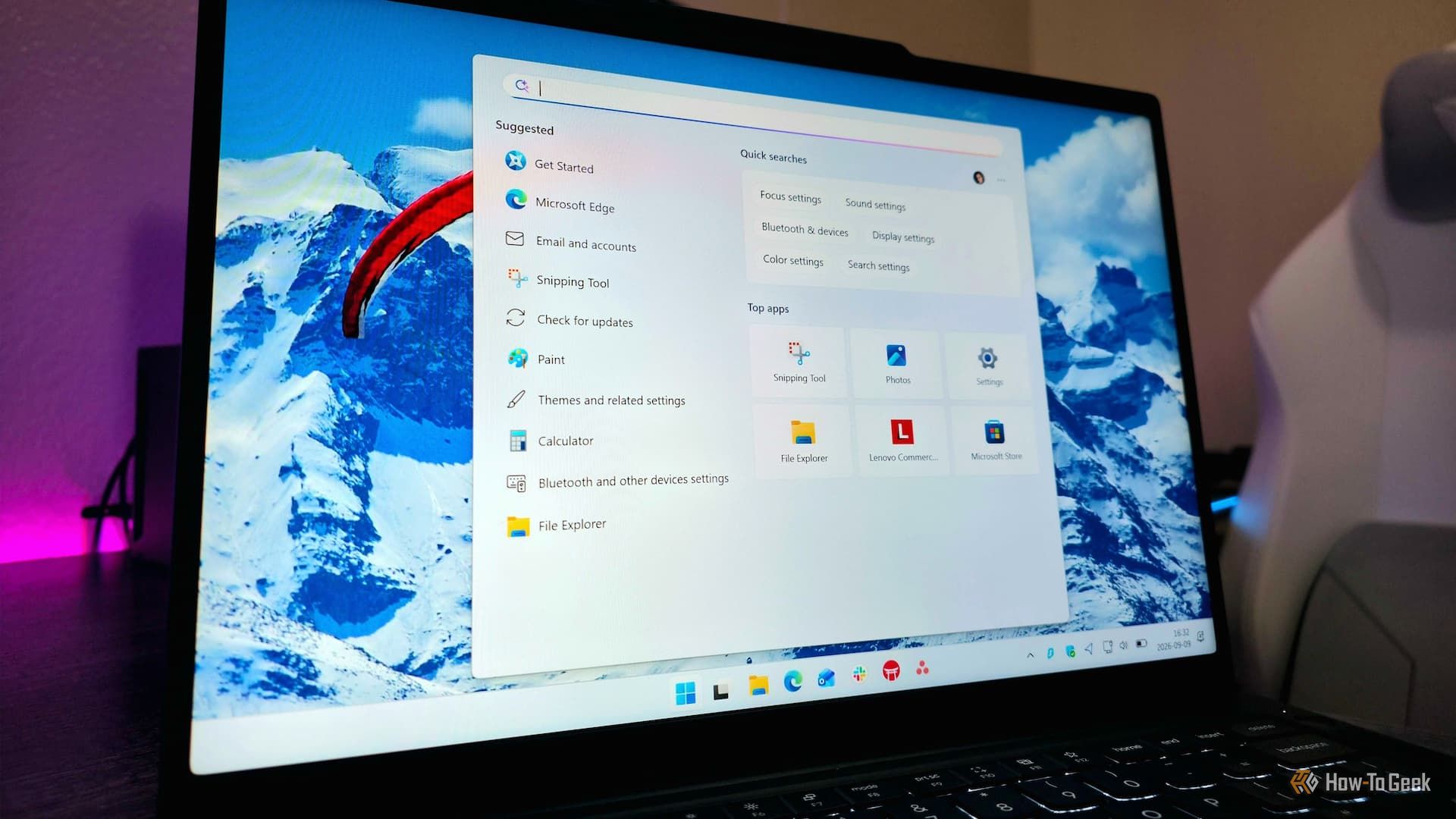
How to Debloat Windows 11 for a Faster, Cleaner PC
Learn to reclaim your Windows 11 PC's performance by removing bloatware, disabling ads, and optimizing startup processes in five easy steps.