
TrashBench's 1996 PC Recreation: A Nostalgic Retreat from Modern Tech
Verdict: A Refreshing Dive into the Past In a tech landscape increasingly dominated by AI, spiraling prices, and a perceived lack of consumer-focused innovation, YouTuber TrashBench's decision to recreate his childhood
Verdict: A Refreshing Dive into the Past
In a tech landscape increasingly dominated by AI, spiraling prices, and a perceived lack of consumer-focused innovation, YouTuber TrashBench's decision to recreate his childhood 1996 PC offers a fascinating and surprisingly relevant escape. This project isn't about raw power or cutting-edge features; it's a testament to the enduring appeal of hands-on computing, a simpler era, and the potent pull of nostalgia. While impractical as a daily driver, it's a brilliant commentary on current industry trends and a delightful journey for any retro computing enthusiast.
The Genesis of a Retro Revival
It's no secret that many in the tech community are feeling a collective ennui. Modern memory, graphics cards, and storage often come with prohibitive price tags, truly novel consumer hardware releases are scarce, and artificial intelligence integration is ubiquitous, sometimes feeling forced. TrashBench (TB) perfectly encapsulates this weariness, describing a longing for the "halcyon days" when technology felt fresh, accessible, and straightforward. His solution? To construct a faithful recreation of the very first PC his parents bought him in 1996, the machine that ignited his passion for computers and allowed him to experience The Need for Speed: Special Edition.
This project, rather than being a mere historical curiosity, serves as a poignant reminder of a time when interacting with hardware was more tactile, more explicit, and arguably, more rewarding for the enthusiast. It's a statement against the black box nature of much modern tech, favoring the transparent, user-configurable systems of yesteryear.
Under the Hood: A Look at '90s Power
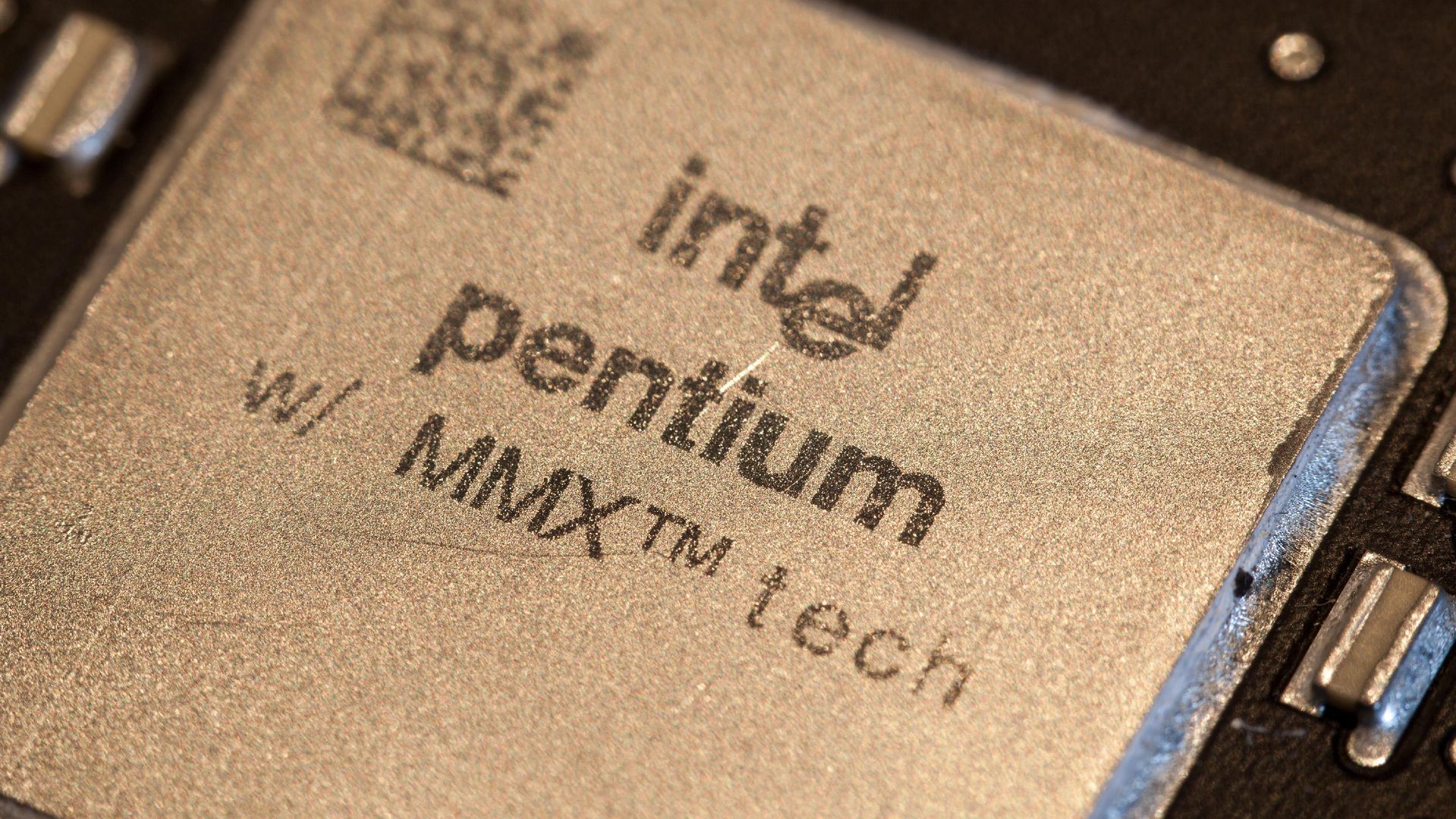
TB's chosen components paint a vivid picture of mid-90s PC architecture. At its heart lies an Intel Pentium MMX 200 MHz CPU, a processor synonymous with the era, known for its multimedia extensions that offered a performance boost to certain applications. This CPU is seated on an Epox Pronix EP-P55-BT motherboard, a board that represents a significant transitional period. Its ZIF (Zero Insertion Force) socket was a welcome convenience for enthusiasts, eliminating the dread of bent pins. More historically interesting are its dual RAM configurations, featuring both SIMM and DIMM slots, reflecting the industry's shift. TB opted for a generous 32 MB of RAM, a substantial amount for gaming and general use in 1996, offering a glimpse into the changing demands for system memory.
Cooling for this era's processors was remarkably simple by today's standards. A humble 40-mm fan was sufficient for the Pentium MMX. There was no need for elaborate case cooling solutions, as heat output was comparatively low. However, TB sagely notes that these small fans were notoriously prone to developing an irritating whine after just a few months of heavy use – a minor but memorable authentic detail. The build process itself involved a quintessential retro challenge: manually setting motherboard jumpers. This physical configuration determined CPU speed and voltage, a stark contrast to modern systems' automatic detection. Mis-setting these jumpers carried a genuine risk of damaging components, adding a layer of technical engagement (and anxiety!) that is largely absent today.
For graphics, TB initially selected an S3 Trio32 card. This was a mainstream, albeit modest, 2D accelerator for the time, notable for its complete lack of dedicated 3D rendering capabilities. This choice perfectly highlights the nascent stage of 3D graphics in the mid-90s PC market, an era where dedicated 3D accelerator cards were just beginning to emerge and would soon become essential for cutting-edge gaming. His system also boasted a 2GB hard drive, a capacity that seemed vast then but would barely hold a handful of modern games today.
The User Experience: Simple Pleasures, Deep Connections
The beauty of TrashBench's recreation lies not just in its accurate component selection, but in the experience it offers. Firing up a PC from 1996, complete with a manual boot process and the characteristic whir of an old HDD, transports the user back to a time of discovery. Gaming The Need for Speed: Special Edition on this machine isn't just playing a game; it's reliving a moment in personal and computing history. The performance, while undeniably limited by modern metrics, is perfectly adequate for the software of its era, delivering the experience as it was originally intended.
The lack of constant notifications, updates, and background processes of a modern OS allows for a focused, almost meditative interaction with the machine. It’s a clean slate, a purpose-built tool for specific tasks, free from the overwhelming demands and distractions of today's hyper-connected devices.
Pros & Cons of This Nostalgic Endeavor
Pros:
- Unparalleled Nostalgia: For anyone who grew up with PCs in the 90s, this build evokes powerful memories of discovery and early computing. It’s a tangible link to one’s personal tech history.
- Educational Insight: Recreating a retro PC provides invaluable hands-on experience with older hardware, offering a deeper understanding of how computers evolved from the ground up, including the importance of manual configuration like jumpers.
- Escape from Modern Tech Exhaustion: It serves as a refreshing antidote to the complexity, constant upgrades, high prices, and AI saturation of the current market, emphasizing simplicity and direct control.
- Focused User Experience: Without the distractions of modern operating systems and internet connectivity, the machine offers a dedicated environment for retro gaming or applications.
- Preservation of History: These builds help keep the knowledge and appreciation for vintage computing alive, ensuring that the legacy of these foundational machines is not forgotten.
Cons:
- Performance Limitations: This is a 1996 PC, not a modern workstation. Its capabilities are severely limited to software and tasks compatible with its era. Expect no multitasking prowess or high-fidelity graphics.
- Component Sourcing Challenges: Finding working, period-correct components in good condition can be difficult, time-consuming, and potentially expensive, as rare parts attract collector prices. Reliability of old parts can also be a concern.
- Maintenance & Reliability: Vintage components are prone to failure. Fans, capacitors, and hard drives have finite lifespans, meaning ongoing maintenance and potential repairs are a factor.
- Limited Practical Utility: While incredibly fulfilling as a hobby project, a 1996 PC offers very little practical utility in a modern environment beyond its specific retro functions.
- The Jumper Gauntlet: While a "pro" for some, the need for manual jumper configuration for CPU settings can be daunting and risky for those unfamiliar with it, with a real chance of hardware damage if done incorrectly.
Recommendation: A Worthwhile Journey for the Weary Enthusiast
TrashBench's 1996 PC recreation is not a product to buy, but a project to admire and potentially emulate. For individuals feeling overwhelmed by the relentless pace and increasingly opaque nature of modern tech, this build is a powerful statement. It's a clear recommendation for anyone seeking a return to a more fundamental, hands-on understanding of computing, fueled by the potent mixture of nostalgia and a desire for simplicity.
It's not about replacing your current setup; it's about enriching your tech perspective. This project is ideal for retro gaming enthusiasts, PC history buffs, or anyone simply looking for a meaningful way to unplug and appreciate the roots of personal computing. The satisfaction of overcoming the challenges of sourcing and assembling period-correct hardware, and then experiencing software as it was originally intended, is a reward that modern, plug-and-play systems rarely offer. It reminds us that sometimes, looking back can help us appreciate where we are, and perhaps, inspire new directions for the future.
FAQ
Q: Is recreating a retro PC like TrashBench's a practical alternative to a modern computer?
A: No, it is not a practical alternative for everyday computing tasks. Its purpose is primarily for nostalgia, retro gaming, educational exploration, or as a hobby project. Its performance is limited to software and tasks from its specific era.
Q: What are the biggest challenges in building a retro PC like this?
A: The biggest challenges include sourcing functional, period-correct components, which can be difficult and sometimes costly due to rarity. Additionally, understanding and correctly configuring older hardware, such as manual motherboard jumpers, requires careful research and patience.
Q: Why would someone want to recreate a 1996 PC in today's tech climate?
A: Many enthusiasts, like TrashBench, are experiencing "tech market exhaustion" due to high prices, lack of innovation, and the pervasive presence of AI. Recreating a retro PC offers a refreshing escape back to a simpler, more hands-on era of computing, fulfilling a sense of nostalgia and providing a unique educational experience.
Related articles

Apple's Touchscreen MacBook Pro: A Long-Awaited Touch
The Verdict Apple's rumored touchscreen MacBook Pro represents a long-overdue evolution, promising to blend the convenience of direct screen interaction with the powerful macOS laptop experience. While not an essential

CMF Watch 3 Pro: Affordable Style Meets Solid Performance
CMF Watch 3 Pro: Affordable Style Meets Solid Performance In the crowded market of smartwatches, finding a device that balances features, design, and affordability can be a challenge. Enter the CMF Watch 3 Pro, a

Love Island Australia S8 Guide: Navigating the Stream, Mostly Free
Love Island Australia Season 8 Streaming Guide: Navigating the Digital Waters Verdict: TechRadar's guide to watching Love Island Australia Season 8 is a generally useful, if somewhat navigationally challenged, resource

Sculpture Re-creates Lycurgus Cup Effect: A Glimmering Triumph of Art
The University of Sheffield successfully re-creates the 1,600-year-old dichroic glass recipe of the Lycurgus Cup. A new sculpture by artist Elliott Walker displays the stunning green-to-red optical effect, blending ancient tech with modern art. A significant scientific and artistic achievement.

UK Gaming's Future on the Line: UKIE Pushes for Modern Tax Credits
UKIE is urging the government to modernize the Video Games Expenditure Credit (VGEC) and introduce a new 'Games Scale-Up Fund' ahead of the Autumn Budget. This move is critical to keep the UK competitive in global game development, address outdated rules, and prevent studios and talent from relocating, ensuring a vibrant future for British-made games.

OpenAI's Deepfake Defense: A Timely, Imperfect Solution
Quick Verdict OpenAI's new safeguard against political deepfakes, by forcing politically sensitive image generations into a cartoon style, is a practical and timely step to protect election integrity. While not a