
Starship V3: Engineering for Rapid Reuse and Deep Space Missions
As software developers, we understand the power of iterative design and rapid prototyping. SpaceX’s Starship program embodies this philosophy in hardware, with each flight test providing invaluable data that fuels the
As software developers, we understand the power of iterative design and rapid prototyping. SpaceX’s Starship program embodies this philosophy in hardware, with each flight test providing invaluable data that fuels the next generation of improvements. The introduction of Starship V3, alongside Super Heavy V3 and the upgraded Raptor 3 engines, represents a significant leap, driven by years of real-world flight testing and development. These enhancements are not merely incremental; they are foundational to unlocking Starship's full potential for rapid, full reuse, in-space propellant transfer, and the ambitious goal of establishing human presence on the Moon and Mars, as well as enabling next-generation space-based compute infrastructure.
The Engineering Imperative: Scale and Sustainability
The driving force behind Starship V3 is the need for unprecedented scale and sustainability in space operations. Accomplishing goals like deploying constellations of orbital data centers or establishing self-sufficient lunar and Martian bases requires launching millions of tons of payload into space annually – a feat far beyond current capabilities. Starship V3 is designed to deliver a "step-change" in performance, moving towards daily, even hourly, launches of 200 tons per flight. This demands not only greater thrust and efficiency but also robust reusability and reduced turnaround times, pushing every subsystem to its limits.
Super Heavy V3: Booster Evolution for Performance and Reliability
The Super Heavy V3 booster incorporates critical changes aimed at enhancing reusability, reducing complexity, and improving operational reliability:
- Grid Fins Redesign: The number of grid fins has been reduced from four to three, but each is now 50% larger and significantly stronger. They feature new catch points and are re-clocked for improved vehicle lift and catch operations. Crucially, they've been lowered to minimize exposure to Starship's engine exhaust during hot-staging. The fin shaft, actuator, and fixed structure have also been moved inside the main fuel tank for better protection.
- Integrated Hot Stage: A new integrated hot stage replaces the previous single-use interstage. This design exposes the booster’s forward fuel tank dome directly to Starship’s Raptor engines during ignition, with internal tank pressure and a non-structural steel layer providing protection. Actuators connecting the ship and booster now retract post-separation, further shielding them.
- Redesigned Fuel Transfer Tube: The cryogenic fuel transfer tube for the 33 Raptor engines has been completely re-engineered, now comparable in size to a Falcon 9 first stage. This enables faster, simultaneous engine startups and more reliable flip maneuvers.
- Aft End Streamlining: The aft end thermal protection system has been redesigned, with propulsion and avionics tightly integrated. Individual engine shrouds have been eliminated, and shielding added around the thrust vector control hardware. The carbon dioxide fire suppression system has been removed due to the deletion of the aft cavity.
- Dual Quick Disconnects: The single primary quick disconnect for fuel/oxidizer loading has been replaced by two physically separated connection points, offering redundancy and allowing for simpler supporting mechanisms.
Starship V3: Upper Stage Innovations for Long-Duration Missions
Starship V3 sees a clean-sheet redesign of its propulsion systems, focusing on efficiency, propellant management, and enabling extended missions:
- Propulsion System Overhaul: Updates enable a new Raptor startup method, increase propellant tank volume, and improve the reaction control system (RCS) for in-flight steering. Contained volumes in the aft end, prone to trapping propellant leakage, have been reduced.
- Aft End Optimization: Similar to Super Heavy, fluid and electrical systems have been rerouted, allowing for the removal of individual engine shrouds and the large aft close-out volume, which previously required extensive environmental control.
- Enhanced Flap Actuation: The aft flap actuation system is upgraded from two actuators per flap to a single actuator with three motors, improving redundancy for return-to-launch-site operations while reducing mass and cost.
- Starlink Deployment: The Starlink PEZ Dispenser mechanism has been enhanced with new actuators and inverters for increased satellite deployment speed.
- Long-Duration Flight Systems: Starship is now designed for extended missions with more efficient RCS, isolation valves for high-pressure gases, 100% vacuum jacketing of the header feed system, a high-voltage electrically actuated cryogenic recirculation system, and a dedicated system for managing propellant interactions with engines during long coasts in space. Four docking drogues and propellant feed connections have been added to facilitate ship-to-ship propellant transfer.
Advanced Avionics and Raptor 3 Power
Both Starship and Super Heavy V3 leverage advanced avionics and a more powerful Raptor engine variant:
- Avionics Suite: Approximately 60 custom avionics units integrate batteries, inverters, and high-voltage electrical distribution, capable of delivering ~9MW of peak power with distributed fault isolation. A multi-sensor navigation system ensures precision autonomous flight with high redundancy. New radio frequency sensors provide accurate propellant level monitoring in microgravity, crucial for in-space refueling. Upgraded cameras offer ~50 views, powered by 480Mbps redundant Starlink connectivity.
- Raptor 3 Engines: These engines deliver increased thrust: sea-level variants now produce 250 tf (up from 230 tf), and vacuum engines 275 tf (up from 258 tf). Sensors and controllers are internally integrated and thermally protected, removing the need for individual engine shrouds. All variants feature a redesigned ignition system. Sea-level engine mass has been reduced to 1,525 kg (from 1,630 kg), contributing to an overall vehicle-level saving of approximately 1 ton per engine.
Starbase Launch Pad 2: The Gateway to High Cadence
Flight 12 will inaugurate Pad 2 at Starbase, which has undergone extensive upgrades to support Starship V3's demanding operational tempo:
- Propellant Farm: Increased storage capacity and more pumps enable significantly faster vehicle filling.
- Launch Tower & Chopsticks: The chopsticks are shorter for faster motion and improved tracking during catch operations. Their main actuators have transitioned from hydraulic to electromechanical, boosting speed, redundancy, and reliability. The Starship upper stage quick disconnect arm has been strengthened, repackaged, and rotates farther away during launch.
- Launch Mount Redesign: The structure and hold-downs have been completely redesigned for better load sharing, throwback reliability, and protection during fly-out. Inside the mount, a new bidirectional flame diverter and top-deck flame deflector are designed to eliminate ablation and the need for post-launch refurbishment.
- Booster Quick Disconnects & Safety: The Super Heavy propellant loading quick disconnects have been moved to the opposite side of the mount and split into separate methane and oxygen mechanisms. Various valves and filters for booster fluid fill are now in a hardened bunker, reducing distance to the rocket and isolating oxygen and methane systems for safety.
These comprehensive upgrades across the Starship system and its ground infrastructure are designed to enable the rapid, full reusability critical for humanity's expansion beyond Earth. The capabilities unlocked by Starship V3 aim to make large-scale orbital deployments, lunar bases, and Martian colonies an achievable reality.
FAQ
Q: What are the primary thrust improvements in Raptor 3 engines?
A: Raptor 3 sea-level engines now produce 250 tf (551,000 lbf), an increase from 230 tf (507,000 lbf) in previous versions. Vacuum engines have also seen an increase, now producing 275 tf (606,000 lbf) from 258 tf (568,000 lbf).
Q: How does Starship V3 support long-duration missions and in-space propellant transfer?
A: Starship V3 includes several features for extended missions, such as more efficient reaction control systems, isolation valves for high-pressure gases, 100% vacuum jacketing for the header feed system, a high-voltage electrically actuated cryogenic recirculation system, and a dedicated system to manage cryogenic propellant interactions with the engines during long coasts. For in-space propellant transfer, four docking drogues and dedicated propellant feed connections have been added on the leeward side of the vehicle.
Q: What significant changes were made to Starbase Launch Pad 2 to support faster launch operations?
A: Pad 2 received several upgrades, including an increased capacity propellant farm with more pumps for faster vehicle fueling. The launch tower's chopsticks are now shorter with electromechanical actuators for quicker motion and improved reliability. The launch mount features a redesigned structure, hold-downs, and a new bidirectional flame diverter/top-deck flame deflector designed to eliminate ablation and the need for refurbishment after launch.
Related articles

Ars Technica's Rocket Report: Your Essential Space Industry Briefing
Quick Verdict Ars Technica's Rocket Report, presented by veteran space reporter Stephen Clark, offers an invaluable and meticulously organized weekly (or similar frequency, implied by "Edition 9.15") digest of the most

Tesla Unveils Thruster-Equipped Roadster, 2028 Production Targeted
Tesla has unveiled its second-generation Roadster, featuring cold-gas thrusters co-developed with SpaceX, enabling it to jump and flip. The electric sports car demonstrated 0-60mph in an astonishing 0.81 seconds, with production targeted for 2028. This highly anticipated reveal also serves as a key recruitment tool for Tesla's ambitious AI and robotics initiatives.

AI's Confidence vs. Formal Methods' Rigor: Design Flaws & Verification
While AI accelerates code generation, formal methods remain critical for ensuring system correctness. Languages like TLA+ and tools like Quint enable developers to model and verify system designs before coding, catching subtle flaws. Quint makes formal methods more accessible with developer-friendly syntax and executability. This approach is vital for verifying AI-generated code through trace validation and model-based testing, ensuring reliability against real-world data.
regional: A two-person Seattle startup lands $1M to reinvent
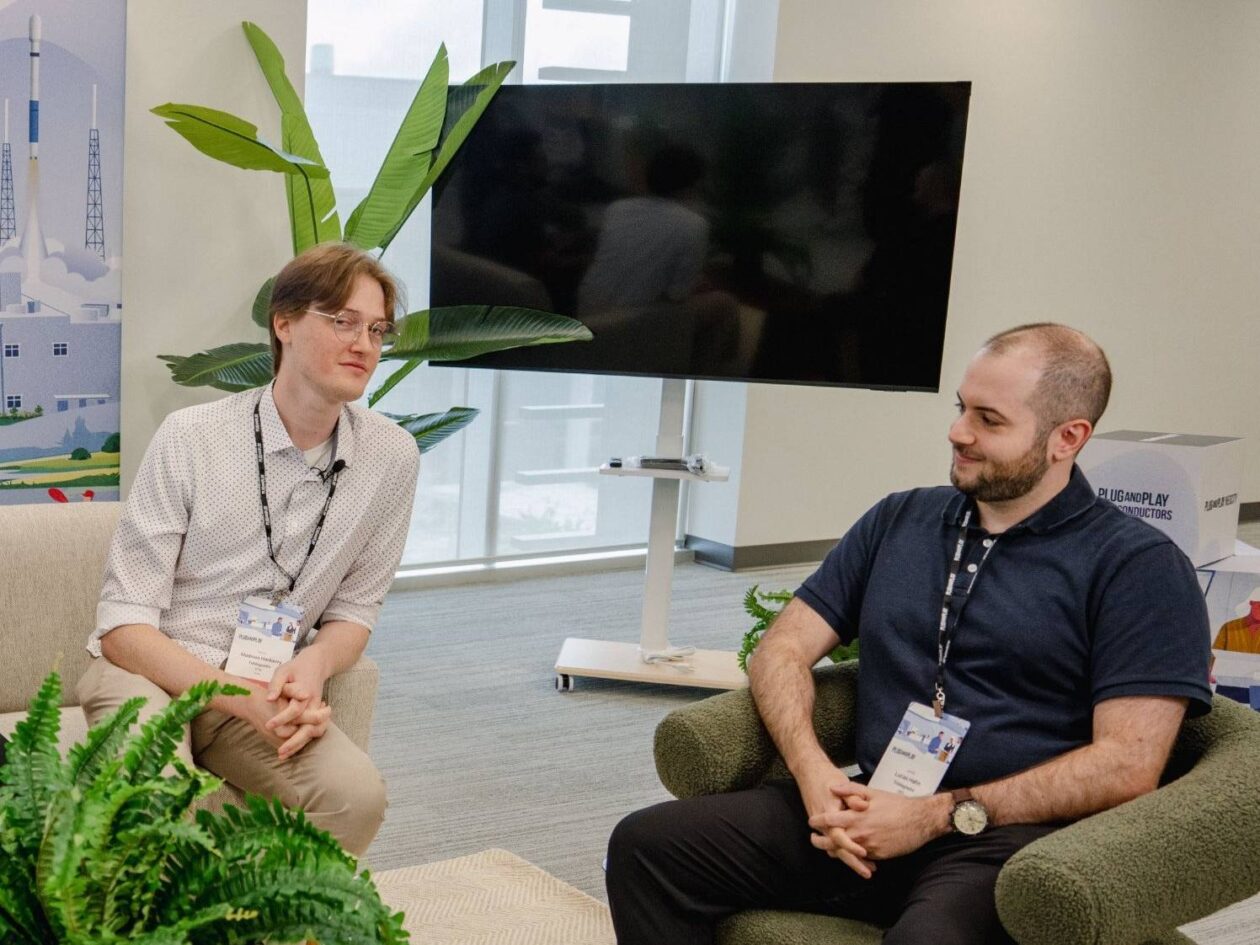
Seattle startup TriMagnetix has secured $1 million to develop semiconductor chips that consume 800 times less energy and are radiation-resistant. The two-person company, leveraging nanomagnetic technology, is targeting space applications and data centers. With new funding and key partnerships, TriMagnetix aims for commercial sales within a year.
Ephemeral PR Preview Environments on GKE: A Deep Dive
Every development team eventually grapples with the limitations of shared staging environments. The familiar scenario: multiple features deployed simultaneously, database migrations clashing, and the phrase "it works on

Secure Internal API Access for AI Agents with MCP
AI agents accessing internal APIs directly pose significant risks, including identity loss, unrestricted queries, and security bypasses. The Model Context Protocol (MCP) offers a solution by defining explicit tools. A secure architecture involves an MCP server wrapping the API with strict input validation, coupled with a gateway that handles authentication, rate limiting, and audit logging, ensuring safe and accountable access.