
Open-Source's Hidden Crisis: A Critical Security Vulnerability
The Unseen Pillars of Software: A Critical System Under Threat Quick Verdict: The modern software ecosystem, from operating systems to mobile apps, rests on a precarious foundation of critical open-source projects, many

The Unseen Pillars of Software: A Critical System Under Threat
Quick Verdict: The modern software ecosystem, from operating systems to mobile apps, rests on a precarious foundation of critical open-source projects, many of which are severely underfunded and understaffed. This reliance on a handful of often low-paid or unpaid maintainers creates significant security risks and sustainability challenges that the tech industry can no longer afford to ignore. It's a stark reminder that while open-source fuels innovation, its underlying infrastructure is critically vulnerable.
The Alarming Reality: Thinly Stretched Resources
Recent reports paint a sobering picture of the state of critical open-source software. A study by The Data Drop highlights that out of 23 essential projects, nearly half – 11 to be exact – are sustained by just one or two maintainers. This isn't just a matter of manpower; it's a deep-seated issue of systemic underfunding, with some projects receiving scarce or even nonexistent financial support. This model is unsustainable and has tangible, dangerous consequences for the entire digital world.
The implications of such limited oversight are profound. When a single individual, or a tiny team, is responsible for code used ubiquitously across millions, if not billions, of devices and applications, any oversight, burnout, or malicious intent can have catastrophic effects. It's the digital equivalent of a massive skyscraper being held up by a few rusty support beams, maintained by volunteers in their spare time.
The Track Record: Exploits and Near Misses
The history of software security is riddled with examples stemming from this very problem. Remember Heartbleed and Shellshock in 2014? Shellshock, a vulnerability in the Bash shell, was traced back to a line of code from 1989, and its maintenance largely rested on one person, Chet Ramey. More recently, we've seen ImageMagick exploited in 2016 (with one primary contributor, Dirk Lemstra, handling most recent code), the widespread Log4Shell exploit in 2021, a zero-day vulnerability in libwebp in 2023, and the highly concerning xz compression library compromise in 2024. These incidents aren't isolated; they are symptoms of a broader systemic fragility.
These vulnerabilities demonstrate that even long-standing, seemingly stable projects can harbor critical flaws, especially when review and development cycles are limited by a lack of resources. The sheer volume of code in these projects – like the Linux kernel nearing 2,000 vulnerabilities per release – makes thorough vetting incredibly difficult for small teams.
The Human Cost: Thankless Work and Hidden Heroes
The human element is central to this crisis. Many unsung heroes dedicate their time and expertise to maintaining projects that underpin vast swathes of the internet and enterprise software. Paul Eggert, a UCLA teacher, maintains the crucial time-zone file for Linux-based systems pro bono. Denis Pushkarev, responsible for Core-js, a library estimated to be used by half of the busiest websites, faced community backlash simply for asking for help or a job after dedicating himself to the project. Behdad Esfahbod's HarfBuzz library, vital for text shaping in many languages, operates without apparent public or corporate funding, almost entirely reliant on his efforts.
Even projects with some form of income demonstrate the precarity. D.R. Commander (DRC) maintains libjpeg-turbo, essential for JPEG image handling in Android, Firefox, and Chromium browsers, sometimes contracting for "3-4 figures rather than 6 or 7." The four individuals behind SQLite, a database with an estimated trillion instances in use across Windows, Android, WhatsApp, and all major browsers, felt compelled to remove their names and photos from the project's page due to concerns about misuse of their information. While funded by paid support, the actual income distribution is not disclosed, leaving questions about its sustainability for a team of four.
Pros (of the open-source model, despite its flaws):
- Ubiquity and Accessibility: Open-source projects like SQLite and Bash are integrated into countless applications and systems, offering foundational functionality that powers modern tech.
- Flexibility and Integration: Their open nature allows for easy integration, customization, and broad adoption across diverse platforms and products.
- Community-Driven Innovation: When well-supported, open-source fosters collaborative development and rapid iteration.
Cons (of the current maintenance landscape):
- Critical Security Risks: Understaffing and underfunding directly lead to unpatched vulnerabilities and increased attack surfaces.
- Single Points of Failure: Over-reliance on one or two maintainers creates significant fragility; if they leave or are compromised, the project faces collapse.
- Maintainer Burnout and Dissatisfaction: Unpaid or low-paid, high-responsibility work leads to demoralization and a high turnover risk.
- Lack of Corporate Accountability: Major corporations benefiting from these projects often fail to contribute equitably to their maintenance.
A Glimmer of Hope and a Clear Path Forward
While the situation is grim, there are examples of progress. The curl utility, a staple for almost every developer, is now maintained by a team of 11, with its founder, Daniel Stenberg, paid full-time. This project receives funding from Open Collective and Germany's Sovereign Tech Agency. Similarly, Log4j and OpenSSL, which have suffered significant security incidents, are now also supported by the Sovereign Tech Agency, alongside projects like FFmpeg and OpenSSH. These instances prove that a more sustainable model is possible with dedicated investment.
Recommendation: Invest in the Foundations
This isn't a product to buy, but a system in dire need of investment. The recommendation is clear: industry leaders, governments, and even individual users must recognize and contribute to the maintenance of critical open-source software. The economic and security risks of neglecting these foundational components far outweigh the cost of proper funding and staffing. In an age where AI agents are rapidly discovering new vulnerabilities, proactively investing in open-source security and maintenance is not just a moral obligation; it's a critical, cost-effective investment in the resilience of our entire digital infrastructure. Companies that build their products on these unpaid efforts must step up with sizable contributions, moving beyond mere usage to active stewardship.
FAQ
Q: Why should I care about underfunded open-source projects? A: You should care because almost every piece of modern software you use daily, from your operating system to web browsers, mobile apps, and even smart devices, relies on open-source components. If these foundational projects are vulnerable due to underfunding or understaffing, it creates potential security risks for your data, privacy, and the stability of the technologies you depend on.
Q: What can be done to help address this issue? A: Companies that heavily utilize open-source software can contribute financially or dedicate engineering resources to maintain these projects. Individuals can support projects through donations (if available), report bugs responsibly, contribute code, or advocate for better corporate and governmental support for open-source initiatives. Awareness of the problem is the first step towards a solution.
Q: Are proprietary software alternatives inherently more secure or better maintained? A: Not necessarily. While proprietary software often has dedicated corporate funding, it doesn't guarantee a lack of vulnerabilities, nor does it typically offer the transparency of open-source projects where code can be audited by a global community. The core issue highlighted is less about open-source vs. proprietary, and more about the critical importance of adequate resources and attention for any software, regardless of its license, especially when it forms the backbone of digital infrastructure.
Related articles
UGREEN 25W MagFlow: Portable 2-in-1 Charger Hits Record Low
The UGREEN 25W MagFlow, a foldable 2-in-1 magnetic wireless charger for iPhones and earbuds, is back to its record-low Prime Day price. Offering Qi2 25W charging and a compact design, it's ideal for travelers and minimalists.

AI Model Lock-in? It's Not the Model, It's Everything Else
A recent survey reveals that while swapping AI models is becoming common, the real lock-in risk for enterprises lies in the surrounding infrastructure: integrations, agent workflows, and guardrails. Despite concerns about vendor lock-in, it often ranks lower than immediate priorities like security and cost in AI purchasing decisions. However, multi-model adopters are proactively building open, flexible architectures, demonstrating a path to mitigate future migration headaches.
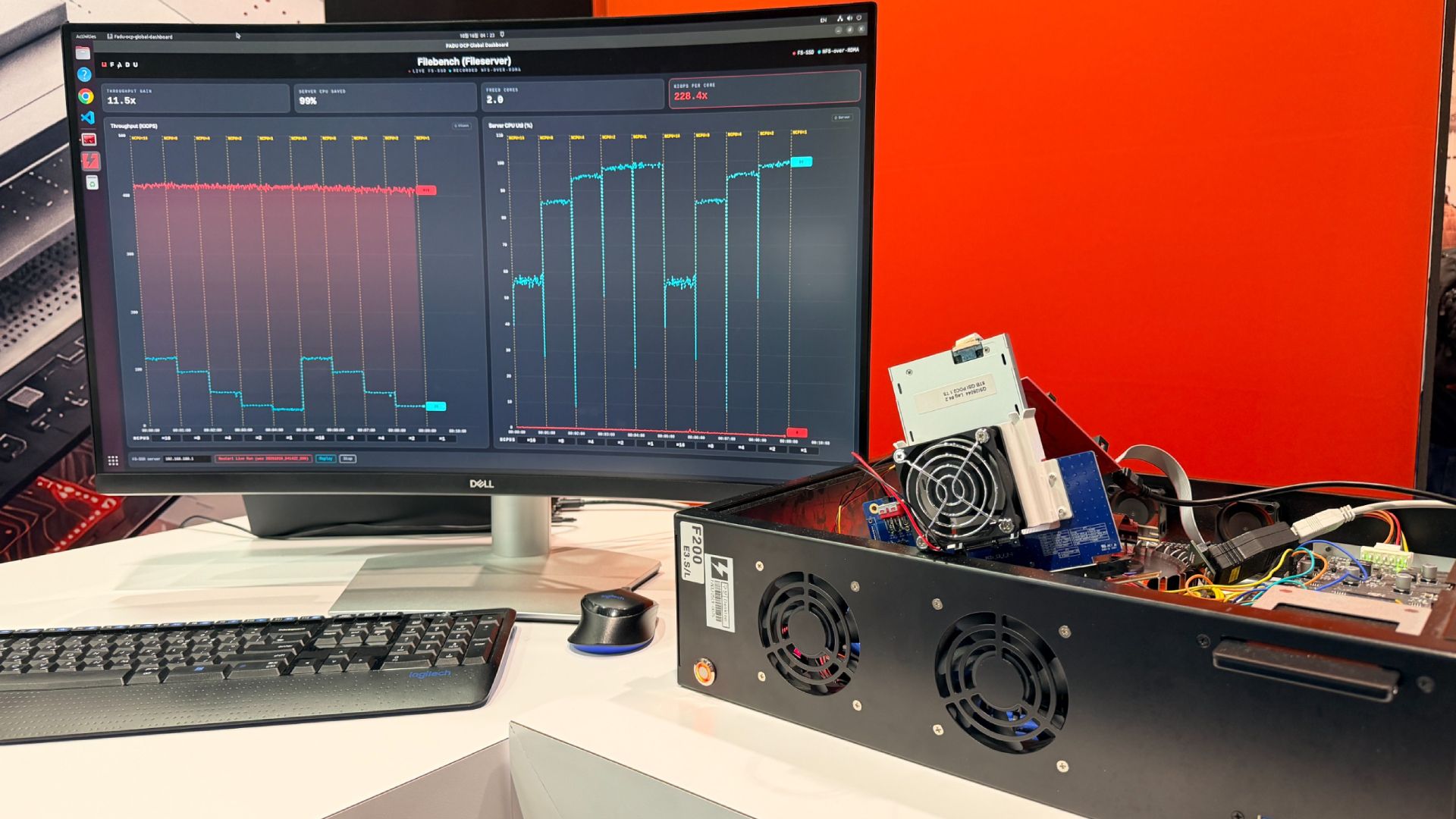
FADU FS-SSD: A Glimpse into the Future of Storage
FADU's File-Semantic SSD moves the filesystem directly into the drive, aiming to dramatically reduce host CPU overhead for file operations, especially for GPUs and DPUs. Promising early results, but a long wait for samples (Q3 2027).

OpenBSD 8.0: Unwavering Security, Specialized Performance
OpenBSD 8.0: Unwavering Security, Specialized Performance OpenBSD 8.0 has officially landed, marking the 61st release for this highly specialized operating system. True to its roots, OpenBSD 8.0 reinforces its

US Orders Federal Agencies to Remove China’s DeepSeek AI — Key Details
US federal civilian agencies are ordered to remove DeepSeek AI products and services due to national security concerns over data access by Chinese authorities. This expands a previous ban and highlights intensifying US-China AI competition, amidst accusations of DeepSeek's model distillation.

OpenAI COBOL Migration: A Promising But Not Perfect Solution
The Engadget Verdict OpenAI's latest strides in large language models, specifically GPT-6 Astra and GPT-6.1 Sol, represent a significant leap forward in tackling one of the enterprise world's most intractable problems: