
NVIDIA Tops $40bn in AI Equity Bets for 2026, Anchored by $30bn
NVIDIA has committed over $40 billion to AI equity investments in the first four months of 2026, including a $30 billion stake in OpenAI. This strategy, which also includes significant investments in companies like CoreWeave, IREN, and Corning, aims to ensure compute capacity is built around NVIDIA's GPUs, influencing the entire AI value chain. While bolstering NVIDIA's data-center revenue, the aggressive approach raises questions about "circular financing" and potential regulatory scrutiny.
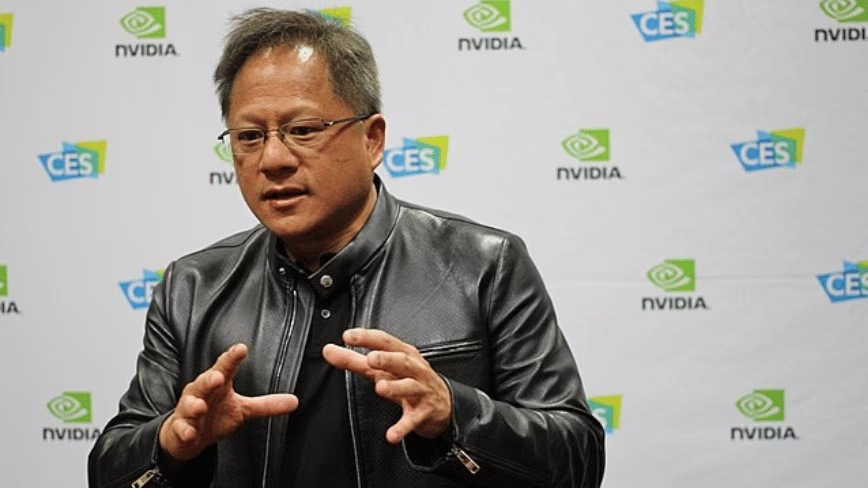
NVIDIA has dramatically ramped up its strategic financial commitments in the artificial intelligence sector, pouring over $40 billion into AI equity investments within the first four months of 2026 alone. This monumental outlay, reported by CNBC based on public filings, is spearheaded by a staggering $30 billion investment into OpenAI in late February, solidifying NVIDIA's position at the heart of the burgeoning AI ecosystem.
The remaining $10 billion-plus is strategically distributed across a diverse portfolio, encompassing seven multi-billion-dollar deals in publicly traded companies and approximately two dozen private startup funding rounds. This aggressive investment pace for 2026 already surpasses the chipmaker's total for the entire previous fiscal year, which saw $17.5 billion directed primarily towards early-stage private companies and infrastructure funds.
Anchor Investments and Strategic Reach
Beyond OpenAI, NVIDIA's significant public market investments include up to $3.2 billion in Corning, the leading optical-fiber and ceramics manufacturer critical for AI data-center infrastructure. Another notable commitment is up to $2.1 billion in IREN, a data-center operator pivoting from Bitcoin mining to GPU compute capabilities. These specific deals were structured as warrants or deferred commitments, allowing NVIDIA discretion over cash outflow.
The company also substantially increased its stakes in existing partners such as CoreWeave and Nebius. The CoreWeave stake, initially $2 billion in January, has now appreciated to an estimated $4.4 billion, constituting approximately 28% of NVIDIA's listed equity portfolio. Similarly, a $2 billion investment in Nebius in March came with an explicit commitment for a five-gigawatt deployment, mirroring the rationale behind the new IREN warrant.
The "Neocloud" Vision
This intricate web of investments reveals a consistent strategy: capital is channeled into companies that are significant purchasers of NVIDIA's Graphics Processing Units (GPUs) at scale, subsequently re-renting this compute capacity to hyperscalers and frontier model developers. This emerging business model has become known within the industry as a "neocloud."
NVIDIA's Chief Financial Officer, Colette Kress, articulated the company's straightforward rationale on a recent earnings call. She explained that NVIDIA invests strategically where it perceives a need to ensure that robust compute capacity is being developed around its cutting-edge hardware. This approach extends NVIDIA's influence both upstream and downstream from the silicon itself.
The OpenAI investment, for instance, is not a standalone financial play but is tightly integrated with multi-year compute commitments and a shared silicon roadmap. The stakes in CoreWeave and Nebius are paired with capacity reservations and joint-architecture agreements. Furthermore, the Corning investment directly bolsters the optical-interconnect supply chain crucial for NVIDIA's next-generation data-center fabrics.
Navigating "Circular Financing" Concerns
While some analysts characterize NVIDIA's expansive strategy as vertical integration, a growing chorus of critics has raised questions about "circular financing." This critique suggests that NVIDIA takes an equity position in a company, which then signs a long-term GPU purchase agreement with NVIDIA, implying that a portion of the GPU revenue flowing back to NVIDIA could be perceived as a return on its initial investment.
The broader concern of revenue counterparty concentration, exemplified by Oracle's $300 billion OpenAI deal, has triggered caution among analysts. In NVIDIA's case, the criticism becomes sharper in scenarios where the chipmaker is both a substantial equity investor and a contractually committed customer, such as CoreWeave's $6.3 billion capacity-purchase agreement with NVIDIA.
However, the comparison is not entirely straightforward. NVIDIA's investments typically represent minority stakes in companies that serve a broad customer base beyond NVIDIA's direct influence. Evidence like Meta's $21 billion add-on deal with CoreWeave underscores the diversity of CoreWeave's clientele, extending beyond NVIDIA's direct commercial ties.
The Road Ahead for NVIDIA's AI Strategy
With NVIDIA commanding roughly $200 billion in cash and equivalents, the financial exposure from these investments is relatively modest compared to its overall balance sheet. Consequently, any potential write-downs would likely not impair the company's core business. The more significant risk, however, lies in reputational damage, as each new deal that appears structurally similar could amplify the perception that NVIDIA is artificially inflating its own demand curve.
Both Wall Street and the U.S. Securities and Exchange Commission (SEC) are reportedly scrutinizing whether current disclosure regulations adequately account for the scale and nature of these intricate arrangements. For the time being, NVIDIA's strategy is achieving its intended outcomes: AI infrastructure is rapidly expanding with NVIDIA silicon at its core, model providers are securing essential compute resources, and the company's data-center revenue continues its robust growth trajectory.
The aggressive pace of equity commitments in 2026 signals NVIDIA's intent to sustain this investment strategy as long as the current demand-supply imbalance for AI compute persists. This positions NVIDIA as one of the largest, if not the largest, single source of AI infrastructure financing in the market, alongside major hyperscalers, further cementing CEO Jensen Huang's vision of the company as the foundational platform of the AI era. The ultimate verdict from auditors and regulators remains a critical question.
FAQ
Q: What is the primary reason behind NVIDIA's extensive AI equity investments?
A: NVIDIA's CFO Colette Kress stated the company invests to ensure compute capacity is built around its hardware, thereby securing its position across the AI value chain and driving demand for its GPUs.
Q: Which companies received the largest portion of NVIDIA's investments in early 2026?
A: OpenAI received the single largest investment of $30 billion. Other significant public market investments included up to $3.2 billion in Corning and up to $2.1 billion in IREN, along with increased stakes in CoreWeave and Nebius.
Q: What are the concerns surrounding NVIDIA's investment strategy?
A: Critics raise questions about "circular financing," where NVIDIA invests in companies that subsequently commit to purchasing its GPUs, potentially creating a self-reinforcing demand curve. Reputational risks and increased scrutiny from Wall Street and the SEC regarding disclosure are also noted.
Related articles

Apple Unveils iPhone Duo: Pricey Foldable Sees Soaring Demand
Apple has officially entered the foldable smartphone arena with the long-anticipated launch of the iPhone Duo. Priced starting at a hefty $1,999, the device features a 5.4-inch outer display and a larger 7.6-inch inner

in-depth: Chicago-Area Cops Helped HSI Spy on Minnesota Anti-ICE
Chicago-area law enforcement, including local police and HSI agents, conducted undercover surveillance on Minnesota anti-ICE activists at an April 2, 2022, talk in Chicago. This operation was part of a federal conspiracy probe into 15 Minnesota activists facing felony charges related to immigration enforcement resistance. Civil liberties advocates have condemned the surveillance as a troubling intrusion into protected political activity.

Mark Wahlberg on using AI in film ‘the right way’ and being open to
Actor Mark Wahlberg believes AI has a place in filmmaking if used responsibly for enhancement, not script generation or actor replacement. At TechCrunch Disrupt, he expressed openness to an AI likeness carrying on his legacy, managed by his family, and emphasized storytelling.

Tesla Unveils Thruster-Equipped Roadster, 2028 Production Targeted
Tesla has unveiled its second-generation Roadster, featuring cold-gas thrusters co-developed with SpaceX, enabling it to jump and flip. The electric sports car demonstrated 0-60mph in an astonishing 0.81 seconds, with production targeted for 2028. This highly anticipated reveal also serves as a key recruitment tool for Tesla's ambitious AI and robotics initiatives.

AI's Confidence vs. Formal Methods' Rigor: Design Flaws & Verification
While AI accelerates code generation, formal methods remain critical for ensuring system correctness. Languages like TLA+ and tools like Quint enable developers to model and verify system designs before coding, catching subtle flaws. Quint makes formal methods more accessible with developer-friendly syntax and executability. This approach is vital for verifying AI-generated code through trace validation and model-based testing, ensuring reliability against real-world data.
Amazon Prime Video Launches AI-Powered Prime 360 for NBA Coverage
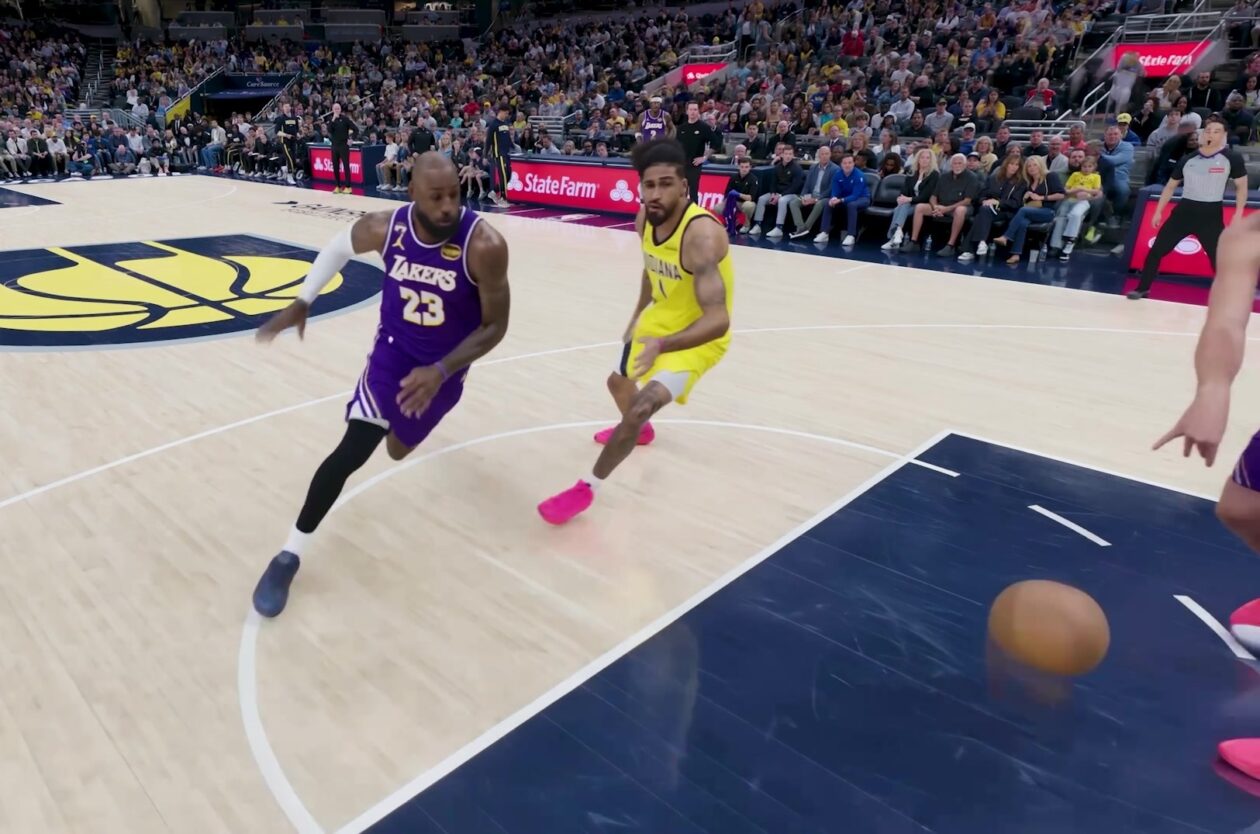
Amazon Prime Video is elevating its NBA coverage with the introduction of Prime 360, an AI-powered replay system offering immersive, 'fly through' views of the action. Kicking off its second season, Prime Video also adds Yahoo fantasy integration and gains exclusive Eastern Conference Finals rights, expanding its tech-driven sports broadcast. The new features aim to deliver a unique and interactive viewing experience for basketball fans.