
iPhone to Android Switch: A Long-Time User's Honest Verdict
Quick Verdict After 13 years deeply embedded in Apple's ecosystem, one user's long-standing loyalty has finally shifted to Android. The catalyst? The unexpected arrival of seamless file transfers between Android and
Quick Verdict
After 13 years deeply embedded in Apple's ecosystem, one user's long-standing loyalty has finally shifted to Android. The catalyst? The unexpected arrival of seamless file transfers between Android and Apple devices via Quick Share, eliminating the last major barrier. This, combined with Android's consistent lead in core features like advanced cameras, high-refresh-rate displays on more affordable models, and enhanced multitasking, revealed what was perceived as Apple's slow adoption and a limiting user experience.
The Unthinkable Switch: From Apple Loyalist to Android Advocate
For over a decade, starting with the iPhone 5c, switching away from Apple was unimaginable. The author was deeply invested, finding the ecosystem's integration, particularly features like AirDrop, to be effortlessly perfect for moving files across devices. This seamlessness was a core part of the Apple experience, making any departure seem unnecessary, even undesirable. However, this 'perfect' experience began to show cracks as a recurring pattern became harder to ignore: iPhones consistently catching up to features Android had offered for years.
This observation sparked a quiet curiosity, leading to the casual use of various Android handsets. Unexpectedly, these Android devices found themselves being picked up more and more frequently. The comfort and familiarity of Apple were slowly being overshadowed by the fresh capabilities and responsiveness of Android.
The Game Changer: Seamless File Transfers with Quick Share
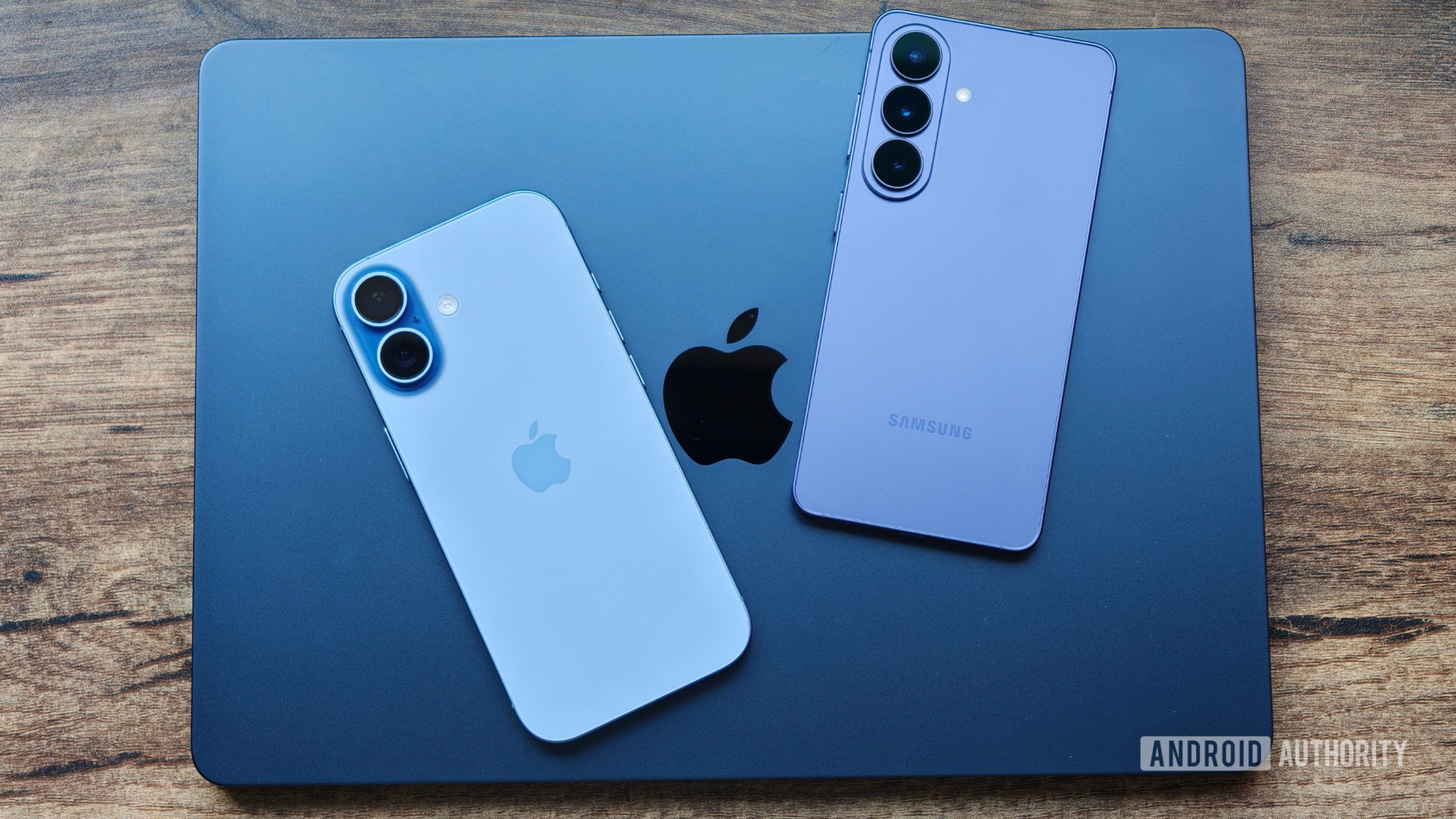
The pivotal moment that sealed the switch revolved around file sharing. Recent advancements in Google Pixel and Samsung Galaxy phones, specifically through Quick Share, achieved what once felt impossible: truly seamless file transfers between Android and iOS devices. This capability directly addressed the author's primary reason for staying with Apple – the ease of AirDrop.
Quick Share, while still relatively new and requiring the latest Android flagships like the Galaxy S26 or Pixel 10 lineups, has proven remarkably simple and effective. The process involves setting your Apple device's AirDrop to 'Everyone' or 'Everyone for 10 minutes,' initiating Quick Share from your Android device, selecting the Apple recipient, and accepting the transfer on the iPhone or MacBook. Initially, the feature struggled with slow transfers, especially for larger files like videos. However, these issues have been resolved, and it now performs as smoothly and quickly as native Apple transfers. Paired with a MacBook Air M2 and the Galaxy S26 as a daily driver, file sharing has become genuinely effortless.
Beyond File Sharing: Uncovering Missed Android Capabilities
With the file transfer hurdle cleared, the author began to fully appreciate other aspects of Android that had been overlooked or simply adapted around while using an iPhone. Their primary use case of quickly sending photos and screenshots from their phone to a MacBook for article writing, which previously involved cumbersome steps like uploading to Google Drive, is now streamlined and instant. This efficiency became particularly noticeable during a recent trip where they used a Galaxy S26 to capture over 20 photos and videos, largely due to the iPhone 17's lack of a telephoto camera. Moving these files to the MacBook for editing took mere seconds, transforming a past chore into an effortless task.
This shift brought a profound realization: how much one can unconsciously adapt to limitations without questioning them. The author recalled carrying a Lightning cable everywhere, assuming their iPhone might not last the day otherwise – a dependency that felt normal but, in retrospect, shouldn't have been. Android, by contrast, offered a sense of freedom and adaptability.
The Apple Lag: A Growing Frustration with Feature Parity
This growing awareness highlighted Apple's perceived slowness in adopting features that had been standard on Android for years. Basic functionalities like T9 dialing and, more critically, high-refresh-rate displays on vanilla models, arrived significantly later on iPhones. The author points to the hypothetical iPhone 17e, priced at $599 in 2026, still offering what's described as the 'bare minimum' – a single rear camera and a 60Hz display. This configuration, when compared to Android phones in the same price bracket, is deemed 'almost amusing.' It raises the question of why such fundamental features take so long to integrate into Apple's mainstream offerings when they are widely available elsewhere. This disparity often left the author feeling limited, though comfort and familiarity with Apple's ecosystem had long prevented a change.
Now, the desire for a phone that adapts to the user, rather than the other way around, has taken precedence. Android's inherent flexibility, including features like split-screen multitasking, has revealed a world of possibilities that were previously missed. With file sharing no longer a limitation, the decision to switch became straightforward.
Key Pros and Cons (Based on the Author's Experience)
Pros (Android):
- Seamless File Transfer (Quick Share): Now rivals AirDrop for cross-platform sharing with Apple devices.
- Advanced Camera Features: Flagship Android phones (e.g., Galaxy S26) offer telephoto lenses where base iPhones might not.
- High-Refresh-Rate Displays: Available on a wider range of Android models, not just flagships.
- Enhanced Multitasking: Features like split-screen offer greater flexibility and productivity.
- Feature Parity/Lead: Android often introduces new features years before they appear on iPhones.
- Value Proposition: Android devices in similar price ranges often offer more features and capabilities.
- Flexibility: Adapts to the user's needs rather than imposing limitations.
Cons (iPhone, as perceived by the switcher):
- Slower Feature Adoption: Key features like T9 dialing, high-refresh-rate screens, and telephoto lenses on base models arrive late.
- Perceived as Limiting: The ecosystem, while seamless, can feel restrictive compared to Android's openness.
- Bare Minimum Offerings: Base models (e.g., iPhone 17e) offer less competitive specs at their price point.
- Historical Dependency: Required reliance on proprietary accessories (e.g., Lightning cables) was a previous limitation.
Comparison to Alternatives
The author's experience highlights several direct and indirect comparisons between iPhone and Android offerings:
| Feature/Aspect | iPhone 17e (2026, ~$599) | Android Phones (Similar Price Range) | iPhone 17 | Galaxy S26 |
|---|---|---|---|---|
| Display Refresh Rate | 60Hz | Often higher (implicit) | (Not specified) | (Implicitly higher) |
| Rear Camera Count | Single camera | Often multiple (implicit) | (Not specified) | Multiple, including telephoto |
| Telephoto Camera | (Implicitly none) | Often included (implicit) | Lacks telephoto camera | Includes telephoto camera |
| Price Point Value | "Bare minimum" | More features/value for money (implicit) | Premium pricing | Premium pricing |
| Multitasking | Limited (implicit) | Split-screen, advanced multitasking | Limited (implicit) | Split-screen, advanced multitasking |
Buying Recommendation
This detailed account suggests a clear recommendation for those who value flexibility, cutting-edge features, and seamless cross-platform functionality. If you've been an iPhone user but find yourself increasingly frustrated by slower feature adoption, perceived limitations, or a desire for more robust multitasking and camera options without a premium price tag on every feature, then Android, particularly a recent flagship like the Galaxy S26 or Pixel 10 series, is now a compelling alternative. The removal of the file-sharing barrier, once a significant deterrent, means that making the switch no longer requires a second thought, especially for users heavily reliant on transferring media between their phone and a Mac. For those who prioritize raw feature-set and adaptability over long-held ecosystem comfort, now might truly be the time to consider Android for good.
FAQ
Q: What was the main reason for switching from iPhone to Android after 13 years? A: The primary trigger was the development of Quick Share on recent Android flagships (like the Galaxy S26 and Pixel 10 lineups), which enabled seamless and fast file transfers between Android and Apple devices. This removed the author's biggest reason to stay within Apple's ecosystem, as it effectively mirrored the functionality of AirDrop.
Q: What specific Android features swayed the decision beyond file sharing? A: Beyond Quick Share, the author appreciated Android's earlier adoption of features like high-refresh-rate displays on vanilla models, T9 dialing, the presence of telephoto cameras on phones like the Galaxy S26 (unlike the iPhone 17), and superior multitasking capabilities such as split-screen. They felt Android offered more flexibility and adapted better to user needs than their iPhone.
Q: Is Quick Share truly as smooth as AirDrop for sharing files with Apple devices? A: According to the author's experience, while Quick Share was initially slow, it now works 'just as smoothly as it does on Apple devices' for transferring files between a Galaxy S26 and a MacBook Air M2. It does require the Apple device's AirDrop settings to be set to 'Everyone' or 'Everyone for 10 minutes' and an accept prompt on the Apple device.
Related articles

Apple Unveils iPhone Duo: Pricey Foldable Sees Soaring Demand
Apple has officially entered the foldable smartphone arena with the long-anticipated launch of the iPhone Duo. Priced starting at a hefty $1,999, the device features a 5.4-inch outer display and a larger 7.6-inch inner
Android 17 QPR2 Beta 7.1: The Performance Relief You've Been Waiting
Android 17 QPR2 Beta 7.1: Finally Fixing the QPR1 Performance Woes Verdict: Android 17 QPR2 Beta 7.1 is a crucial and highly anticipated software update for Google Pixel users, specifically targeting and resolving the

DJI Solo Video Setups: Smart Choices for Lone Creators
This review delves into DJI's recommended solo video setups, highlighting the Osmo Pocket 3 Creator Combo as a top pick for its integrated camera, gimbal, and mic. It also covers stabilizers like the Osmo Mobile 8 and RS 4, and the DJI Mic Mini series for enhanced audio, providing honest pros, cons, and clear buying advice.

Ars Technica's Rocket Report: Your Essential Space Industry Briefing
Quick Verdict Ars Technica's Rocket Report, presented by veteran space reporter Stephen Clark, offers an invaluable and meticulously organized weekly (or similar frequency, implied by "Edition 9.15") digest of the most

Apple iPhone Duo: A Daring Debut with Notable Compromises
Apple's highly anticipated iPhone Duo, priced at $2,000, has gone on pre-order. While hailed as "Apple's most exciting device in a decade" for its innovative foldable design and immersive display, it comes with significant drawbacks like the absence of FaceID and a premium camera.
KDE Plasma 6.8: A Future-Focused 30th Anniversary Update
Quick Verdict KDE Plasma 6.8, arriving as the "30th Anniversary Edition," is a pivotal release that decisively pushes the desktop environment into the future. With a definitive farewell to native X11 sessions and a