
industry: OCSF explained: The shared data language security teams
OCSF, an open-source framework, is rapidly standardizing cybersecurity data across vendors, streamlining threat detection and investigation. Its adoption is critical for managing AI's increasing complexities in security operations.

The cybersecurity industry is undergoing a quiet but profound transformation with the emergence of the Open Cybersecurity Schema Framework (OCSF). This open-source, vendor-neutral initiative is rapidly becoming the industry standard for normalizing security data, enabling a common language for describing security events, findings, and context across a fragmented landscape of tools and platforms. Spearheaded by Amazon AWS and Splunk in 2022, OCSF significantly reduces the operational burden on security teams, allowing them to focus more on threat detection and less on data translation, a critical need as AI introduces new complexities to the security domain.
Unifying Disparate Security Data
At its core, OCSF provides a shared structure for cybersecurity events, independent of storage format or data collection methods. This seemingly technical detail has massive practical implications for Security Operations Centers (SOCs). Historically, correlating security events—such as an employee logging in from two different geographical locations within minutes—has been a monumental task due to varying field names, data structures, and assumptions across different security products. OCSF directly addresses this "tax" by helping vendors map their proprietary schemas into a universal model, streamlining data flow through security information and event management (SIEM) tools, data lakes, and pipelines without constant reformatting.
Rapid Growth and Widespread Adoption
OCSF’s ascent has been remarkably swift over the last two years. Initially announced in August 2022 by AWS and Splunk, with foundational contributions from Symantec and Broadcom, the initiative quickly attracted major players including Cloudflare, CrowdStrike, IBM, Okta, Palo Alto Networks, Rapid7, Salesforce, Securonix, Sumo Logic, Tanium, Trend Micro, and Zscaler. The community expanded from 17 companies to over 200 participating organizations and 800 contributors by August 2024, before officially joining the Linux Foundation in November 2024, now boasting 900 contributors.
This widespread acceptance is evident in its integration across numerous industry products. AWS Security Lake, AppFabric, and Security Hub all natively support OCSF, converting logs and events into the standardized format. Splunk and Cribl facilitate the translation of incoming or streaming data into OCSF, while Palo Alto Networks forwards Strata Logging Service data to Amazon Security Lake in OCSF. CrowdStrike leverages OCSF on both ends, translating Falcon data for Security Lake and positioning its Falcon Next-Gen SIEM to ingest and parse OCSF-formatted data, solidifying OCSF’s status as essential operational plumbing.
AI's Urgency for Standardized Security
The proliferation of AI infrastructure, particularly Large Language Models (LLMs) and complex agentic systems, has injected fresh urgency into OCSF's mission. These AI systems generate novel forms of telemetry that span multiple product boundaries. Security teams are increasingly challenged to understand not just the output of an AI, but the full chain of actions—tool calls, data retrievals, and policy engine interactions—that led to it, especially when investigating potential security breaches or misuse.
In this environment, an AI assistant calling the wrong tool or accessing sensitive data creates a complex security event that demands a unified understanding across systems. A shared security schema like OCSF becomes indispensable, especially as AI is also increasingly deployed for faster, more comprehensive security analytics.
Evolving Capabilities: Focus on AI-driven Security
OCSF’s development roadmap reflects this pivot towards AI. Updates in versions 1.5.0, 1.6.0, and 1.7.0 were specifically designed to help security teams piece together AI-related incidents. For instance, if an AI assistant begins behaving unusually—pulling incorrect files or using unauthorized tools—OCSF helps flag the anomalous behavior, trace tool calls step-by-step, and identify who had access to connected systems, moving beyond just the final AI output to the full sequence of actions.
Looking ahead, OCSF 1.8.0 aims to further enhance AI-incident investigation. It will enable security teams to discern details like the specific AI model and provider involved in an interaction, message roles, and changes in token counts. A sudden surge in prompt or completion tokens, for example, could signal an abnormally large hidden prompt, excessive data retrieval from a vector database, or an overly verbose response, all of which could increase the risk of sensitive information leakage. This level of granular, standardized data provides crucial investigative clues.
A Standard Takes Hold
OCSF has rapidly transcended its origins as a community effort to become a foundational, everyday standard in cybersecurity. Its robust governance, frequent releases, and practical support across data lakes, ingest pipelines, SIEM workflows, and partner ecosystems underscore its widespread adoption. As AI continues to expand the attack surface through new scams, abuses, and vulnerabilities, security teams will increasingly rely on OCSF to seamlessly connect and contextualize data from disparate systems, ultimately enhancing their ability to protect critical information in an ever-evolving threat landscape.
FAQ
Q: What problem does OCSF primarily solve for security teams? A: OCSF addresses the major challenge of data silos and disparate formats from various security tools. It provides a common, standardized schema for security events, significantly reducing the effort and time security teams spend on normalizing data, building custom parsers, and translating information between different products.
Q: How does OCSF interact with AI and large language models (LLMs) in a security context? A: OCSF is becoming crucial for securing AI systems by providing a framework to understand and trace the actions of LLMs and AI agents. It helps security teams analyze AI-generated telemetry, understand tool calls, data retrievals, and policy interactions, which is vital for investigating potential AI-related security incidents or misuse beyond just the AI's final output.
Q: Which major organizations support or integrate OCSF? A: OCSF was initially launched by Amazon AWS and Splunk, with contributions from Symantec and Broadcom. It has since grown to include over 200 organizations and 900 contributors under the Linux Foundation. Key integrations are seen in AWS services (Security Lake, AppFabric, Security Hub), Splunk, Cribl, Palo Alto Networks, and CrowdStrike, among others.
Related articles

Apple Unveils iPhone Duo: Pricey Foldable Sees Soaring Demand
Apple has officially entered the foldable smartphone arena with the long-anticipated launch of the iPhone Duo. Priced starting at a hefty $1,999, the device features a 5.4-inch outer display and a larger 7.6-inch inner

in-depth: Chicago-Area Cops Helped HSI Spy on Minnesota Anti-ICE
Chicago-area law enforcement, including local police and HSI agents, conducted undercover surveillance on Minnesota anti-ICE activists at an April 2, 2022, talk in Chicago. This operation was part of a federal conspiracy probe into 15 Minnesota activists facing felony charges related to immigration enforcement resistance. Civil liberties advocates have condemned the surveillance as a troubling intrusion into protected political activity.
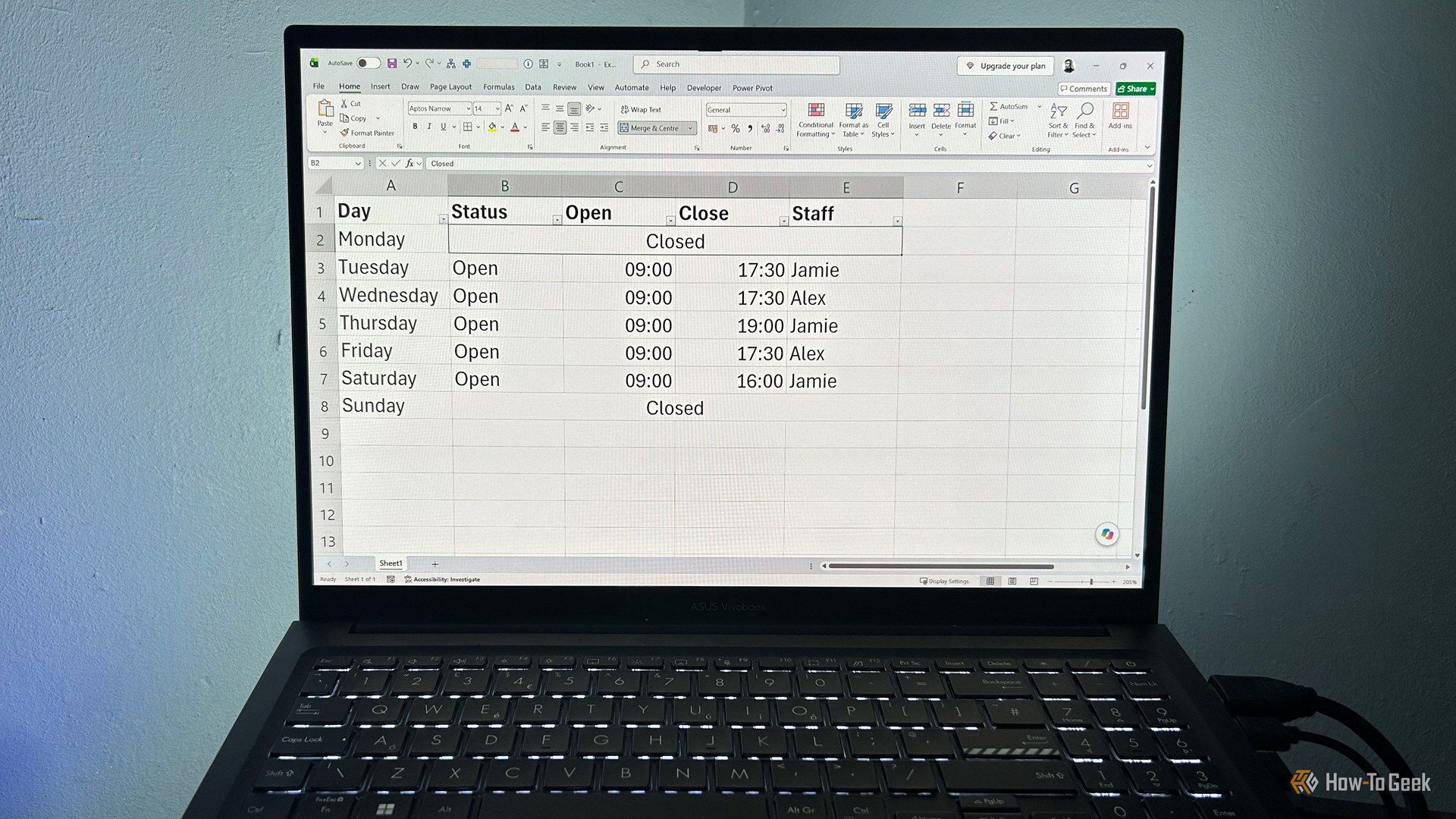
Ditch Merge & Center: The Better Way to Align Text in Excel
Learn to use Excel's "Center Across Selection" to align text across cells without merging, avoiding common data manipulation issues. This guide provides steps to utilize this newly accessible feature and add it to your Quick Access Toolbar.

Mark Wahlberg on using AI in film ‘the right way’ and being open to
Actor Mark Wahlberg believes AI has a place in filmmaking if used responsibly for enhancement, not script generation or actor replacement. At TechCrunch Disrupt, he expressed openness to an AI likeness carrying on his legacy, managed by his family, and emphasized storytelling.
Ars Technica's Rocket Report: Your Essential Space Industry Briefing
Quick Verdict Ars Technica's Rocket Report, presented by veteran space reporter Stephen Clark, offers an invaluable and meticulously organized weekly (or similar frequency, implied by "Edition 9.15") digest of the most

Tesla Unveils Thruster-Equipped Roadster, 2028 Production Targeted
Tesla has unveiled its second-generation Roadster, featuring cold-gas thrusters co-developed with SpaceX, enabling it to jump and flip. The electric sports car demonstrated 0-60mph in an astonishing 0.81 seconds, with production targeted for 2028. This highly anticipated reveal also serves as a key recruitment tool for Tesla's ambitious AI and robotics initiatives.