
IBM's Half-Möbius Molecule: A Quantum Leap in Molecular Engineering
Verdict: A Glimpse into Tomorrow's Science IBM and the University of Manchester have unveiled a groundbreaking achievement: the successful creation of a molecule with a half-Möbius topology, partially guided by quantum
Verdict: A Glimpse into Tomorrow's Science
IBM and the University of Manchester have unveiled a groundbreaking achievement: the successful creation of a molecule with a half-Möbius topology, partially guided by quantum computing. This isn't a consumer gadget or a new software suite, but a monumental scientific endeavor that pushes the very boundaries of chemistry, materials science, and computational methods. While the immediate practical applications are non-existent, this work represents a crucial stepping stone, showcasing an unprecedented level of atomic manipulation and a nascent, yet promising, utility for quantum hardware. It’s an expensive, complex, and highly specialized proof-of-concept, but one that undeniably points to a future where bespoke molecular engineering is within reach.
Unpacking the Molecular Marvel
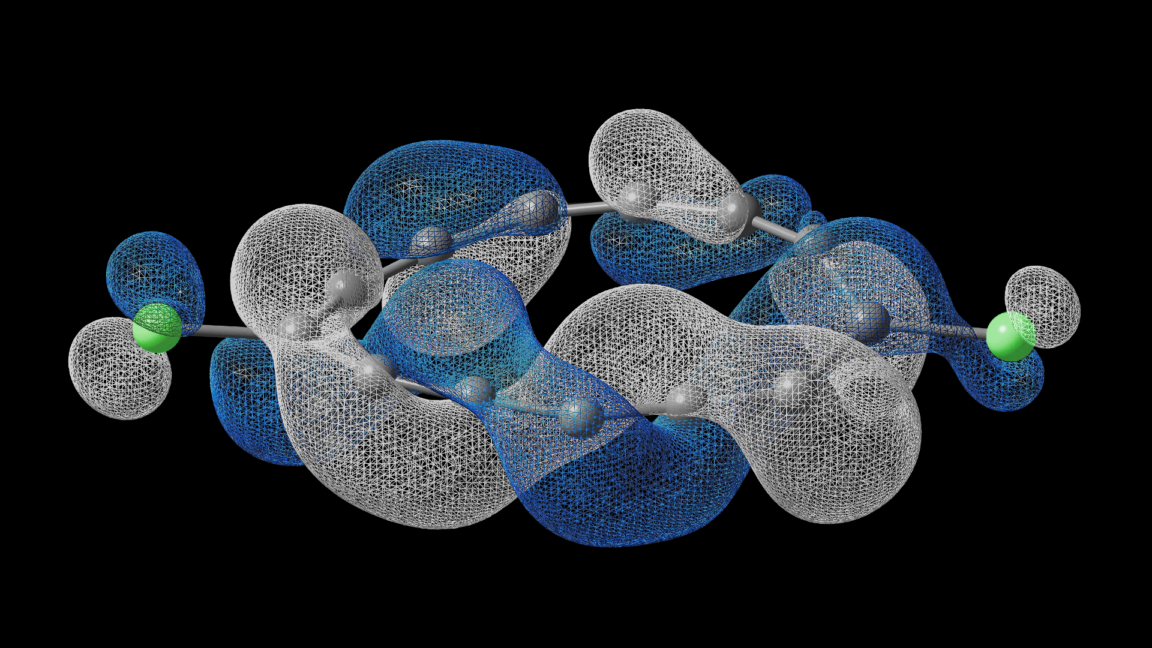
The star of this research is a unique molecule: a 13-carbon ring featuring two strategically placed chlorine atoms. What makes it extraordinary is its 'half-Möbius' topology. Unlike simpler Möbius strips where an electron would return to its starting side (top or bottom) after two loops, in this half-Möbius configuration, a single loop leaves the electron somewhere on its periphery. It would require four full loops to return to its original top position. This intricate orbital arrangement, a significant departure from common structures like benzene, highlights our advanced understanding of quantum mechanics at the molecular level.
Key Molecular Details:
- Structure: 13-carbon ring, two chlorine atoms.
- Topology: Half-Möbius, meaning an electron's path around the ring requires four circuits to return to its initial top position.
- Stability: Inherently unstable; requires isolation at extremely low temperatures on a salt crystal surface to prevent collapse into a more conventional form.
- Purpose: Not for immediate application, but an exploration of molecular manipulation and orbital configurations.
The Engineering Feat: Atomic Precision and Quantum Assist
Creating such a peculiar and unstable molecule is far from straightforward. Traditional chemical synthesis routes are simply inadequate. Instead, the international research team employed a truly futuristic approach: atomic-level fabrication using a scanning tunneling microscope (STM). They started with a complex three-ring molecule, then precisely applied voltages to individual atoms, effectively breaking bonds and removing most chlorine atoms to sculpt the desired 13-carbon ring. This method allowed for unprecedented control, tailoring a single molecule to exact specifications.
Once the foundational structure was formed, additional voltage applications via the STM were used to manipulate the molecule's bonding configuration, causing the chlorine atoms to pop out of the carbon ring's plane. This subtle shift was key to inducing the half-Möbius orbital arrangement. The successful creation of this configuration was then verified using atomic force microscopy, which mapped the orbital structures and confirmed the theoretical predictions.
But before any physical manipulation, there was the computational challenge. Simulating the behavior of 24 carbon electrons and 8 chlorine electrons in such a complex system is beyond the capabilities of classical computers. This is where quantum computing entered the picture. While a full quantum simulation was still out of reach for current hardware, the researchers utilized IBM's Heron processor (employing over half of its 150 qubits) to execute a mixed classical-quantum algorithm called Sample-based quantum diagonalization. This algorithm rapidly gathered numerous samples of the system's behavior, allowing the classical part of the algorithm to infer the general rules governing the orbitals. This hybrid approach circumvents some of the limitations of today's noisy quantum computers, providing a faster way to explore complex quantum systems than classical methods alone.
Pros and Cons of This Scientific Achievement
Pros:
- Unprecedented Precision: Demonstrates an incredible ability to manipulate individual atoms and molecular structures with an STM, akin to 'molecular surgery.'
- Advanced Molecular Understanding: Deepens our comprehension of molecular orbital configurations and the potential for designing previously unimaginable chemical structures.
- Quantum Computing Validation: Provides a concrete, albeit specialized, example of quantum computing contributing meaningfully to a scientific problem that's intractable for classical methods.
- Hybrid Algorithm Efficacy: Showcases the effectiveness of mixed classical-quantum algorithms in navigating the current limitations of quantum hardware, hinting at a pathway to broader utility.
- Future Foundation: Lays groundwork for future advancements in materials science, quantum computing applications, and theoretical chemistry.
Cons:
- Extreme Instability: The half-Möbius molecule is not stable under normal conditions, requiring isolation and ultra-low temperatures, severely limiting any immediate practical use.
- No Immediate Applications: As acknowledged by the researchers, there's no obvious direct application for this specific molecule in its current form.
- High Barrier to Entry: The synthesis and analysis require highly specialized, expensive equipment (STM, AFM) and expertise, making it a laboratory-bound endeavor.
- Limited Quantum Role: While crucial, quantum computing's role was auxiliary (sampling) rather than a full, self-contained quantum solution, reflecting the technology's current nascent state.
- Complexity: The entire process, from design to synthesis and analysis, is incredibly complex and not easily replicated.
Comparison to Alternatives: Beyond Simple Twists
While simpler Möbius molecules have been synthesized in the past, this research distinguishes itself significantly. Previous Möbius structures involved a single, full twist. The half-Möbius topology is a step beyond in complexity and theoretical significance, presenting a more nuanced orbital arrangement. More importantly, the methodology employed here marks a departure. Rather than relying on traditional chemical reactions, this work showcases a direct, atomic-level fabrication method combined with quantum-assisted computation. This combination represents a leap forward in our control over molecular construction and our ability to predict the behavior of complex quantum systems, something not seen in earlier, simpler Möbius syntheses.
Recommendation: A Must-Watch for Futurists and Researchers
For the average consumer, this isn't a product to buy, but a critical scientific development to observe. For researchers in chemistry, materials science, and quantum computing, this is a clarion call. It's a clear demonstration of the cutting edge, highlighting both the incredible precision now achievable in molecular engineering and the growing, albeit still limited, power of quantum computation. This research provides tangible proof that the future of materials design and complex scientific simulations will likely involve a tight synergy between advanced microscopy, atomic manipulation, and quantum algorithms. Invest in understanding this space; the dividends, though distant, promise to be revolutionary.
FAQ
Q: What is the practical use of creating a half-Möbius molecule?
A: Currently, there is no obvious practical use for this specific, unstable half-Möbius molecule. Its creation is primarily a scientific exploration, demonstrating our ability to manipulate molecular orbital configurations and pushing the boundaries of what's chemically possible. The insights gained, however, could inform future developments in materials science and quantum chemistry.
Q: How significant was the role of quantum computing in this research?
A: The role of quantum computing was significant, though specific. It wasn't used for a full, end-to-end quantum simulation, which is beyond current hardware. Instead, it executed a 'Sample-based quantum diagonalization' algorithm, forming a critical part of a mixed classical-quantum approach. This allowed researchers to efficiently gather data about the molecule's complex electronic orbital behaviors, which would have been intractable for classical computers alone. It highlights a pragmatic path for quantum computing's utility in the near term.
Q: Does this mean quantum computers are ready for widespread use in chemistry?
A: Not yet for widespread, direct use. This research demonstrates a specialized application where quantum computing provided a crucial assist for a highly complex problem. It highlights the technology's 'inch[ing] toward utility,' particularly through hybrid classical-quantum algorithms designed to work within current hardware limitations. Full-scale, general-purpose quantum chemistry simulations are still a goal for future, more powerful, and error-corrected quantum computers. This is a promising step, not the final destination.
Related articles

Crystal Lake Series on Peacock: A Deep Dive into Horror's Past
Crystal Lake Series Review: A Deep Dive into Horror's Past Verdict: Is Crystal Lake Worth the Dive? The long-awaited Friday the 13th prequel, Crystal Lake, is finally arriving on Peacock, promising a fresh, in-depth
Google's AI Branding Fix: A Clearer Vision for Gemini
This article critiques Google's fragmented AI branding, proposing a unified 'Gemini Intelligence' system to simplify user experience and strengthen Gemini's identity.

Chuwi UniBox AI495 Pro Review: A Mini AI Powerhouse
Chuwi's UniBox AI495 Pro review: A powerful mini workstation with 192GB RAM and an AMD Ryzen AI chip for local LLM processing, packed into a compact, Mac Pro-esque design.
Pixel Connectivity: Battery Drain, Not Data Speed, Is the Real
Google's Pixel series has consistently offered a compelling Android experience, often earning a spot on recommendation lists for its clean software and camera prowess. However, a recurring shadow has loomed over the

CNET's NYT Connections: Sports Edition Hints & Answers - Daily Puzzle
CNET's daily guide for NYT Connections: Sports Edition offers clear, spoiler-protected hints and answers, making it an efficient and reliable resource for sports puzzle enthusiasts.
Unofficial Sony Headphone PC Apps: Ditch Your Phone, Take Control
Tired of Sony's mobile app? These unofficial, open-source PC tools like Sony Device Center and SonyBridge offer desktop control over your Sony headphones' ANC, EQ, and more. A convenient, albeit unofficial, solution for Windows, Linux, and Mac users looking to ditch their phone for audio adjustments.