
Gemini vs. ChatGPT: Why I Still Pay for OpenAI's AI Assistant
Google's Gemini has undeniably made impressive strides in the AI chatbot landscape, positioning itself as a versatile "Swiss Army knife" deeply integrated into the Android ecosystem. Its rapid development pace is
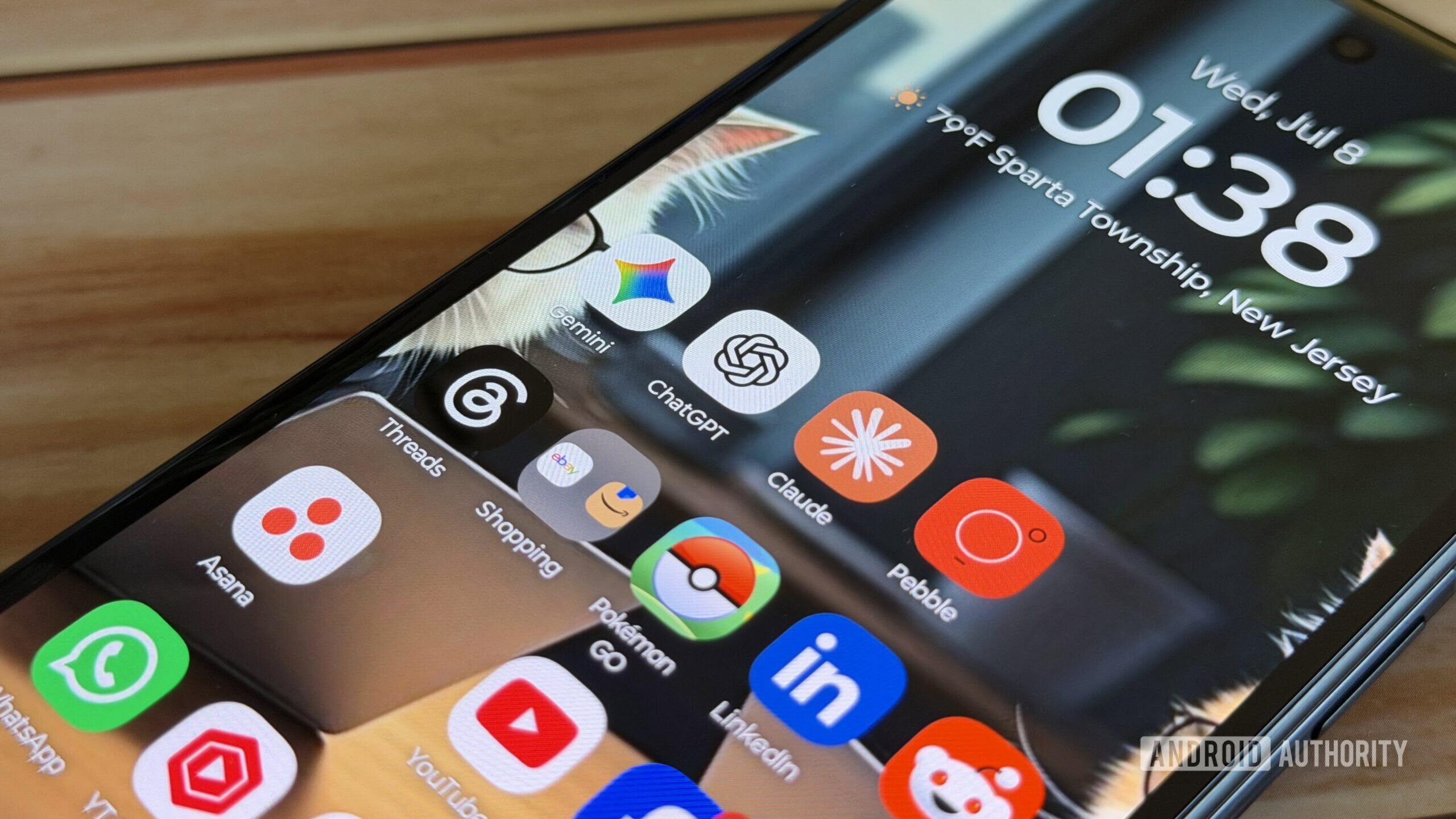
Google's Gemini has undeniably made impressive strides in the AI chatbot landscape, positioning itself as a versatile "Swiss Army knife" deeply integrated into the Android ecosystem. Its rapid development pace is commendable, allowing it to perform tasks no other chatbot can, particularly within Google's suite of services. Yet, despite having full access to Gemini's capabilities through a Google AI Pro plan, many dedicated users, including myself, find themselves maintaining a separate subscription to ChatGPT. Why? Because ChatGPT, leveraging its first-mover advantage, consistently delivers a more polished, reliable, and universally adaptable experience.
I navigate between Gemini and ChatGPT daily, each serving different purposes. However, when it comes to the heavy lifting, the nuanced tasks, and the sheer consistency that makes an AI indispensable, Gemini still falls short in several critical areas. It's not about what Gemini can't do at all, but what it still can't do as well as ChatGPT.
User Experience: Where Gemini Stumbles
Inconsistent Complex Instruction Following
One of the most frustrating aspects of using Gemini daily is its struggle with complex, multi-step instructions. There have been numerous occasions where I've provided Gemini with a detailed list of commands, only for it to inexplicably skip several of them. This isn't just an isolated incident; it's happened within individual chats and even inside Notebooks, which are designed to consolidate context across multiple conversations. My recent attempt to run a full-fledged expense manager within Gemini highlighted this flaw, as the chatbot repeatedly failed to execute instructions correctly.
Adding to this, Gemini's scheduled tasks feature has proven unreliable for weeks, refusing to run despite multiple attempts to restart or manually toggle it on. Whether these are bugs or systemic issues, the impression is clear: Gemini still feels like a product in progress, lacking the consistent reliability and polish of its rival. ChatGPT, by contrast, has offered a far more dependable and consistent experience over the years, making these hiccups with Gemini harder to overlook.
The Weight of History: A Matter of Personal Context
This point is somewhat subjective but profoundly impactful for long-term users. Having used ChatGPT for what feels like an eternity, it has amassed a significant amount of my personal and professional context, intentionally shared across hundreds of chats. This deep, personalized history is incredibly difficult to replicate with a new chatbot.
Despite Gemini's integration with Google's extensive Personal Intelligence capabilities and its built-in tool for importing chats and context from other AI platforms, I haven't felt a strong enough pull to make a complete switch. The persistent reliability issues I encounter with Gemini deter me from investing the time and effort to transfer such a vital personal knowledge base.
Image Generation: Quality Over Speed
Equipped with Nano Banana, Gemini is capable of generating and editing impressive imagery, and it often boasts faster generation speeds. However, after experiencing ChatGPT's more recently released image generation model, Gemini's offering visibly lags behind in terms of quality and adherence to instructions. When I'm editing photos or creating vectors, Gemini frequently messes up colors, even when precise hex codes are provided. It tends to render images either too dull or excessively bright after even a simple touch-up.
While ChatGPT's image generation isn't flawless, it demonstrably performs better at following my instructions and maintaining a consistent color palette throughout editing cycles. The slight wait for ChatGPT's output is a small price to pay for the visibly superior results.
The Irony of Web Search
Given its lineage, one would naturally assume that Gemini, a Google product, would be the undisputed champion of real-time web search. Surprisingly, this isn't the case. For daily tasks, like getting a morning news rundown of tech updates, I rely on AI tools to summarize information from specific websites.
Both Gemini and ChatGPT are tasked with this, yet Gemini consistently misses crucial pieces of information that ChatGPT reliably picks up, even after repeated prompts for more detailed summaries. It's a genuine shame how inadequate Gemini feels when it comes to retrieving and synthesizing current information from the internet, an area where Google's core strength theoretically lies.
A Closed Ecosystem vs. Broad Integration
Gemini excels when you operate entirely within the Google ecosystem. Its seamless connectivity with Gmail, Docs, and Keep significantly boosts productivity. It can also interface with Google Flights and Hotels to assist with travel planning and features Google's own video generation and editing tools. However, its meaningful connections with the external world remain limited. This is a significant drawback for users who rely on a diverse array of non-Google applications for their daily tasks—a domain where ChatGPT truly shines.
For instance, while Gemini's music discovery and playlist generation are confined to YouTube Music, ChatGPT extends its capabilities to both Spotify and Apple Music. It integrates with various third-party travel services like Expedia and Skyscanner, and even allows users to interact with DoorDash and Uber directly within the app. I particularly appreciate ChatGPT's connection with Canva, my preferred image editing tool, allowing me to prompt it for generation and edits directly. Gemini has begun opening its MCP connections for third-party developers, but this is still very much in its foundational stages.
Gemini vs. ChatGPT: A Feature Comparison
| Feature | Gemini (Pro Plan) | ChatGPT (Paid Subscription) |
|---|---|---|
| Complex Instructions | Inconsistent, frequently skips details, unreliable scheduled tasks | Consistently follows multi-step prompts, reliable execution |
| Personal Context Recall | Lacks deep, long-term personal history; import tools don't fully bridge the gap | Possesses a deeply ingrained personal and work context from extensive usage |
| Image Generation Quality | Faster, but often struggles with color accuracy, tends to produce dull or overly bright outputs | Slower, but generally produces better quality, adheres to instructions, and maintains consistent color palettes |
| Real-time Web Search | Surprisingly inconsistent, frequently misses important details in news summaries | More reliable and comprehensive in retrieving and summarizing real-time information from the internet |
| External App Integration | Strong within Google ecosystem (Gmail, Docs, Keep, YouTube Music, Flights, Hotels) | Broad integration with numerous third-party apps (Spotify, Apple Music, Expedia, Skyscanner, DoorDash, Uber, Canva) |
The Habit Factor
Ultimately, the choice often boils down to habit and muscle memory. For many, an AI-worthy question instinctively leads fingers to type "chatgpt.com" into the address bar. This speaks volumes about the level of trust and familiarity ChatGPT has built. While I consciously push myself to use Gemini for certain tasks, ChatGPT remains the instinctive, default choice due to its consistent performance and versatility. This habit shift is a formidable challenge Gemini must overcome.
Recommendation
For users deeply embedded within the Google ecosystem who prioritize seamless integration with Google's proprietary services and require fast (though not always accurate) image generation, Gemini certainly has its niche. However, for those seeking an AI assistant that delivers consistent reliability, superior image generation quality, dependable real-time web search, and extensive integration with a broad array of third-party applications, ChatGPT remains the more robust, versatile, and recommended choice for power users.
FAQ
Q: Is Gemini a good alternative to ChatGPT?
A: While Gemini has made significant advancements and offers unique integrations within the Google ecosystem, it currently lags behind ChatGPT in critical areas such as reliably following complex instructions, producing high-quality images, and consistent real-time web search. For many power users, it's not yet a complete replacement for ChatGPT.
Q: Which AI is better for image generation?
A: Based on recent comparisons, ChatGPT's image generation model generally yields better quality and more accurate results, particularly regarding color consistency and adherence to specific instructions, even if Gemini sometimes generates images faster.
Q: Should I pay for both Gemini and ChatGPT?
A: For most users, a single paid subscription to a reliable AI chatbot like ChatGPT should be sufficient. Paying for both is typically only justified if you heavily utilize Gemini's deep Google ecosystem integrations and are willing to tolerate its current inconsistencies in other areas, while still needing ChatGPT for more robust, general-purpose AI tasks.
Related articles

Chuwi UniBox AI495 Pro Review: A Mini AI Powerhouse
Chuwi's UniBox AI495 Pro review: A powerful mini workstation with 192GB RAM and an AMD Ryzen AI chip for local LLM processing, packed into a compact, Mac Pro-esque design.

Nscale Adds Former OpenAI Exec Fidji Simo to Board Ahead of IPO
Nscale, the U.K.-based AI data center startup, has appointed former OpenAI, Meta, and Instacart executive Fidji Simo to its board of directors. This high-profile addition comes as Nscale prepares for a potential IPO this fall, leveraging Simo's extensive experience in scaling major tech platforms and guiding a company through a successful public offering.
Pixel Connectivity: Battery Drain, Not Data Speed, Is the Real
Google's Pixel series has consistently offered a compelling Android experience, often earning a spot on recommendation lists for its clean software and camera prowess. However, a recurring shadow has loomed over the

CNET's NYT Connections: Sports Edition Hints & Answers - Daily Puzzle
CNET's daily guide for NYT Connections: Sports Edition offers clear, spoiler-protected hints and answers, making it an efficient and reliable resource for sports puzzle enthusiasts.
Unofficial Sony Headphone PC Apps: Ditch Your Phone, Take Control
Tired of Sony's mobile app? These unofficial, open-source PC tools like Sony Device Center and SonyBridge offer desktop control over your Sony headphones' ANC, EQ, and more. A convenient, albeit unofficial, solution for Windows, Linux, and Mac users looking to ditch their phone for audio adjustments.

OpenAI's Bubeck Denies Credit Stripping, Apologizes Amidst
OpenAI's Sébastien Bubeck denies attempting to strip Anthropic mathematician Levent Alpöge of credit for his work on the Navier-Stokes problem, apologizing for a remark made during contentious private discussions. OpenAI CEO Sam Altman backed Bubeck, but Alpöge and his collaborator, Tristan Buckmaster, present a conflicting account of events. The dispute also raises questions about OpenAI's data handling policies, as the mathematicians claim to have used OpenAI's Codex tool during their research.