
F5 at 30: From Dot-Com Load Balancing to AI Security Leadership
F5, the Seattle-based tech veteran, marks its 30th anniversary by unveiling a significant pivot into AI security, highlighted by its recent acquisition of SurePath AI. CEO François Locoh-Donou discusses the company's journey from early internet load-balancing to a modern enterprise security platform addressing the complex challenges of AI visibility and governance.

Seattle-based technology giant F5 is celebrating its 30th anniversary, marking three decades of continuous reinvention that has seen it evolve from a dot-com era startup to a critical player in modern application and security infrastructure. The company is now embarking on its latest strategic pivot, expanding significantly into the burgeoning field of AI security.
F5's chairman, president, and CEO, François Locoh-Donou, recently shared insights into this remarkable journey on the GeekWire Podcast. From its improbable beginnings as a group of University of Washington students aiming to build online video games, F5 transformed into an internet load-balancing pioneer in the 1990s, a move Locoh-Donou described as a "tough decision" that "paid off in big ways."
Today, F5 stands as a publicly traded company with approximately 6,500 employees and over $3 billion in annual revenue. Its technology is essential for keeping many of the world's largest applications running securely, with more than 80% of the Fortune 500 counting among its diverse customer base.
The company's latest transformation addresses a critical emerging challenge: securing artificial intelligence. Locoh-Donou highlighted what he calls the "AI visibility problem," where enterprises deploying AI models and agents struggle to monitor their usage, understand data access, and maintain governance across complex IT environments.
"The more an enterprise adopts AI, the less visibility it has into what AI is crawling in the organization," Locoh-Donou explained. This lack of oversight makes it challenging to track which employees use what AI tools, and how different agents interact with applications and retrieve data, creating significant security and compliance gaps.
In response, F5 is building a comprehensive AI security platform designed to tackle these complexities head-on. This initiative was underscored by the company's recent acquisition of SurePath AI, a move that accelerates F5's capabilities in this new domain. The platform aims to consolidate disparate tools into a unified solution.
"Having four, five, six different tools to discover, test and secure your AI is a nightmare," Locoh-Donou stated. F5's integrated platform will offer capabilities for the discovery of AI models and agents, robust governance and visibility, thorough testing of these models, and essential guardrails to protect them from threats.
Beyond F5's corporate strategy, Locoh-Donou also reflected on his personal journey and leadership philosophy. Originally from Togo, he shared his early struggles with belonging in the tech industry, noting the absence of executives who looked like him. His initial aspiration was simply "to not get fired," highlighting a common sentiment among underrepresented professionals.
This personal experience fuels his dedication to fostering inclusion. He recently addressed high school students from underrepresented backgrounds, emphasizing that the technology industry welcomes them and that their voices are valuable, regardless of their family's tech background or their coding skills. His leadership approach focuses on attracting top talent, instilling self-belief, and encouraging peer-driven performance over top-down pressure.
As F5 celebrates its 30th year, its pivot into AI security positions it at the forefront of a rapidly evolving technological landscape. The company's history of successful reinvention suggests it is well-equipped to navigate the challenges and opportunities presented by the AI era, continuing its legacy of securing the digital world.
FAQ
Q: What is F5's latest strategic focus? A: F5's latest strategic focus is expanding into AI security, aiming to provide a comprehensive platform for discovering, governing, testing, and protecting AI models and agents within enterprises.
Q: How did F5 start, and what is its primary business today? A: F5 began 30 years ago as a group of University of Washington students trying to build online video games before pivoting to internet load balancing. Today, it's a publicly traded company that helps secure and optimize many of the world's largest applications for over 80% of the Fortune 500.
Q: What is the "AI visibility problem" that F5 aims to solve? A: The "AI visibility problem" refers to the difficulty enterprises face in understanding which AI models and agents are deployed, how they are being used by employees, and how they access data, leading to security and governance challenges.
Related articles

Apple Unveils iPhone Duo: Pricey Foldable Sees Soaring Demand
Apple has officially entered the foldable smartphone arena with the long-anticipated launch of the iPhone Duo. Priced starting at a hefty $1,999, the device features a 5.4-inch outer display and a larger 7.6-inch inner

in-depth: Chicago-Area Cops Helped HSI Spy on Minnesota Anti-ICE
Chicago-area law enforcement, including local police and HSI agents, conducted undercover surveillance on Minnesota anti-ICE activists at an April 2, 2022, talk in Chicago. This operation was part of a federal conspiracy probe into 15 Minnesota activists facing felony charges related to immigration enforcement resistance. Civil liberties advocates have condemned the surveillance as a troubling intrusion into protected political activity.

Mark Wahlberg on using AI in film ‘the right way’ and being open to
Actor Mark Wahlberg believes AI has a place in filmmaking if used responsibly for enhancement, not script generation or actor replacement. At TechCrunch Disrupt, he expressed openness to an AI likeness carrying on his legacy, managed by his family, and emphasized storytelling.

Tesla Unveils Thruster-Equipped Roadster, 2028 Production Targeted
Tesla has unveiled its second-generation Roadster, featuring cold-gas thrusters co-developed with SpaceX, enabling it to jump and flip. The electric sports car demonstrated 0-60mph in an astonishing 0.81 seconds, with production targeted for 2028. This highly anticipated reveal also serves as a key recruitment tool for Tesla's ambitious AI and robotics initiatives.

Amazon Prime Video Launches AI-Powered Prime 360 for NBA Coverage
Amazon Prime Video is elevating its NBA coverage with the introduction of Prime 360, an AI-powered replay system offering immersive, 'fly through' views of the action. Kicking off its second season, Prime Video also adds Yahoo fantasy integration and gains exclusive Eastern Conference Finals rights, expanding its tech-driven sports broadcast. The new features aim to deliver a unique and interactive viewing experience for basketball fans.
regional: A two-person Seattle startup lands $1M to reinvent
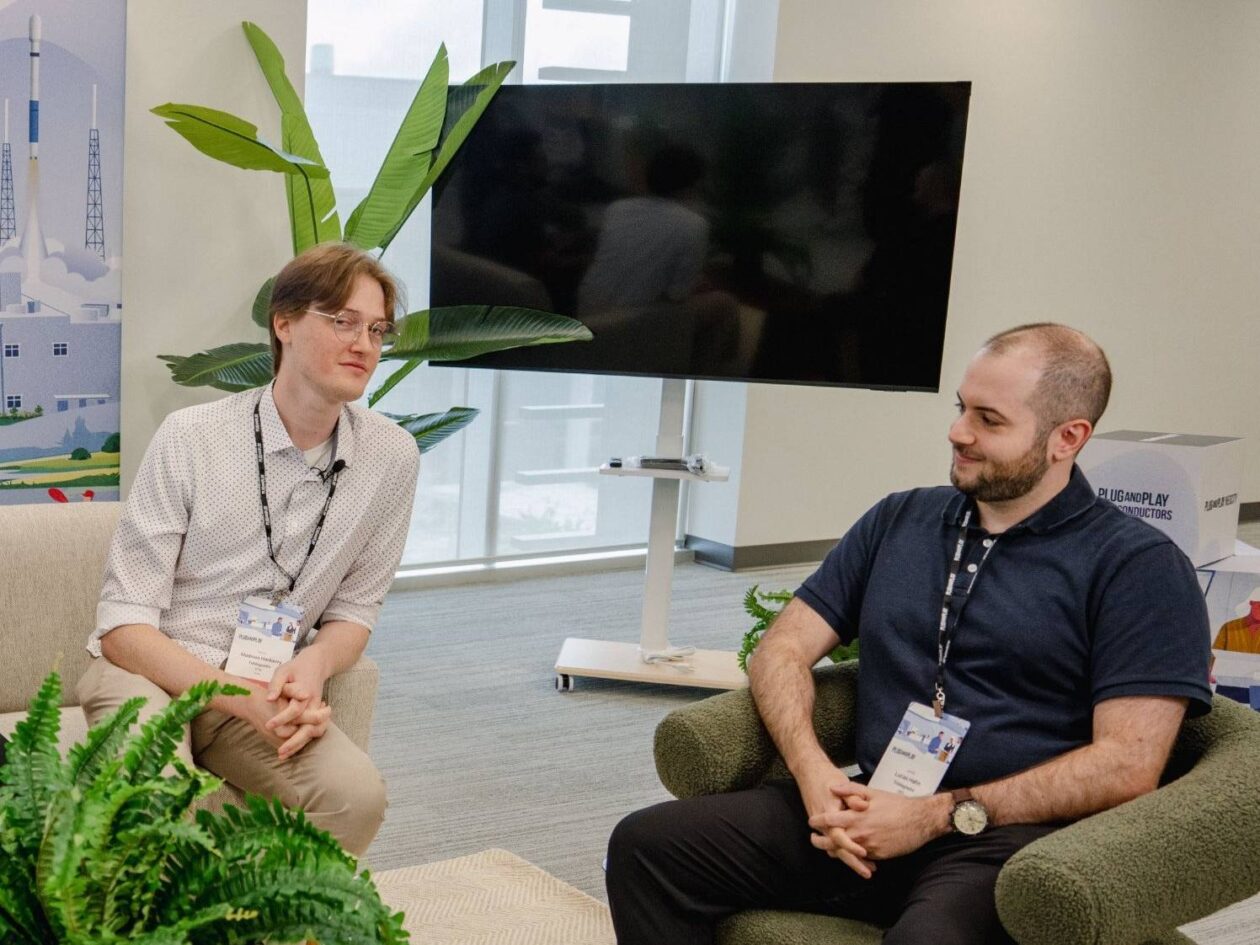
Seattle startup TriMagnetix has secured $1 million to develop semiconductor chips that consume 800 times less energy and are radiation-resistant. The two-person company, leveraging nanomagnetic technology, is targeting space applications and data centers. With new funding and key partnerships, TriMagnetix aims for commercial sales within a year.