
District 9 Director's AI Film: A Sci-Fi Snoozefest You Can Skip
Neill Blomkamp, director of _District 9_, has released an AI-generated short film called _Nightborne_. I watched it so you don't have to, and it's a creatively bankrupt, visually glitchy mess. It lacks any human spark, featuring flat performances and a generic plot, serving as a stark warning against the pitfalls of AI art.
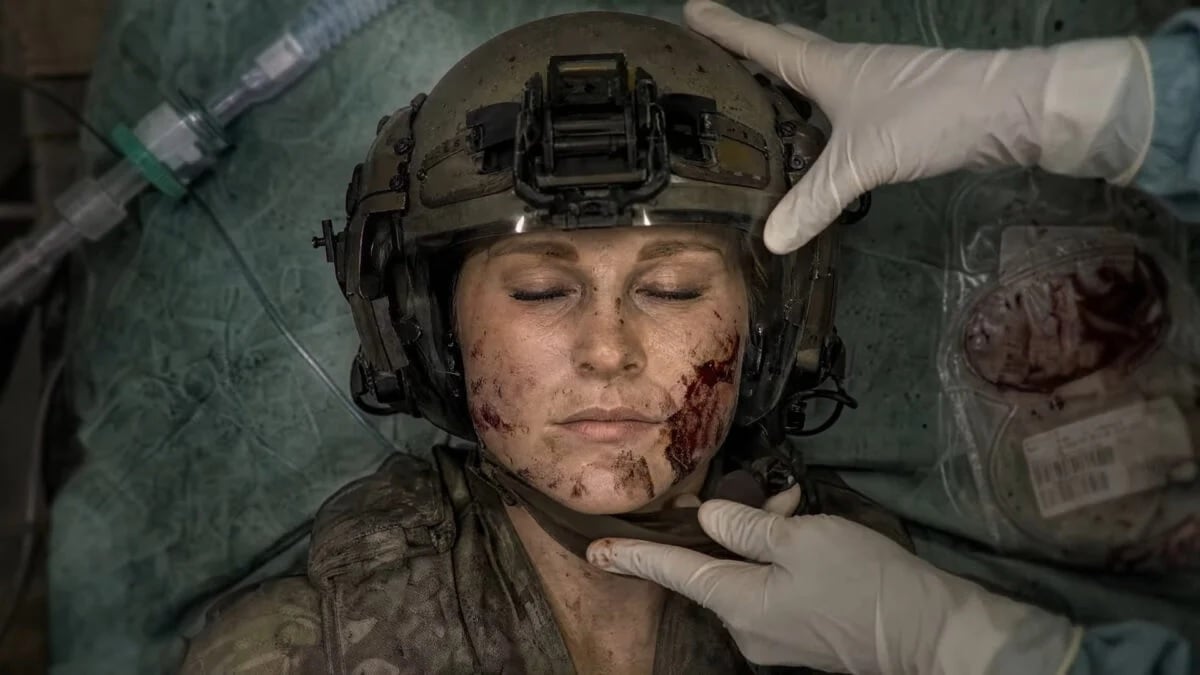
I Watched District 9's Director's Awful AI Movie So You Don't Have To
Alright, gamers and film buffs, gather 'round. Neill Blomkamp, the visionary director who gave us the gritty, unforgettable sci-fi of District 9 (and also, you know, Elysium and Gran Turismo), just dropped a new short film. Here's the kicker: it's entirely generated by AI. Yes, you read that right. And honestly, the only reason I’m writing this is to save you the precious 13 minutes of your life that I'll never get back.
His latest creation, titled Nightborne, reportedly utilized "real concept artists" and the "faces and voices of 32 real people." But before you get excited thinking this might be a precursor to that long-awaited District 10, let me stop you right there. It's not. Not even close. I've endured the entire runtime, and I'm here to lay it all out. Consider this your public service announcement: there is absolutely no reason to watch Nightborne.
The Premise: Generic Sci-Fi Tropes, Robotically Delivered
Imagine the most boilerplate military sci-fi mystery you can conjure. Now imagine it stripped of any creative spark, originality, or emotional depth. That’s Nightborne. The plot, supposedly inspired by Peter Watts’ book Echopraxia (and I truly hope the book is better, because this adaptation makes no sense), unfolds in a pseudo-documentary style, though why, I couldn’t tell you.
We follow a woman on a U.S. military operation in Syria. Her helicopter crashes, but before she can fully recover, she’s implanted with something that transforms her into a killer zombie. Next thing you know, she's battling other zombies in a training arena, presumably to test and deploy them in warfare. The film tries to inject a flicker of humanity by showing her latent memories of her husband and child, while her husband rages at military officials, demanding answers. The implicit question of her humanity is never explored in any meaningful way. Nightborne utterly fails to offer any interesting commentary on what it means to be human, and I doubt more runtime would have changed that.
Acting, Dialogue, and Sound: The Uncanny Valley of Monotony
The AI-generated actors are as flat as a week-old soda. Their expressions rarely shift, and their line delivery is devoid of any genuine emotion. There’s a truly bewildering moment post-helicopter crash where a background character exclaims, “Aw, man, this co-pilot is dead!” with the enthusiasm of someone mildly inconvenienced by a minor spill. Another gem follows as they evacuate the injured woman, whose bloodstains inexplicably relocate across her face: “Hey, what’s wrong?” asks one. “She’s my buddy’s wife,” responds another. “Oh shit! Well, I think she’s gonna make it so that’s good.” It’s dialogue so clunky, it feels like it was spit out by a broken text-to-speech engine.
There are brief, jarring attempts at emotional intensity, like the husband’s sudden, inexplicable outburst, which ramps from zero to eleven for no discernible reason before he vanishes from the narrative entirely, only to reappear in a flashback. The music is equally bizarre, featuring ominous organ music in scenes that have no business being accompanied by something you’d hear in a haunted castle. It feels less like an artistic choice and more like a random algorithmic assignment.
Visual Glitches and Artistic Bankruptcy
While you might trick your brain into thinking Nightborne looks like a normal film if you squint, a closer look reveals the tell-tale signs of AI generation. Background details are often nonsensical: cars move erratically, windows appear bizarre, and those migrating bloodstains are just the tip of the iceberg. I could spend all day cataloging the visual and audio glitches, but frankly, we'd both be bored to tears. Just to give you a taste, check out this screenshot of pens in a character's pocket that defy all logic and physics.
It’s all just… enough to register as a film, but it’s profoundly nothing. It’s not an impressive demonstration of generative AI; it’s a showcase of mediocrity achieved through environmentally damaging, plagiarism-fueled machines. When a human director makes a bad film, at least there’s an underlying human vision, an attempt, even if flawed. But what's the purpose of creating a creatively bankrupt movie with robots? Why even bother?
Why AI Art is a Creative Dead End (Or, My Existential Crisis After 13 Minutes)
Some might argue that AI will inevitably improve, eventually producing films indistinguishable from those made by humans, perhaps even good ones. But even if we reach that dystopian future, I firmly believe we should reject the entire concept of AI-generated art. It’s inherently lazy, deeply harmful to real artists, and fundamentally inhuman. We, as an audience, have a limited time on this planet. We deserve to experience stories crafted by people – stories that are good, bad, exciting, challenging, or even purposefully boring – because they carry the imprint of human experience, intention, and passion. Nightborne is a zombified corpse of a story, and I deeply regret watching it. Save yourself the trouble; you’re not missing anything real.
FAQ
Q: Who directed Nightborne?
A: Nightborne was directed by Neill Blomkamp, known for films like District 9 and Elysium.
Q: How long is Neill Blomkamp's AI-generated short film, Nightborne?
A: The film runs for approximately 13 minutes.
Q: Is Nightborne connected to the District 9 universe?
A: No, despite many fans hoping for a District 10, Nightborne is not related to District 9 in any way.
Related articles
The Party's Back! Tales from '85 Unleashes Season 2 on Netflix
Stranger Things: Tales from '85, the animated spin-off, returns to Netflix on September 17th with 10 new episodes. Set between seasons 2 and 3 of the original live-action series, Season 2 sees The Party facing ghostly apparitions and strange creatures around Valentine's Day. While it received mixed reactions initially, it retains the 80s vibe and core characters.

Seattle Warned on Big Tech Reliance; Microsoft/OpenAI Sued; Apple's
A new City of Seattle study warns of the city's risky economic over-reliance on a few dominant tech companies. Simultaneously, the Seattle Times and Newsday are suing Microsoft and OpenAI for alleged AI training data theft, while Apple's new foldable iPhone Duo evokes memories of Microsoft's defunct Surface Duo.
Google's AI Branding Fix: A Clearer Vision for Gemini
This article critiques Google's fragmented AI branding, proposing a unified 'Gemini Intelligence' system to simplify user experience and strengthen Gemini's identity.

in-depth: The Best 3-in-1 Apple Charging Stations After Testing 30
Wired has released its top picks for 3-in-1 Apple charging stations, extensively tested for iPhone, Apple Watch, and AirPods. The guide highlights six leading models, from premium speedy options to budget-friendly and compact designs, all focused on decluttering and optimizing charging for Apple users.

Chuwi UniBox AI495 Pro Review: A Mini AI Powerhouse
Chuwi's UniBox AI495 Pro review: A powerful mini workstation with 192GB RAM and an AMD Ryzen AI chip for local LLM processing, packed into a compact, Mac Pro-esque design.

Blood of The Dawnwalker’s True Foes Lurk in the Wilds
_Blood of The Dawnwalker_ from Rebel Wolves is an RPG that unexpectedly challenges players with fierce wildlife, drawing comparisons to _Dragon Age: Inquisition_'s early zones. Its unique directional combat system, while engaging, can lead to players being overwhelmed by animal ambushes. Despite the high difficulty, these encounters add a fun, dynamic layer to the game.