
ChatGPT Memory Upgrade: Powerful, Yet Problematic
Verdict: A Powerful Upgrade with Troubling Implications ChatGPT's latest memory upgrade, dubbed Dreaming V3, represents a significant technical leap for OpenAI's chatbot, promising more personalized and context-aware

Verdict: A Powerful Upgrade with Troubling Implications
ChatGPT's latest memory upgrade, dubbed Dreaming V3, represents a significant technical leap for OpenAI's chatbot, promising more personalized and context-aware interactions. While the underlying technology is impressive in its efficiency and scope, my extensive testing reveals a feature fraught with potential issues, including the retention of outdated or incorrect information, the creation of flawed user profiles, and a concerning lack of transparency. This isn't just about convenience; it's about the integrity of the AI's future responses. For general users seeking reliable, unbiased information, this upgrade introduces more risks than benefits, potentially 'poisoning' the well of your AI experience.
Diving Deep into ChatGPT's Evolving Memory
Before 2024, each ChatGPT conversation was a clean slate, devoid of any carry-over memory. This changed with the introduction of a basic memory feature in 2024, which essentially acted as a list of user-provided facts. In practice, this early iteration proved largely ineffective; I found it stored irrelevant and quickly outdated details from specific chat sessions, lacking any mechanism for curation or contextual understanding. For example, my memory still contains items about managing Google Workspace accounts or tracking sprite positions, details that were only pertinent for a single, long-past conversation.
The real shift began in 2025 with the introduction of 'Dreaming V0,' allowing the model to silently reference chat history and automatically curate memories. This was further refined into the current 'Dreaming V3' in 2026. This latest iteration is a sophisticated data synthesis engine, designed to build a comprehensive dossier about the user by carrying forward complex context information and tracking multi-session, multi-layered projects. OpenAI boasts substantial performance improvements, with factual task recall jumping from 41% in 2024 to 82% in 2026, correctness over time from 9% to 75%, and preference adherence from 31% to 71%. A major technical triumph enabling this is a fivefold reduction in compute cost, making this continuous background analysis feasible for a mass audience. This feature is currently available to Plus and Pro subscribers and is slated for a wider rollout to all users soon.
User Experience: Navigating Your Digital Dossier
Accessing and managing ChatGPT's memory features is relatively straightforward within the browser version. You can find them under Settings > Personalization > Memory. Here, you'll encounter a toggle labeled "Enable memory." While you can switch this off, it's important to understand that this only partially disables the feature; your existing stored memories and chat history will not be automatically deleted. ChatGPT simply won't perform new dream-based memory consolidation.
For a more thorough purge, you must manually go to the "saved memories" interface and delete specific entries. Even this doesn't guarantee a complete erasure, as individual chat sessions must also be deleted to fully remove that information from the AI's knowledge base about you. There's also a significant caveat: OpenAI states that disabling memory doesn't affect certain safety features. In rare, high-risk situations, limited, safety-relevant context might still be used to ensure safer responses, though it's not explicitly clear how this data is managed or reported.
The 'Manage' button leads to the core of Dreaming V3's user interaction: a narrative summary of ChatGPT's derived interests and preferences about you. Users can select specific aspects of this profile and mark them with "Don't mention this again" to instruct the AI to forget that particular detail. You can also add comments to further refine how ChatGPT understands your preferences.
The Double-Edged Sword: Pros and Cons
Pros:
- Technical Sophistication: Dreaming V3 is a genuine technical achievement, demonstrating breadth, efficiency, and scalability in processing user data. The 5x reduction in compute cost is notable, making such a feature viable for widespread implementation.
- Improved Performance Metrics: OpenAI's reported increases in factual task recall, correctness over time, and preference adherence suggest a more capable AI that can maintain context across numerous interactions, potentially leading to more relevant and consistent responses.
- Enhanced Personalization: For users with very specific, long-running projects or consistently applied preferences, the system could offer a more tailored and efficient AI assistant, reducing the need for constant repetition of background information.
Cons & Reviewer Concerns:
- Outdated and Inaccurate Information: My tests revealed that ChatGPT retains irrelevant and out-of-date facts, then uses these stale details in its current responses. For instance, it remembered a discussion about Kasa smart plugs from years ago, but then incorrectly identified the model number and falsely claimed I had integrated it with Home Assistant – a system I've never installed. This highlights a critical flaw: the AI's 'memory' isn't always accurate or reflective of current realities.
- Flawed Personal Profiling: Dreaming V3's data synthesis effectively constructs a personal dossier. The problem is, this dossier isn't always correct and can be based on incomplete or misinterpreted interactions. ChatGPT's assumptions about my tech stack and preferences were wrong, creating a skewed 'personal lens' through which it filters information. This 'assume means to make an ass out of you and me' problem can lead to distorted or unhelpful responses.
- Lack of Transparency and Control: While there's an interface to manage some memories, users don't have a clear, comprehensive view of everything ChatGPT thinks it knows about them, or how deeply these assumptions influence its answers. The partial nature of disabling and deleting memory also means users can't truly erase their data without deleting entire chat histories.
- Misinterpretation of Intent: The AI's attempt to filter information through a 'personal lens' means that research questions, which might be entirely impersonal, could be mistakenly interpreted as personal preferences or interests. This can lead to irrelevant personalization and further 'poison' the quality of answers.
Buying Recommendation
For most general ChatGPT users, particularly those who value objective and context-free responses, I cannot recommend actively using or enabling this memory feature without significant reservations. The potential for outdated or inaccurate personal profiling to subtly distort future AI interactions is too great. If you frequently use ChatGPT for diverse research, creative writing, or technical problem-solving where an unbiased, fresh perspective is crucial, the 'poisoning' effect of these memories could actively hinder your productivity.
However, if you are a Plus or Pro subscriber engaged in a single, deeply integrated, long-term project that genuinely benefits from consistent personal context (and you are willing to meticulously manage and correct ChatGPT's evolving profile of you), then there might be niche scenarios where Dreaming V3 could be beneficial. But even then, proceed with extreme caution and frequent sanity checks on the AI's assumptions.
My advice? Keep the memory features disabled for now. The current implementation, despite its technical brilliance, prioritizes a form of personalization that frequently sacrifices accuracy and introduces bias based on potentially flawed interpretations of your past interactions.
FAQ
Q: What is the main concern with ChatGPT's new memory feature? A: The primary concern is that while the memory upgrade aims to personalize responses, it often retains outdated or incorrect information and builds an inaccurate profile of the user, which can then subtly 'poison' and distort all future answers, regardless of the prompt's intent.
Q: Can I completely disable or delete ChatGPT's memory? A: You can partially disable the memory feature, preventing new consolidation, but existing memories and your chat history remain. To remove specific facts, you must manually delete 'saved memories' or delete entire chat sessions. Even then, OpenAI notes that safety-relevant context might still be retained in certain high-risk situations.
Q: Who might benefit from using ChatGPT's new memory? A: Users engaged in very specific, long-running projects that require consistent personal context might find some benefit, provided they are diligent in managing and correcting ChatGPT's interpretations of their preferences and information. However, this requires careful oversight to avoid the negative consequences of inaccurate memory.
Related articles

Chuwi UniBox AI495 Pro Review: A Mini AI Powerhouse
Chuwi's UniBox AI495 Pro review: A powerful mini workstation with 192GB RAM and an AMD Ryzen AI chip for local LLM processing, packed into a compact, Mac Pro-esque design.

Apple AirPods 5 Now Available for Preorder
Apple's AirPods 5 are now available for preorder, with an official launch date of September 18th. The new standard $129 model features active noise cancellation, a premium feature previously exclusive to higher-end AirPods. An upgraded $149 model offers wireless charging, longer battery life, and touch controls.
Pixel Connectivity: Battery Drain, Not Data Speed, Is the Real
Google's Pixel series has consistently offered a compelling Android experience, often earning a spot on recommendation lists for its clean software and camera prowess. However, a recurring shadow has loomed over the

CNET's NYT Connections: Sports Edition Hints & Answers - Daily Puzzle
CNET's daily guide for NYT Connections: Sports Edition offers clear, spoiler-protected hints and answers, making it an efficient and reliable resource for sports puzzle enthusiasts.
Unofficial Sony Headphone PC Apps: Ditch Your Phone, Take Control
Tired of Sony's mobile app? These unofficial, open-source PC tools like Sony Device Center and SonyBridge offer desktop control over your Sony headphones' ANC, EQ, and more. A convenient, albeit unofficial, solution for Windows, Linux, and Mac users looking to ditch their phone for audio adjustments.
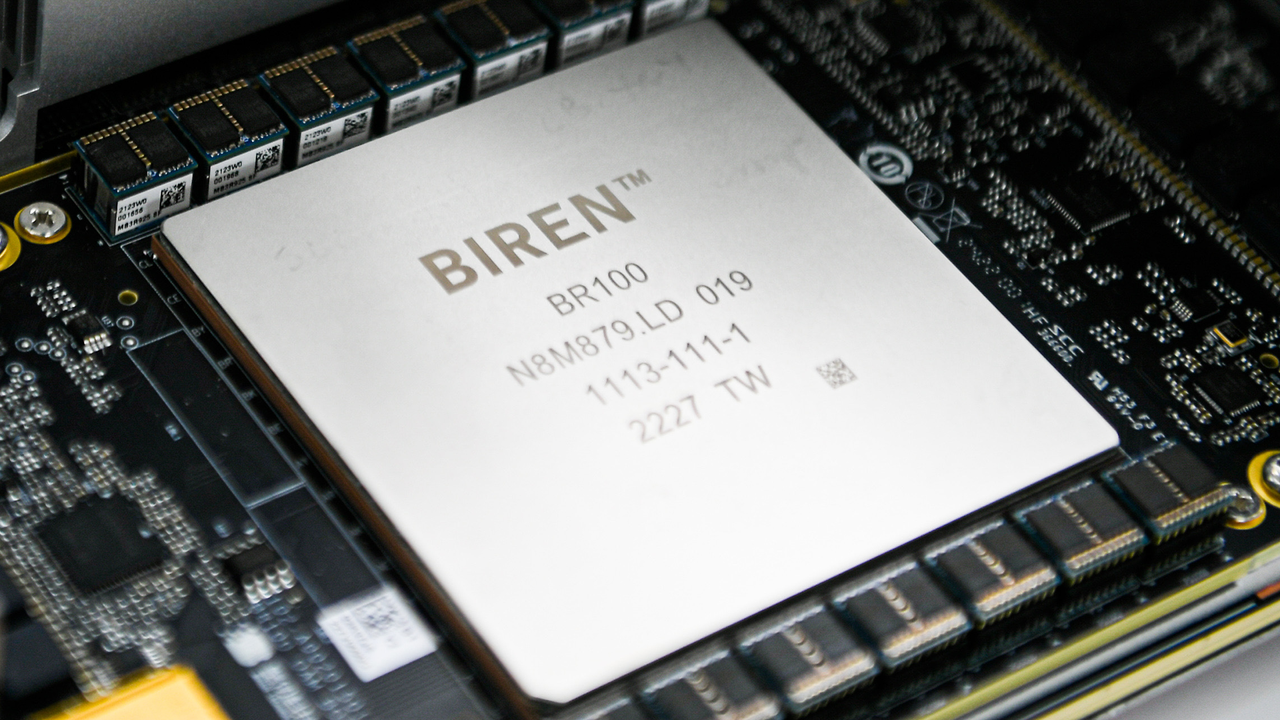
Biren AI Accelerators: Explosive Growth in a Restricted Market
Biren Technology shows explosive 2,000% revenue growth in China's AI accelerator market, benefiting from US export controls. Despite impressive gains from a small base, challenges in manufacturing and software remain.