
Blocking Internet Archive: AI's Non-Solution, Web's Historical Cost
Major publishers are blocking the Internet Archive, citing concerns about AI scraping. This action, while intended to control content use by commercial AI, simultaneously erases the web's critical historical record, a resource relied upon by journalists, researchers, and courts for decades. The EFF argues that archiving and AI training for transformative purposes are often fair use, and sacrificing public digital history is a severe and irreversible mistake.
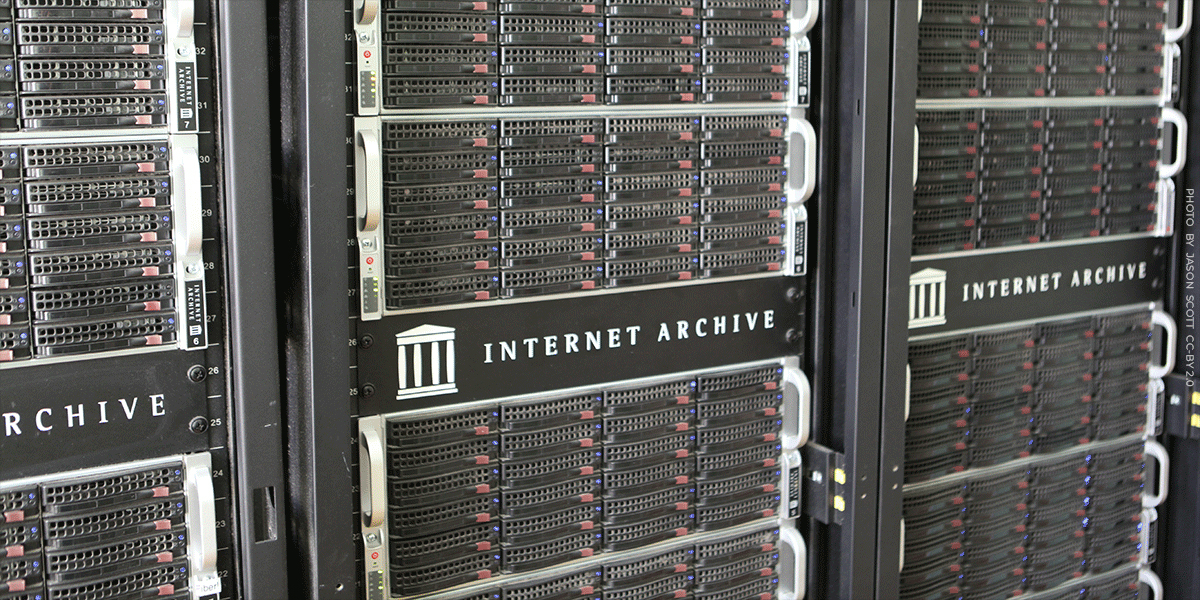
The Looming Digital Amnesia: Publishers vs. Preservation
For those of us building and interacting with the web's vast information ecosystem, a concerning trend is emerging: major publishers are actively blocking the Internet Archive. This isn't just about controlling content access; it's a profound move that threatens the historical record of the internet itself. The New York Times, for instance, has implemented technical measures that go beyond standard robots.txt directives to prevent the Archive's crawlers from accessing its site. Other significant news outlets, like The Guardian, appear to be adopting similar strategies.
This action poses a critical challenge to the Internet Archive's foundational mission: to preserve the web and make it publicly accessible. The Archive's Wayback Machine, a digital library containing over a trillion archived web pages, is an indispensable resource. It's a daily tool for journalists verifying facts, researchers tracing information evolution, and legal professionals citing online evidence. When a significant portion of this digital landscape becomes inaccessible to the Archive, we risk losing verifiable historical context at an unprecedented scale.
The Internet Archive: Our Collective Digital Memory
Think of the Internet Archive as the world's largest digital library, meticulously collecting and indexing web content for nearly three decades. Its role extends beyond simple data storage; it acts as a crucial historical ledger for online information. In a dynamic medium where content can be edited, updated, or outright removed without notice, the Wayback Machine frequently stands as the sole reliable record of an article's original publication state. This isn't just an academic concern; consider the impact on investigative journalism, historical analysis, or even everyday fact-checking if the original source material vanishes or is subtly altered.
For developers, the Internet Archive represents a robust, publicly accessible API to the past web. It allows for analysis of trends, recovery of lost content, and validation of historical claims. Its extensive dataset, supporting millions of links on platforms like Wikipedia, underscores its critical role as a stable and authoritative reference point in the global information infrastructure. The sheer scale—trillions of pages across hundreds of languages—highlights the monumental effort in digital preservation that is now being actively impeded.
The Catalyst: AI, Scraping, and Copyright Disputes
Publishers state their primary motivation for blocking the Internet Archive is concern over AI companies scraping their content for model training. This concern is valid; the rapid proliferation of generative AI has ignited numerous legal disputes regarding the use of copyrighted material for training large language models (LLMs). Publishers, including The New York Times, are indeed pursuing litigation against AI companies, asserting that such training constitutes copyright infringement.
However, it's crucial to differentiate between commercial AI enterprises and non-profit archival institutions. The Electronic Frontier Foundation (EFF) argues that the act of training AI models on copyrighted material often falls under fair use, similar to how search engines index web content. Regardless of the eventual legal outcomes of these AI-specific lawsuits, the response of blocking an archival institution like the Internet Archive is a disproportionate and ultimately counterproductive measure. The Archive is not developing commercial AI systems; it is performing a public service of historical preservation.
The Unintended Consequence: Erasing the Web's History
The fundamental flaw in this blocking strategy is its indiscriminate nature. By denying access to the Internet Archive, publishers aren't just limiting commercial AI bots; they are effectively erasing decades of documented web history. This isn't merely a restriction on future access; it's a retroactive deletion of a shared public record. Imagine a traditional library being ordered to discard all its archived newspapers to prevent a separate, unrelated dispute with a new technology company. The damage is irreparable.
For developers, this implies a future where the historical context of online information becomes increasingly opaque. Building tools or conducting research that relies on tracing the evolution of web content will become significantly harder, if not impossible. The web, by its very nature, is ephemeral. Archives like the Wayback Machine provide much-needed persistence. Compromising this persistence sacrifices long-term public good for a short-term, likely ineffective, attempt to control a different technological challenge.
Archiving and Search: Legally Sound Principles
The legal underpinnings of archiving and making material searchable are well-established. Courts have consistently recognized that creating a searchable index often necessitates copying underlying material, and this copying serves a transformative purpose. A landmark example is the Google Books case, where courts affirmed that scanning and indexing entire books to create a searchable database constituted fair use, as it enabled discovery, research, and new insights into creative works.
This legal precedent directly applies to the Internet Archive's operations. The Archive copies web pages to enable historical search, preservation, and research—purposes that are transformative and serve the public interest. While courts may eventually refine the boundaries of fair use concerning AI training, the legal framework protecting archiving and search engines is robust. Sacrificing this established legal protection, and the invaluable public resource it enables, to address distinct disputes with commercial AI entities would be a profound and possibly irreversible error for the integrity of our digital world.
Practical Takeaways
As developers, we operate within the digital landscape and often rely on the stability and accessibility of information. The actions against the Internet Archive underscore several critical points:
- Digital Ephemerality: Online content is inherently volatile. Trusting that something published today will be accessible or unchanged tomorrow is a flawed assumption without robust archival efforts.
- Importance of Preservation: Non-profit digital libraries like the Internet Archive are crucial public infrastructure. Their role in maintaining historical context and data integrity is irreplaceable.
- Fair Use and Transformative Use: Understanding fair use principles is vital, especially as new technologies emerge. The distinction between commercial exploitation and transformative uses (like search, archiving, or even potentially AI training) is central to legal and ethical discussions.
- Impact on Data Integrity: Loss of archived web content directly impacts the ability to verify, research, and build reliable systems that depend on historical data. This isn't just a legal issue; it's a data integrity challenge.
FAQ
Q: How do publishers typically block crawlers beyond robots.txt?
A: While robots.txt is a declarative protocol for polite crawler behavior, publishers can implement more aggressive technical measures. This often involves dynamic IP blocking, user-agent string blacklisting, CAPTCHAs, or even advanced bot detection algorithms that analyze behavioral patterns characteristic of crawlers, preventing access regardless of robots.txt compliance.
Q: What is the "transformative purpose" in fair use, particularly for digital archives?
A: In the context of fair use, a "transformative purpose" means that the new work (e.g., an archived copy, a searchable index) adds new meaning, expression, or utility to the original material, rather than merely superseding it. For digital archives, making content searchable and preserving it for historical, research, and educational purposes transforms its utility from a transient publication into a stable, discoverable historical record, thereby enabling new forms of analysis and access that the original publication did not inherently provide.
Q: If content is removed from a live site, does blocking the Internet Archive erase its past archival copies?
A: No, blocking new crawls prevents the Internet Archive from creating new snapshots. It does not retroactively delete existing, previously archived copies. However, if a live page is updated or removed, and the Archive is subsequently blocked, future researchers will not have access to a current or updated archived version, and the existing archive might become the only record, unable to reflect any later changes or removals the publisher might wish to document or acknowledge publicly.
Related articles

AI's Confidence vs. Formal Methods' Rigor: Design Flaws & Verification
While AI accelerates code generation, formal methods remain critical for ensuring system correctness. Languages like TLA+ and tools like Quint enable developers to model and verify system designs before coding, catching subtle flaws. Quint makes formal methods more accessible with developer-friendly syntax and executability. This approach is vital for verifying AI-generated code through trace validation and model-based testing, ensuring reliability against real-world data.

Amazon Prime Video Launches AI-Powered Prime 360 for NBA Coverage
Amazon Prime Video is elevating its NBA coverage with the introduction of Prime 360, an AI-powered replay system offering immersive, 'fly through' views of the action. Kicking off its second season, Prime Video also adds Yahoo fantasy integration and gains exclusive Eastern Conference Finals rights, expanding its tech-driven sports broadcast. The new features aim to deliver a unique and interactive viewing experience for basketball fans.

Kojima Compares Divisive New Film 'Digger' to MGS2's Prescient Vision
Gaming icon Hideo Kojima has praised the divisive 2026 film *Digger*, drawing intriguing parallels to his own prophetic game, *Metal Gear Solid 2*. Both works, he explains, uniquely explore the dangers of misinformation and a fragmented digital reality, anxieties he shares with *Digger*'s director, Alejandro González Iñárritu.

Ephemeral PR Preview Environments on GKE: A Deep Dive
Every development team eventually grapples with the limitations of shared staging environments. The familiar scenario: multiple features deployed simultaneously, database migrations clashing, and the phrase "it works on

Ubisoft Proposes German Studio Workforce Reduction Amidst
Ubisoft is planning a voluntary departure program for about 100 employees across its Düsseldorf, Berlin, and Mainz studios in Germany. This move is part of a larger, ongoing cost-reduction and restructuring effort by the publisher, aiming to better position its studios for future projects.

Secure Internal API Access for AI Agents with MCP
AI agents accessing internal APIs directly pose significant risks, including identity loss, unrestricted queries, and security bypasses. The Model Context Protocol (MCP) offers a solution by defining explicit tools. A secure architecture involves an MCP server wrapping the API with strict input validation, coupled with a gateway that handles authentication, rate limiting, and audit logging, ensuring safe and accountable access.