
Demystifying Dijkstra's Algorithm: The Shortest Path Pioneer
Explore Dijkstra's Algorithm, the foundational pathfinding technique conceived by Edsger W. Dijkstra. This guide explains how it solves shortest path problems using graphs, nodes, edges, and weights. Learn its greedy approach and the critical role of data structures like adjacency lists and priority queues in its efficient Python implementation.

In 1956, a profound idea took shape over coffee in Amsterdam that would fundamentally alter how we navigate our world. Edsger W. Dijkstra, a brilliant programmer, conceptualized an algorithm in mere minutes, without the aid of pencil and paper, that now powers the very fabric of modern systems like GPS navigation, network routing protocols, complex supply chains, and advanced robotics. This algorithm, known as Dijkstra's, remains a cornerstone of computer science for finding the shortest paths in graphs. For developers, understanding its mechanics isn't just academic; it's a gateway to solving a vast array of real-world optimization challenges.
The Shortest Path Problem: Context and Challenge
At its core, Dijkstra's Algorithm addresses the single-source shortest path problem. Imagine a network of interconnected locations, where traveling between any two points incurs a certain cost – be it distance, time, or even monetary expense. The challenge is to find the most efficient route from a designated starting point (the "source") to every other reachable point in that network. This isn't just about finding a path; it's about guaranteeing the shortest one.
Modeling the World: Graphs and Their Anatomy
Dijkstra's Algorithm operates on a fundamental data structure known as a graph. To apply it, we must first translate our real-world problem into this abstract representation:
- Nodes (Vertices): These represent the individual locations or points of interest in our network. For instance, cities in a road map, routers in a computer network, or warehouses in a supply chain.
- Edges: These are the connections or paths between nodes. An edge signifies that direct travel is possible between two nodes. Edges can be directed (one-way) or undirected (two-way).
- Weights: Crucially, each edge is assigned a "weight." This weight quantifies the "cost" of traversing that particular edge. In a navigation system, this could be the physical distance, the estimated travel time, or even the traffic congestion on a road segment. Dijkstra's Algorithm is designed to work with non-negative edge weights.
This abstract graph model allows us to systematically analyze connections and costs to find optimal routes.
Dijkstra's Algorithm: A Greedy Strategy for Pathfinding
What makes Dijkstra's Algorithm so effective is its elegant, step-by-step approach, which is classified as a greedy algorithm. This means that at each stage of its execution, it makes the locally optimal choice in the hope that this will lead to a globally optimal solution. For shortest path problems with non-negative edge weights, this greedy strategy works perfectly.
Here’s how it generally works:
- Initialization: Assign a tentative distance value to every node: zero for the starting (source) node and infinity for all other nodes. This signifies that we don't yet know the shortest path to these nodes.
- Visited Set: Maintain a set of nodes for which the shortest path from the source has been definitively determined. Initially, this set is empty.
- Iteration: While there are unvisited nodes:
- Select the unvisited node with the smallest tentative distance. This is the greedy choice.
- Add this selected node to the visited set, as its shortest path is now finalized.
- Relaxation: For each neighbor of the newly visited node, calculate a new tentative distance from the source. This is done by adding the current node's finalized shortest distance to the weight of the edge connecting it to the neighbor. If this new calculated path to the neighbor is shorter than its current tentative distance, update the neighbor's tentative distance.
This iterative process systematically explores the graph, constantly refining the shortest known paths to unvisited nodes until all reachable nodes have been processed.
Practical Implementation with Efficient Data Structures
To implement Dijkstra's Algorithm efficiently, particularly in a language like Python, specific data structures are key:
-
Graph Representation (Adjacency List): For storing the graph itself, an adjacency list is typically preferred over an adjacency matrix for sparse graphs (graphs with relatively few edges). An adjacency list might be represented as a dictionary where keys are nodes and values are lists of tuples, with each tuple containing a
(neighbor, weight)pair. This structure allows for quick retrieval of all neighbors for any given node. -
Priority Queue (Min-Heap): This is the backbone of the algorithm's efficiency. The greedy step of selecting the unvisited node with the smallest tentative distance must be performed quickly. A min-heap (which can be efficiently implemented using Python's
heapqmodule) is ideal for this. It stores(distance, node)pairs, allowing us toextract-min(get the node with the smallest distance) in logarithmic time (O(log V), where V is the number of nodes). Without a priority queue, finding the minimum would require iterating through all unvisited nodes, leading to a much slower O(V^2) complexity. -
Path Reconstruction (Backtracking): The algorithm primarily computes the shortest distance to each node. To recreate the actual path, a backtracking mechanism is needed. During the relaxation step, whenever a node's tentative distance is updated via a specific neighbor, we can store that neighbor as the node's
predecessor. Once the algorithm completes, we can start from the destination node and backtrack through its predecessors until we reach the source, effectively reconstructing the optimal path.
Real-World Impact and Developer Takeaways
Dijkstra's algorithm is far more than just a theoretical concept; it's an indispensable tool in a developer's arsenal. Its direct applications in GPS and network routing illustrate its utility in dynamic, real-time systems. Understanding how it meticulously explores paths and prioritizes choices empowers developers to design and optimize solutions for a myriad of complex routing, resource allocation, and logistical problems.
Its brilliant simplicity, conceived in 20 minutes, continues to drive innovation and efficiency across countless domains. Mastering Dijkstra's provides a profound understanding of graph theory and optimal pathfinding, essential skills for any serious software engineer.
FAQ
Q: What makes Dijkstra's Algorithm a "greedy" algorithm?
A: Dijkstra's is classified as greedy because, at each step, it makes the locally optimal choice: it always selects the unvisited node that currently has the smallest known distance from the source node. It then considers this node's neighbors, updating their tentative distances. This consistent local optimization leads to a globally optimal solution for graphs with non-negative edge weights.
Q: Why is a priority queue (min-heap) so crucial for Dijkstra's efficiency?
A: A priority queue, often implemented as a min-heap, is essential because it allows the algorithm to efficiently find the unvisited node with the smallest tentative distance. In each iteration, instead of scanning all unvisited nodes (which would be an O(V) operation), a min-heap provides the minimum-distance node in O(log V) time. This significantly improves the overall time complexity of the algorithm, especially for large graphs.
Q: Can Dijkstra's Algorithm be used with graphs that have negative edge weights?
A: No, Dijkstra's Algorithm is not designed to correctly handle negative edge weights. Its greedy nature relies on the assumption that once the shortest path to a node is finalized, it cannot be improved further. Negative edge weights can create "negative cycles" or lead to situations where a path discovered later (via a negative edge) could offer a shorter route to an already "finalized" node, breaking the algorithm's core assumption. For graphs with negative weights, algorithms like Bellman-Ford or SPFA are more appropriate.
Related articles

AI's Confidence vs. Formal Methods' Rigor: Design Flaws & Verification
While AI accelerates code generation, formal methods remain critical for ensuring system correctness. Languages like TLA+ and tools like Quint enable developers to model and verify system designs before coding, catching subtle flaws. Quint makes formal methods more accessible with developer-friendly syntax and executability. This approach is vital for verifying AI-generated code through trace validation and model-based testing, ensuring reliability against real-world data.

Ephemeral PR Preview Environments on GKE: A Deep Dive
Every development team eventually grapples with the limitations of shared staging environments. The familiar scenario: multiple features deployed simultaneously, database migrations clashing, and the phrase "it works on

Secure Internal API Access for AI Agents with MCP
AI agents accessing internal APIs directly pose significant risks, including identity loss, unrestricted queries, and security bypasses. The Model Context Protocol (MCP) offers a solution by defining explicit tools. A secure architecture involves an MCP server wrapping the API with strict input validation, coupled with a gateway that handles authentication, rate limiting, and audit logging, ensuring safe and accountable access.

EV Battery End-of-Life: A Clear Path Forward
Verdict: Demystifying the EV Battery's Afterlife For anyone pondering the longevity and environmental impact of their electric vehicle, the question of 'what happens to an EV battery after it's removed from your car?'
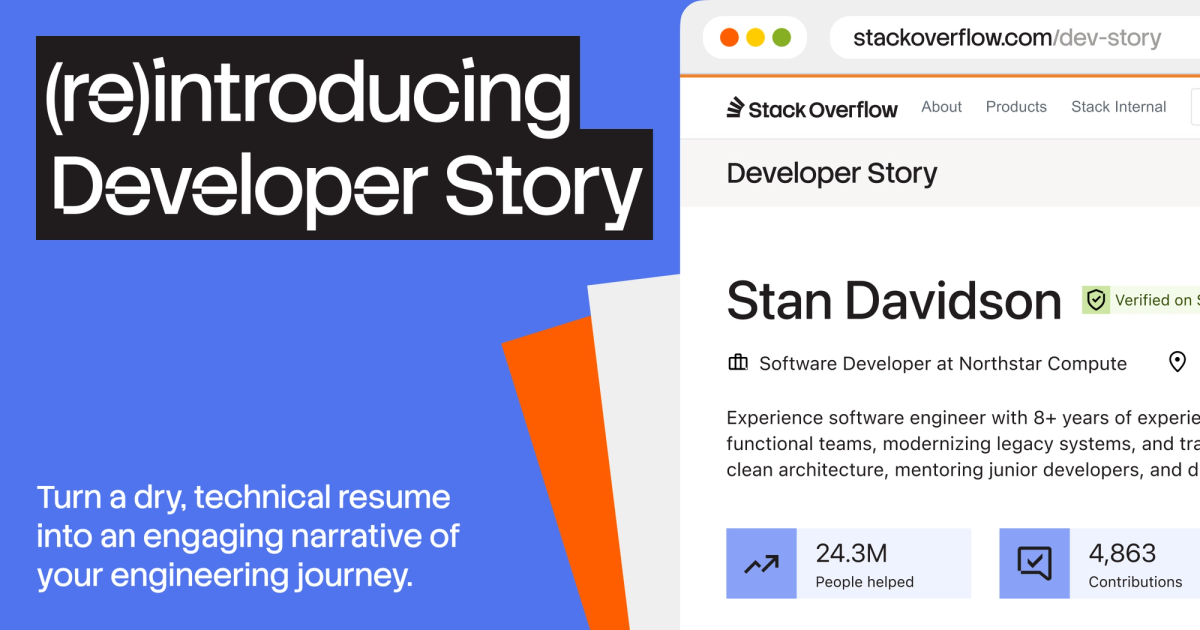
Beyond the Resume Noise: Developer Story Rethinks Tech Hiring
Stack Overflow is addressing the growing challenges in tech hiring, exacerbated by AI's influence leading to untrustworthy and generic resumes. Their solution, the re-introduced Developer Story, offers a platform for developers to authentically showcase their work, expertise, and impact through verifiable contributions and personal projects. This aims to provide hiring teams with more objective insights and help genuine talent stand out in a crowded market.

Adding & Validating JSON-LD Structured Data in Next.js
When we build websites, we want them to be discoverable and accurately understood by search engines. This isn't just about keywords and meta descriptions anymore; it's about providing explicit, machine-readable context.