
Ars Technica's Spaceport Search: Critical Insights, Urgent Challenge
Quick Verdict Ars Technica's article, "Inside the Pentagon, the pressure is on to find a home for a new spaceport," delivers a concise yet crucial look into the United States Space Force's ambitious plans to establish a
Quick Verdict
Ars Technica's article, "Inside the Pentagon, the pressure is on to find a home for a new spaceport," delivers a concise yet crucial look into the United States Space Force's ambitious plans to establish a third heavy-lift launch site by 2030. While clearly articulating the 'why' behind this urgent requirement, the piece transparently highlights the significant uncertainty surrounding the 'how,' making it an essential read for anyone tracking the future of national security and space infrastructure.
The Looming Deadline: A New Spaceport by 2030
The Space Force is facing a pressing need to expand its launch capabilities, aiming to have a new heavy-lift spaceport operational within the next four years. This initiative is driven by the burgeoning demand for orbital launches, which currently strain existing facilities in Florida (Cape Canaveral Space Force Station and Kennedy Space Center) and California (Vandenberg Space Force Base). These long-standing sites, which have served the nation's space ambitions for nearly seven decades, are projected to see annual launch attempts skyrocket from 175 last year to 700 by 2036.
Beyond simply accommodating increased traffic, a third launch site is crucial for what military leaders term 'geographic resiliency.' This strategic diversification would mitigate the risks posed by natural disasters or potential attacks that could incapacitate a primary launch complex. The concept gained traction following a congressionally mandated study of Space Force launch infrastructure, which underscored the necessity for an additional site capable of handling heavy and super-heavy lift vehicles. The Trump administration further endorsed this direction with a space transportation policy advocating for more launch and reentry sites for both commercial and military operations.
Lt. Gen. Philip Garrant, head of Space Systems Command, outlined an 'aspirational' timeline for this new base, acknowledging the immense practical challenges. Establishing a spaceport is no small feat, requiring careful consideration of orbital trajectories, safety protocols, access to essential commodities, and, critically, the impact on nearby communities, given the significant noise and operational footprint involved. The article effectively conveys the urgency of the ambition while tempering it with a dose of pragmatic reality.
Uncharted Territory: The Quest for a Location and Model
Despite the clear and urgent need, the article reveals a striking lack of concrete plans regarding the new spaceport's location or the method of land acquisition. As of now, Pentagon officials have not determined where this vital facility will be situated or how the necessary land will be secured. Lt. Gen. Garrant emphasizes the critical role of strong partnerships with local and state governments, indicating that the path forward is heavily collaborative.
Currently, the federal government does operate NASA's Wallops Flight Facility in Virginia, though this site is primarily used for suborbital tests and launches of smaller to medium-sized satellites. Alaska also hosts the state-owned Pacific Spaceport Complex, suitable for small rockets. However, these facilities do not meet the heavy-lift requirements for the envisioned third site. The Space Force is therefore exploring a range of acquisition models, leaving no option off the table:
- Public-private partnerships: A collaborative approach leveraging both government and commercial resources.
- New federal installation: A traditional government-owned and operated base.
- State land: Utilizing property owned by a state government.
- Leveraging commercial land: Potentially leasing property from a privately developed spaceport, such as the expansive facility SpaceX intends to build in southern Louisiana.
While the article notes that each option presents its own 'pros and cons,' it does not delve into specific details for these trade-offs, reflecting the ongoing internal discussions within the Pentagon. This highlights the fluidity and complexity of the decision-making process, underscoring that the 'how' is as challenging, if not more so, than the 'why.'
Potential Spaceport Development Models: A Comparison
The Space Force's exploration of various acquisition models for its third heavy-lift spaceport indicates a flexible approach to meet its critical needs. The article touches upon several broad categories, each with distinct characteristics:
| Feature / Model | Federal Installation | Public-Private Partnership | State Land | Commercial Lease |
|---|---|---|---|---|
| Ownership/Control | Exclusive federal | Shared with private entities | State government | Private company |
| Funding Source | Primarily federal budget | Mixed (federal/state/private) | State budget, potential federal grants | Private capital |
| Speed of Development | Can be lengthy (bureaucracy, land acquisition) | Variable, depends on agreement complexity | Variable, dependent on state priorities/resources | Potentially faster if existing infrastructure is suitable |
| Flexibility | High degree of direct control | Shared decision-making, potential for innovation | State-specific regulations, often tailored | Limited by lessor's terms, may need customization for military |
| Risk Mitigation | Direct government oversight and security | Shared responsibilities, potential for varied expertise | State support and regional commitment | Offloads some operational/financial risk to private sector |
| Key Challenge | Significant capital investment, political hurdles, environmental impact assessments | Complex negotiations, aligning diverse interests, legal frameworks | State funding, political will, geographical suitability | Ensuring military needs align with commercial objectives, long-term access guarantee |
Article Presentation and User Experience
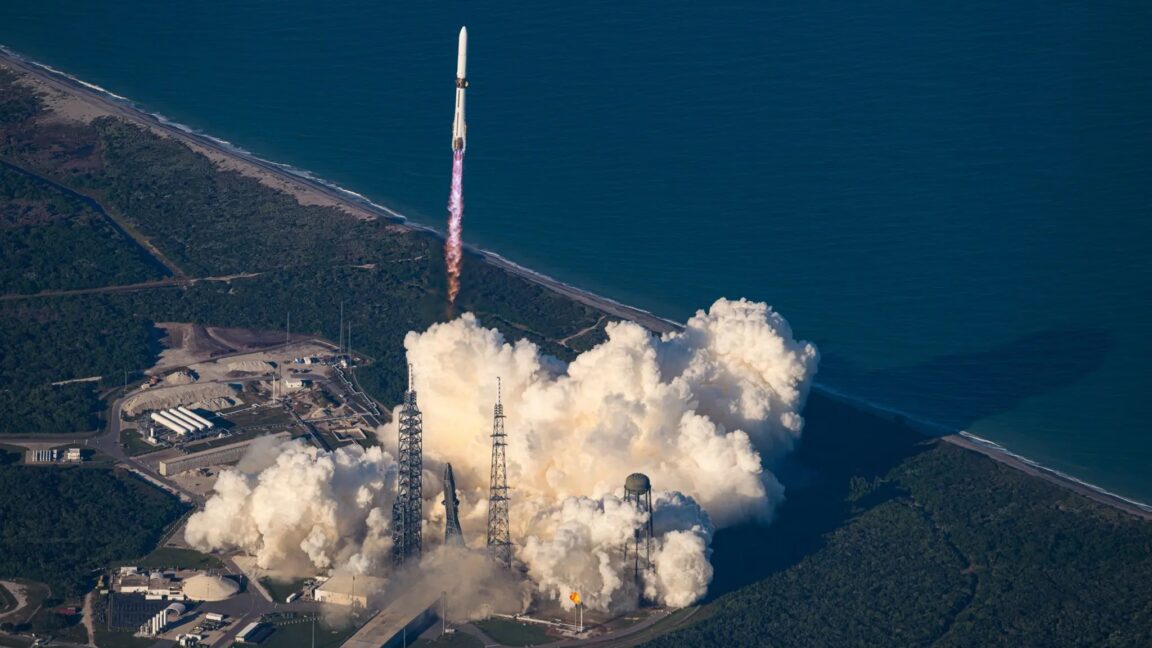
Ars Technica delivers this information with its characteristic clarity and professionalism. The article is well-structured, presenting the context, the Space Force's goals, and the challenges in a logical flow. The use of a relevant image – Blue Origin's New Glenn rocket – effectively grounds the discussion in real-world space operations. Quoting key figures like Air Force Secretary Troy Meink and Lt. Gen. Philip Garrant adds credibility and depth, ensuring readers hear directly from those driving the initiative.
The piece is concise, getting straight to the point without unnecessary jargon, making complex military and space policy accessible to a broad audience. Hyperlinks to related Ars Technica content, such as the Trump administration's space transportation policy, provide valuable context for readers who wish to delve deeper. The user experience is enhanced by the clean layout and simple navigation, typical of Ars Technica's online presence.
Honest Pros and Cons
Pros:
- Timely and Relevant: Addresses a critical, time-sensitive national security issue in the context of rapidly expanding space activity.
- Clear Articulation of 'Why': Effectively communicates the strategic imperatives behind the spaceport initiative, including demand offloading and geographic resiliency.
- Authoritative Sources: Features direct quotes from senior Space Force and Air Force officials, lending significant weight to the reporting.
- Balanced Perspective: Acknowledges both the ambition and the substantial pragmatic challenges involved in such a large-scale project.
- Informative on Options: Clearly outlines the various models being considered for land acquisition, providing a foundational understanding of the Pentagon's approach.
Cons:
- Limited Specificity on 'How': While it accurately reflects the Pentagon's current uncertainty, the article offers minimal speculative insight or detailed analysis into the specific challenges or advantages of each acquisition model beyond general statements. Readers might crave more depth on the practical hurdles or potential locations.
- Aspirational Timeline Not Deeply Challenged: The article presents the 2030 deadline as 'aspirational' but doesn't extensively explore or question the feasibility of such a tight schedule given the many unknowns.
Recommendation
For anyone interested in the intersection of space, defense, and national policy, this Ars Technica article is a must-read. It provides an excellent, up-to-the-minute snapshot of a critical initiative, laying bare the ambitions and the significant hurdles ahead. While it doesn't offer all the answers – because the Pentagon itself doesn't have them yet – it brilliantly frames the problem and the ongoing search for solutions. It's a foundational piece for understanding the evolving landscape of US space launch capabilities and the strategic thinking underpinning future military operations in orbit.
FAQ
Q: Why does the Space Force need a new heavy-lift spaceport by 2030?
A: The Space Force projects a massive increase in orbital launch demands, from 175 last year to 700 by 2036, which existing facilities cannot sustain. A new spaceport would offload pressure and provide 'geographic resiliency' against potential disruptions to current launch sites.
Q: What are the primary challenges in establishing this new spaceport?
A: Key challenges include identifying a suitable location, acquiring land, factoring in safety, commodity access, local community impact (especially noise), and coordinating effectively with state and local governments, all while working towards a tight aspirational deadline.
Q: What types of land acquisition or partnership models is the Space Force considering for the new spaceport?
A: The Space Force is exploring public-private partnerships, establishing a new federal installation, utilizing state-owned land, and potentially leasing property from existing or planned commercial spaceports.
Related articles

Apple's Touchscreen MacBook Pro: A Long-Awaited Touch
The Verdict Apple's rumored touchscreen MacBook Pro represents a long-overdue evolution, promising to blend the convenience of direct screen interaction with the powerful macOS laptop experience. While not an essential

CMF Watch 3 Pro: Affordable Style Meets Solid Performance
CMF Watch 3 Pro: Affordable Style Meets Solid Performance In the crowded market of smartwatches, finding a device that balances features, design, and affordability can be a challenge. Enter the CMF Watch 3 Pro, a

Love Island Australia S8 Guide: Navigating the Stream, Mostly Free
Love Island Australia Season 8 Streaming Guide: Navigating the Digital Waters Verdict: TechRadar's guide to watching Love Island Australia Season 8 is a generally useful, if somewhat navigationally challenged, resource

Sculpture Re-creates Lycurgus Cup Effect: A Glimmering Triumph of Art
The University of Sheffield successfully re-creates the 1,600-year-old dichroic glass recipe of the Lycurgus Cup. A new sculpture by artist Elliott Walker displays the stunning green-to-red optical effect, blending ancient tech with modern art. A significant scientific and artistic achievement.

UK Gaming's Future on the Line: UKIE Pushes for Modern Tax Credits
UKIE is urging the government to modernize the Video Games Expenditure Credit (VGEC) and introduce a new 'Games Scale-Up Fund' ahead of the Autumn Budget. This move is critical to keep the UK competitive in global game development, address outdated rules, and prevent studios and talent from relocating, ensuring a vibrant future for British-made games.

Java's Enduring Foundations: Interconnectedness, Reliability, and
Java's origins, driven by creator James Gosling at Sun Microsystems, addressed critical challenges in early computing. The language tackled significant 'networking friction' to enable seamless interconnectedness across diverse systems. Simultaneously, the 'stringent reliability requirements' of consumer electronics inspired the robust design of the Java Virtual Machine (JVM) and its evolving garbage collectors, crucial for 'large-scale concurrent memory management.'