
Apple's iCloud Link Scan: A Double-Edged Sword for Privacy
Verdict: A Step Towards Safety, A Stumble for Privacy Apple's impending update to iOS, iPadOS, macOS, and visionOS 27.3, set for release in December 2026, introduces a significant change to how public iCloud links are

Verdict: A Step Towards Safety, A Stumble for Privacy
Apple's impending update to iOS, iPadOS, macOS, and visionOS 27.3, set for release in December 2026, introduces a significant change to how public iCloud links are handled. The company will now actively check content shared via "Anyone with the link" options for harmful material. While the intention to combat illicit content is commendable, the execution raises considerable privacy concerns, particularly given the vagueness of what constitutes "harmful content" and the implications for user accounts. For most users who share benign content, this change may go unnoticed, but for those who value absolute privacy or share sensitive (though legal) material, it's a call to re-evaluate their sharing practices.
Diving into the Details: What This Policy Entails
Previously, when sharing content from iCloud Photos or iCloud Drive, users had two primary options: "People you choose," which is access-controlled, and "Anyone with the link," a public option. It’s this latter category that Apple is now targeting. The company has clarified in a new support document that public links will be subject to content checks, a shift that applies across its major operating systems: iOS 27.3, iPadOS 27.3, macOS 27.3, and visionOS 27.3.
The stable build of these updates is expected to roll out in December 2026, meaning this isn't a distant future concern but a near-term reality. The official statement from Apple notes that public links were always technically accessible to Apple, suggesting that this new policy is more about active enforcement than a fundamental change in access. However, the critical distinction lies in the proactive scanning and the subsequent actions Apple may take.
The Ambiguity of "Harmful Content"
One of the most glaring issues with this new policy is Apple's lack of a clear definition for "harmful content." The source infers, based on Apple's mention of law enforcement, that child sexual abuse material (CSAM) and malware are likely targets. While these are universally recognized as harmful, the absence of a comprehensive definition leaves room for interpretation and potential overreach. What else might fall under this umbrella in the future? This ambiguity creates unease and uncertainty for users, who are left to guess the full scope of what Apple considers objectionable.
The Consequences of Flagged Content
Should Apple's system flag content shared through a public link, the repercussions can be severe. The company explicitly states it "reserves the right to move, refuse, modify, remove, or delete" the flagged material. Beyond content manipulation, Apple may also block or disable the user's Apple Account entirely. In more serious cases, it doesn't rule out contacting law enforcement. These are significant powers to grant to a system whose criteria for flagging remain undefined.
The Privacy Trade-Off
Apple has long championed user privacy, often touting features like end-to-end encryption. However, this new policy highlights a critical distinction: content shared via public iCloud links is not end-to-end encrypted, even if Advanced Data Protection is enabled for the account. The reasoning is straightforward – for Apple to inspect content, it must be able to access it. This means that any data shared through public links is viewable by Apple, making it vulnerable to scanning. While this might seem obvious for public links, it contrasts sharply with the expectation of strong privacy Apple often cultivates, especially when it comes to all cloud content.
User Experience: Navigating the New Normal
For the vast majority of users who primarily share innocuous content like holiday videos or family photos via public links, the immediate impact might be minimal. They might never encounter a flag or an account ban. However, the principle of the matter and the potential for abuse or unintended consequences cannot be ignored. The change forces users to be more deliberate about their sharing choices.
Recommendation for Sharing
Given the new policy, the reviewer strongly advises users to exercise caution. For anything even remotely private or sensitive, it’s best to avoid the "Anyone with the link" option altogether. Instead, users should stick to:
- "People you choose": This limits access to specific individuals you invite, offering a layer of privacy and control.
- "Send a Copy": This creates a direct copy of the file, which you can then send through other, potentially more secure, channels. This bypasses iCloud link sharing entirely.
Pros and Cons: Weighing the Impact
Every policy change comes with a balance of benefits and drawbacks. This one is no different.
Pros:
- Enhanced Safety: The most immediate benefit is the potential reduction of truly harmful content, such as child sexual abuse material and malware, being spread via iCloud. This contributes to a safer online environment.
- Platform Responsibility: Apple is taking a more active role in moderating content on its platform, which can be seen as a necessary step for a company of its size and influence.
Cons:
- Vague Content Definition: The undefined nature of "harmful content" is a major concern, potentially leading to subjective enforcement and a lack of transparency.
- Privacy Erosion: The explicit confirmation that public links are not end-to-end encrypted and are subject to scanning diminishes the perceived privacy of the iCloud ecosystem, especially for a company that prides itself on privacy.
- Potential for Overreach: Without clear boundaries, there's a risk of Apple flagging content that is not genuinely harmful but might violate unstated community guidelines or cultural norms.
- Lack of Transparency: Details on how these checks work, what AI or human moderation is involved, and what recourse users have if content is wrongly flagged are absent.
- Account Bans: The threat of account termination for flagged content is a severe penalty, highlighting the high stakes for users.
Comparison to Alternatives
The source content does not provide information on alternative cloud services that have implemented similar content checking policies for public links, nor does it compare Apple's approach to any industry standards or competing services. Therefore, a direct comparison table is not feasible based on the provided text. This lack of comparative detail makes it difficult to assess how Apple's policy stacks up against the broader tech landscape in terms of user privacy or content moderation efficacy.
Recommendation: Adapt Your Sharing Habits
While this isn't a product to buy or avoid, it's a significant policy change that demands user attention. For current and prospective Apple users, the recommendation is clear: be acutely aware of how you use public iCloud links. Treat them as truly public, understanding that Apple can and will inspect the content. If you have any reservations about content being seen by Apple or potentially flagged, opt for the more private sharing options available within iCloud or consider alternative secure file transfer methods. This policy emphasizes that convenience often comes with a trade-off, and in this case, it's a portion of your digital privacy.
FAQ
Q: What specific types of content will Apple be checking for in public iCloud links? A: Apple has not provided a definitive list of what constitutes "harmful content." The source infers that it likely includes child sexual abuse material (CSAM) and malware, but the official definition remains vague.
Q: Will my private iCloud links (shared with specific people) also be scanned? A: No, the new policy specifically targets content shared through "Anyone with the link" public iCloud links. Content shared using the "People you choose" option, which involves inviting specific individuals, is not explicitly mentioned as being subject to these checks, and it's generally understood to be more private and, in some cases, end-to-end encrypted with Advanced Data Protection.
Q: What happens if Apple flags content in my public iCloud link? A: If content is flagged, Apple may move, refuse, modify, remove, or delete it. Additionally, Apple reserves the right to block or disable your Apple Account and may contact law enforcement if deemed necessary.
Related articles

Gemini Memory Summary: Essential User Control
Google Gemini, like many advanced AI systems, aims to personalize your interactions by remembering details about you. While this can enhance your experience, it also brings up natural privacy concerns regarding what

Android XR Smartglasses: Display-less Specs Redefine AI Wearables
For years, I've approached smartglasses without integrated displays with a healthy dose of skepticism. My thinking was simple: if I can't see augmented reality overlays or discrete notifications right in my line of

Nvidia CEO Jensen Huang resigns amid spy, affair scandals: CEO
Nvidia CEO and co-founder Jensen Huang has resigned, effective immediately, following reports of two extramarital affairs: one with an alleged Chinese spy and another with a subordinate executive. CFO Colette Kress has been appointed interim CEO as the board initiates a search for a permanent replacement. Huang's departure marks the end of a 33-year tenure at the helm of the AI chip giant.
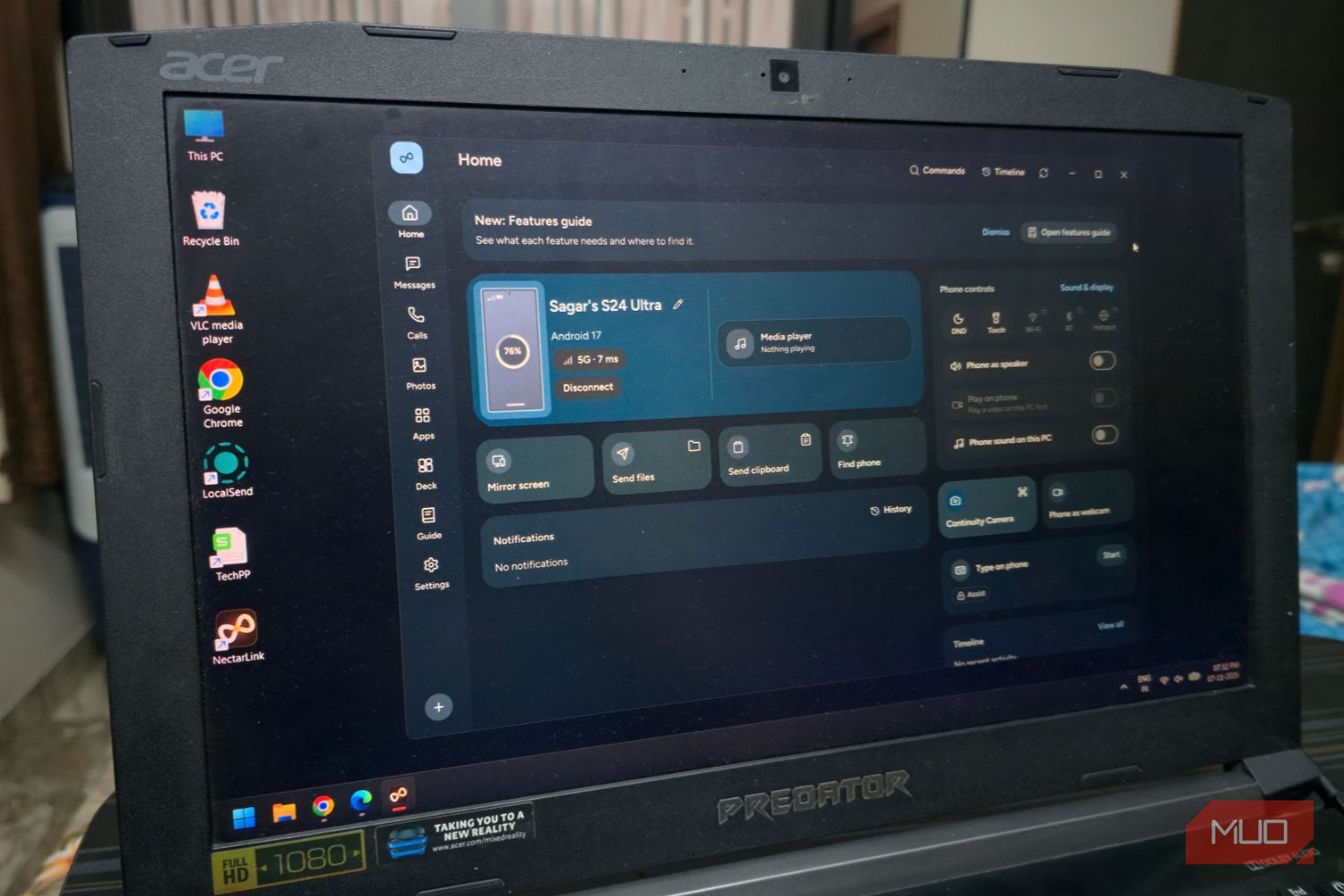
Seamlessly Connect Your Android to Windows with NectarLink
Learn to connect your Android phone to Windows using NectarLink, a free, open-source hub, in a few simple steps. Get notifications, sync files, mirror screens, and control your phone securely without cloud accounts.
Humble Bundle's "Vibe-Coded" Revamp: Security Stripped, Trust Shaken
Humble Bundle's recent redesign, described as 'vibe-coded,' has introduced critical security flaws, including the removal of two-factor authentication and inadequate password/email change verification. Users are also facing significant quality-of-life regressions like poor library sorting and forced frequent logins. Gamers are advised to remove payment info until issues are resolved.

Jensen Huang's Crisis Deepens Amid Ouster Reports and Second Affair
Nvidia CEO Jensen Huang is facing potential ouster amid revelations of two alleged extramarital affairs—one with a suspected Chinese spy, Alice Huang, and another with Nvidia VP Kimberly Powell. The scandal, which has caused Nvidia's stock to drop, has triggered national security concerns and a congressional inquiry into his ties to Chinese intelligence assets.