
AI Cybersecurity: The Perpetual Cat and Mouse Game
In the rapidly evolving digital landscape, the interplay between artificial intelligence and cybersecurity has created a dynamic, ceaseless challenge—a true cat and mouse game. AI is not merely a tool for defense; it's

In the rapidly evolving digital landscape, the interplay between artificial intelligence and cybersecurity has created a dynamic, ceaseless challenge—a true cat and mouse game. AI is not merely a tool for defense; it's also becoming a sophisticated instrument for threat actors, accelerating both the discovery of vulnerabilities and the execution of exploits. This constant push and pull necessitates a re-evaluation of our security strategies, moving beyond traditional perimeter defenses to more proactive, resilient, and intelligent approaches.
Sam Curry, the Chief Security Officer at Zscaler, recently discussed key insights into navigating this new security paradigm. His perspective, shared on The Stack Overflow Podcast, highlights where human intelligence retains its crucial role, the strategic importance of embedding security closer to applications, and the imperative of building fundamentally resilient code infrastructure.
The Indispensable Role of Human Intelligence
One of the central questions in the age of AI-driven security is the future of human intelligence. While AI can automate threat detection, analyze vast datasets, and even generate defensive responses at speeds no human can match, the insights from Zscaler's CSO underscore that human intellect remains irreplaceable. AI excels at pattern recognition and executing defined tasks, but it often lacks the contextual understanding, intuitive reasoning, and ethical judgment necessary for complex security scenarios. Humans are essential for setting the strategic direction of AI systems, interpreting novel anomalies that current AI models might miss, and making critical decisions when faced with zero-day exploits or adaptive attackers. The security landscape is not static; it's continuously shaped by human ingenuity, both malicious and defensive. Therefore, human analysts are vital for adapting security policies, understanding the motivations behind attacks, and evolving defensive postures to outmaneuver adversaries who are also leveraging AI. The cat, in this game, often needs a human to guide its cunning.
Shifting Security Left: Protection Closer to Applications
Another critical aspect highlighted is the necessity of shifting security protections closer to applications. This concept, often referred to as "shifting left" in the software development lifecycle, emphasizes integrating security practices from the earliest stages of development rather than bolting them on at the end. In an AI-accelerated threat environment, attackers can rapidly and automatically probe for weaknesses across vast attack surfaces. By embedding security directly into the application layer, developers can significantly limit these probes and reduce the exposure window for vulnerabilities.
Consider the implications: if security is an inherent part of the application's design, code, and deployment, it becomes much harder for automated AI tools to find exploitable entry points. This includes adopting secure coding practices, implementing robust API security, utilizing runtime application self-protection (RASP), and applying principles like those found in zero trust architectures. Zscaler, for instance, specializes in cloud-based security solutions and zero trust, which intrinsically align with this 'closer to applications' philosophy by ensuring that access is granted based on strict verification rather than network location. By moving security closer to the source of logic and data, we build smaller, more defensible perimeters around our most critical assets, making it harder for the mouse to find its way in.
Building Resilient Code Infrastructure
Perhaps the most fundamental defense against AI-driven threats is the proactive construction of more resilient code infrastructure. Even with the best preventive measures, vulnerabilities can and will be discovered, especially by sophisticated AI tools that can quickly identify subtle weaknesses or combinatorial exploits. The key, then, is to design and build systems that can withstand or quickly recover from such discoveries, minimizing their impact.
Resilient code infrastructure implies several layers of defense. It starts with secure-by-design principles, emphasizing robust error handling, input validation, least privilege, and defense-in-depth across all system components. This also extends to architectural choices that promote isolation, redundancy, and rapid deployment of patches and updates. If an AI system discovers a vulnerability in one component, a resilient infrastructure ensures that the breach is contained and does not cascade across the entire system. Furthermore, the ability to quickly deploy fixes, often facilitated by cloud-native deployment models and continuous integration/continuous delivery (CI/CD) pipelines, is crucial. The goal isn't just to prevent attacks, but to make systems inherently robust enough to gracefully handle the inevitable presence of vulnerabilities that AI might uncover, ensuring that even if the mouse finds a hole, the trap is already set or the cheese is too well-protected.
Practical Takeaways
For developers navigating this AI-driven cybersecurity landscape, the message is clear: integrate security into every phase of development. Embrace a "shift-left" mindset, focusing on secure design and coding from the outset. Understand that human expertise remains paramount for strategic oversight and adapting to novel threats. Finally, prioritize building inherently resilient systems that can absorb and mitigate the impact of vulnerabilities, regardless of how or by whom they are discovered.
FAQ
Q: How does "shifting security closer to applications" specifically help against AI-driven vulnerability probes?
A: By embedding security directly into the application's design and code (shifting left), you create a smaller, more secure attack surface from the start. AI-driven probes, while fast and extensive, are still looking for exposed weaknesses. If security controls like input validation, API authentication, and robust access policies are intrinsic to the application, the opportunities for AI to discover and exploit vulnerabilities are significantly reduced and detected earlier in the development lifecycle.
Q: What does "building more resilient code infrastructure" entail in the context of AI-discovered vulnerabilities?
A: It means designing systems with inherent fault tolerance and security mechanisms that minimize the impact of a discovered vulnerability. This includes principles like strict data validation, secure defaults, compartmentalization (e.g., microservices), robust error handling, and the ability to rapidly patch or update. The goal is to ensure that even if AI identifies a weakness, the system's overall integrity is maintained, and recovery is swift.
Q: Where does human intelligence fit when AI is capable of automating so many security tasks?
A: Human intelligence is crucial for strategic oversight, anomaly detection beyond known patterns, and adaptive response to novel threats. While AI can automate tactical defenses, humans are needed to interpret complex contexts, make ethical decisions, refine AI models, and devise long-term security strategies against adversaries who are also leveraging AI's evolving capabilities. It's about combining AI's speed with human wisdom.
Related articles

Understanding the Anti-Woke Right's Challenge with Grand Theft Auto VI
Welcome to this guide on understanding the current cultural conversation surrounding the highly anticipated game, Grand Theft Auto VI. This resource is designed to help you navigate the specific challenges and

Blood of The Dawnwalker’s True Foes Lurk in the Wilds
_Blood of The Dawnwalker_ from Rebel Wolves is an RPG that unexpectedly challenges players with fierce wildlife, drawing comparisons to _Dragon Age: Inquisition_'s early zones. Its unique directional combat system, while engaging, can lead to players being overwhelmed by animal ambushes. Despite the high difficulty, these encounters add a fun, dynamic layer to the game.

Unions Level Up: How Collective Power is Reshaping Game Dev
The gaming industry is seeing a massive shift as unionization rises globally, securing vital worker protections, better pay, and AI safeguards. This collective movement is empowering developers and fundamentally changing workplace dynamics. It's a win for workers, and ultimately, for the games we play.

AI's Impact on Malware Detection: Next-Gen Protection Deep Dive
The landscape of cybersecurity has transformed dramatically. Gone are the days when a simple virus attached itself to a file, easily quarantined by an antivirus scanner. Today, malware is sophisticated, multifaceted,

No More Robots Sails into New Territory with Cruise Control
After nine years of publishing success, indie studio No More Robots is launching its first self-developed IP, `Cruise Control`, a puzzle game born from a pivot away from a shelved online shooter. Founder Mike Rose reflects on the company's unconventional, lean approach, the accidental success of `Descenders`, and the massive potential of upcoming title `Another Door`, while also considering his own future in the demanding industry.
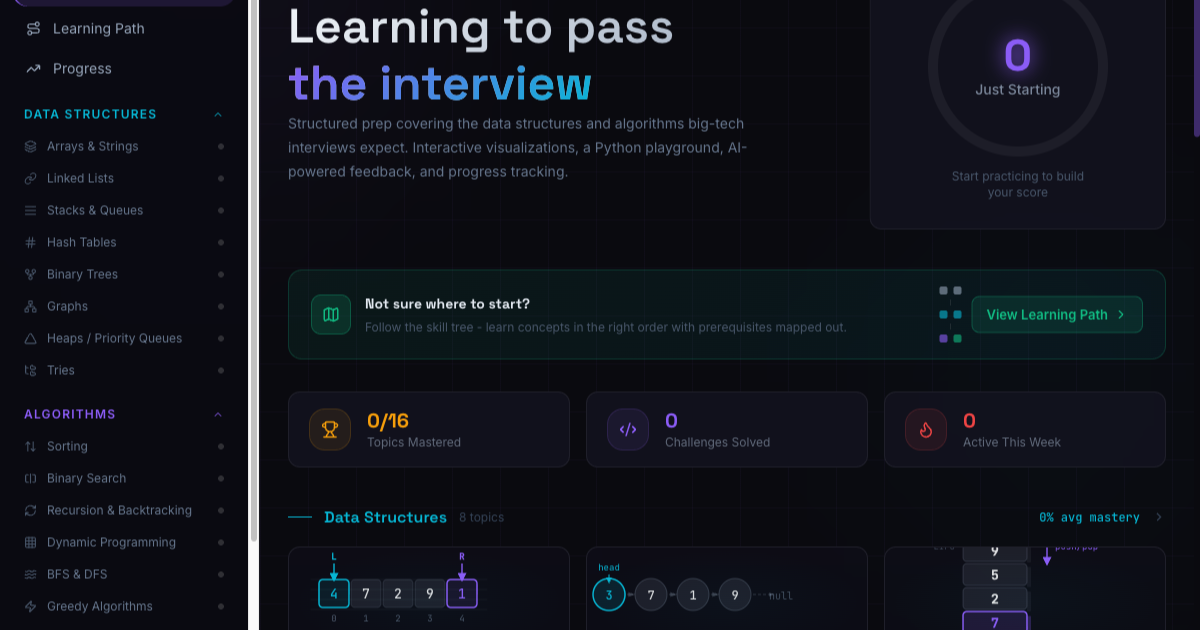
Learningto/Pass: Free, AI-Powered Interview Prep for Developers
Landing a role at a top-tier tech company often hinges on mastering complex data structures and algorithms, coupled with a solid grasp of system design. The problem for many aspiring software developers is that quality