
6 Creative Ways to Repurpose Your 3D Printed Benchy Fleet
So, you’ve joined the ranks of 3D printer enthusiasts, and along the way, you’ve likely accumulated a small armada of Benchy models. These iconic little boats, often printed as a rite of passage or for calibration, can
So, you’ve joined the ranks of 3D printer enthusiasts, and along the way, you’ve likely accumulated a small armada of Benchy models. These iconic little boats, often printed as a rite of passage or for calibration, can quickly pile up. But what do you do with them all? Don’t let them simply gather dust! Instead, transform your collection into something fun, practical, or even a learning opportunity. Here are six clear and actionable ideas to put your Benchy models to good use.
Prerequisites
Before diving into these projects, ensure you have your collection of 3D printed Benchy models ready. Some ideas may require additional materials like sandpaper, primer, paint, or specific 3D printed parts from online repositories. Always prioritize safety by wearing appropriate protective gear, especially when sanding or painting.
1. Play the Benchy Shipping Co. Board Game (or Other Games)
What you'll accomplish: Turn your Benchys into game pieces for a dedicated 3D printing-themed board game or repurpose them for existing board games.
Benchy Shipping Co. is a unique board game designed specifically to utilize your Benchy models. It’s described as a “whimsical yet strategic” game for two to four players. While it might sound like a perfect solution for your collection, be aware that each player needs 30 Benchy pieces, meaning you’ll need a substantial fleet!
Steps:
- Gather your Benchys: Collect at least 30 Benchy models per player. If your Benchys are in various colors and filaments, you can assign them to players directly. If not, use stickers or markers to clearly differentiate which boats belong to each player.
- Print the board game: The game board features 20 port city destinations and can be 3D printed.
- Find a dice: The game requires a dice for gameplay. As a bonus tip, you can even create a press to recycle old PLA into a new dice for a fully 3D printed gaming experience.
- Learn the rules: Gameplay involves rolling a dice to collect boats and then strategically placing them on the map to form shipping routes.
Tip: If you don't have enough Benchys for the dedicated game, you can easily use a single Benchy as a unique player token or pawn in other board games like Monopoly or chess, adding a personal touch to your game nights.
2. Create Practical Keyrings
What you'll accomplish: Transform a Benchy into a distinctive keyring for your house, car, or other keys.
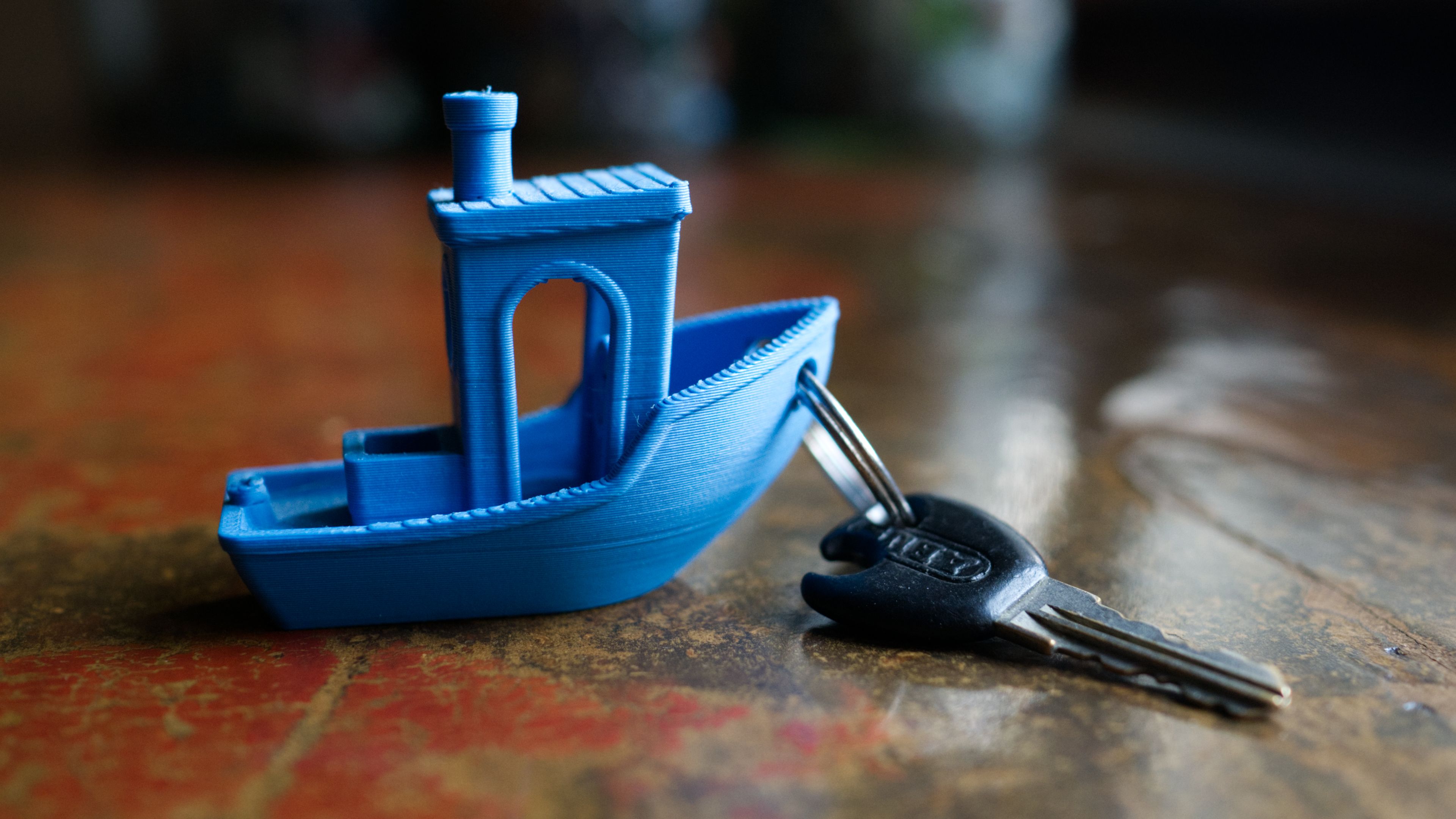
Did you know the Benchy model is designed with a small hole at its bow (the front of the boat) that perfectly accommodates a keyring? This simple trick turns a test print into a surprisingly functional item.
Steps:
- Select a Benchy: Choose a Benchy model you like for your keyring. Its size makes it easy to find on a crowded desk or in a bag.
- Attach the keyring: Carefully thread a standard keyring through the pre-existing hole at the bow of the Benchy.
Tip: While functional, be aware that a Benchy makes for quite a large keyring. It’s best suited for keys that remain in a static location, like a spare house key, rather than those constantly carried in a pocket. You might also notice slight scratches on the hull when attaching the ring, but for a test print, this often adds character.
3. Master the Art of Sanding 3D Prints
What you'll accomplish: Improve the surface finish of your 3D prints by practicing sanding techniques on your Benchy models.
Sanding is an excellent way to reduce the visibility of layer lines on your 3D prints, achieving a much smoother finish. Benchy models are ideal practice pieces due to their varied surfaces, including stepped top layers and potential ghosting on the hull, which are common areas where sanding makes a significant difference.
Steps:
- Start with coarse grit: Begin sanding with a moderately coarse grit sandpaper, such as 80-grit, to quickly remove prominent layer lines and imperfections.
- Progress to fine grit: Once the major lines are reduced, switch to a finer grit, around 120-grit, to smooth out the surface further.
- Finish with very fine grit: For a silky-smooth finish, use a very fine grit sandpaper, such as 220-grit. Continue until the desired smoothness is achieved.
Best Practices & Troubleshooting:
- Wear a mask: Always wear a protective mask when sanding 3D prints to avoid inhaling plastic dust.
- Avoid carbon fiber: Never sand filaments that contain carbon fiber, as the dust can be harmful.
- Practice makes perfect: Using a Benchy for practice allows you to experiment and make mistakes without ruining a more important print.
4. Experiment with Priming and Painting Techniques
What you'll accomplish: Learn how to prime and paint 3D printed models, enhancing their appearance for display or gaming.
Many 3D printer owners create figurines, models, and miniatures. PLA, a common filament, is quite paint-friendly, but for the best and most durable results, priming your model first is crucial. Your Benchy models provide a perfect canvas for honing these skills.
Steps:
- Clean your Benchy: Ensure your Benchy is free of dust and debris before applying any primer.
- Apply primer: Use a spray-on automotive primer. This type of primer is a popular choice and helps to fill and hide subtle layer lines, creating an ideal surface for paint adhesion.
- Choose your paints: Experiment with various paints. Affordable acrylics (including spray acrylics) are a great starting point, or you can opt for specialized model paints for more intricate details.
- Practice painting techniques: Try different brush strokes, layering, and weathering effects. If you're new to miniature painting, look for community guides online to achieve specific looks, like battle-worn or aged effects.
Tip: Once primed and painted, your Benchy will look much more interesting on your desk and demonstrate your artistic and finishing skills.
5. Assemble a Mecha Benchy
What you'll accomplish: Create a fun, albeit impractical, robot made entirely from multiple Benchy models.
For those with an abundance of Benchys and a sense of humor, the “combined robot Benchy” is a fantastic project. It's a whimsical way to display your collection, transforming individual boats into a larger, interconnected robot.
Steps:
- Gather your Benchys: This project uses multiple Benchy models to form the robot's components.
- Print connecting parts: You'll need to 3D print additional parts, like joints and connectors, that utilize the existing holes, protrusions, and recesses of the Benchy bodies to link them together.
- Assemble the robot: Follow the instructions for the specific Mecha Benchy model you choose (e.g., from MakerWorld). The design typically relies on tight tolerances for a snug fit.
Troubleshooting:
- Fit issues: While designs aim for a precise fit, print settings and filament variations can affect how snugly parts connect. If you find the connections are not tight enough, a thin layer of tape applied to the connecting surfaces can help close the gap and secure the parts.
- Filament cost: Be aware that printing the connecting parts will cost you additional filament (around 36g, roughly the equivalent of one whole Benchy).
Tip: This is a much more engaging and fun way to collect dust than simply leaving individual boats scattered around your printing area.
6. Give Them to Kids
What you'll accomplish: Provide a simple, readily available toy for children to enjoy.
Sometimes the simplest solution is the best. Kids often love novelty plastic items, and your collection of Benchy models can serve as a fun, free toy. While a Benchy doesn’t actually float, its boat shape can still spark imaginative play.
Steps:
- Select safe Benchys: Choose Benchy models that are well-printed and free from sharp edges or small, easily breakable parts.
- Gift to a child: Offer the Benchy as a toy or plaything.
Important Safety Considerations:
- Choking hazard: The small chimney on top of the Benchy could break off and pose a choking hazard for very young children. Always supervise play, especially with toddlers.
- PLA safety: The safety of PLA filament, particularly when put in mouths, is a grey area. It’s best to avoid giving Benchy models to children who might chew on or ingest parts of the model.
Remember, your 3D printer is a tool for creation, and even test prints like Benchy can find new life with a little creativity. Next time you’re printing, consider skipping the Benchy and explore other useful or fun models for your new printer.
FAQ
Q: Do Benchy models float in water? A: No, despite being a boat, the Benchy model is not designed to float. Its density and open hull structure mean it will sink.
Q: Is it safe to sand all types of 3D printing filament? A: No. While PLA is generally safe to sand with proper precautions (like wearing a mask), you should absolutely avoid sanding filaments that contain carbon fiber, as the dust can be harmful. Always wear a mask when sanding any 3D print.
Q: What kind of primer should I use before painting a Benchy? A: A spray-on automotive primer is a popular and effective choice. It adheres well to PLA and can help fill in minor layer lines, creating a smoother surface for your paint.
Related articles
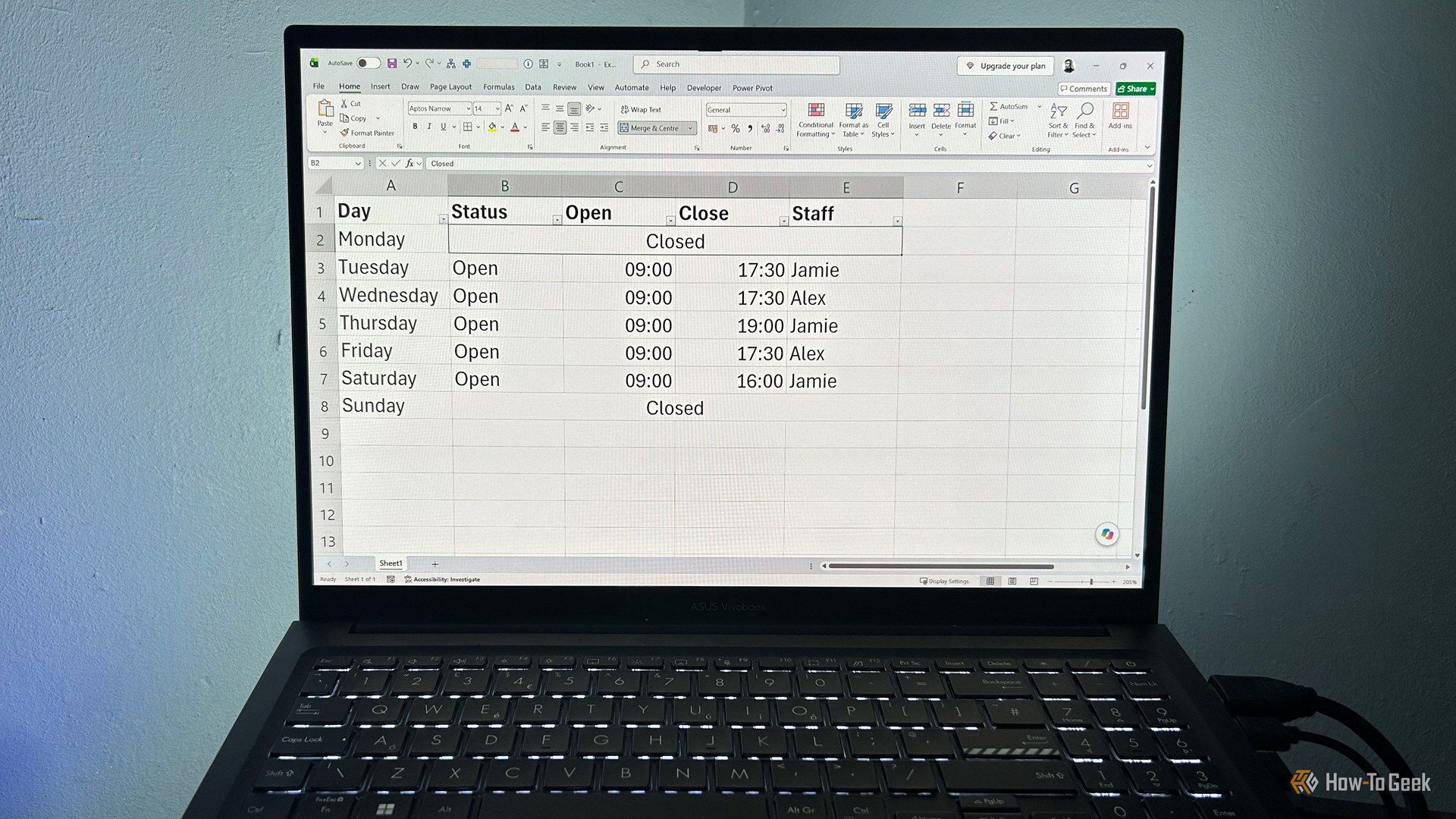
Ditch Merge & Center: The Better Way to Align Text in Excel
Learn to use Excel's "Center Across Selection" to align text across cells without merging, avoiding common data manipulation issues. This guide provides steps to utilize this newly accessible feature and add it to your Quick Access Toolbar.

Ars Technica's Rocket Report: Your Essential Space Industry Briefing
Quick Verdict Ars Technica's Rocket Report, presented by veteran space reporter Stephen Clark, offers an invaluable and meticulously organized weekly (or similar frequency, implied by "Edition 9.15") digest of the most

Stop Android Auto Battery Drain: Essential Features to Disable and
Android Auto offers unparalleled convenience, bringing your phone's most useful features directly to your car's display. From navigation and calls to messages and music, it keeps you connected without distracting you
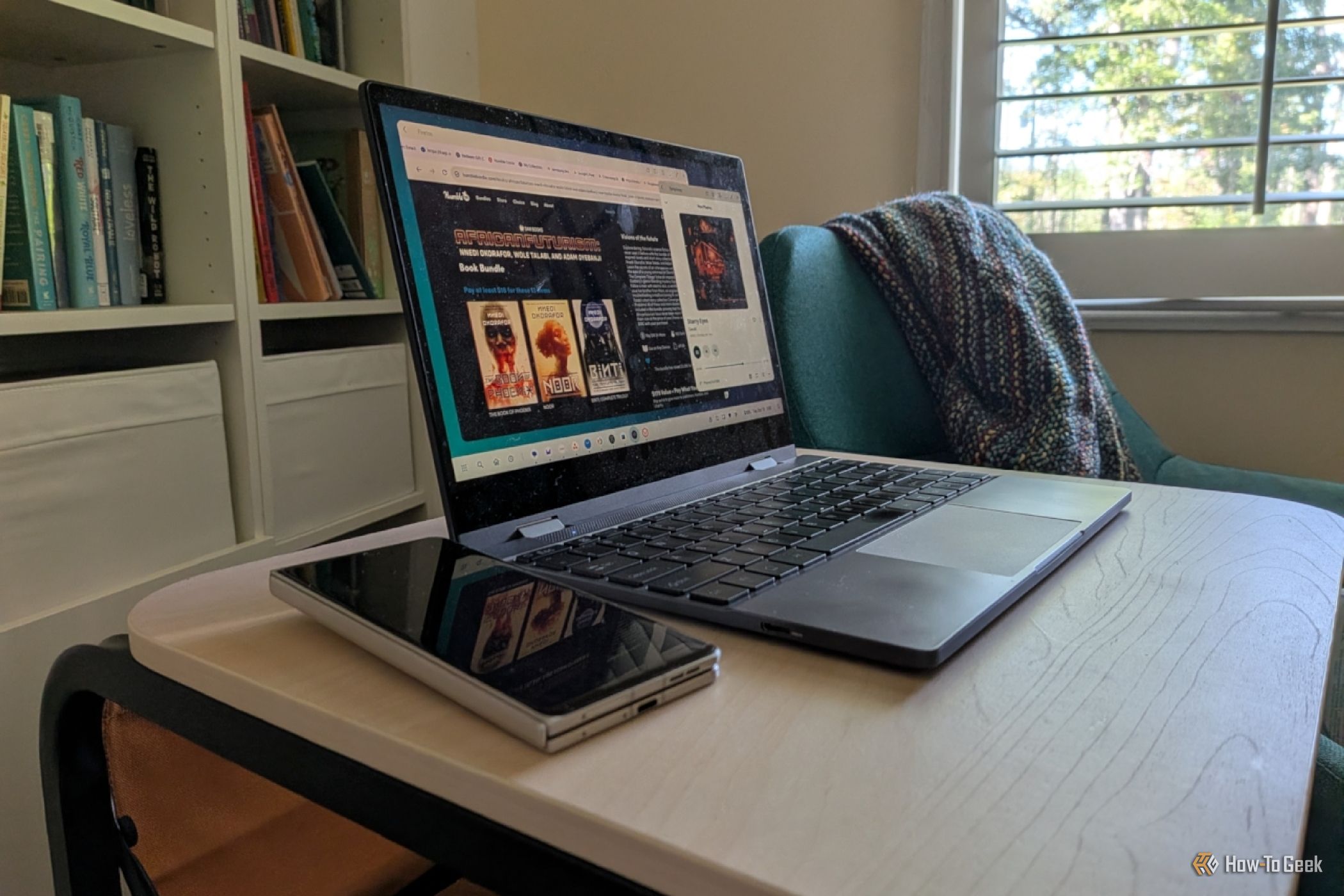
Turn Your Android Phone into a Powerful Desktop Replacement
Learn how to transform your Android phone into a full-fledged desktop computer using external displays and accessories, providing a cost-effective and integrated alternative to new Googlebooks.

VisionQuest Cameo Insight: A Pragmatic Look at MCU TV Realities
VisionQuest Cameo Insight: A Pragmatic Look at MCU TV Realities Verdict: The news surrounding VisionQuest's initial creative discussions offers valuable, albeit potentially disappointing, insight into the realities of

howto: Four Ways the Fitbit Edge Is Better Than the Charge 6, and Two
Learn the key differences between the Fitbit Edge and Charge 6, including four advantages of the Edge and two areas where it falls short, to help you choose the best fitness tracker for your needs.