2 results found

While AI accelerates code generation, formal methods remain critical for ensuring system correctness. Languages like TLA+ and tools like Quint enable developers to model and verify system designs before coding, catching subtle flaws. Quint makes formal methods more accessible with developer-friendly syntax and executability. This approach is vital for verifying AI-generated code through trace validation and model-based testing, ensuring reliability against real-world data.
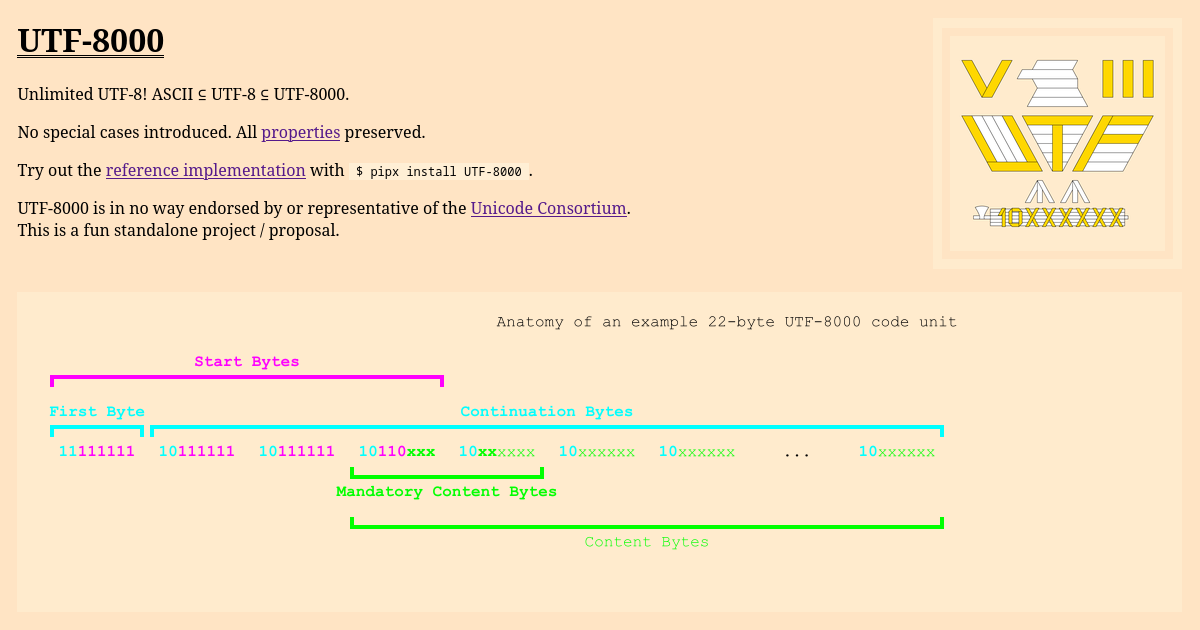
UTF-8000 is an innovative proposal that extends standard UTF-8 to support arbitrarily large codepoints, surpassing the current 4-byte limit. It achieves this by allowing multiple 'start bytes' within a code unit, leveraging UTF-8's inherent extensible design without introducing any new special cases. This project highlights the robustness of UTF-8's architecture, maintaining crucial properties like self-synchronization and self-punctuation.
