6 results found
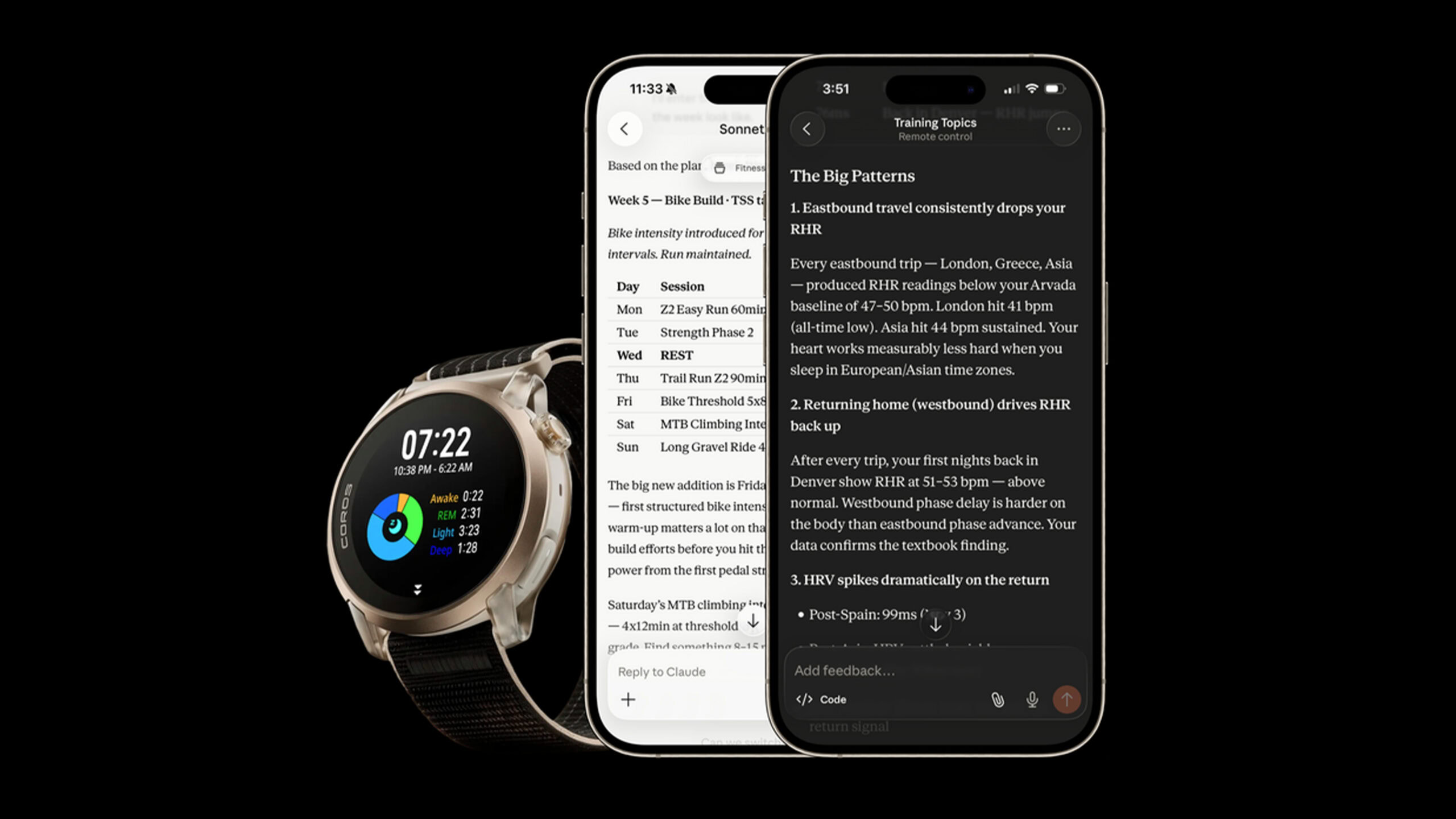
COROS has made a bold move in the crowded fitness tracking market, not by launching another incremental hardware upgrade, but by fundamentally rethinking how athletes interact with their most valuable asset: their

MCP (Model Context Protocol) is a new standard that acts as a standardized bridge, enabling secure and efficient connections between large language models (LLMs) and external, private enterprise data sources. It addresses the complexity of traditional API integrations by standardizing data formats for AI, making agentic workflows more scalable and effective. MCP ensures LLMs have the crucial internal context needed for practical enterprise applications.

This guide details building a reliable personal financial assistant using the Model Context Protocol (MCP) and a "Narrator" architectural pattern. By separating deterministic data computation in Python from LLM narration, the system ensures factual accuracy, reduces hallucinations, and provides auditable, data-backed financial insights. It covers MCP client wrappers, budget enforcement, simple request parsing, and precise metric calculation.

The Model Context Protocol (MCP), an open-source standard launched by Anthropic in late 2024, is rapidly gaining traction as the core communication method for AI agents. It provides a flexible framework for agents to interact with external data and users, distinct from traditional APIs that are designed for deterministic developer-driven tasks. With major adoption by OpenAI and Google, MCP is shaping the future of autonomous AI workflows.

Integrating AI assistants into enterprise environments presents a unique challenge: how do you securely and efficiently connect them to your proprietary internal data? While many tutorials cover basic external

Enterprise MCP adoption is outpacing security controls Enterprises are rapidly integrating Model Context Protocol (MCP) and deploying autonomous AI agents, yet security frameworks are struggling to keep pace, creating a
