
ZDNET's '12 Solar Myths': Essential Reading for Home Solar Hopefuls
ZDNET's '12 Solar Myths': Essential Reading for Home Solar Hopefuls Verdict: ZDNET's deep dive into 12 common solar power myths is a highly valuable, no-nonsense resource for anyone considering home solar. The article

ZDNET's '12 Solar Myths': Essential Reading for Home Solar Hopefuls
Verdict: ZDNET's deep dive into 12 common solar power myths is a highly valuable, no-nonsense resource for anyone considering home solar. The article provides a clear-eyed, experience-backed perspective, cutting through misinformation to equip consumers with crucial facts, particularly regarding financial expectations and, critically, safety. While a few myths could benefit from deeper exploration, the overall honesty and practical advice make this article an indispensable guide in the burgeoning home solar landscape.
Introduction
In an era where renewable energy is often clouded by strong opinions and conflicting information, ZDNET's article, "I've lived with solar power at home for years - 12 myths you can safely ignore in 2026," stands out as a beacon of clarity. Authored by a seasoned user of solar technology, Adrian Kingsley-Hughes, this piece aims to debunk common misconceptions surrounding residential solar power systems, from basic plug-in setups to larger arrays. The author’s extensive personal experience with various solar solutions lends significant credibility to the advice, offering readers a refreshingly honest and detailed analysis that feels grounded in real-world application rather than speculative theory.
Dispelling the Fog: Key Insights from the Solar Myths
The article meticulously addresses 12 prevalent myths, providing practical details and tangible examples that are crucial for making informed decisions:
The Financial Realities (Myths 1, 2, & 8): One of the most significant takeaways is the nuanced discussion around solar savings. Contrary to polarized beliefs of either huge profits or no returns, the article asserts that actual savings are highly variable. Key factors include the size of your solar array, your local peak sunlight hours (PSH), and the cost of electricity in your area. For instance, a 1,200W plug-in system in Utah, with 6 PSH and $0.14/kWh electricity, could save about $281 annually, achieving a payback in roughly 5.5 years for a $1,600 EcoFlow STREAM system. In contrast, California's higher PSH (7.5 hours) and electricity costs (up to $0.36/kWh) could yield annual savings of around $910. The article also clarifies that plug-in solar is typically designed to offset a home's base load (e.g., refrigerators, routers) and won't eliminate electricity bills entirely due to overnight downtime without battery storage.
Prioritizing Safety (Myth 3): A critical and often overlooked aspect covered is solar panel safety. The author issues a stark warning: electricity is dangerous. Any voltage of 50 volts (AC or DC) or higher is considered hazardous, capable of causing shock, burns, or worse. Solar panels produce electricity whenever exposed to daylight, meaning they are always 'on' outdoors. The article recounts a personal experience with a painful DC burn and a shock from damp MC4 connectors, stressing the importance of covering panels or working at night to minimize risks. This strong emphasis on electrical safety is a paramount contribution to consumer awareness.
Performance and Durability (Myths 4, 5, 11, & 12): The longevity of solar equipment is another area where myths are tackled head-on. Solar panels are not short-lived; many come with 10-year warranties and are expected to last 20 to 25 years with proper care. Even on cloudy days, panels continue to generate electricity, albeit at a reduced capacity, debunking the idea they are useless without direct sun. Furthermore, concerns about solar generator battery life are addressed, highlighting that modern Lithium Iron Phosphate (LiFePO4) batteries offer thousands of cycles, translating to years of reliable service (e.g., 3,000 cycles for 10 years of use). Finally, panels are described as durable and weather-resistant, requiring minimal maintenance beyond occasional cleaning.
Practical and Legal Considerations (Myths 6, 7, 9, & 10): The article provides crucial updates on the legality of plug-in solar systems in the US. As of 2026, five states (Utah, Colorado, Maine, Maryland, Virginia) have legalized plug-in solar systems up to 1,200W-1,920W without permits, with more states considering similar legislation. It’s also important to note that plug-in solar systems, for safety reasons, will power down during an outage unless paired with a battery backup. Regarding solar generators, the article notes they are versatile tools, not just for emergencies, implying broader utility. While it mentions panels are 'properly installed -- south-facing' for optimal performance in the Northern Hemisphere during calculations, it doesn't extensively debunk the myth that they must face south, rather reinforcing south-facing as the ideal for maximum output.
User Experience and Practical Implications
The article's strength lies in its ability to translate complex technical information into actionable insights for the average homeowner. The author’s direct, anecdotal style makes the information relatable and trustworthy. By setting realistic expectations for savings, emphasizing critical safety protocols, and clarifying operational aspects, the piece empowers readers to approach solar adoption with a more informed and cautious mindset. It guides potential users to understand that solar is not a one-size-fits-all solution, but a variable investment influenced by specific geographical and economic factors. The practical advice on avoiding common mistakes (mentioned in linked articles) further enhances its value as a comprehensive preparatory guide.
Pros and Cons of the Article's Information
Pros:
- Experience-Backed Authenticity: The author’s 'lived with solar for years' perspective provides a grounded, honest viewpoint.
- Critical Safety Emphasis: Strong warnings and personal anecdotes regarding electrical safety are invaluable.
- Data-Driven Financial Realities: Offers clear calculations and examples for varying financial returns based on location and electricity costs.
- Timely Information: Addresses contemporary plug-in solar legislation and modern battery technology, relevant for 2026.
- Mythbusting Clarity: Effectively debunks many common misconceptions, promoting realistic expectations.
Cons:
- Limited Depth on Some Myths: Myth 9 (solar generators for emergencies only) and Myth 10 (panel orientation) are addressed somewhat briefly, with less detailed debunking compared to others. For instance, while south-facing is optimal, the article doesn't delve into the viability or efficiency trade-offs of east/west installations.
- Focus on 'What Not To Believe': While excellent for debunking, it doesn't serve as a full 'how-to' guide for installation or system design, necessitating further research for those ready to commit.
Recommendation
This ZDNET article is essential reading for any homeowner contemplating a solar power system. Its honest, detailed analysis, particularly concerning financial viability and the critical safety aspects of electricity, makes it a foundational resource. It's especially useful for those confused by conflicting information and seeking a pragmatic understanding of what home solar truly entails. While it may not cover every single nuance of solar installation, it brilliantly prepares you with the core knowledge to navigate the initial decision-making process confidently and safely.
FAQ
Q: How do my potential solar savings differ based on my location?
A: Your savings from solar panels depend heavily on three factors: the size of your solar array, the average peak sunlight hours (PSH) your location receives, and the current price of electricity in your area. For example, a state with higher PSH and more expensive electricity will generally see greater annual savings and a faster return on investment compared to a state with less sun and cheaper power.
Q: Is plug-in solar safe, and can it provide power during an outage?
A: While convenient, plug-in solar systems, like all electrical setups, require extreme caution. Solar panels produce hazardous voltages when exposed to daylight, and proper safety measures must always be observed, such as working with panels covered or at night, and avoiding damaged components. Importantly, unless your plug-in solar system is equipped with a battery for storage, it will automatically power down during a grid power cut for safety reasons, meaning it won't provide backup electricity.
Q: How long do solar panels and their associated batteries typically last?
A: Modern solar panels are built for longevity, often coming with warranties of 10 years and expected to provide 20 to 25 years of service with minimal maintenance. Batteries used in solar generators, particularly Lithium Iron Phosphate (LiFePO4) types, also have impressive lifespans, typically offering thousands of charge cycles, which can translate to 10 or more years of daily use.
Related articles
Android 17 QPR2 Beta 7.1: The Performance Relief You've Been Waiting
Android 17 QPR2 Beta 7.1: Finally Fixing the QPR1 Performance Woes Verdict: Android 17 QPR2 Beta 7.1 is a crucial and highly anticipated software update for Google Pixel users, specifically targeting and resolving the

DJI Solo Video Setups: Smart Choices for Lone Creators
This review delves into DJI's recommended solo video setups, highlighting the Osmo Pocket 3 Creator Combo as a top pick for its integrated camera, gimbal, and mic. It also covers stabilizers like the Osmo Mobile 8 and RS 4, and the DJI Mic Mini series for enhanced audio, providing honest pros, cons, and clear buying advice.

Ars Technica's Rocket Report: Your Essential Space Industry Briefing
Quick Verdict Ars Technica's Rocket Report, presented by veteran space reporter Stephen Clark, offers an invaluable and meticulously organized weekly (or similar frequency, implied by "Edition 9.15") digest of the most

Apple iPhone Duo: A Daring Debut with Notable Compromises
Apple's highly anticipated iPhone Duo, priced at $2,000, has gone on pre-order. While hailed as "Apple's most exciting device in a decade" for its innovative foldable design and immersive display, it comes with significant drawbacks like the absence of FaceID and a premium camera.
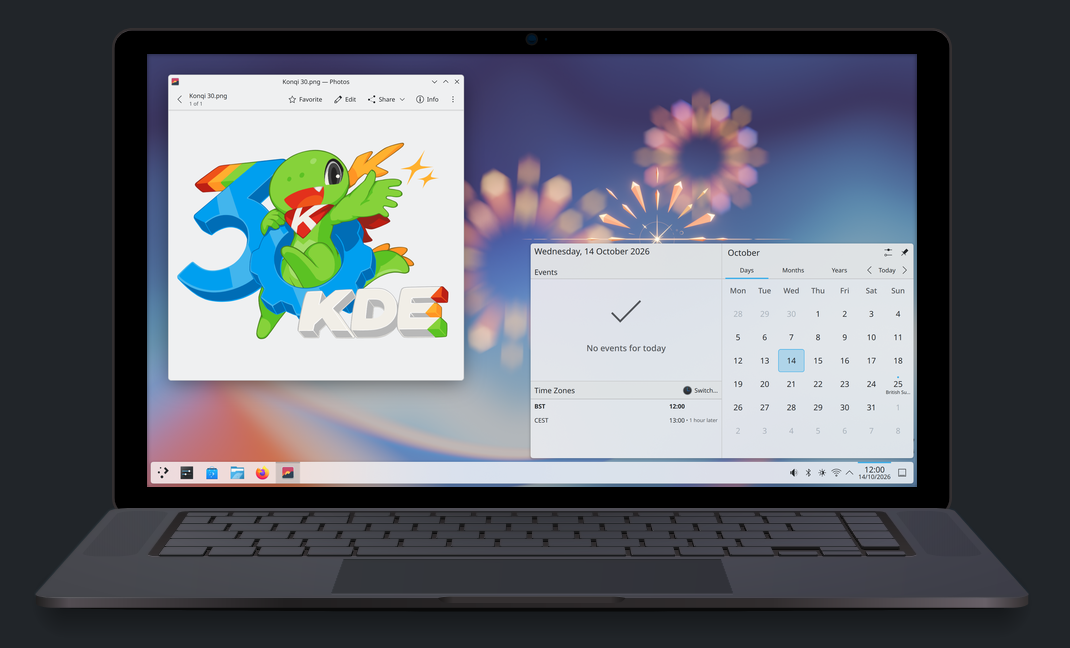
KDE Plasma 6.8: A Future-Focused 30th Anniversary Update
Quick Verdict KDE Plasma 6.8, arriving as the "30th Anniversary Edition," is a pivotal release that decisively pushes the desktop environment into the future. With a definitive farewell to native X11 sessions and a
Galaxy Watch One UI 9 Beta: Promising Progress, But Patience Needed
Galaxy Watch 8, Watch Ultra, and Watch 7 are receiving a new One UI 9 Watch beta build with bug fixes and a security patch. Active development signals progress, but a stable release date remains elusive.