
US Venture Capital Funnels 87.5% to Megadeals, Vintage Drives Other
US venture capital in H1 2026 saw 87.5% of funds go to megadeals, largely driven by AI. PitchBook's report reveals a stark market split: AI companies command huge premiums, while older startups are discounted by up to 59.1% based on their last funding round's vintage. The exit market remains challenging, even as unicorn numbers swell.

The US venture capital landscape in the first half of 2026 witnessed an unprecedented concentration of funding, with 87.5% of all deployed dollars flowing into megadeals of $100 million or more. A new report from PitchBook reveals that artificial intelligence companies are the primary beneficiaries, creating a stark dichotomy where the remaining market is increasingly valued not by business fundamentals, but by the age of a startup's last funding round.
AI Fuels Megadeal Dominance
PitchBook's Q2 US VC Valuations report, released August 10, 2026, highlights AI's powerful influence. AI companies achieved a median valuation step-up of 2.2 times this year, significantly outperforming non-AI firms at 1.6 times. This premium is even more pronounced in early stages, with AI pre-money valuations at Series A roughly double those of non-AI counterparts. By Series D and later, this gap widens dramatically to 6.6 times.
Emily Zheng, a senior research analyst at PitchBook, pointed to the astounding late-stage growth. The median velocity of value creation for Series D and later-stage companies surged nearly tenfold in 12 months, from $108.9 million in 2025 to $1.028 billion this year. High-profile AI firms like Anthropic, which saw its valuation jump 5.3 times in just eight months, are key drivers, pushing median AI pre-money valuations at Series D and beyond to an impressive $3.95 billion.
The Steep Price of "Vintage" Funding
Beyond the AI boom, PitchBook uncovered a critical trend: the market is now pricing companies based on their last primary funding date, or "vintage." On the secondary platform Forge, companies that secured their last primary round in 2026 face no discount. Those from 2025 see a modest median discount of 4.7%.
However, the outlook darkens considerably for older vintages. Startups whose last funding round occurred in 2021 are trading at a median discount of 59.1%, while 2022 vintages face a 54.1% median discount. This means two businesses with identical revenues could receive vastly different prices, solely based on the year of their last term sheet. PitchBook attributes this to stale primary rounds lacking fresh reference points and buyers having limited information rights on most secondary trades.
Brex Acquisition Illustrates the Discount
This theoretical "vintage discount" found a tangible example in the recent acquisition of fintech firm Brex. Capital One purchased Brex for $5.2 billion, a significant 58% markdown from its peak pandemic valuation of $12.3 billion. This figure aligns almost perfectly with the 54% to 59% secondary discount range observed for 2021 and 2022 vintages, demonstrating that what the secondary market priced in theory, acquirers are now paying in practice.
Glimmers of Hope Amidst the Shift
Despite the concentrated funding and vintage-based discounts, the report notes some positive shifts. Flat and down rounds declined to 13.1% of deals, marking the lowest share since 2022. Median Series A pre-money valuations reached $64 million in Q2, more than triple the $21 million seen in 2020. Series C valuations also saw an impressive 84.5% year-on-year increase, reaching $546 million.
Acquisition activity also appears healthier, with deal value hitting a decade high of $375.4 billion. The median step-up in valuations recovered to 1.9 times from 1.2 times, and the median acquisition size doubled to $200 million. Notable deals include ServiceNow's $7.8 billion acquisition of Armis and Eli Lilly's $7 billion purchase of Kelonia Therapeutics.
Exit Market Stumbles, Unicorns Pile Up
The public exit market, however, remains largely stalled. SpaceX almost single-handedly buoyed the first half with its public listing and subsequent acquisitions of xAI and Cursor, propelling its valuation from $180 billion to $1.8 trillion. Yet, its shares have struggled, trading around $115 in late July, down 14.8% from its $135 listing price. Of the ten most prominent listings since 2025, only Cerebras, CoreWeave, and Circle currently trade above their IPO price, with three others down over 50%. PitchBook's assessment is clear: a single record-setting listing is insufficient to genuinely reopen the market and provide the exit outcomes critical for venture pricing.
The active unicorn count has swelled to a record 945 in Q2, up 9.4% since the end of 2025, with an aggregate value of $5.3 trillion that largely remains unrealized. This growth is increasingly fueled by non-traditional investors, who participated in 91.9% of US VC deal value this year, with corporate venture arms involved in 82.6%. The secondary market reflects this concentration, as the top 20 startups accounted for 86% of Q2 value on Hiive, with the top five alone commanding 50.3%.
Europe's Different Path and the Funding Paradox
The report highlights a divergence in Europe, where venture capital shows a different concentration. UK and European defense-tech startups had already raised $12.3 billion by late June, nearly double the prior year. Europe also continued to mint non-AI unicorns, such as London's 9fin ($1.3 billion) and Allica Bank ($1.2 billion).
Intriguingly, major venture firms are actively contributing to the very concentration they warn about. Index Ventures recently raised $2 billion for AI, while co-founder Neil Rimer cautioned about a coming redistribution of AI wealth. Similarly, Accel secured $5 billion for late-stage AI in April and another $3.5 billion this week. The venture landscape now hinges on whether this extreme 87.5% concentration persists and if the steep 2021 vintage discount begins to narrow, trends future PitchBook reports will undoubtedly track.
FAQ
Q: What is a "megadeal" in the context of US venture capital?
A: PitchBook defines a megadeal as a funding round of $100 million or more. These deals captured 87.5% of all US venture dollars in the first half of 2026.
Q: How does AI influence current venture valuations?
A: AI companies are experiencing a significant premium, with median valuation step-ups of 2.2x (compared to 1.6x for non-AI firms) and pre-money valuations at Series D and later reaching 6.6x that of non-AI companies, driven by massive increases in value creation velocity.
Q: Why are older funding "vintages" experiencing such deep discounts on secondary markets?
A: Companies that last raised capital in prior years, particularly 2021 and 2022, face substantial discounts (e.g., 59.1% for 2021 vintages). This is attributed to the lack of fresh primary funding rounds to set new reference points and limited information rights for buyers in secondary trades.
Related articles

Apple Unveils iPhone Duo: Pricey Foldable Sees Soaring Demand
Apple has officially entered the foldable smartphone arena with the long-anticipated launch of the iPhone Duo. Priced starting at a hefty $1,999, the device features a 5.4-inch outer display and a larger 7.6-inch inner

in-depth: Chicago-Area Cops Helped HSI Spy on Minnesota Anti-ICE
Chicago-area law enforcement, including local police and HSI agents, conducted undercover surveillance on Minnesota anti-ICE activists at an April 2, 2022, talk in Chicago. This operation was part of a federal conspiracy probe into 15 Minnesota activists facing felony charges related to immigration enforcement resistance. Civil liberties advocates have condemned the surveillance as a troubling intrusion into protected political activity.

Mark Wahlberg on using AI in film ‘the right way’ and being open to
Actor Mark Wahlberg believes AI has a place in filmmaking if used responsibly for enhancement, not script generation or actor replacement. At TechCrunch Disrupt, he expressed openness to an AI likeness carrying on his legacy, managed by his family, and emphasized storytelling.

Tesla Unveils Thruster-Equipped Roadster, 2028 Production Targeted
Tesla has unveiled its second-generation Roadster, featuring cold-gas thrusters co-developed with SpaceX, enabling it to jump and flip. The electric sports car demonstrated 0-60mph in an astonishing 0.81 seconds, with production targeted for 2028. This highly anticipated reveal also serves as a key recruitment tool for Tesla's ambitious AI and robotics initiatives.
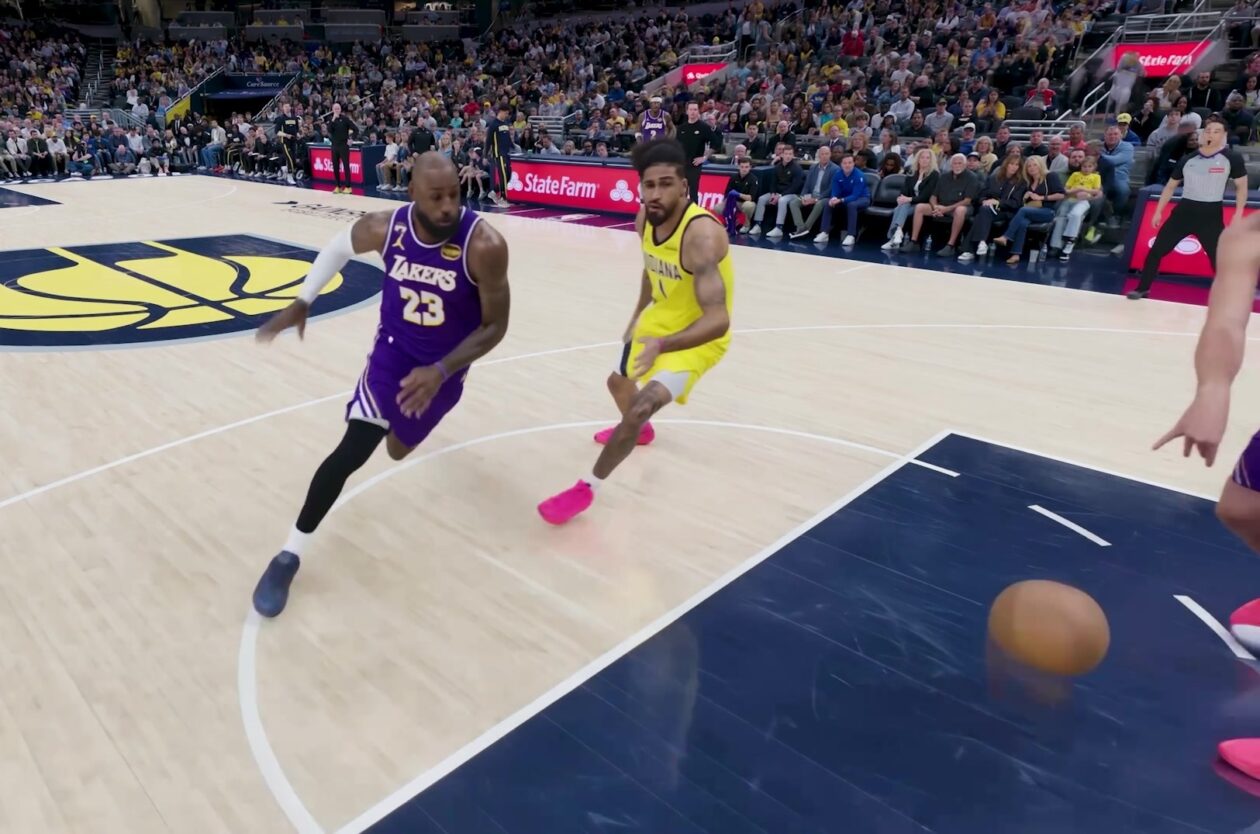
Amazon Prime Video Launches AI-Powered Prime 360 for NBA Coverage
Amazon Prime Video is elevating its NBA coverage with the introduction of Prime 360, an AI-powered replay system offering immersive, 'fly through' views of the action. Kicking off its second season, Prime Video also adds Yahoo fantasy integration and gains exclusive Eastern Conference Finals rights, expanding its tech-driven sports broadcast. The new features aim to deliver a unique and interactive viewing experience for basketball fans.
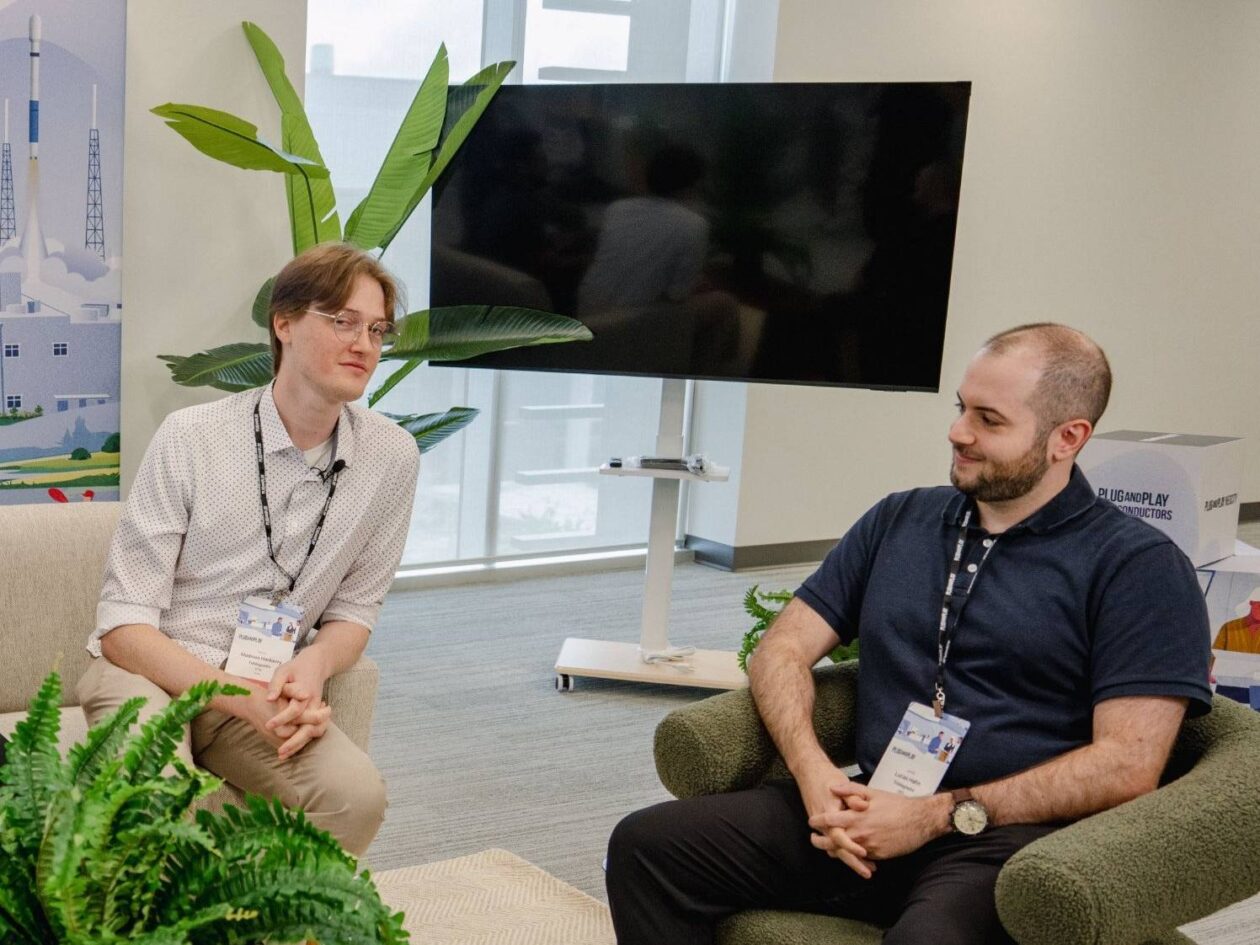
regional: A two-person Seattle startup lands $1M to reinvent
Seattle startup TriMagnetix has secured $1 million to develop semiconductor chips that consume 800 times less energy and are radiation-resistant. The two-person company, leveraging nanomagnetic technology, is targeting space applications and data centers. With new funding and key partnerships, TriMagnetix aims for commercial sales within a year.