
Tinder Group Hangouts: A Lower-Pressure Way to Connect
Tinder's new Group Hangouts feature expands on double dates, offering a low-pressure way to meet new people with friends. This review explores its mechanics, benefits, and potential drawbacks for users seeking a more social dating experience.
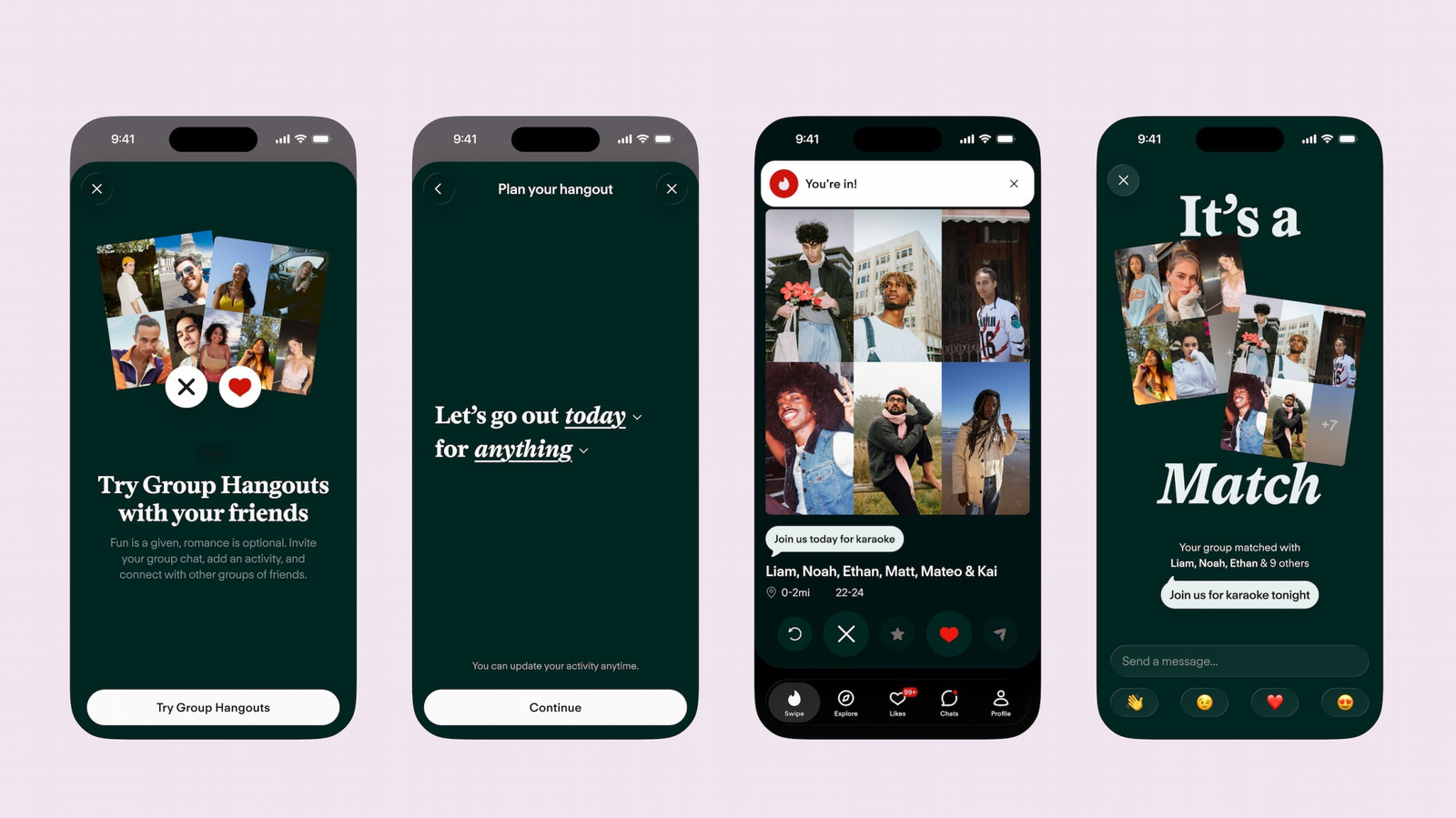
Quick Verdict
Tinder's new Group Hangouts feature is a smart evolution, building on the success of its double dates to offer a more relaxed, social entry point to meeting new people. By facilitating activity-based group interactions, it significantly dials down the pressure of one-on-one first encounters, catering especially to younger users seeking connections with the comfort of friends. While initially limited in availability, it presents a compelling alternative for those feeling dating fatigue.
A New Approach to Digital Dating
For years, Tinder has been synonymous with the swipe-right, one-on-one dating experience. However, the platform is now acknowledging a growing desire among its user base, particularly younger demographics, for less intense, more social ways to meet potential partners. Following the positive reception of its double date feature, Tinder is expanding this vision with "Group Hangouts," allowing users to connect with others in a more communal, activity-driven setting. This move represents a significant shift, aiming to transform the often high-stakes nature of first dates into a more casual, friend-supported experience.
What Are Tinder Group Hangouts?
At its core, Tinder Group Hangouts is designed to facilitate social gatherings rather than singular romantic encounters. It moves beyond the traditional binary match, enabling groups of friends to discover and connect with other groups for shared activities. The feature is built around the idea of a "lower-pressure" environment, providing a buffer that many users, particularly those under 30, seem to crave when navigating the initial stages of meeting someone new. This isn't just about finding another couple to hang out with; it's about forming dynamic groups centered around common interests, all within the familiar Tinder ecosystem.
Key Features and User Experience
Engaging with Tinder Group Hangouts is designed to be straightforward. The process begins with a user forming their own group and selecting an activity that they'd like to pursue. Once a group has a minimum of three members, its collective profile becomes visible to other groups on the app. Users can then browse these group profiles, and if a mutual interest is found, a match can occur. This matching initiates a group chat, providing a space for all members of both groups to communicate and coordinate plans for a potential meet-up. Access to the feature, when available in a user's region, is conveniently located at the top of the app's home screen. Importantly, Tinder has integrated all its standard safety features into this new offering, and users retain the flexibility to leave any group or hangout chat whenever they choose.
The Numbers Game: Why Groups?
Tinder’s decision to lean into group interactions isn't arbitrary; it's backed by user data. The company observed that approximately 90 percent of users who engaged with the previous double date feature were under the age of 30. Furthermore, these double date matches led to a 35 percent increase in messages exchanged compared to one-on-one interactions. These statistics strongly suggest that younger users are actively seeking alternative, less intimidating methods for making new connections. Initial trials of Group Hangouts in Australia reinforced this trend, with a promising 40 percent acceptance rate for invites. These figures paint a clear picture: there's a significant demand for a social layer in the dating experience, moving away from the solitary focus of traditional swiping towards a more collaborative approach to meeting people.
Pros
- Reduced First Date Pressure: The presence of friends provides a comfortable social buffer, alleviating the common anxieties associated with one-on-one first dates.
- Built-In Social Support: Having your friends along means built-in conversation starters and a familiar dynamic, making interactions feel more natural and less forced.
- Activity-Based Matching: Matching based on shared activities fosters genuine initial connections and provides immediate ideas for a group meet-up, streamlining the planning process.
- Enhanced Safety and Comfort: Leveraging Tinder's existing safety features, users can feel more secure knowing they are meeting in a group context, often with friends present.
- Flexibility and Control: Users can easily leave a group or a chat at any time, maintaining control over their social interactions without feeling obligated to stay.
- Increased Engagement Potential: The data from double dates suggests group interactions lead to more extensive messaging, potentially fostering deeper initial connections before meeting in person.
Cons
- Limited Initial Availability: The feature's rollout is not universal, initially restricted to the US and a few other selected markets, meaning many users won't have immediate access.
- Complexity of Group Dynamics: Coordinating schedules and preferences for multiple individuals (three or more per group) can be more challenging than organizing a single date.
- Dilution of Dating Focus: For some, the group hangout might feel more like a friend-finding tool than a direct path to romantic connection, potentially blurring the lines of intention.
- Reliance on Friends' Availability: The success of the feature hinges on having friends who are also available and interested in participating, which might not always be the case.
- Potential for Group Mismatches: While activity-based, personality clashes within or between groups could still lead to awkward or uncomfortable hangouts.
Is This the Future of Dating Apps?
Tinder Group Hangouts represents a perceptive response to evolving user preferences. For a demographic that often values communal experiences and authenticity, this feature offers a refreshing departure from the conventional dating app model. It effectively bridges the gap between casual socializing and purposeful dating, making the initial step of meeting someone new feel less daunting. While not every user will seek this group dynamic, for those who find traditional dating apps overwhelming, or simply prefer a more social approach, it could very well be a game-changer. It leverages the power of social circles to foster connections, aligning Tinder more closely with the organic ways people often meet in real life.
Final Recommendation
If you're under 30, or simply someone who finds the prospect of one-on-one first dates intimidating, Tinder Group Hangouts is definitely worth exploring. It offers a low-stakes, high-fun way to expand your social circle and potentially find connections without the intense spotlight. While the feature's limited initial availability might be a drawback for some, if it's live in your region, it provides a much-needed alternative for a more relaxed and authentic dating experience. Give it a try if you're looking for connection with the comfort of company.
FAQ
Q: How does Tinder Group Hangouts differ from traditional Tinder dates?
A: Unlike traditional Tinder, which focuses on matching two individuals for a one-on-one date, Group Hangouts allows a group of friends (three or more) to match with another group for a collective, activity-based outing, reducing individual pressure.
Q: Is Tinder Group Hangouts available everywhere?
A: No, the feature is initially rolling out in the US and other select markets. Tinder plans for a broader availability eventually, but it won't be accessible globally from day one.
Q: What are the main benefits of using group hangouts?
A: Key benefits include a lower-pressure environment for meeting new people, the comfort and support of having friends present, and activity-based matching that helps create more natural and engaging initial interactions.
Related articles
Android 17 QPR2 Beta 7.1: The Performance Relief You've Been Waiting
Android 17 QPR2 Beta 7.1: Finally Fixing the QPR1 Performance Woes Verdict: Android 17 QPR2 Beta 7.1 is a crucial and highly anticipated software update for Google Pixel users, specifically targeting and resolving the

DJI Solo Video Setups: Smart Choices for Lone Creators
This review delves into DJI's recommended solo video setups, highlighting the Osmo Pocket 3 Creator Combo as a top pick for its integrated camera, gimbal, and mic. It also covers stabilizers like the Osmo Mobile 8 and RS 4, and the DJI Mic Mini series for enhanced audio, providing honest pros, cons, and clear buying advice.

Ars Technica's Rocket Report: Your Essential Space Industry Briefing
Quick Verdict Ars Technica's Rocket Report, presented by veteran space reporter Stephen Clark, offers an invaluable and meticulously organized weekly (or similar frequency, implied by "Edition 9.15") digest of the most

Apple iPhone Duo: A Daring Debut with Notable Compromises
Apple's highly anticipated iPhone Duo, priced at $2,000, has gone on pre-order. While hailed as "Apple's most exciting device in a decade" for its innovative foldable design and immersive display, it comes with significant drawbacks like the absence of FaceID and a premium camera.

KDE Plasma 6.8: A Future-Focused 30th Anniversary Update
Quick Verdict KDE Plasma 6.8, arriving as the "30th Anniversary Edition," is a pivotal release that decisively pushes the desktop environment into the future. With a definitive farewell to native X11 sessions and a
Galaxy Watch One UI 9 Beta: Promising Progress, But Patience Needed
Galaxy Watch 8, Watch Ultra, and Watch 7 are receiving a new One UI 9 Watch beta build with bug fixes and a security patch. Active development signals progress, but a stable release date remains elusive.