
TimescaleDB: Supercharging PostgreSQL for Time-Series Data
Managing vast, fast-growing time-series data often cripples standard PostgreSQL. This article introduces TimescaleDB, an extension that transforms PostgreSQL into a high-performance time-series database, optimizing query speeds, reducing storage, and enabling real-time analytics for applications like IoT and AI telemetry.
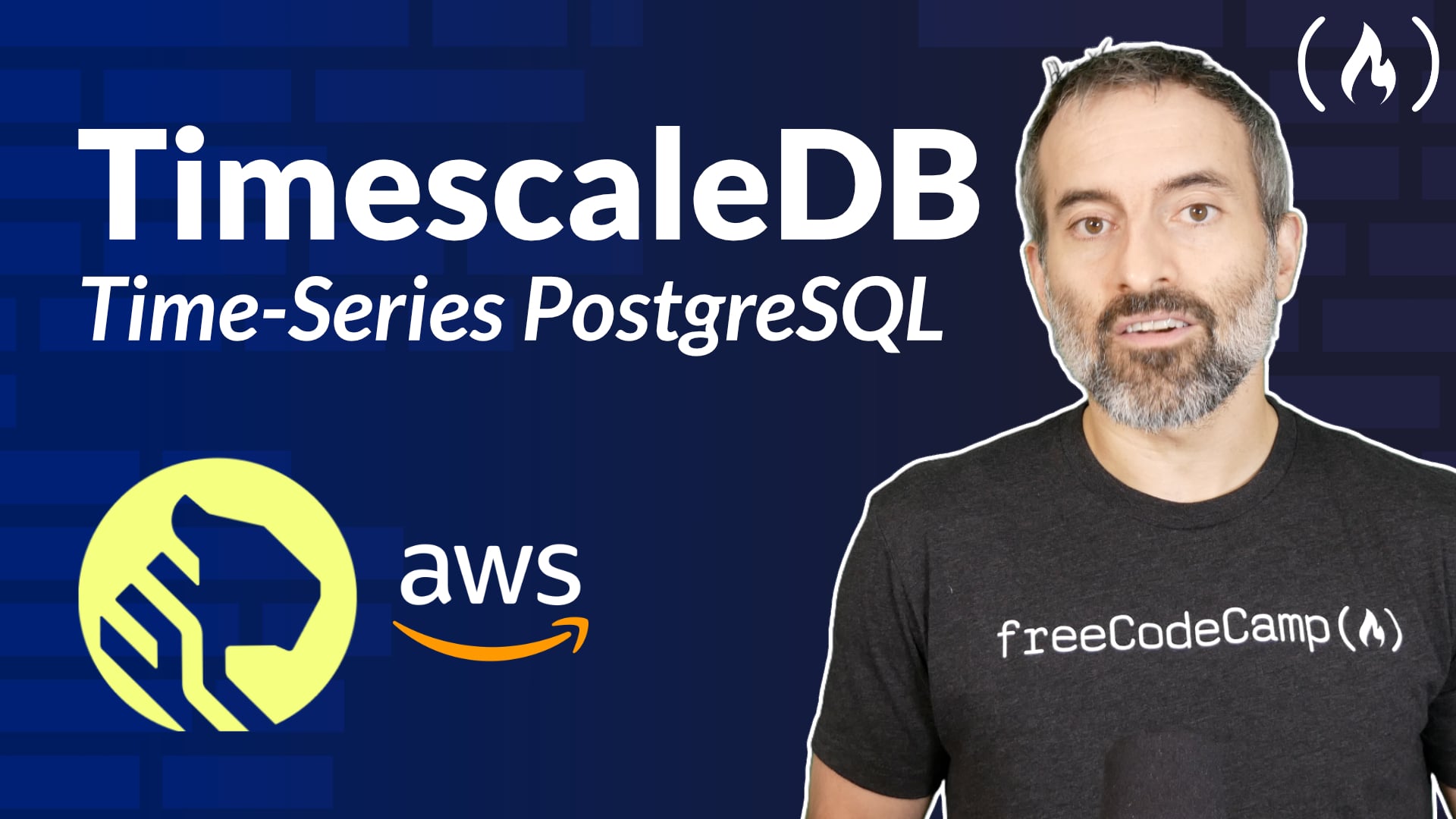
Modern software development often involves managing colossal, rapidly expanding datasets. From monitoring IoT device telemetry and logging API requests to powering dashboards for AI agents, time-series data is ubiquitous. However, standard PostgreSQL, while robust, can struggle with the sheer volume and high write rates characteristic of time-series workloads. Unoptimized, these datasets quickly degrade query performance, leading to sluggish applications and frustrated users. Recognizing this critical challenge, a specialized approach is often necessary.
TimescaleDB emerges as an elegant solution, transforming a standard PostgreSQL instance into a high-performance time-series database. As an open-source extension, it allows developers to leverage their existing PostgreSQL knowledge while gaining advanced capabilities tailored for time-series data. Its primary goal is to optimize query speeds, drastically reduce storage footprints, and ensure dashboards remain fast and responsive, even at scale. freeCodeCamp.org has recently released a comprehensive course offering hands-on experience with TimescaleDB's powerful features.
Core Concepts for High Performance
Hypertables and Intelligent Chunking
At the core of TimescaleDB's efficiency are hypertables. These act as a single table abstraction but intelligently partition your data by time (and optionally by other attributes) into smaller, physical tables called "chunks." This automatic chunking significantly speeds up queries by ensuring the database only scans relevant data segments. Furthermore, it simplifies data lifecycle management, allowing for seamless data retention without the performance overhead of traditional row deletions on massive tables.
Columnar Storage and Compression Efficiency
TimescaleDB excels at storage optimization through columnar storage and compression. While recent data benefits from fast row-oriented inserts, older, less frequently accessed data can be converted into column-oriented batches. This transformation can shrink your database size by over 90%. Crucially, columnar storage dramatically accelerates analytical queries by allowing the database to read only the necessary columns from disk, rather than entire rows, leading to substantial performance gains for aggregations.
Continuous Aggregates for Real-time Insights
To prevent redundant calculations, TimescaleDB introduces continuous aggregates. These are incremental, automatically updating materialized views that pre-compute and store aggregated data. For dashboards and analytical applications, this means avoiding repeated, expensive computations. By building "aggregate ladders" – layers of pre-computed data – dashboards can return results in milliseconds, providing a near real-time analytical experience without overwhelming the underlying database.
Hyperfunctions and Data Smoothing
TimescaleDB extends PostgreSQL with specialized Hyperfunctions designed for time-series analysis. These functions enable efficient calculations for percentiles, distinct counts, and sophisticated handling of data phenomena like counter resets. They also offer robust capabilities for gap filling and interpolation, ensuring that frontend charts appear clean and continuous, even when raw data has missing points, providing a more reliable visual representation of trends.
Advanced Data Tiering and Vector Search
For petabyte-scale datasets, TimescaleDB offers advanced data tiering, allowing older, less critical "cold" data to be seamlessly moved from expensive local SSDs to more cost-effective object storage like Amazon S3. This maintains query accessibility across tiers without application changes. Additionally, TimescaleDB facilitates combining standard time-series queries with cutting-edge AI vector search, opening new avenues for complex pattern recognition and semantic analysis within your time-series data.
Building Production-Ready Projects
The practical utility of TimescaleDB is reinforced through two hands-on projects presented in the freeCodeCamp.org course. One project involves constructing an AI Agent Flight Recorder, designed to track millions of language model inferences, tool calls, costs, and latencies within a Docker environment. The second project focuses on an EV Charger Fleet Telemetry System, which monitors 2,000 devices reporting every 10 seconds, deployed on the fully-managed Tiger Cloud platform. These projects demonstrate real-world applications and deployment strategies.
Conclusion: The Power of Optimized Time-Series
TimescaleDB stands out as a powerful enabler for developers confronting the challenges of time-series data within the PostgreSQL ecosystem. By offering intelligent data partitioning, aggressive compression, pre-computed aggregates, and specialized analytical tools, it allows for the creation of highly scalable and performant data-driven applications. For developers seeking to master efficient time-series data management, the four-hour freeCodeCamp.org course provides an excellent resource to gain practical expertise and build robust systems.
FAQ
Q: What is a "hypertable" in TimescaleDB and how does it benefit query performance? A: A hypertable is TimescaleDB's core abstraction, automatically partitioning time-series data by time (and other dimensions) into smaller physical "chunks." This architecture significantly boosts query performance by allowing the database to only scan the specific chunks relevant to a query's time range, rather than the entire dataset, thereby reducing the I/O and processing load.
Q: How does TimescaleDB achieve substantial storage savings and faster analytical queries for older data? A: TimescaleDB employs columnar storage and compression for older data. By converting row-oriented data into column-oriented batches and applying advanced compression, it can reduce storage footprints by over 90%. This columnar format also massively speeds up analytical queries, as the database only needs to read the specific columns required for an aggregation, optimizing data access.
Q: Why are "continuous aggregates" important for building fast, responsive dashboards? A: Continuous aggregates are incremental, automatically updating materialized views that pre-compute and store aggregated results. They are crucial for dashboards because they eliminate the need to recalculate the same data repeatedly. Instead, aggregated data is already available, allowing dashboards to retrieve results in milliseconds, significantly improving responsiveness and user experience.
Related articles

Ditch Merge & Center: The Better Way to Align Text in Excel
Learn to use Excel's "Center Across Selection" to align text across cells without merging, avoiding common data manipulation issues. This guide provides steps to utilize this newly accessible feature and add it to your Quick Access Toolbar.

AI's Confidence vs. Formal Methods' Rigor: Design Flaws & Verification
While AI accelerates code generation, formal methods remain critical for ensuring system correctness. Languages like TLA+ and tools like Quint enable developers to model and verify system designs before coding, catching subtle flaws. Quint makes formal methods more accessible with developer-friendly syntax and executability. This approach is vital for verifying AI-generated code through trace validation and model-based testing, ensuring reliability against real-world data.

regional: A two-person Seattle startup lands $1M to reinvent
Seattle startup TriMagnetix has secured $1 million to develop semiconductor chips that consume 800 times less energy and are radiation-resistant. The two-person company, leveraging nanomagnetic technology, is targeting space applications and data centers. With new funding and key partnerships, TriMagnetix aims for commercial sales within a year.

Ephemeral PR Preview Environments on GKE: A Deep Dive
Every development team eventually grapples with the limitations of shared staging environments. The familiar scenario: multiple features deployed simultaneously, database migrations clashing, and the phrase "it works on

Secure Internal API Access for AI Agents with MCP
AI agents accessing internal APIs directly pose significant risks, including identity loss, unrestricted queries, and security bypasses. The Model Context Protocol (MCP) offers a solution by defining explicit tools. A secure architecture involves an MCP server wrapping the API with strict input validation, coupled with a gateway that handles authentication, rate limiting, and audit logging, ensuring safe and accountable access.

Nvidia's RTX 5090 Reportedly Scrapped: Is AI Eating Our Flagship GPUs
Nvidia has reportedly halted production of the GeForce RTX 5090, with leaked factory notices suggesting its core chip will be repurposed for AI and data center cards. This move positions the RTX 5080 24GB as the new flagship gaming GPU in the 50-series. The decision is linked to an industry-wide memory shortage, heavily influenced by surging AI demand, impacting consumer tech across the board.