
This puzzle game’s simple premise hides surprising depth: indie game
Solo developer TrampolineTales has released *What’s the Password?*, a puzzle game challenging players to input four-digit codes. Despite its simple premise, the game offers surprising depth through diverse and clever clue formats, available on PC, iOS, and Android.

Solo developer Dan DiIorio, known as TrampolineTales, has launched his latest puzzle game, What’s the Password?, across PC via Steam, iOS, and Android. The title presents a deceptively straightforward core challenge: players must input the correct four-digit password on a number pad for each of its over 100 puzzles. However, this simple premise quickly expands into a surprisingly deep and varied experience, offering inventive clues that consistently defy expectations.
The game's genius lies in DiIorio’s ability to extract immense creative potential from its seemingly limited mechanic. Players start with straightforward textual instructions but quickly encounter a diverse array of inventive clue formats. These puzzles demand different types of deductive reasoning, transitioning from interpreting the blinking digits of a clock to deciphering nonogram grids, solving complex arithmetic problems, or even counting the physical teeth on a digital key. The developer masterfully integrates meta-puzzle elements, with clues sometimes hidden within the game's own cover art or accessible menus, compelling players to think outside the immediate puzzle interface. This constant evolution of clue presentation ensures that the experience remains fresh and engaging, consistently challenging players to adapt their problem-solving strategies.
While the puzzles can be genuinely tough, often halting progress for minutes at a time, What’s the Password? prioritizes player enjoyment over frustration. There are no penalties for incorrect guesses, fostering an environment where players can freely experiment with numerous combinations without fear of setback. Should a player become particularly stumped, the game offers a merciful escape route: the option to skip a puzzle entirely, and occasionally, a hint to guide them toward a solution. This forgiving design allows players of all skill levels to progress and enjoy the unfolding creativity without being permanently stalled.
Adding to its distinct charm is the game's minimalist aesthetic. Presented entirely in black-and-white, accompanied by a calming, jazzy soundtrack that loops a single, meandering tune, What’s the Password? cultivates a unique "noir gumshoe" atmosphere. Reviewer Jay Peters noted that this deliberate, unhurried vibe not only enhances immersion but also subtly aids in the puzzle-solving process. The gentle, repetitive music can allow the mind to wander creatively, sometimes sparking an unexpected insight into a tricky puzzle's solution. This synergy between audio, visuals, and gameplay demonstrates a thoughtful and cohesive design philosophy.
Peters spent approximately three hours navigating What’s the Password?, successfully completing about 77 percent of the game's extensive collection of puzzles. His experience underscored the game's inherent lessons in patience and the power of a fresh perspective. He observed that challenges that seemed insurmountable one evening often became clearer with a good night's sleep and a fresh mind in the morning. Ultimately, the core appeal of What’s the Password? stems from the continuous unveiling of unexpected and cleverly designed puzzle formats, which transforms its foundational simplicity into a deeply rewarding and surprisingly profound intellectual exercise.
What’s the Password? is now available, offering a refreshing take on the puzzle genre for players on PC via Steam, iOS, and Android. It exemplifies how thoughtful game design, even with minimal graphical flair, can deliver a rich and memorable experience.
FAQ
Q: What platforms is What’s the Password? available on? A: The game is currently available on PC via Steam, iOS, and Android devices.
Q: What kind of puzzles can players expect in What’s the Password? A: Players will encounter a wide variety of four-digit password puzzles, including those based on written text, clock digits, nonograms, arithmetic problems, object counting (like key teeth), and even meta-references within the game's own art and menus.
Q: Does the game penalize players for wrong guesses? A: No, What’s the Password? does not penalize players for incorrect password attempts, encouraging free experimentation. It also offers options to skip puzzles or receive hints if a player gets stuck.
Related articles

Apple Unveils iPhone Duo: Pricey Foldable Sees Soaring Demand
Apple has officially entered the foldable smartphone arena with the long-anticipated launch of the iPhone Duo. Priced starting at a hefty $1,999, the device features a 5.4-inch outer display and a larger 7.6-inch inner

in-depth: Chicago-Area Cops Helped HSI Spy on Minnesota Anti-ICE
Chicago-area law enforcement, including local police and HSI agents, conducted undercover surveillance on Minnesota anti-ICE activists at an April 2, 2022, talk in Chicago. This operation was part of a federal conspiracy probe into 15 Minnesota activists facing felony charges related to immigration enforcement resistance. Civil liberties advocates have condemned the surveillance as a troubling intrusion into protected political activity.

Mark Wahlberg on using AI in film ‘the right way’ and being open to
Actor Mark Wahlberg believes AI has a place in filmmaking if used responsibly for enhancement, not script generation or actor replacement. At TechCrunch Disrupt, he expressed openness to an AI likeness carrying on his legacy, managed by his family, and emphasized storytelling.

Tesla Unveils Thruster-Equipped Roadster, 2028 Production Targeted
Tesla has unveiled its second-generation Roadster, featuring cold-gas thrusters co-developed with SpaceX, enabling it to jump and flip. The electric sports car demonstrated 0-60mph in an astonishing 0.81 seconds, with production targeted for 2028. This highly anticipated reveal also serves as a key recruitment tool for Tesla's ambitious AI and robotics initiatives.
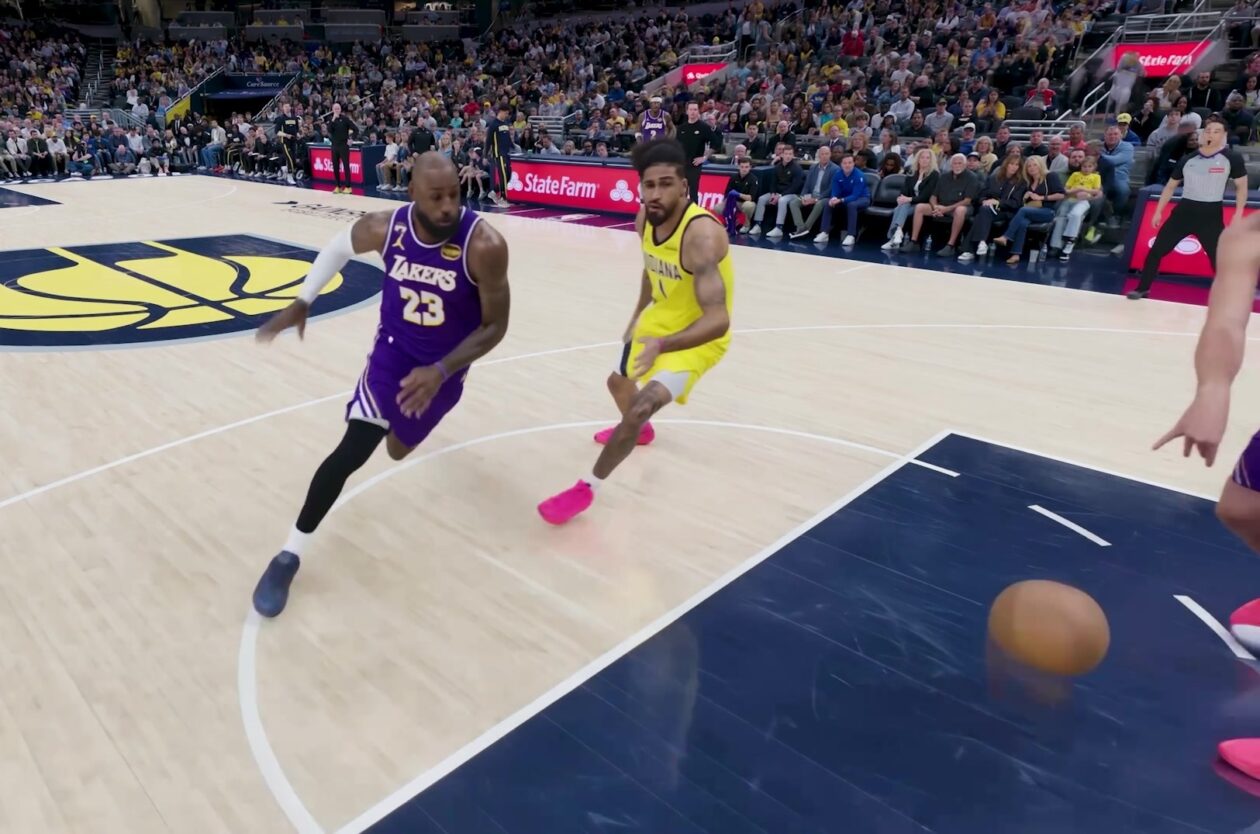
Amazon Prime Video Launches AI-Powered Prime 360 for NBA Coverage
Amazon Prime Video is elevating its NBA coverage with the introduction of Prime 360, an AI-powered replay system offering immersive, 'fly through' views of the action. Kicking off its second season, Prime Video also adds Yahoo fantasy integration and gains exclusive Eastern Conference Finals rights, expanding its tech-driven sports broadcast. The new features aim to deliver a unique and interactive viewing experience for basketball fans.

regional: A two-person Seattle startup lands $1M to reinvent
Seattle startup TriMagnetix has secured $1 million to develop semiconductor chips that consume 800 times less energy and are radiation-resistant. The two-person company, leveraging nanomagnetic technology, is targeting space applications and data centers. With new funding and key partnerships, TriMagnetix aims for commercial sales within a year.