
Temu 4TB External HDD Review: A $20 Scam Exposed
Quick Verdict Our deep dive into the "4TB external HDD" from Temu, famously (or infamously) purchased by a Redditor for a mere $20, reveals a stark reality: it's an undeniable scam. Far from being a legitimate 4TB hard
Quick Verdict
Our deep dive into the "4TB external HDD" from Temu, famously (or infamously) purchased by a Redditor for a mere $20, reveals a stark reality: it's an undeniable scam. Far from being a legitimate 4TB hard drive, this product is nothing more than a microSD card reader hot-glued inside a generic plastic casing. While the low price might tempt some to take a gamble, the outcome here serves as a clear warning: if a deal seems too good to be true, it almost certainly is. This item offers no value, delivers none of its advertised capabilities, and is a complete waste of money and potential data.
Unpacking the "Product": The Reality Behind the Claim
Claimed Specifications vs. The Hard Truth
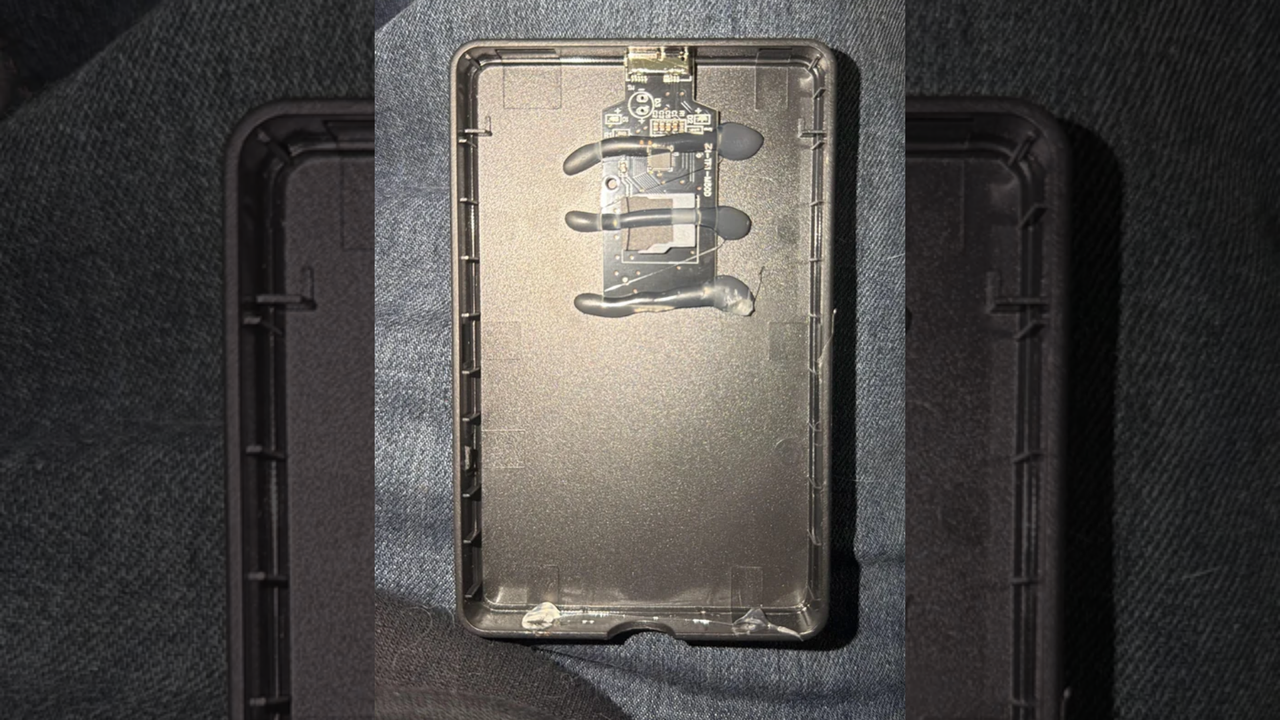
The product was advertised on Temu as a 4TB external hard disk drive, carrying a shocking price tag of just $20. To put this into perspective, a reputable 4TB external hard drive, such as the WD My Passport, typically retails for around $720. The sheer disparity—over 97% cheaper—was a glaring red flag from the outset, prompting the Reddit user to treat the purchase as a low-stakes gamble. Upon opening the casing, however, the deception became clear: there was no 2.5-inch SATA drive. Instead, the box contained a small microSD card reader, likely with a low-capacity memory card inserted, hot-glued into place.
Design and Build Quality (or Lack Thereof)
From a physical standpoint, the "drive" is a masterclass in deceptive minimalism. Encased in a lightweight plastic shell designed to mimic a legitimate external HDD, its true nature is immediately apparent once handled. Real hard drives, even compact external models, possess a certain heft due to their internal components. This Temu offering would undoubtedly feel significantly lighter, hinting at its hollow core. The internal construction is equally rudimentary: a cheap, off-the-shelf microSD card reader crudely affixed with hot glue, revealing the shoddy craftsmanship aimed solely at superficial appearance rather than functional integrity. There is no actual robust storage mechanism, no SATA connection, and certainly no spinning platters or flash memory modules capable of holding terabytes of data.
User Experience: A Gamble Lost
The Discovery and Swift Resolution
The Redditor's experience, while disappointing, was not entirely unexpected. The ease with which Temu processed a refund—described as "suspiciously easily"—suggests a familiarity with such fraudulent listings and perhaps an automated system to handle obvious scams. This particular user did not explicitly state whether they connected the device to a PC to verify its reported capacity, but such an exercise would likely yield misleading results. Scammers frequently tamper with the firmware of memory devices to report a much larger capacity than what is physically available. A 4TB microSD card, for instance, does not exist in the consumer market, with the highest readily available capacity being 2TB, which itself costs nearly $300.
Detecting Fake Drives
For those who might encounter similar deceptive products, several methods exist to unmask them. Software utilities like H2testw can accurately test the true capacity of a drive by writing data to every sector and verifying it. Another, albeit riskier, method is to simply attempt to fill the drive with your own files. With fake drives, you'll often discover that data begins to overwrite itself as soon as the actual, much smaller capacity is reached, leading to irreversible data loss. The proliferation of these fake drives has intensified, partly due to global factors like the AI-driven chip shortage, which has pushed up prices for legitimate SSDs and HDDs, making seemingly unbelievable deals even more tempting.
Pros and Cons
Given the fraudulent nature of this product, a traditional pros and cons list is difficult to construct without irony. However, for the sake of completeness:
Pros:
- Extremely Low Price (Initial Appeal): At $20 for a supposed 4TB drive, the initial price point is incredibly attractive, albeit misleading.
- Easy Refund Process: In this specific case, Temu provided a refund suspiciously easily, indicating their awareness of such scams.
Cons:
- Fraudulent Product: The item is not what it claims to be, a fundamental breach of trust.
- Zero Actual Storage: It provides virtually none of the advertised 4TB capacity, rendering it useless for serious data storage.
- Risk of Data Loss: Attempting to use such a device can lead to data corruption or loss due to firmware manipulation.
- Deceptive Design: The exterior is designed to fool buyers into believing it's a legitimate hard drive.
- Waste of Money and Time: Even with a refund, the time spent ordering, waiting, and discovering the fraud is a cost.
- Poor Build Quality: Hot-glued components within a flimsy plastic casing demonstrate a complete lack of engineering integrity.
Comparison to Legitimate Alternatives
To highlight the stark contrast, here's how the Temu "drive" stacks up against genuine storage solutions:
| Feature | Temu 4TB "External HDD" | WD My Passport 4TB External HDD | SanDisk Extreme 2TB microSD Card |
|---|---|---|---|
| Advertised Capacity | 4TB | 4TB | 2TB (highest readily available) |
| Actual Storage | Likely <1TB (microSD) | 4TB | 2TB |
| Price | $20 | $719.99 | $289.99 (for 2TB) |
| Type | MicroSD reader (internal) | Traditional HDD | Flash storage |
| Reliability | Extremely Low (Scam) | High | High |
| Purpose | Deception | Data storage/backup | Portable storage (phones, cameras) |
The comparison vividly illustrates the massive discrepancy in both price and genuine capability. Legitimate 4TB external drives represent a significant investment because they contain sophisticated technology. Even a high-capacity microSD card, while portable, commands a price proportional to its storage capacity and manufacturing quality.
The Broader Problem: Why Scams Proliferate
Temu, like many online marketplaces, has a reputation for selling inexpensive goods, including a significant number of knockoffs. This incident serves as a potent reminder of why many tech enthusiasts and Reddit communities actively advise against purchasing storage devices or other critical electronics from such platforms. While rare instances of users receiving genuine high-value items (like a free RTX 3060 GPU, as mentioned in one anecdotal case) do occur, they are the exception, not the rule, and often come with their own uncertainties about authenticity and functionality. The current market, with elevated prices for storage due to chip shortages, only exacerbates the appeal of these fraudulent deals, making it even more crucial for consumers to exercise extreme caution and verify prices against established market values.
Buying Recommendation
Our recommendation is unequivocal: Do not purchase external storage drives or other sensitive electronics from unverified sellers on marketplaces like Temu when the price seems unbelievably low. The risk of receiving a fraudulent, non-functional, or even data-corrupting product far outweighs any perceived savings. For critical components like storage, always opt for reputable brands and trusted retailers, even if it means a higher upfront cost. Investing in genuine hardware ensures reliability, performance, and, most importantly, the safety of your valuable data. Treat offers that are drastically below market value as immediate red flags, and always do your due diligence before making a purchase.
FAQ
Q: How can I tell if an external drive I bought online is fake?
A: Look for discrepancies in price compared to reputable brands, check the physical weight (fake drives often feel too light), and most reliably, use software like H2testw to test the actual storage capacity by writing and verifying data across the entire claimed space.
Q: Is it ever safe to buy electronics from marketplaces known for cheap goods?
A: While some non-critical items might be acceptable, it's generally not recommended for sensitive electronics like storage drives, GPUs, or other components where authenticity and reliability are paramount. The risk of receiving a counterfeit or non-functional item is significantly higher.
Q: What should I do if I receive a fake storage device?
A: Immediately contact the seller and the marketplace for a refund. Provide clear evidence of the fraud, such as photos of the internal components. As seen in this case, some platforms may offer quick refunds for obvious scams.
Related articles
Android 17 QPR2 Beta 7.1: The Performance Relief You've Been Waiting
Android 17 QPR2 Beta 7.1: Finally Fixing the QPR1 Performance Woes Verdict: Android 17 QPR2 Beta 7.1 is a crucial and highly anticipated software update for Google Pixel users, specifically targeting and resolving the

DJI Solo Video Setups: Smart Choices for Lone Creators
This review delves into DJI's recommended solo video setups, highlighting the Osmo Pocket 3 Creator Combo as a top pick for its integrated camera, gimbal, and mic. It also covers stabilizers like the Osmo Mobile 8 and RS 4, and the DJI Mic Mini series for enhanced audio, providing honest pros, cons, and clear buying advice.

Ars Technica's Rocket Report: Your Essential Space Industry Briefing
Quick Verdict Ars Technica's Rocket Report, presented by veteran space reporter Stephen Clark, offers an invaluable and meticulously organized weekly (or similar frequency, implied by "Edition 9.15") digest of the most

Apple iPhone Duo: A Daring Debut with Notable Compromises
Apple's highly anticipated iPhone Duo, priced at $2,000, has gone on pre-order. While hailed as "Apple's most exciting device in a decade" for its innovative foldable design and immersive display, it comes with significant drawbacks like the absence of FaceID and a premium camera.

KDE Plasma 6.8: A Future-Focused 30th Anniversary Update
Quick Verdict KDE Plasma 6.8, arriving as the "30th Anniversary Edition," is a pivotal release that decisively pushes the desktop environment into the future. With a definitive farewell to native X11 sessions and a

Ephemeral PR Preview Environments on GKE: A Deep Dive
Every development team eventually grapples with the limitations of shared staging environments. The familiar scenario: multiple features deployed simultaneously, database migrations clashing, and the phrase "it works on