
Surface Laptop Ultra: A Premium Powerhouse for AI Developers
Surface Laptop Ultra: A Premium Powerhouse for AI Developers Quick Verdict: The Surface Laptop Ultra isn't for everyone, but for a specific niche of AI developers and power users, Microsoft has delivered a meticulously
Surface Laptop Ultra: A Premium Powerhouse for AI Developers
Quick Verdict: The Surface Laptop Ultra isn't for everyone, but for a specific niche of AI developers and power users, Microsoft has delivered a meticulously crafted, high-performance machine. With its robust build, excellent keyboard, and NVIDIA RTX Spark platform enabling up to 128GB of RAM, it’s a beautiful beast – if you can justify the premium $2,599 starting price.
First Impressions: Understated Elegance
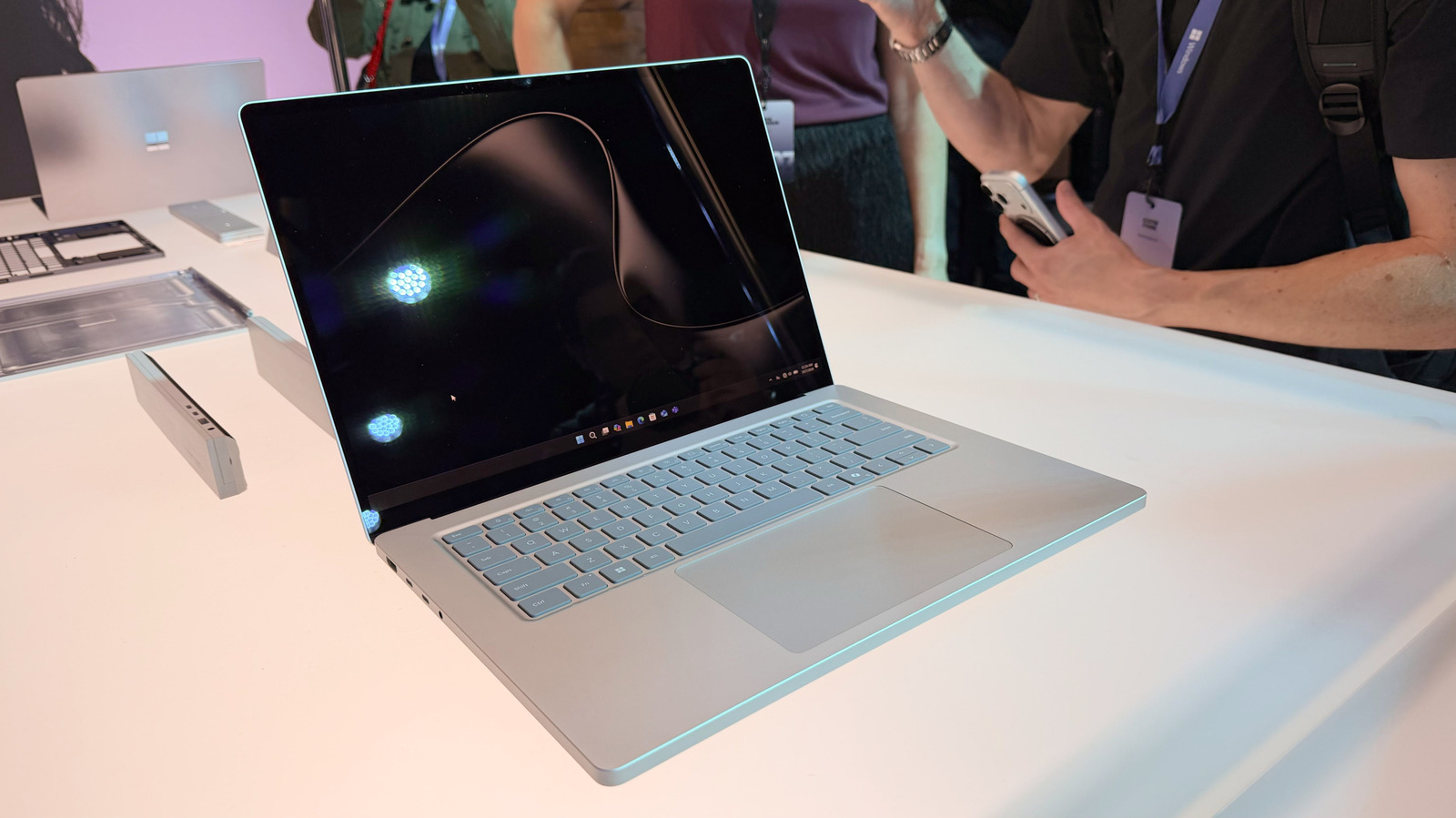
When the Surface Laptop Ultra first made its debut, it struck many as surprisingly conventional. In an era where Surface devices often push design boundaries with unique hinges and form factors, the Ultra presents itself as a straightforward, premium laptop, drawing comparisons to a MacBook Pro. After getting some hands-on time, this initial assessment holds true: there are no flashy gimmicks here. Instead, you're greeted with an undeniable sense of quality that permeates every aspect of its design. The aluminum case boasts a clean, minimalist aesthetic, glowing subtly under studio lights, suggesting more of a sturdy, reliable Volvo than a flashy sports car.
Its 16-inch form factor makes it a substantial machine, weighing in at just under 4.5 pounds. While this might sound heavy to some, it's actually lighter than Apple's 16-inch MacBook Pro, yet it manages to feel just as incredibly sturdy and well-built. This combination of robust construction and thoughtful design immediately sets a high bar for Windows laptops.
Performance & AI Ambitions: The RTX Spark Advantage
Under the hood, the Surface Laptop Ultra is where things get really interesting, especially for its target audience. Powered by NVIDIA's RTX Spark platform and an Arm CPU, this machine is clearly designed to tackle demanding workloads. While a full performance review requires extensive testing, the hands-on experience hints at significant horsepower. The ability to configure it with up to 128GB of RAM is a major draw for AI researchers and developers, many of whom have expressed envy over similar memory capacities in MacBook Pros.
Microsoft and NVIDIA are heavily banking on the concept of 'hybrid intelligence' – a blend of local and cloud-based AI processing – which the RTX Spark platform is built to facilitate. This focus means that, for now, the most immediate and profound benefits of this architecture are primarily aimed at developers and power users engaged in complex AI model training and data analysis. Anecdotal evidence from researchers at the launch event suggests genuine excitement about running large AI models locally on a Windows system with this level of flexibility.
Beyond AI, NVIDIA's graphical prowess also makes the Surface Laptop Ultra a capable gaming system. During the hands-on, it comfortably ran Gears of War: E-Day smoothly at slightly more than 1080p resolution. Crucially, this level of performance was maintained both when plugged in and running purely on battery. Microsoft highlights this consistent on-battery performance as a significant advantage of the Arm-based RTX Spark platform, addressing a common pain point for many laptop users.
User Experience: Keyboard, Touchpad, and Connectivity
Microsoft has consistently delivered excellent input devices on its Surface line, and the Laptop Ultra is no exception. The keyboard offers just the right amount of tactile feedback, making typing a genuinely pleasurable experience. Complementing this is a massive haptic touchpad that feels exceptionally smooth and responsive, allowing for precise control and navigation.
Connectivity is also robust, as expected from a premium workstation. The Surface Laptop Ultra features multiple USB-C connections, a full-sized HDMI port, and an SD card slot – a welcome inclusion for content creators and professionals who often rely on physical media. One particularly intriguing detail is a slightly offset USB-C port designed for Microsoft's new custom magnetic USB-C cable. This cable effectively replaces the old proprietary Surface Connector, latching onto the port magnetically. It's a clever solution that offers the safety of a breakaway connection (potentially saving your laptop from accidental tugs) while retaining universal compatibility, as you can still charge the laptop with any standard USB-C cable. The magnetic cable itself won't work with other laptops, but its adapter can be flipped to offer a standard USB-C connection for other devices.
The Elephant in the Room: Price and Target Audience
Starting at a hefty $2,599, the Surface Laptop Ultra is unequivocally a high-end device. This price point, coupled with its strong emphasis on AI capabilities and vast RAM options, makes it clear that this is not a system for the average computer user. While Microsoft and NVIDIA are touting a 'reinvention' of the PC with RTX Spark, it feels more like a direct response to the foundational shifts brought about by Apple Silicon six years ago.
Like Apple's processors, RTX Spark utilizes Arm-based CPUs, relies on fast unified memory, and integrates powerful NPU and GPU hardware. However, the immediate benefits for the general consumer buying an RTX Spark machine are not yet as apparent or widespread as they were with the initial rollout of Apple Silicon. While Apple's chips delivered instant, noticeable improvements in performance and battery life for all new Mac buyers, the advantages of the Surface Laptop Ultra's underlying technology are currently more niche-focused, primarily benefiting developers and power users. It remains to be seen how long it will take for these high-end RTX Spark benefits to trickle down to the broader consumer market.
Verdict: Is the Surface Laptop Ultra for You?
The Surface Laptop Ultra is a meticulously crafted, powerful machine that embodies Microsoft's commitment to premium hardware. Its design is understated yet elegant, its build quality is exceptional, and its input devices are top-tier. For AI developers, researchers, or power users who genuinely need the immense RAM capacity and the computational muscle of NVIDIA's RTX Spark platform in a portable Windows form factor, this laptop could very well be a dream come true. Its ability to maintain performance on battery and its comprehensive port selection are significant plusses.
However, for the average user seeking a general-purpose laptop, the $2,599 starting price is steep, and the core benefits of the RTX Spark platform may not translate into tangible everyday improvements compared to more affordable, conventional laptops. If you're not deeply embedded in AI development or other incredibly demanding tasks, you might find more immediate value and a better bang for your buck elsewhere. The Surface Laptop Ultra is a specialist's tool, exquisitely made and supremely capable within its intended domain.
FAQ
Q: Who is the Surface Laptop Ultra primarily designed for?
A: The Surface Laptop Ultra is primarily designed for AI developers, researchers, and other power users who require a highly powerful and portable system capable of handling large AI models and demanding computational tasks, especially given its support for up to 128GB of RAM and NVIDIA's RTX Spark platform.
Q: What makes the Surface Laptop Ultra's charging unique?
A: The Surface Laptop Ultra features a slightly offset USB-C port specifically for Microsoft's new custom magnetic USB-C charging cable. This cable magnetically latches on, offering a breakaway safety feature similar to the old Surface Connector, while still allowing the laptop to be charged via any standard USB-C cable in that port.
Q: How does the Surface Laptop Ultra compare to a MacBook Pro for a general user?
A: While the Surface Laptop Ultra boasts a premium build and powerful performance for specific tasks (like AI), similar to MacBook Pros, its core benefits around the new RTX Spark platform are currently more geared towards developers. Apple Silicon in MacBook Pros offered more immediate, widespread performance and efficiency benefits for all users upon its release, whereas the Ultra's advantages for an average user are less pronounced at its premium price point.
Related articles

Ars Technica's Rocket Report: Your Essential Space Industry Briefing
Quick Verdict Ars Technica's Rocket Report, presented by veteran space reporter Stephen Clark, offers an invaluable and meticulously organized weekly (or similar frequency, implied by "Edition 9.15") digest of the most

Apple iPhone Duo: A Daring Debut with Notable Compromises
Apple's highly anticipated iPhone Duo, priced at $2,000, has gone on pre-order. While hailed as "Apple's most exciting device in a decade" for its innovative foldable design and immersive display, it comes with significant drawbacks like the absence of FaceID and a premium camera.

AI's Confidence vs. Formal Methods' Rigor: Design Flaws & Verification
While AI accelerates code generation, formal methods remain critical for ensuring system correctness. Languages like TLA+ and tools like Quint enable developers to model and verify system designs before coding, catching subtle flaws. Quint makes formal methods more accessible with developer-friendly syntax and executability. This approach is vital for verifying AI-generated code through trace validation and model-based testing, ensuring reliability against real-world data.

KDE Plasma 6.8: A Future-Focused 30th Anniversary Update
Quick Verdict KDE Plasma 6.8, arriving as the "30th Anniversary Edition," is a pivotal release that decisively pushes the desktop environment into the future. With a definitive farewell to native X11 sessions and a
Galaxy Watch One UI 9 Beta: Promising Progress, But Patience Needed
Galaxy Watch 8, Watch Ultra, and Watch 7 are receiving a new One UI 9 Watch beta build with bug fixes and a security patch. Active development signals progress, but a stable release date remains elusive.

Enterprise AI Beyond Chatbots: A Vision for Actionable Intelligence
Quick Verdict: Redefining Enterprise AI's Potential TechRadar Pro's opinion piece, "What it takes to move enterprise AI beyond the chatbot," delivers a refreshingly honest and vital perspective on the current state and